What is changing in Dubai renovations
The clearest shifts in Dubai renovation over the last few years are: fluted and slatted wall panelling replacing plain painted feature walls, wet and dry kitchen arrangements becoming standard in villas, dressing rooms taking space from bedrooms, home gyms and offices replacing formal majlis rooms in some households, louvred pergolas making terraces usable year round, and a move from high-gloss white to warmer matt finishes with brass and blackened metal. Prices have risen, so more clients are refinishing and rewrapping rather than replacing.
It is worth saying at the outset what a trend is and is not. Some of what follows is a genuine change in how people use their homes — the wet and dry kitchen, the dressing room, the home office — and those will not reverse. Others are a change in taste, and taste moves. Fluted panelling looks fresh now and will date, the way high-gloss white kitchens dated.
We tell clients that distinction plainly, because it changes what is worth spending on. Structural and layout changes are expensive and durable, so it is worth doing them properly and to your own requirements rather than to a look. Surface finishes are comparatively cheap and can be changed in a decade, so that is where a fashionable choice belongs if you want one.
Everything below is drawn from what we are actually asked to build, not from what is circulating on design sites. Where something is fashionable rather than functional, we say so.
From the workshopWhat we are actually asked to build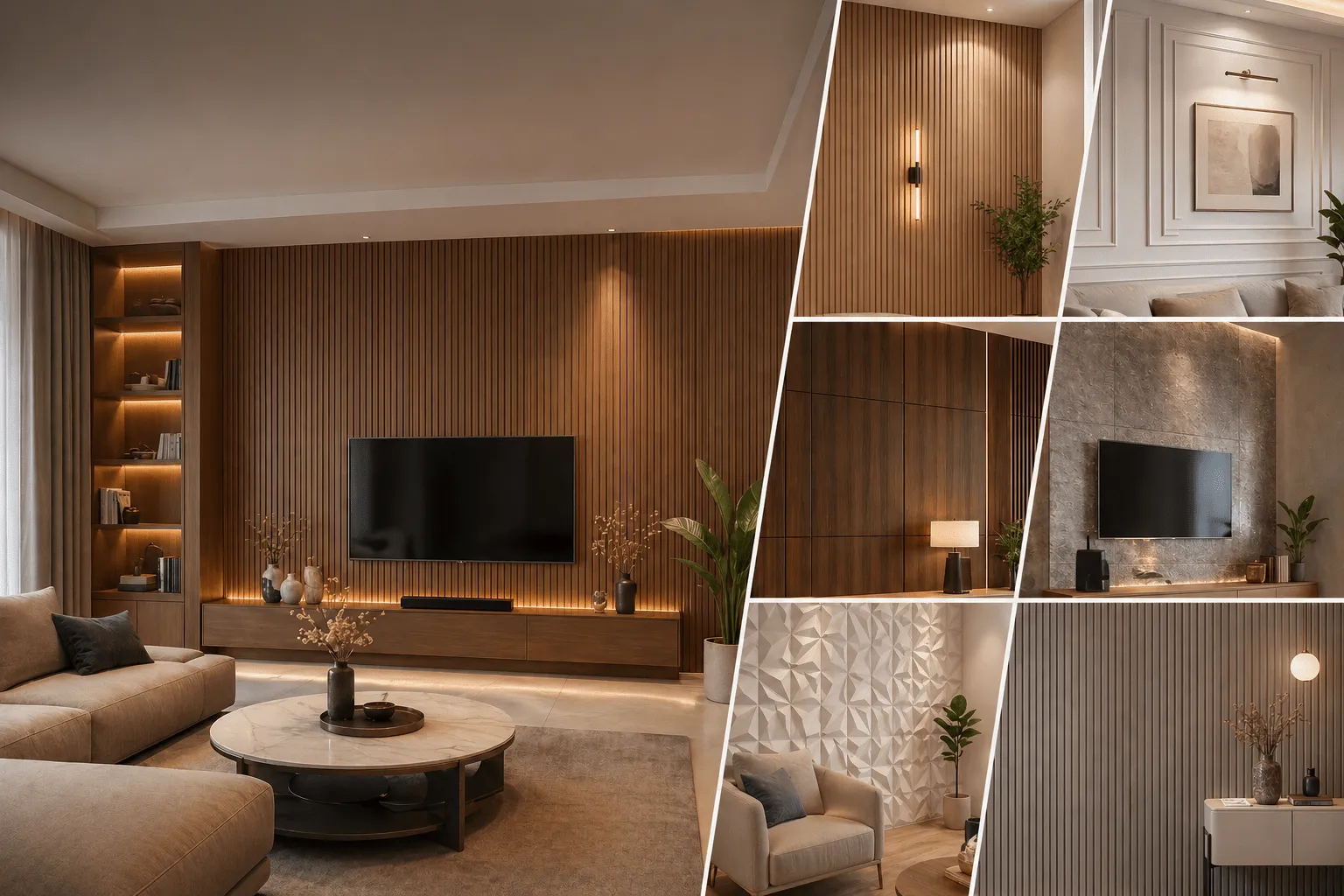
The changes that are about how people live
These are not fashions. They are changes in how households in Dubai actually use their homes, and they are the ones worth building properly.
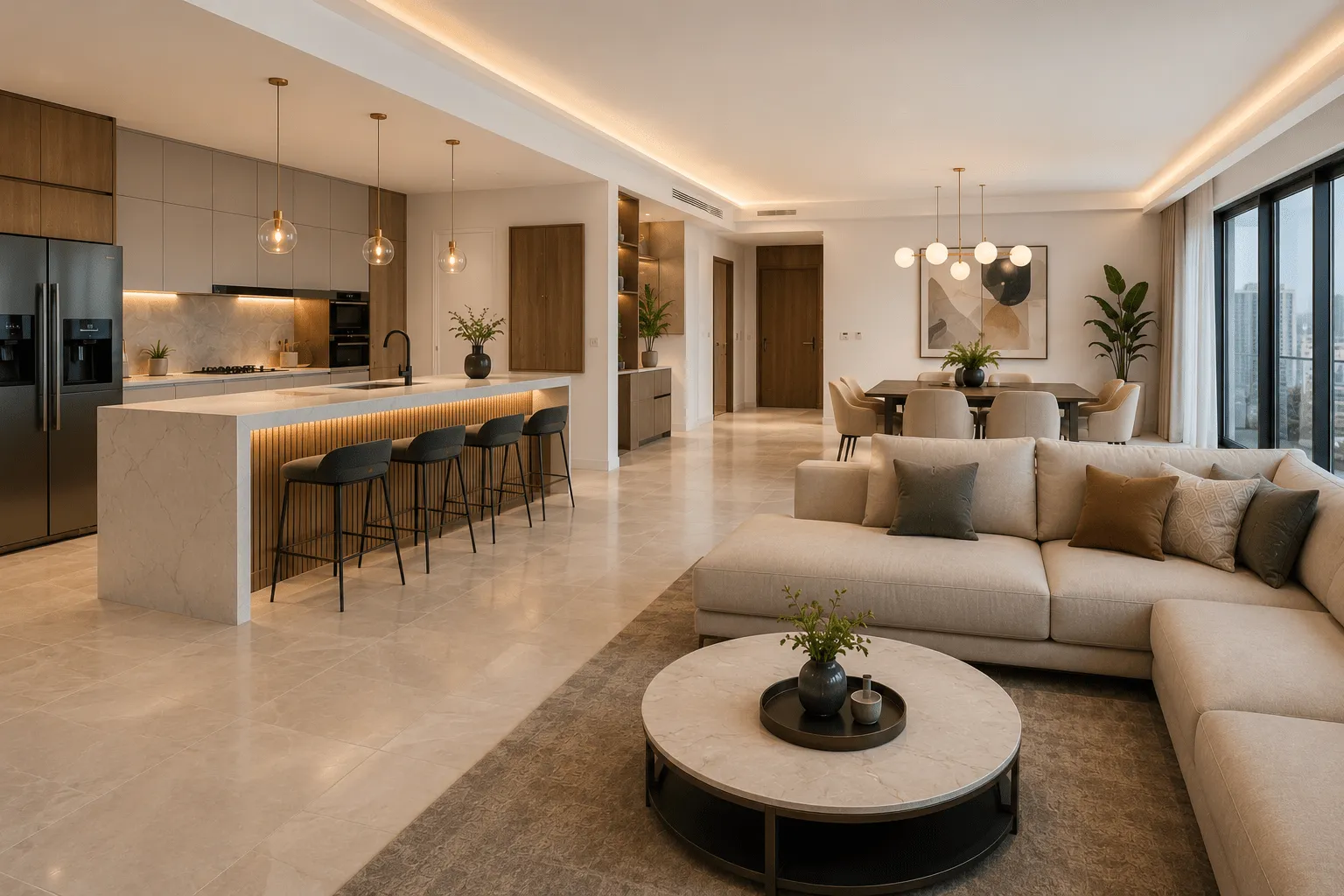
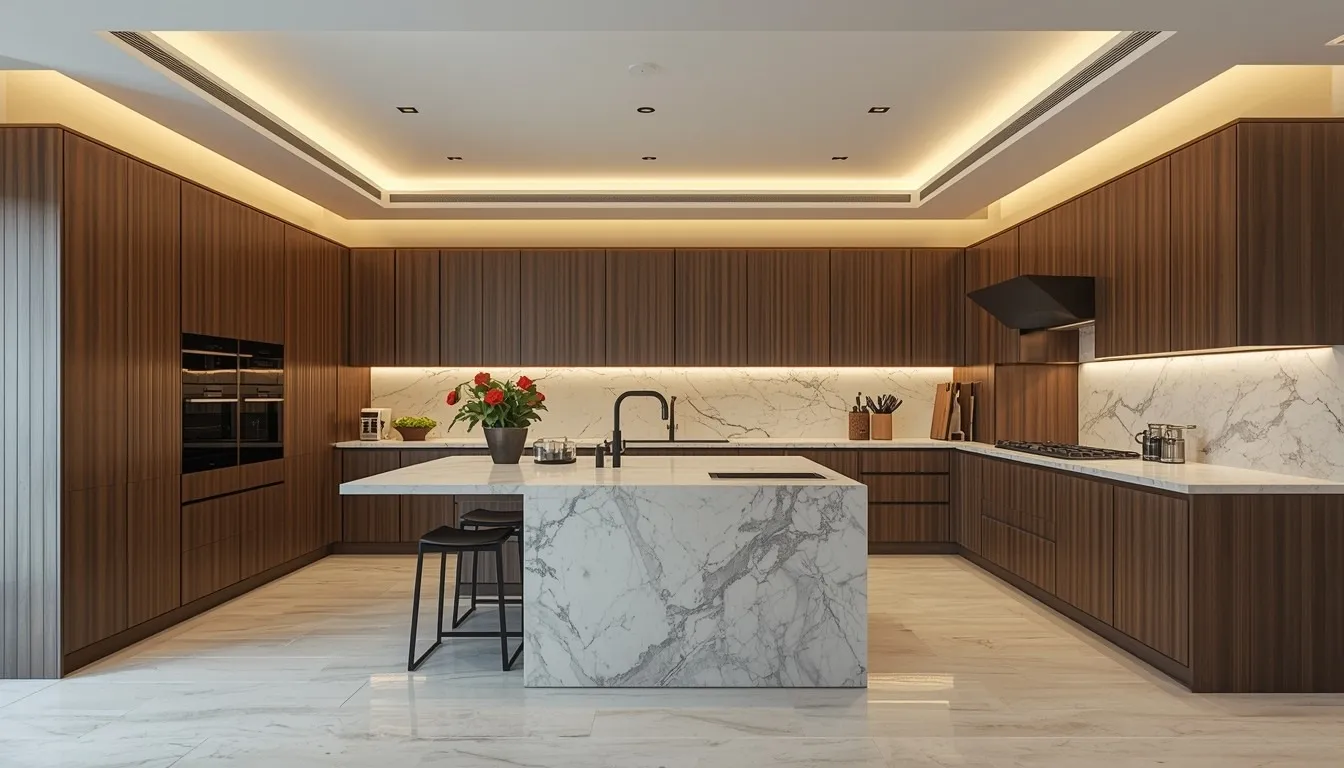
Wet and dry kitchens. Now close to standard in villa renovations. The visible kitchen with the island handles coffee, breakfast and light preparation; an enclosed, well-extracted second kitchen handles the real cooking. In a city where the cooking is often heavier than an open-plan kitchen can extract, this solves a genuine problem. See kitchen and butler’s pantry.
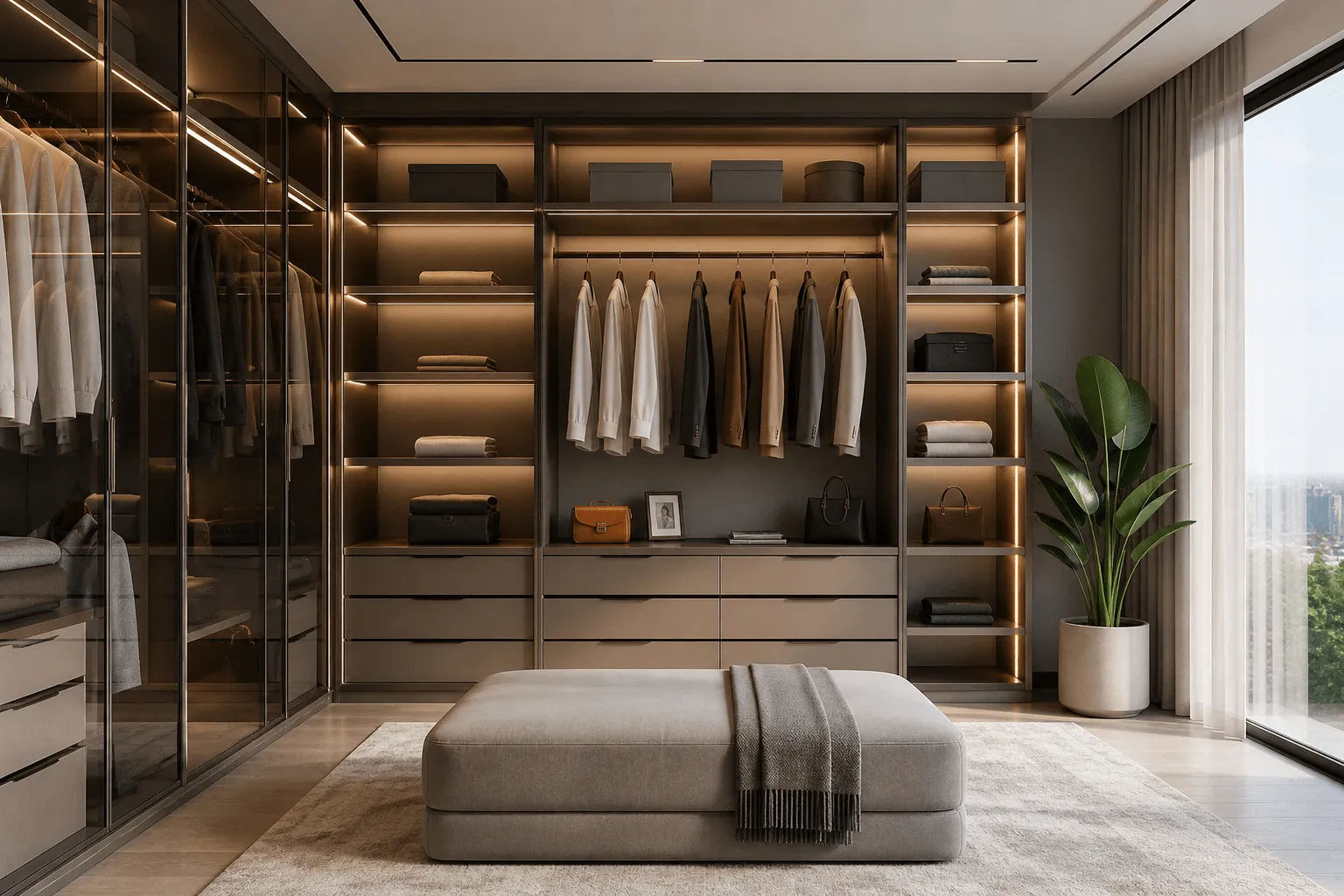
Dressing rooms taking space from bedrooms. Rather than lining a bedroom with wardrobes, clients are increasingly giving up two or three metres of bedroom depth or converting a small adjoining room. The bedroom gets calmer, the storage gets better, and both rooms work. See dressing rooms.
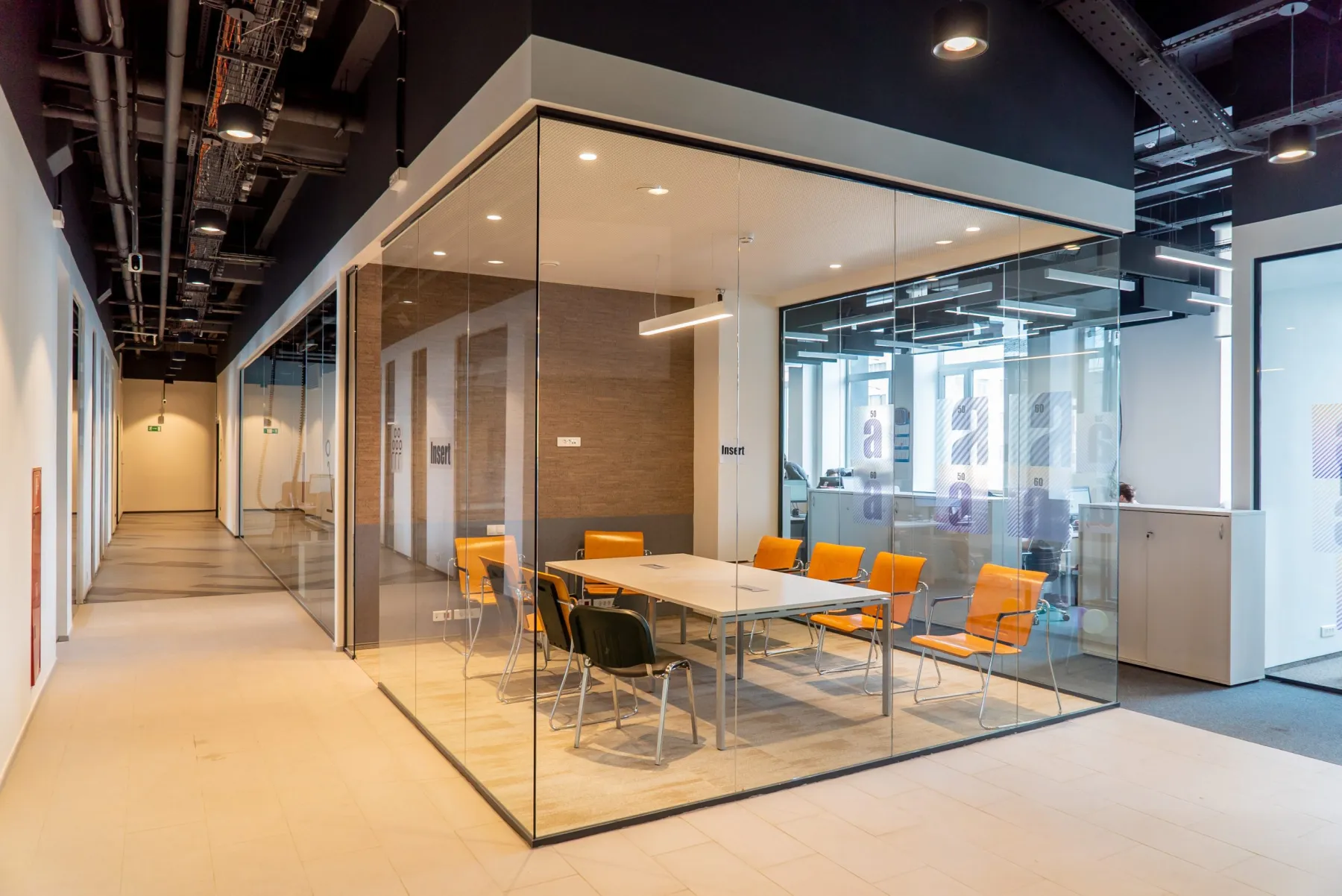
Home offices that are actually usable. Not a desk in a corner — a room with a door that closes, acoustic separation and proper lighting for video calls. A large share of our office enquiries are conversions of a ground floor majlis or a garage. See home office and boardroom.
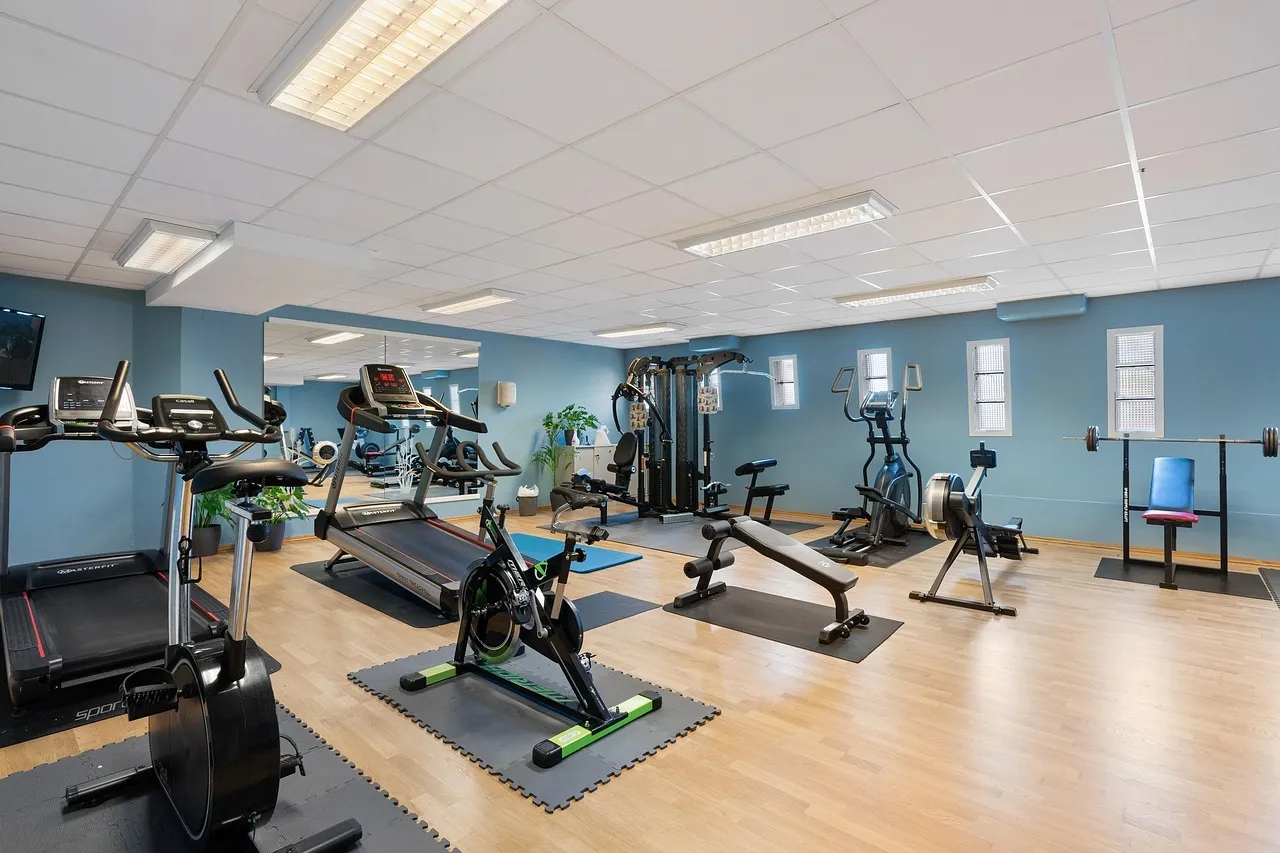
Home gyms replacing spare rooms and garages. Consistently one of the most requested conversions, and the one most often done badly — without insulation, cooling or an impact floor, a Dubai garage gym is unusable from May onwards. See home gym.
Outdoor rooms rather than gardens. Louvred pergolas that close in summer and open in winter, outdoor kitchens in marine-grade materials, and built-in shaded seating. The shift is from a garden you look at to a room you use. See landscaping.
Utility taken seriously. Laundries with proper extraction, drainage and folding space, and entryways with real shoe and bag storage. Unglamorous, inexpensive, and the changes clients report as making the most daily difference.

What has changed on the surfaces
The single most visible change is texture. Plain painted feature walls have largely been replaced by fluted, reeded and slatted panelling, which reads well under the grazing light Dubai interiors tend to have and hides an uneven wall completely. It is genuinely good detailing, and it is also unmistakably of this decade — in ten years it will read as dated the way a 2010 high-gloss kitchen does now.
Colour has moved warm. The white and grey palette that dominated Dubai apartments has given way to warm off-whites, clay and stone tones, deeper greens and browns, and timber with visible grain rather than a uniform stained finish. Matt and satin have displaced high gloss almost entirely, including on kitchen fronts.
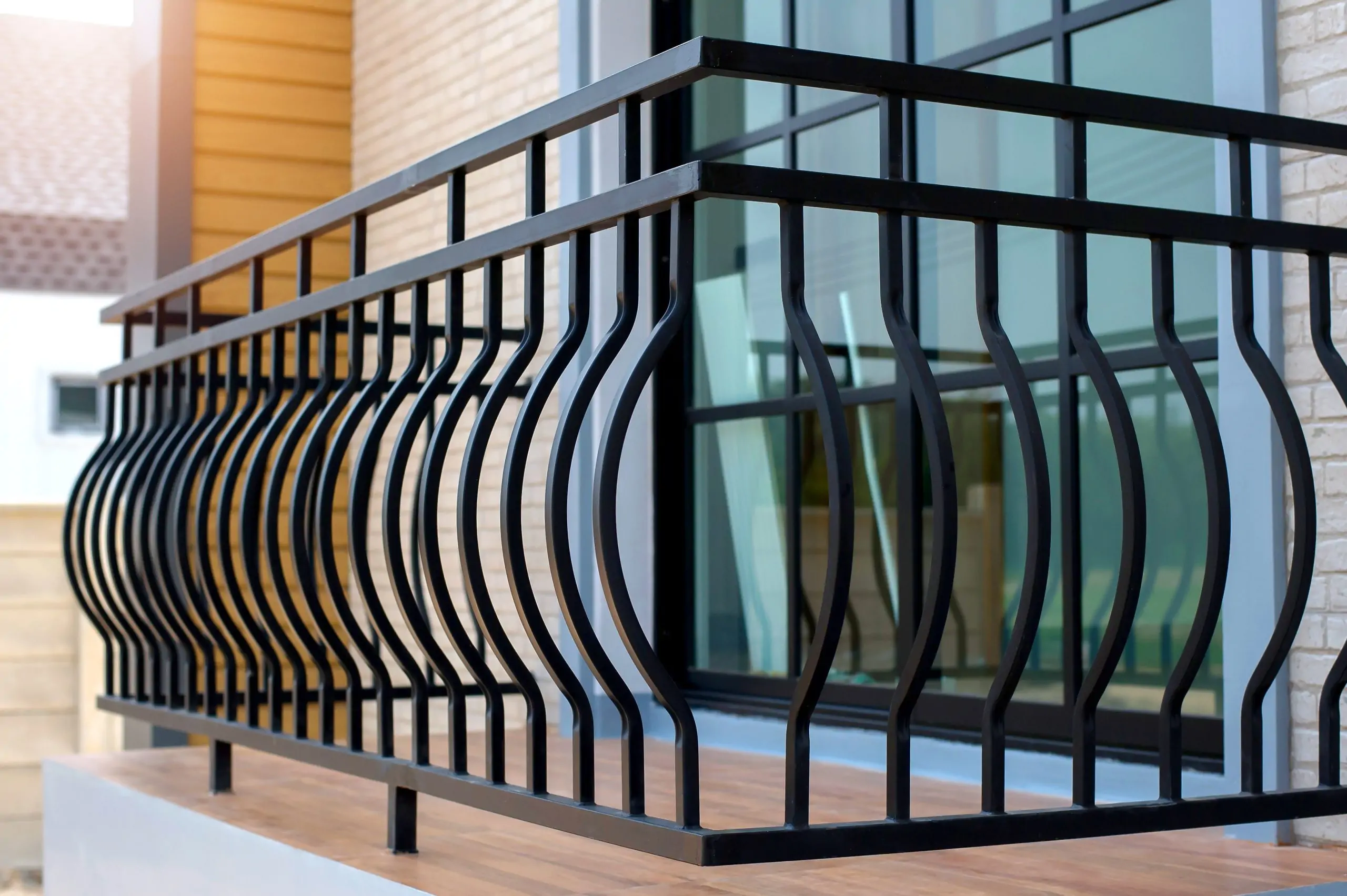
Metal has become a finish rather than a fixing. Brushed brass, blackened steel and gunmetal on handles, frames, shelf brackets and screens, usually in place of chrome. It is the detail that most reliably makes a scheme look considered, and the one most often ruined by mixing three finishes in one room.
Stone is used more boldly — book-matched feature walls, mitred edges that build apparent thickness, full-height splashbacks running into the worktop — and porcelain and sintered slabs are quietly displacing marble in kitchens because they do the same job without etching.
TextureThe clearest visible change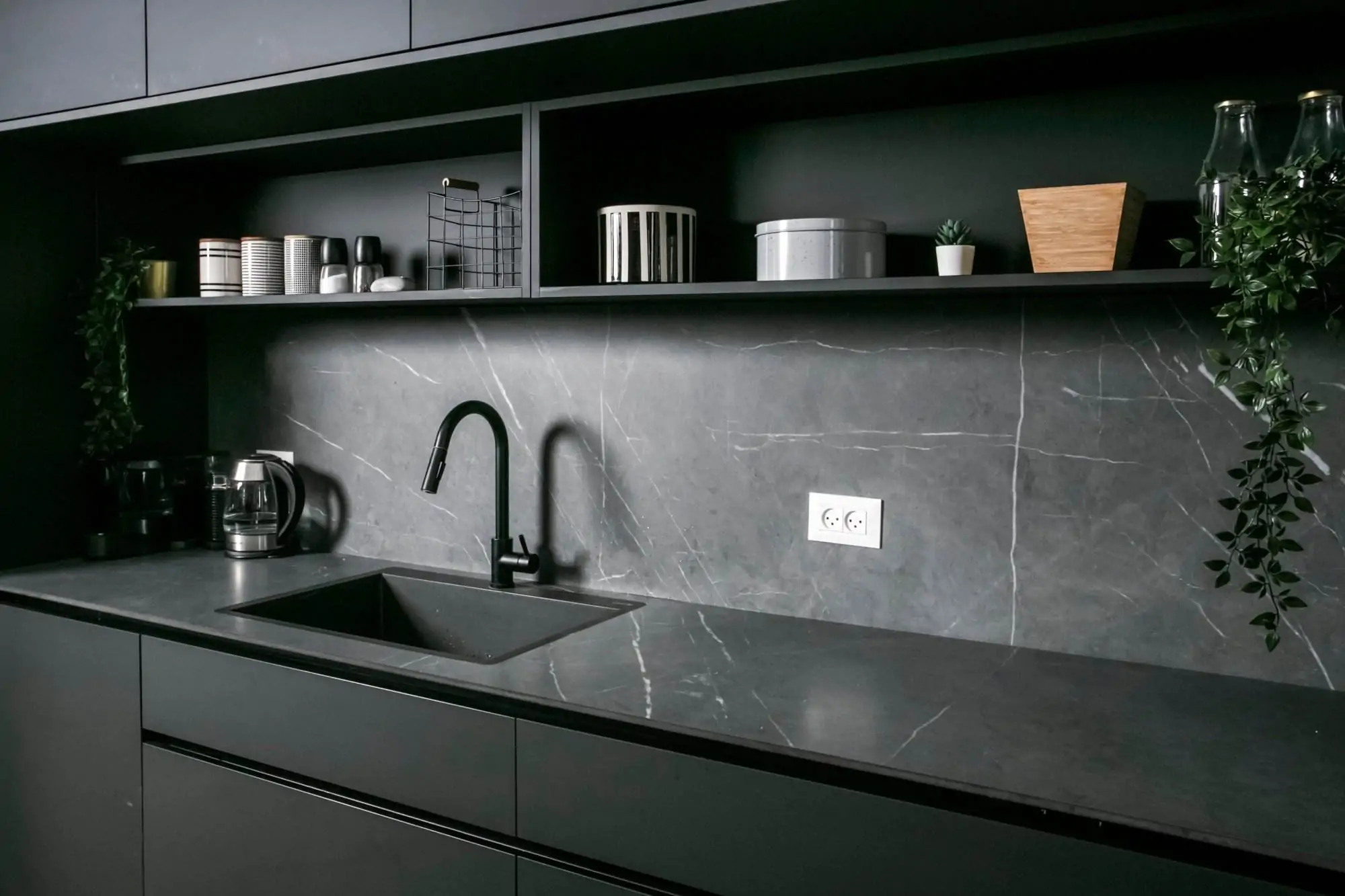
Refinish rather than replace
The most practical change of the last few years is that clients are far more willing to refinish existing joinery instead of replacing it. Kitchen carcasses that are structurally sound get resprayed or vinyl-wrapped rather than ripped out, doors are stripped and sprayed rather than binned, and sofa frames are reupholstered rather than replaced.
The arithmetic is why. A kitchen respray runs AED 9,000 to 22,000 and a vinyl rewrap AED 3,500 to 14,000, against AED 25,000 or more for a replacement kitchen — and the layout, which is usually the thing that actually works, stays. See furniture painting and vinyl wrapping.
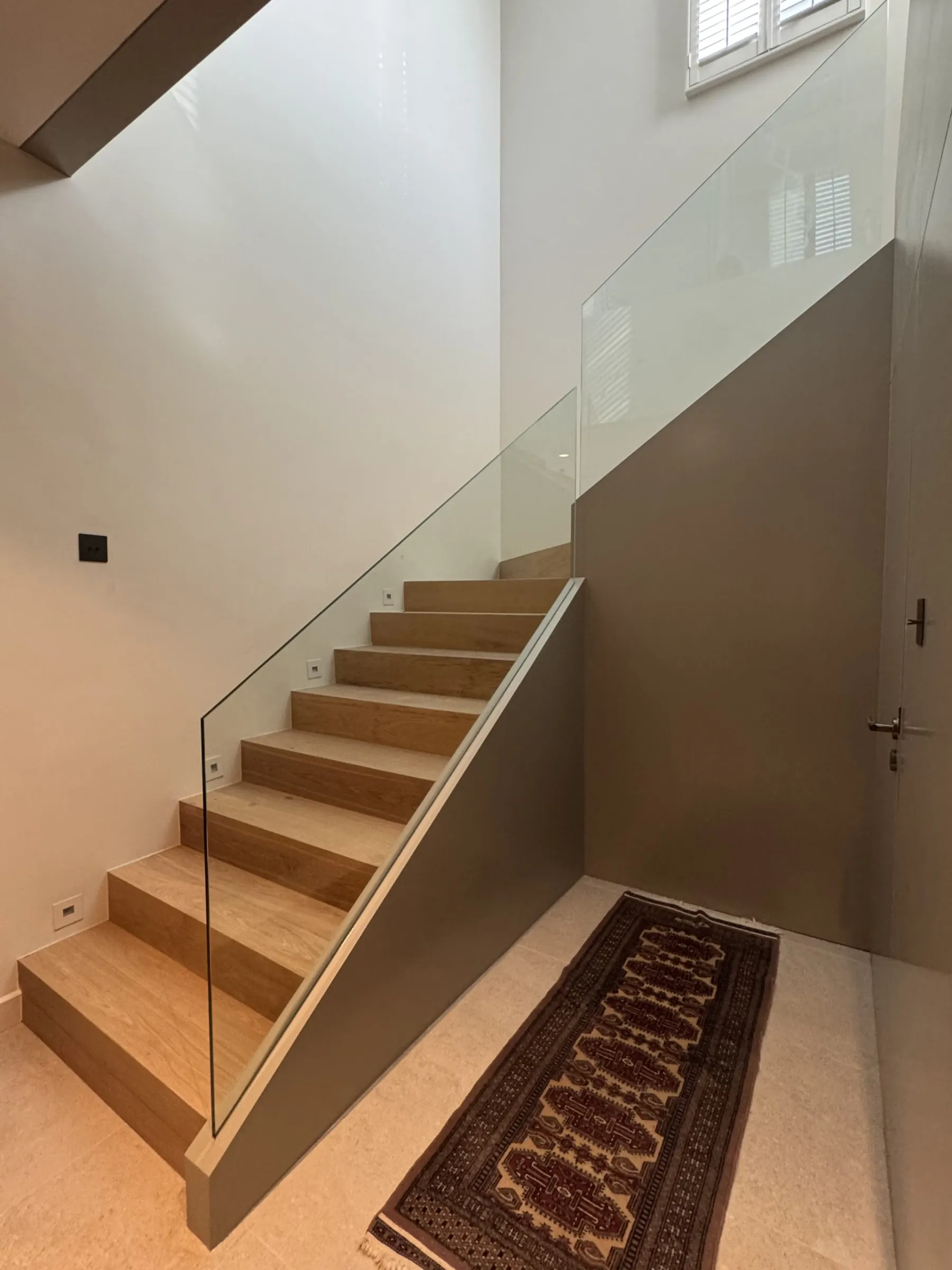
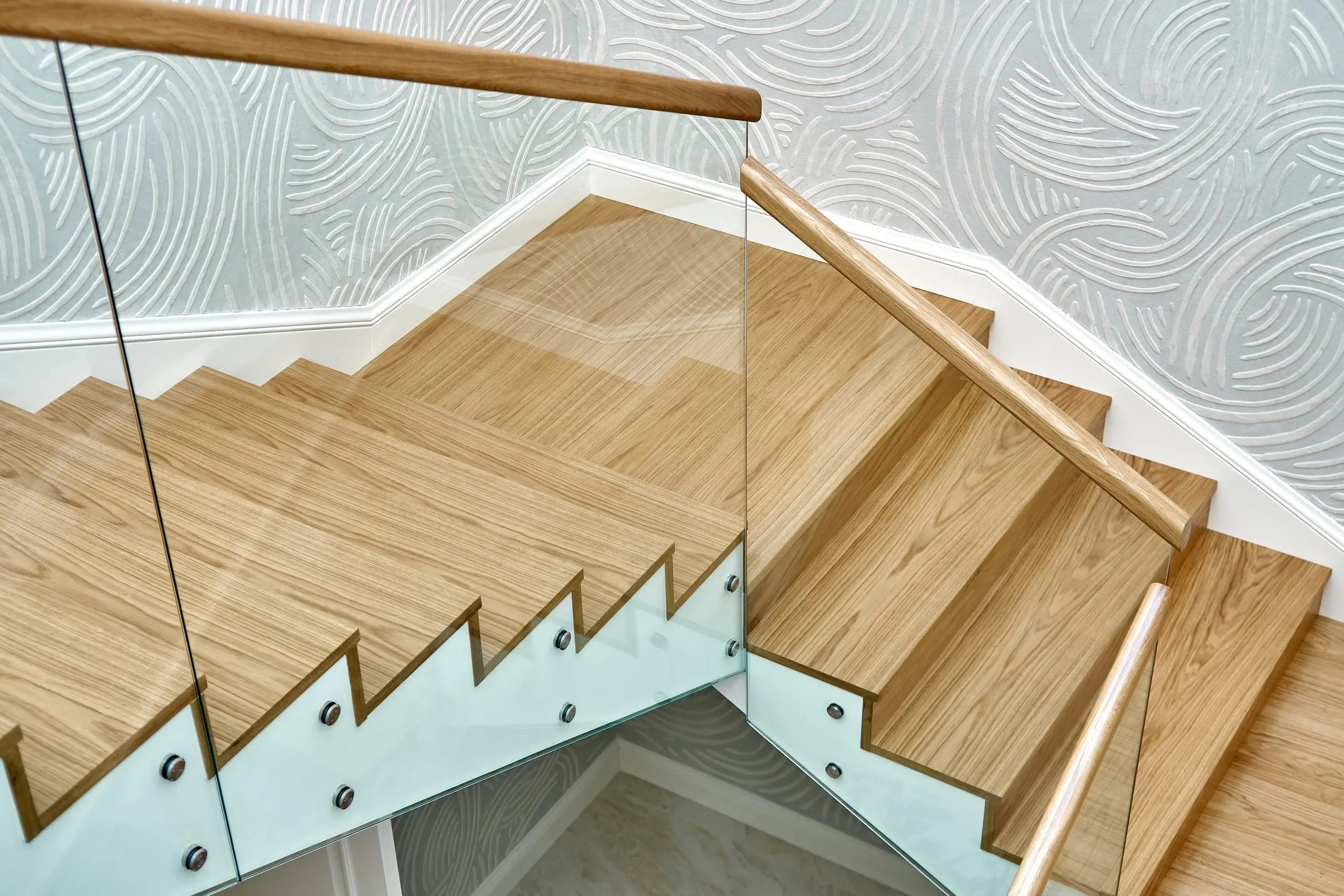
The same logic has reached staircases. Cladding an existing concrete flight in oak or stone with a new glass balustrade transforms a villa entrance for a quarter of the cost of a new staircase and takes a week rather than a month. See staircase services.
The unglamorous things more clients now ask about
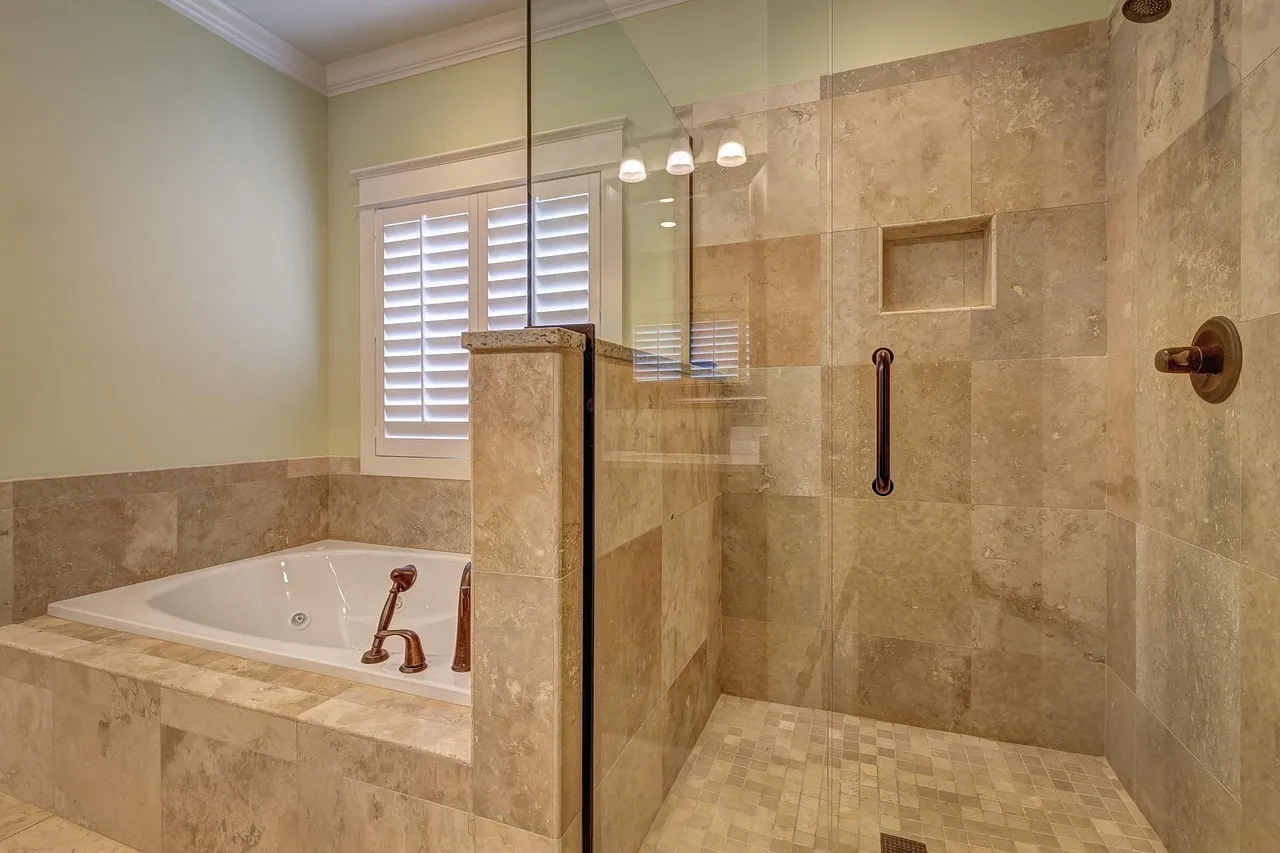
Waterproofing has become a question clients raise themselves rather than something we have to explain. Leaks through a bathroom floor into the ceiling below are the most expensive common defect in Dubai property, and awareness has risen enough that people now ask whether the wet area will be flood tested. It should be, for 24 to 48 hours, before any tile is laid. See waterproofing.
Acoustics is the second. More clients are asking for partitions built to the slab rather than to the ceiling, insulated cavities and solid core doors with seals — largely because they have worked from home in a room where every conversation carried. It costs very little during construction and cannot be added afterwards without opening walls.
And lighting has moved from an afterthought to a design stage. Layered circuits, warm colour temperatures, cove and wall-wash lighting instead of a grid of downlights on one switch. Of everything on this page, it is the change that most alters how a finished room feels, and it is nearly always the cheapest.
Renovation trends: common questions
What is the biggest renovation trend in Dubai right now?
Textured wall panelling — fluted, reeded and slatted timber — replacing plain painted feature walls. It is the most visible change, it works well under Dubai lighting, and it is also the one most likely to date within a decade.
Are wet and dry kitchens worth it?
In a villa where serious cooking happens, yes. An open-plan island kitchen cannot extract heavy frying and spice cooking, and the smell ends up in the living room soft furnishings. An enclosed, well-extracted second kitchen solves that properly.
Is marble still popular in Dubai kitchens?
It is still requested, but porcelain and sintered stone are quietly displacing it in kitchens that get used, because they give a similar appearance without etching from lemon, wine and cleaning products. Marble remains the choice for vanities and feature walls.
Should I replace my kitchen or refinish it?
If the carcasses are sound and the layout works, refinish. A respray is AED 9,000 to 22,000 and a vinyl rewrap AED 3,500 to 14,000 against AED 25,000 or more to replace, and you keep the layout that already works.
What renovation adds most value to a Dubai villa?
Kitchens and bathrooms remain the two that most affect resale, followed by usable outdoor space. But the changes that most affect daily life — storage, lighting, acoustics and a properly planned laundry and entryway — cost far less.
Which trends will date fastest?
Anything defined by a surface texture or a colour, fluted panelling included. Layout changes — the second kitchen, the dressing room, the home office, the shaded terrace — are about how you live and will not reverse.
Are people still building formal majlis rooms?
Yes, and in many households it remains essential. What has changed is that in some homes a ground floor majlis used a few times a year is being converted into a home office or gym, which gets used daily.
What is the most underrated renovation?
Lighting. Replacing a single-circuit grid of downlights with layered, dimmable, warm lighting changes how a room feels more than new furniture does, and usually costs less than a single sofa.
Talk to us about your project
Forty years of building in Dubai gives us a fair view of what lasts and what does not. Tell us what you are planning and we will tell you honestly where the money is best spent.