Waterproofing services in Dubai – roofs, bathrooms, balconies and basements
Torch-applied and liquid membranes, tanking, leak detection and repair. Every wet area is flood tested for 24 to 48 hours before a tile goes down, and the test record is yours.
Waterproofing services in Dubai cover every surface that has to stay dry: roofs, bathrooms, balconies, terraces, planters, water tanks, basements and pool shells. Abdulla Carpentry EST has worked out of Ras Al Khor since 1984. Budget AED 55 to 120 per square metre for a bathroom, AED 70 to 180 for a balcony or roof, and AED 2,500 to 8,000 to trace and repair an existing leak. The site inspection and quotation are free, and the flood test record is part of the handover.
Waterproofing contractors Dubai
Search waterproofing works Dubai, waterproofing company in Dubai or waterproofing services near me and you get hundreds of numbers back. What separates them is whether anyone writes down what was actually applied. We run a fit-out and joinery workshop in Ras Al Khor Industrial Area 2, and waterproofing sits inside that: we tank the wet areas of the bathrooms and kitchens we build, and we get called back to roofs and balconies we did not build.
Our waterproofing services in Dubai begin with a free site inspection and waterproofing quotation. We measure the area, photograph the substrate, say plainly what is failing, and price the making good next to the membrane – the screed, the tiling, the skirting – so the number on the quotation is the number you pay at the end.
 1984Working in Dubai since
Roof waterproofing
Roof waterproofing Dubai work splits three ways: villa roof waterproofing on an accessible slab, flat roof waterproofing on an apartment block or a warehouse, and roof leak repair where a stain has already come through a ceiling below. The first question is always the falls. A membrane laid over a screed that ponds water holds that water against itself until it finds the weakest lap.
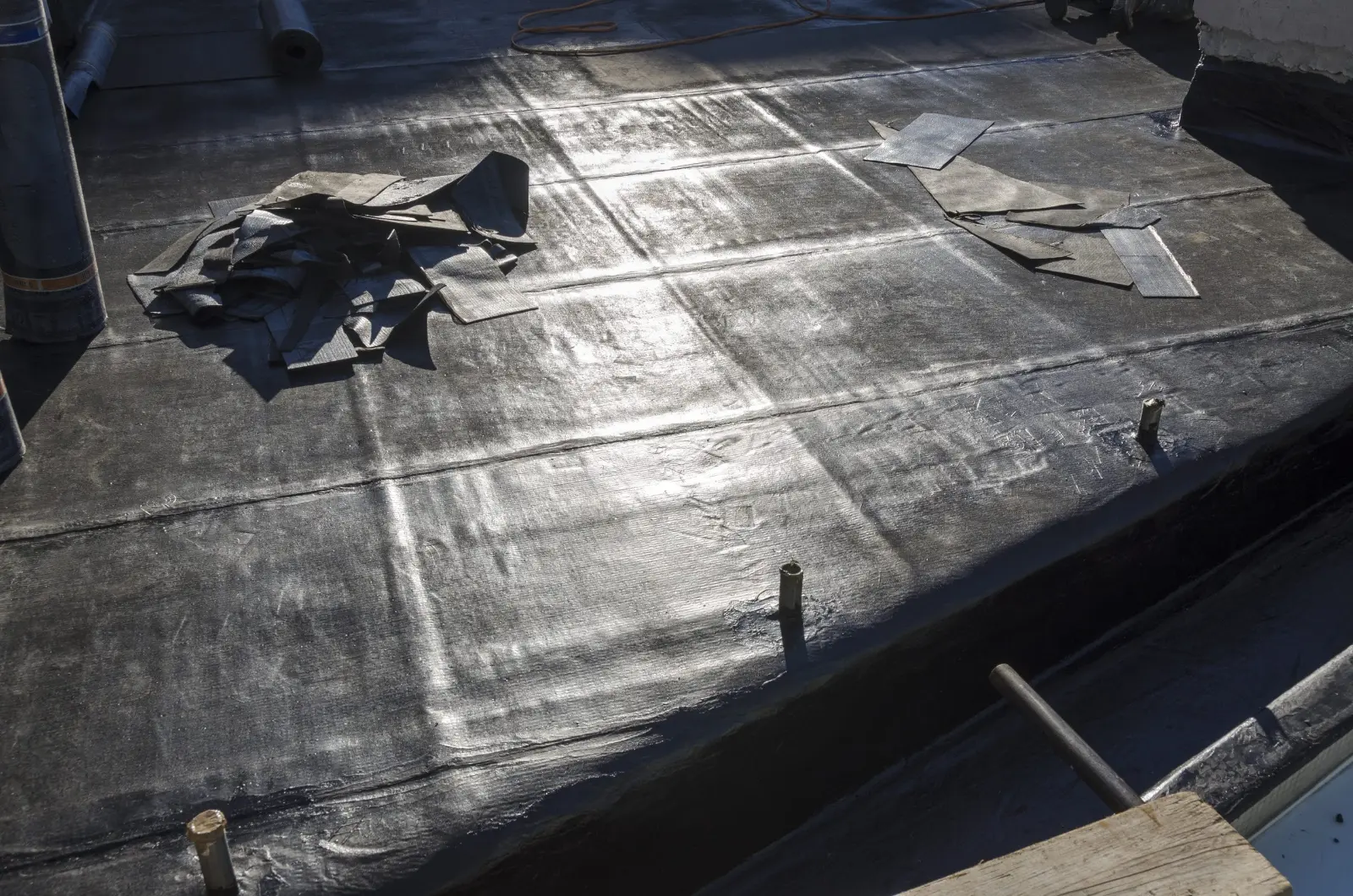
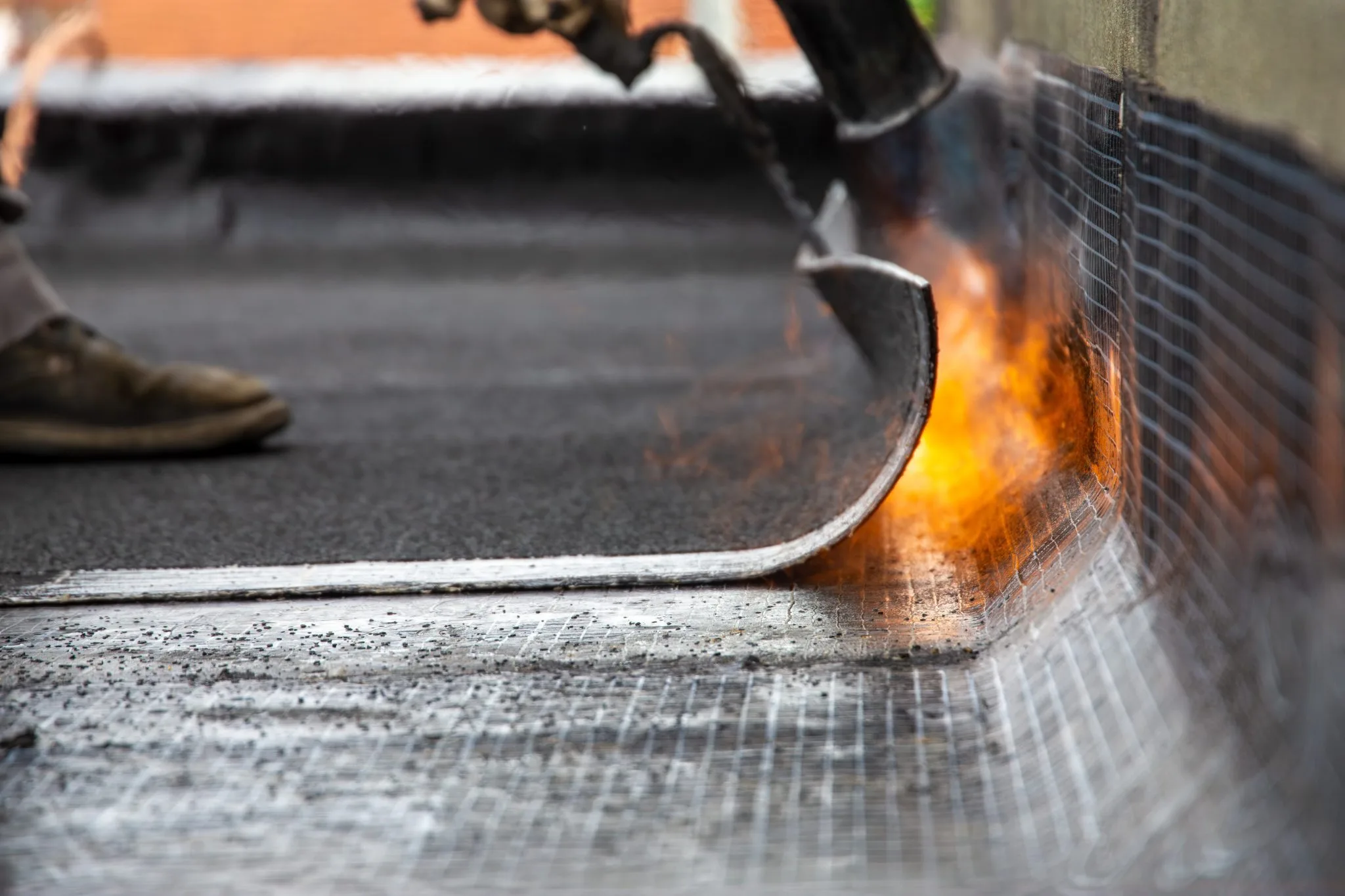
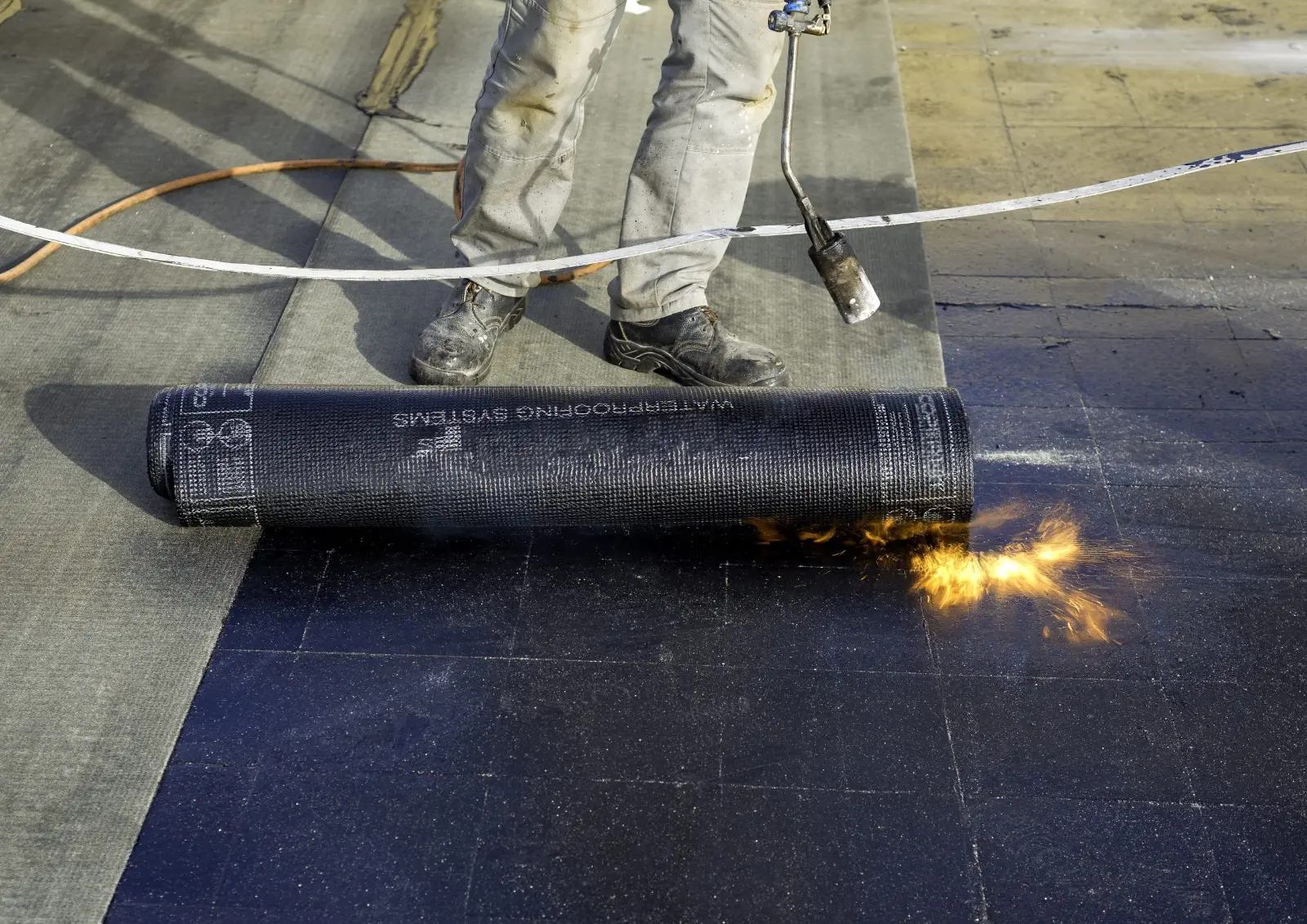
For exposed roofs we generally specify a bituminous membrane: a torch-applied membrane in APP membrane or SBS membrane grade, chosen for how much the slab moves and how hot the surface gets. APP copes better with UV and heat; SBS stays flexible when the structure shifts. A sheet gives you a factory-controlled thickness no site-applied film can match, so the attention moves to the laps, the upstands and the outlets.
Where a roof is being insulated at the same time, roof insulation boards go under the membrane. Where a roof cannot be stripped, a heat-reflective roof coating over a sound system drops the surface temperature and buys years. Re-waterproofing old roofs costs less before the rains than after them, which is when we would rather be on the scaffold.
Bathroom and wet area waterproofing
Bathroom waterproofing is the job we do most often and the one most often skipped. Shower waterproofing means the floor, the upstands and the full height of every wet wall, not a strip around the tray. Waterproofing before tiling is the only moment at which it can be done properly; once the tiles are down you are managing a problem instead of preventing one.
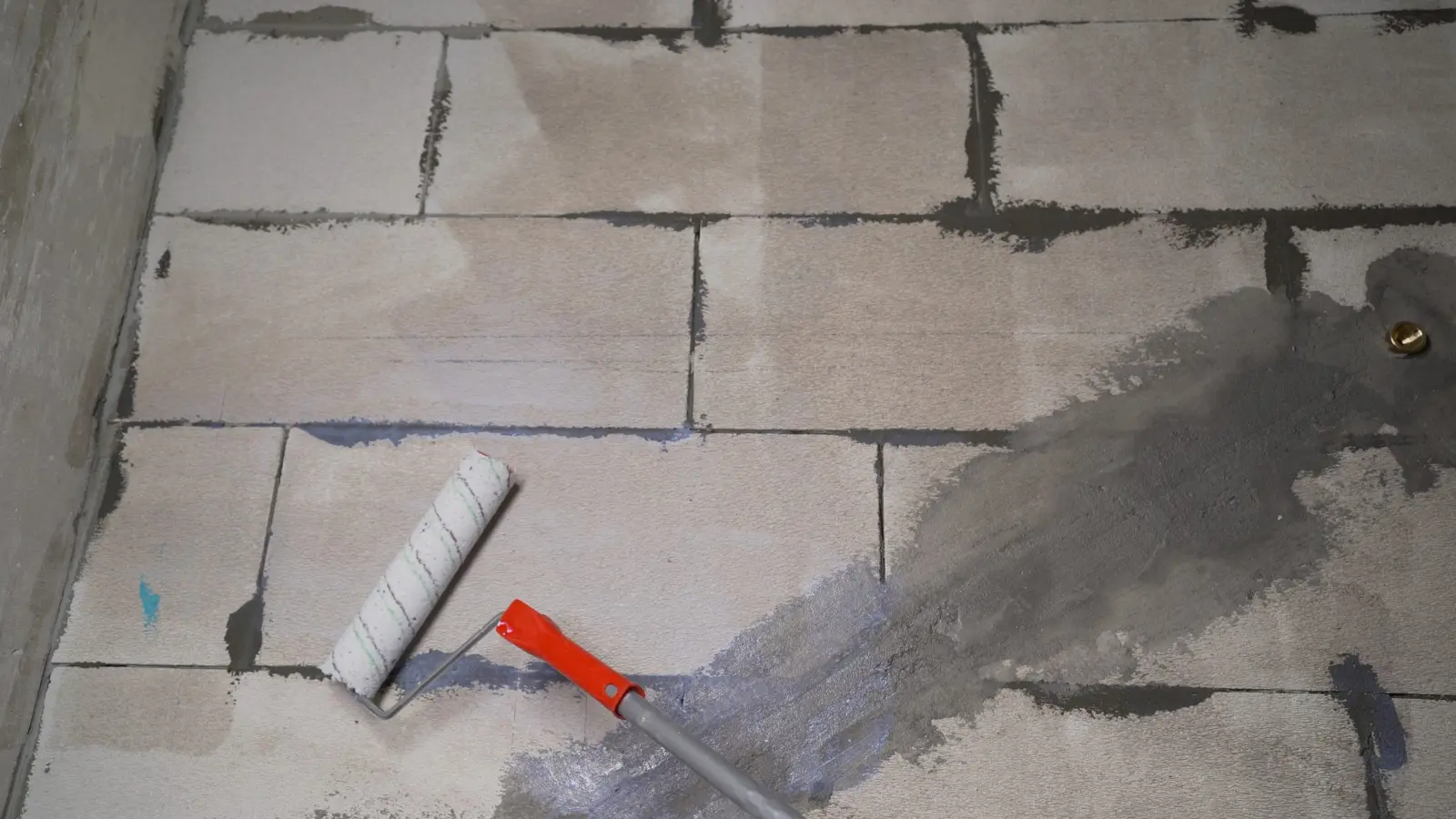
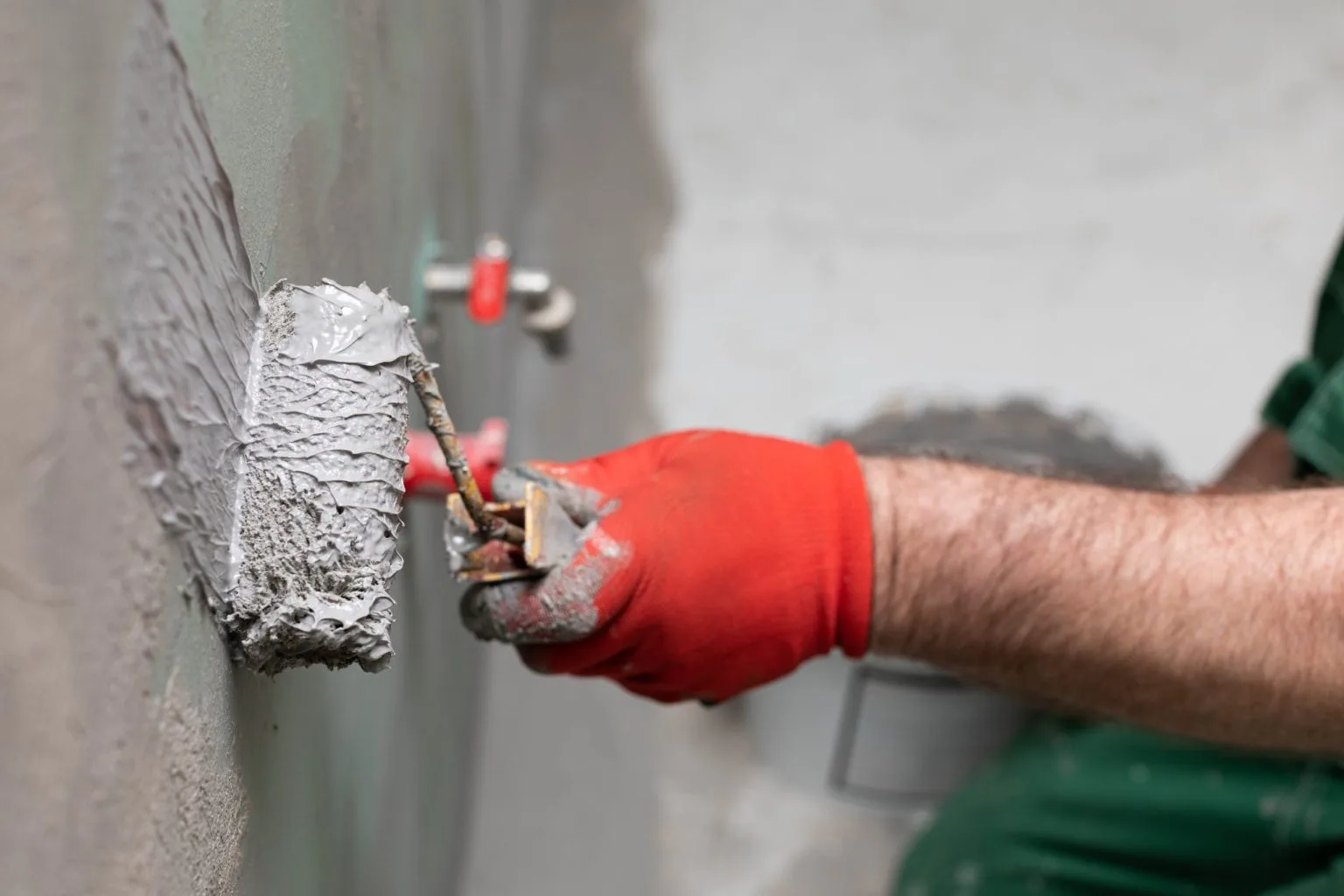
Kitchen waterproofing and laundry room waterproofing matter for the same reason: a slow seep under a washing machine reaches the neighbour below long before it reaches you. In an apartment, our waterproofing services in Dubai treat the kitchen floor, the sink run and every plumbing penetration as one continuous surface rather than three separate details.
Then we flood test. The area is plugged and filled for 24 to 48 hours, photographed full and photographed drained, and the record reaches you before the tiler starts. Two coats, applied at right angles, at the coverage rate printed on the tin and written on our sheet.
Balcony, terrace and podium waterproofing
Balcony waterproofing and terrace waterproofing fail at the edges, not in the middle. Podium waterproofing and a rooftop terrace add a second problem: a finish laid over the top – tiles, decking, planting – that hides the membrane and stops anyone seeing the failure until it appears on a ceiling indoors.
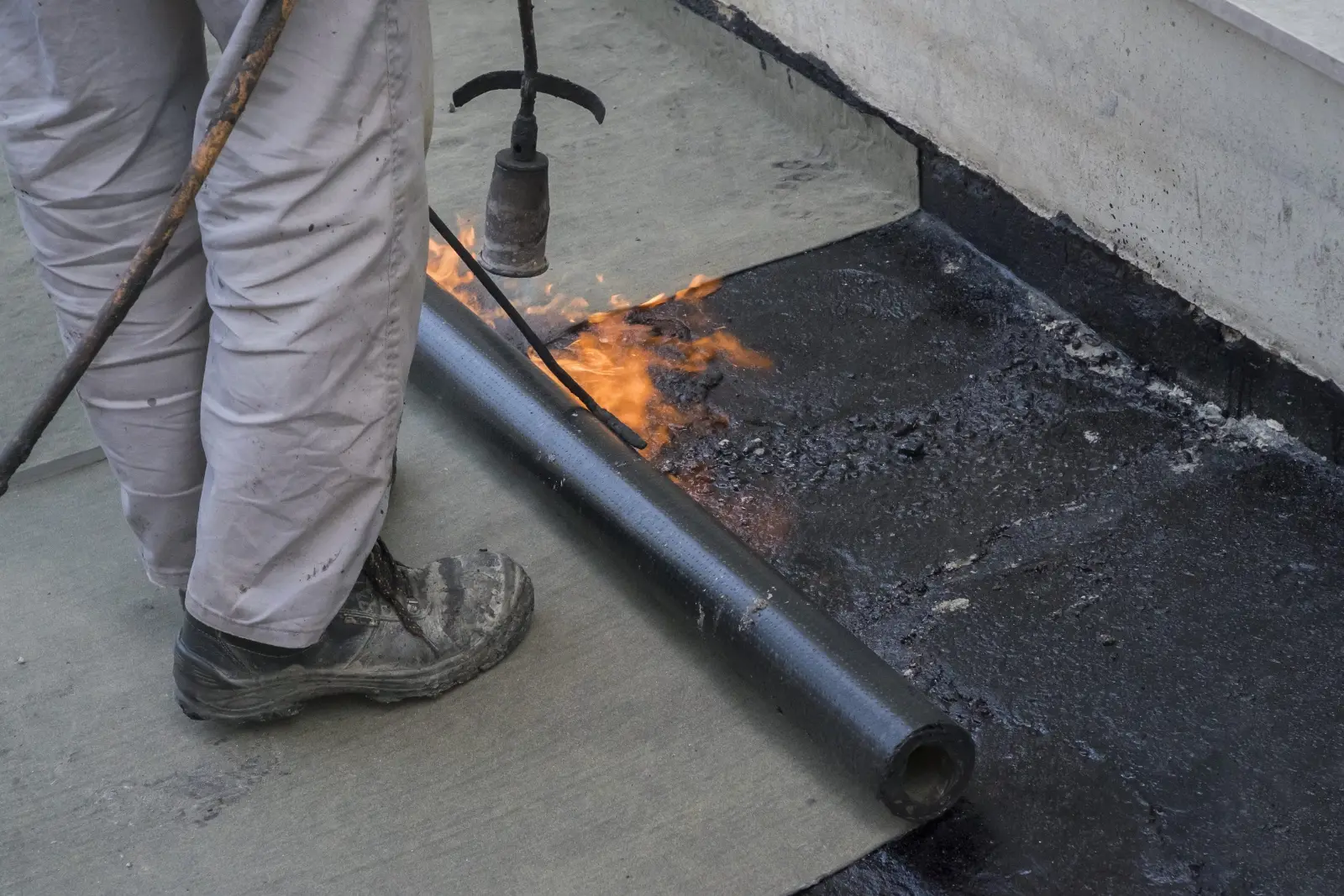
On these surfaces our waterproofing services in Dubai usually use liquid waterproofing rather than sheet: an acrylic coating on a sheltered area, a polyurethane (PU) coating or an elastomeric coating where sun and movement are severe. A liquid system turns corners, drains and pipe collars without a single joint, which is exactly where sheet material gets awkward.
Parapet wall waterproofing belongs to the same job and is taken up behind the coping rather than stopped at floor level. Expansion joint sealing is detailed with a flexible band bonded each side, so the joint can move the few millimetres it needs to without tearing the membrane along its edge.
Basement and foundation waterproofing
Basement waterproofing and foundation waterproofing deal with water pushing in rather than falling on. In coastal and reclaimed parts of Dubai the water table does that pushing all year round. Retaining wall waterproofing applied from the outside – the positive side – holds water off the structure; damp proofing applied on the inside face is a second line of defence, not a substitute for the first.
Where a wall is already built and already wet, our waterproofing services in Dubai use crack injection. PU injection suits an active leak, because the resin foams on contact with water and stops the flow before anything else can be done. Epoxy resin is used where the crack is dry and the repair is structural as much as it is watertight.
Cementitious waterproofing suits substrates that do not move – lift pits, retaining walls, tanks – and cracks if they do. Crystalline waterproofing earns its place where treatment has to work from the negative side, growing crystals into the pores of the concrete instead of sitting on the face of it. An epoxy coating goes on where chemicals or traffic are part of the picture.
Swimming pool and water tank waterproofing
Swimming pool waterproofing is a water-retaining job: the shell stays wet permanently and flexes slightly with temperature, so a flexible polymer-modified cementitious system goes on before the mosaic or the tile. Water tank waterproofing uses a potable-approved coating instead, so that nothing leaches into stored drinking water.
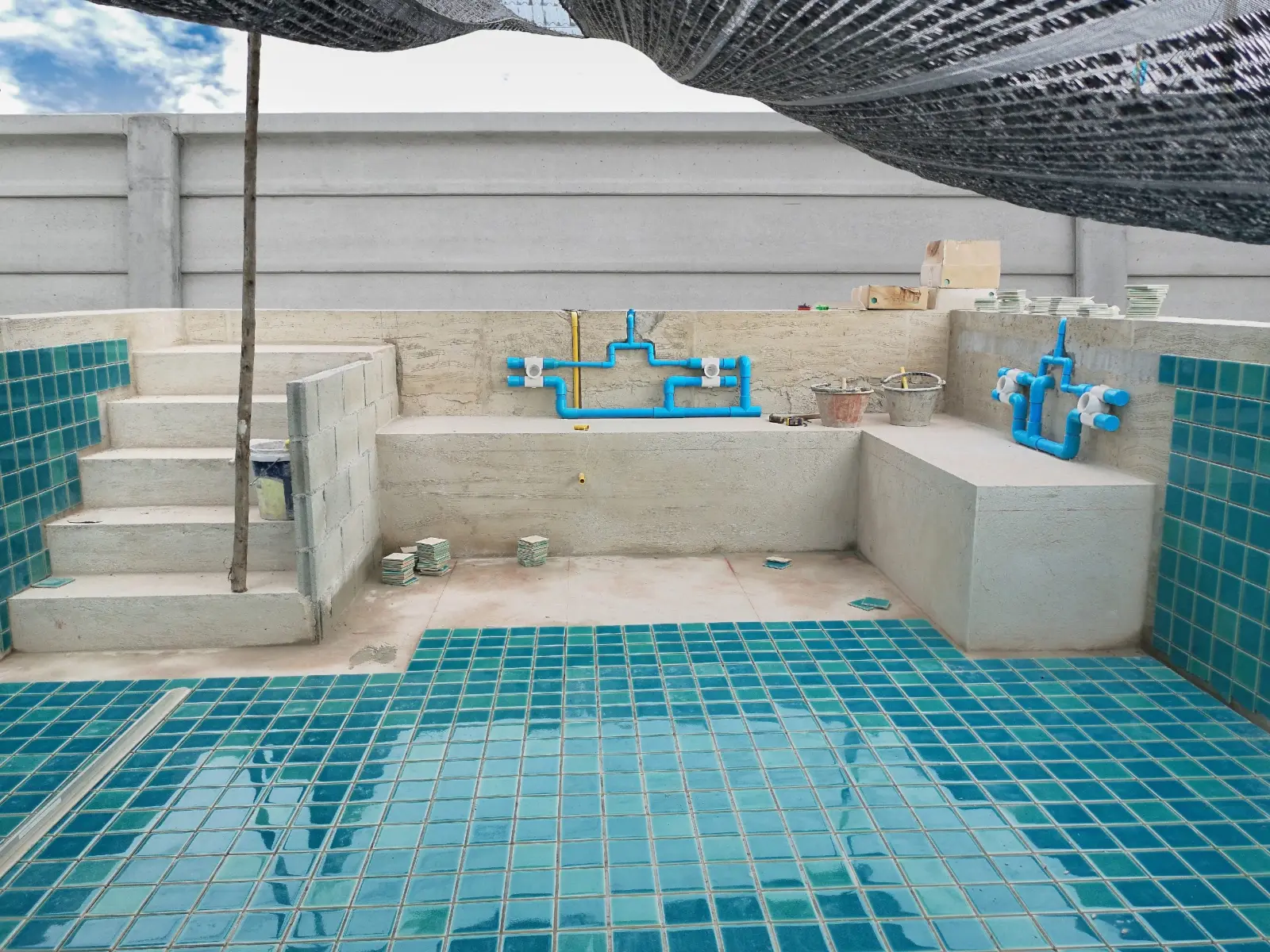
Planter box waterproofing is the one everybody forgets. A planter is a tank that is also full of soil, fertiliser and live roots, and it usually sits on a slab directly above a room. Our waterproofing services in Dubai tank planters internally and add a root barrier and a drainage layer before any soil goes back in.
Leak detection and water damage repair
Water seepage repair starts with finding the source, not with opening the wall. Dampness in walls and rising damp look identical from inside whether the water is coming from a planter, a chilled-water pipe or a failed balcony above, and wall dampness treatment applied to the wrong cause simply moves the stain a metre to the left.
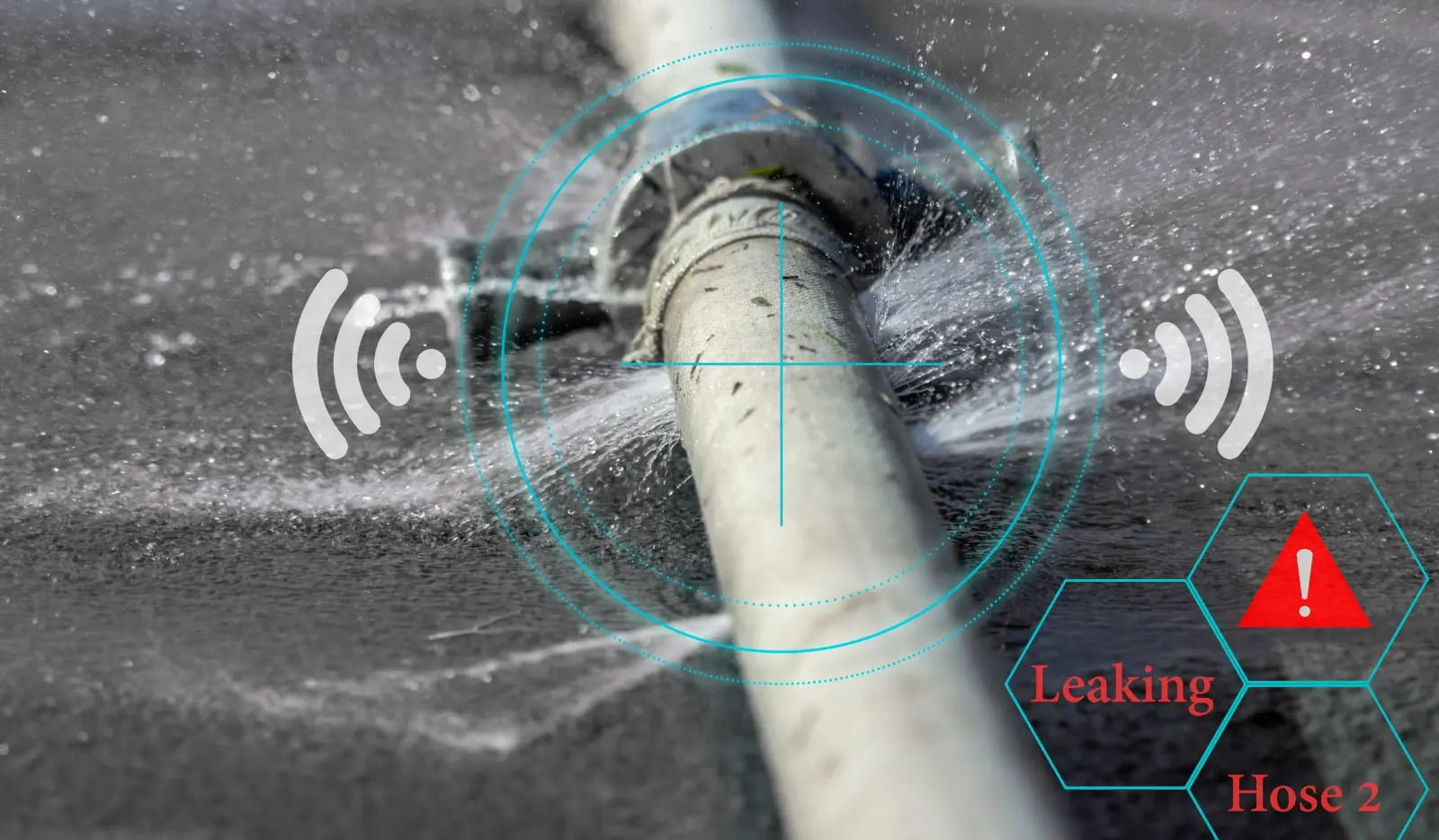
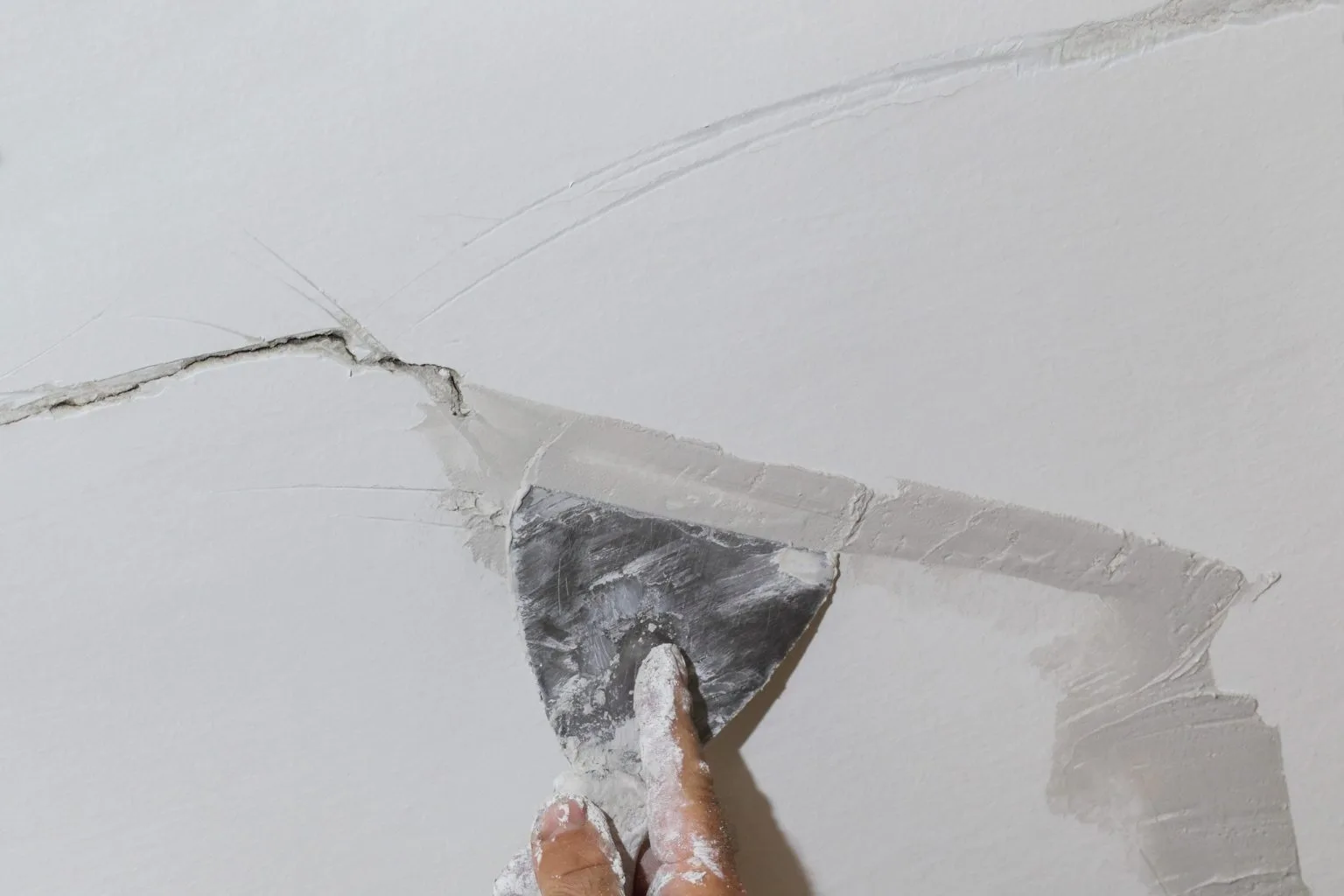
Ceiling leak repair is the most common call we get. A leak from the upstairs bathroom, AC leak damage from a blocked condensate drain and a roof leak all show up as the same brown ring. Our waterproofing services in Dubai start with water leak detection – isolating supply, drainage and condensate in turn, and tracing concealed runs with a moisture meter and a thermal imaging camera.
Once the source is proved we price the repair honestly. Sometimes it is sealant works and silicone sealing at a shower tray, sometimes window and facade leak sealing, sometimes stripping and re-tanking a whole wet area. Where damp has been sitting for months, mould treatment and anti-fungal treatment go on before anything is closed back up.
Waterproofing systems and materials
No single product does everything, so the waterproofing services in Dubai we quote name the system rather than just the trade. Bituminous sheet for exposed roofs. Liquid PU and elastomeric for balconies and complex detailing. Flexible cementitious for wet areas and pool shells. Crystalline for negative-side basements. Epoxy where chemicals or heavy traffic are involved.
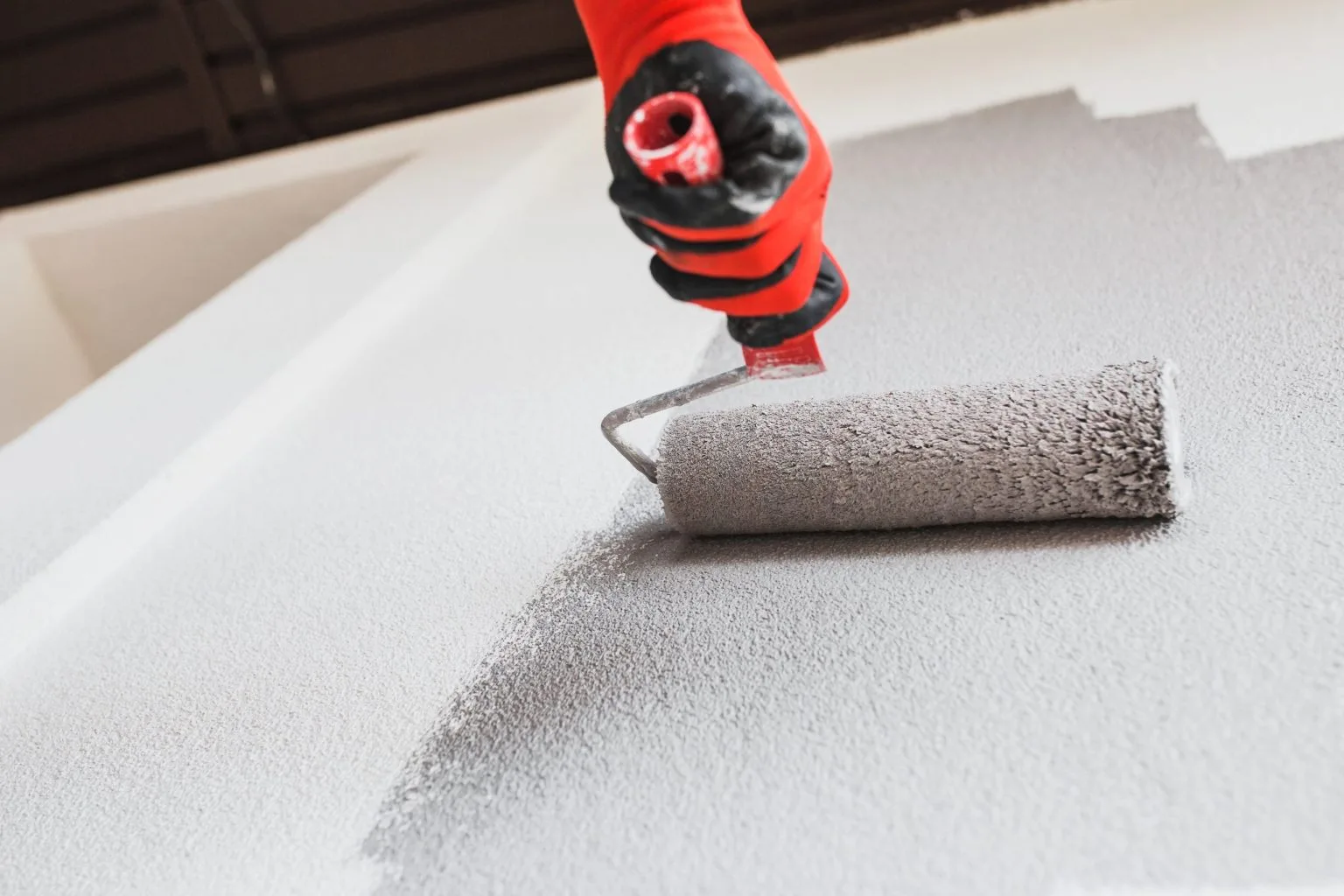
We specify Dubai Municipality-approved materials and keep the manufacturer data sheet with the job file, because that is what building management approval usually asks to see before a contractor is allowed to start work in an occupied tower.
The number that decides whether a membrane works is dry film thickness, and it is the number almost nobody checks. A system specified at 1.5 mm dry but applied at 0.6 mm because the coverage was stretched is not waterproof, whatever it says on the tin. We apply by coverage rate per square metre and we record it.
Villa, apartment and commercial waterproofing
Waterproofing for new construction is the easy case: the substrate is bare and the programme has room in it. Waterproofing for renovation is harder, because the finishes are in, the neighbours are in, and the work has to be staged so that a family bathroom is not standing open for a fortnight.
Villa work takes us to Arabian Ranches, the Springs, the Meadows, Dubai Hills, Damac Hills, Mirdif and Jumeirah. Apartment work is mostly JVT, JVC and Al Barsha. Commercial waterproofing services in Dubai – warehouse roofs, plant rooms and tank farms – run out to Al Quoz and Jebel Ali, usually out of hours so that trading is not interrupted.
Before and after waterproofing is easy to show on a roof and impossible to show in a bathroom, which is exactly why the flood test photographs matter. Leak repair before the rains is a far better piece of timing than leak repair during them, so October beats January every year.
How a waterproofing job runs
Site survey
We check the substrate, the falls to the drain and how sound it is.
Preparation
Loose material comes off, cracks are cut out and primer is applied.
Detail work
Corners, upstands, outlets and pipe collars get a reinforcing band.
Application
Two coats at right angles, applied at the specified coverage rates.
Test record
Plugged, filled for 24 to 48 hours, photographed, then handed over.
Waterproofing cost in Dubai
Waterproofing cost per sq ft Dubai is how most people ask, so: our rates work out at roughly AED 5 to 17 per square foot depending on the system and the surface. The roof waterproofing cost and bathroom waterproofing cost in the table below are per square metre of finished area and include preparation, detailing and the flood test.
| Item | Unit | Typical range |
|---|---|---|
| Bathroom, liquid membrane, floor and upstands | per sq m | AED 55 – 95 |
| Shower enclosure, full height walls | per sq m | AED 75 – 120 |
| Kitchen or laundry floor | per sq m | AED 50 – 90 |
| Balcony or terrace | per sq m | AED 70 – 140 |
| Roof, liquid applied system | per sq m | AED 80 – 160 |
| Roof, torch-applied bitumen sheet | per sq m | AED 90 – 180 |
| Planter, internal tanking | per sq m | AED 110 – 220 |
| Water tank, potable-approved coating | per sq m | AED 120 – 260 |
| Basement or retaining wall tanking | per sq m | AED 130 – 300 |
| Screed to correct falls | per sq m | AED 60 – 130 |
| Leak detection and tracing | per visit | AED 800 – 2,500 |
| Leak repair, localised | per project | AED 2,500 – 8,000 |
| Removal of failed membrane and tiling | per sq m | AED 70 – 150 |
The ranges assume reasonable access and a sound substrate. Screed to correct the falls, removal of a failed membrane and making good the tiling are priced separately and shown as their own lines, because burying them inside a headline rate is how a cheap quotation turns into an argument halfway through the job.
Standards and system references
The specifications behind our waterproofing services in Dubai are written against the regulator’s requirements and the manufacturer’s own data. These are the sources we work from.
Waterproofing services in Dubai: 12 best expert answers
How much does roof waterproofing cost per sq ft in Dubai?
A liquid-applied roof system runs AED 80 to 160 per square metre, which is about AED 7.50 to 15 per square foot. A torch-applied bitumen sheet is AED 90 to 180 per square metre, or roughly AED 8.50 to 17 per square foot. Screed to correct the falls, where a roof ponds, is a separate AED 60 to 130 per square metre.
How do I know if my roof needs waterproofing?
Look for water that stands for more than a day after washing or rain, blisters or splits in the existing membrane, felt that has gone grey and brittle, lifted laps at upstands and around outlets, and salt staining or a brown ring on the ceiling below. Any one of those is worth an inspection before the rains arrive.
How long does waterproofing last in Dubai?
A correctly applied roof system lasts eight to fifteen years here. UV and surface temperatures well above 70 degrees shorten everything. A bathroom tanked properly and buried under tiles should last as long as the tiling itself. Upstands, outlets and movement joints fail first, so those are worth checking every couple of years.
Do you provide a waterproofing warranty?
Yes. We guarantee our own workmanship and the system as installed, and the handover pack includes the flood test record and photographs of the detailing. Manufacturer system warranties, which typically run five to ten years, are available on roofs where the full specified build-up has been used rather than a partial one.
How much does it cost to waterproof a bathroom in Dubai?
AED 55 to 95 per square metre for the floor and upstands, and AED 75 to 120 per square metre for full-height shower walls. A typical bathroom lands between AED 900 and 2,200 including preparation, detailing and the flood test.
Do you really need to flood test before tiling?
Yes. It is the only way to know the membrane works while it is still cheap to fix. Skipping the test saves two days and risks a repair costing twenty times the saving, because the tiles, the screed and often the ceiling below all have to come out again.
What causes a ceiling leak from the bathroom upstairs?
Usually one of four things: a failed floor membrane, a leaking waste connection under the tray or the WC, a supply pipe joint buried in the screed, or a blocked AC condensate drain that has nothing to do with the bathroom at all. Leak detection tells you which one before anything is opened up.
Can you find a leak without breaking the floor?
Often, yes. Isolating supply, drainage and condensate in turn narrows it down quickly, and a moisture meter with a thermal imaging camera traces most concealed runs. Leak detection and tracing is AED 800 to 2,500 per visit and usually pays for itself in demolition you do not have to do.
What is the difference between liquid and torch-applied membrane?
A torch-applied bituminous sheet arrives at a factory-controlled thickness and suits large, open, exposed roofs. A liquid membrane cures seamlessly around drains, collars and corners and suits balconies, bathrooms and anything with heavy detailing. Most of our waterproofing services in Dubai use one across the field and the other on the details.
Can you waterproof over existing tiles?
Only as a holding measure. A coating over tiles bonds to the glaze and the grout rather than the slab, and it traps whatever water is already underneath. Where the tiling is sound and the leak is confined to one joint we will say so, but on a failed wet area the honest answer is to strip and re-tank.
How long does a bathroom waterproofing job take?
Two to four days for preparation and coats, then 24 to 48 hours of flood testing before tiling can start. Roofs and large terraces take longer and depend on recoat intervals, humidity and the weather on the day.
Which areas of Dubai do you cover?
All of it. Our waterproofing services in Dubai reach JVT, JVC, Arabian Ranches, the Springs, the Meadows, Mirdif, Al Barsha, Jumeirah, Dubai Hills, Damac Hills, Al Quoz and Jebel Ali, and the site visit is free wherever the property is.
Get the wet areas checked before the rains
Send photographs of the stain, the roof or the bathroom on WhatsApp and we will tell you what is most likely happening and what it costs to put right. The site inspection and the quotation for our waterproofing services in Dubai are free.