Home › Services › Staircase services
Staircase services in Dubai, built to millimetres, not to eye
New staircases in timber, steel, glass and stone; cladding and renovation of existing concrete stairs; balustrades and handrails fabricated in our own workshop. Set out so every riser is identical, because that is what makes a stair safe.
What staircase services covers and what it costs
Staircase services in Dubai covers designing and building new staircases, cladding existing concrete stairs in timber or stone, and replacing balustrades and handrails. Expect AED 12,000 to 35,000 to clad an existing concrete flight in timber or stone with a new balustrade, AED 35,000 to 120,000 for a new feature staircase in steel and timber, and AED 900 to 2,200 per linear metre for a glass balustrade. Abdulla Carpentry EST manufactures the joinery and the metalwork in-house, so the stair and its balustrade are detailed as one piece.
A staircase is the one element in a house that is judged by your body before your eyes. If the risers vary by even five or six millimetres between steps, people trip — not because the stair is dangerous in any obvious way, but because after two steps the body has learned the rhythm and the third one lies to it.
That is why setting out matters more on a stair than on anything else we build. Total rise divided by an equal number of risers, going set to match, nosings consistent, and headroom checked at the tightest point. Get that arithmetic wrong and no amount of beautiful timber saves the result.
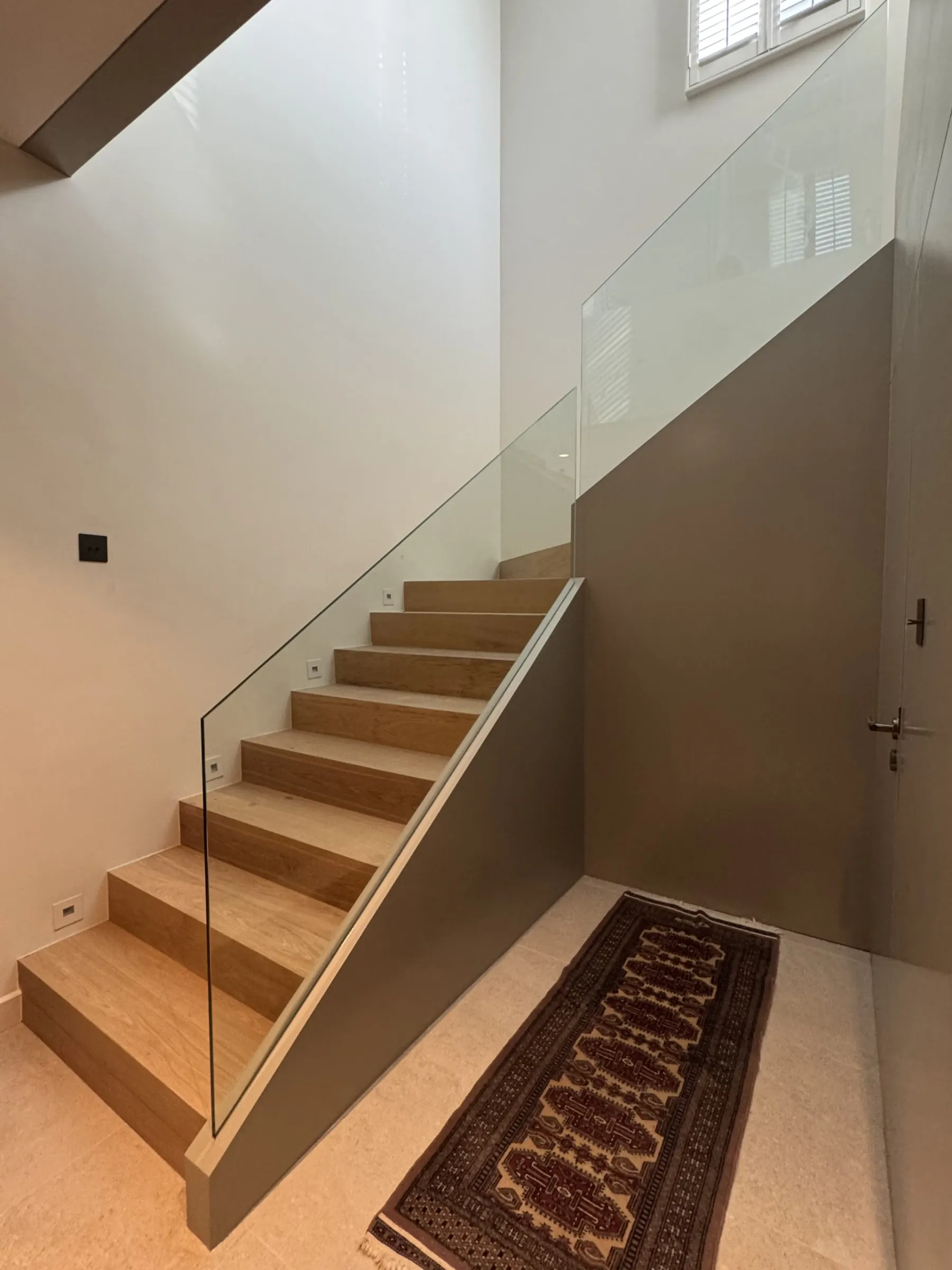
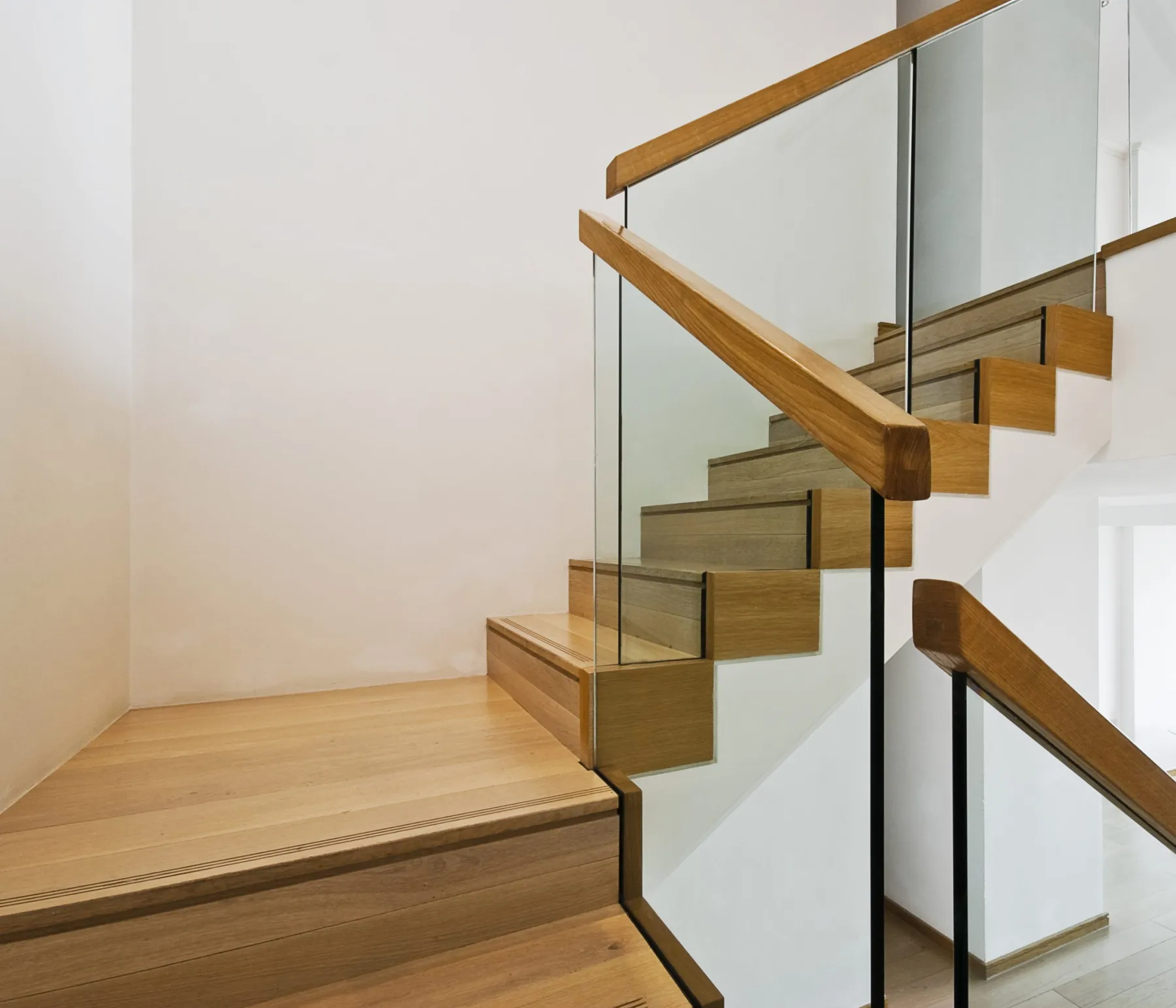
Most of what we do is not a new stair at all. It is an existing concrete flight — which every Dubai villa and townhouse has — clad in oak or stone, with a new balustrade replacing the original. That transforms the space for a fraction of the cost and without touching the structure.
 Equal risersSet out, not eyeballed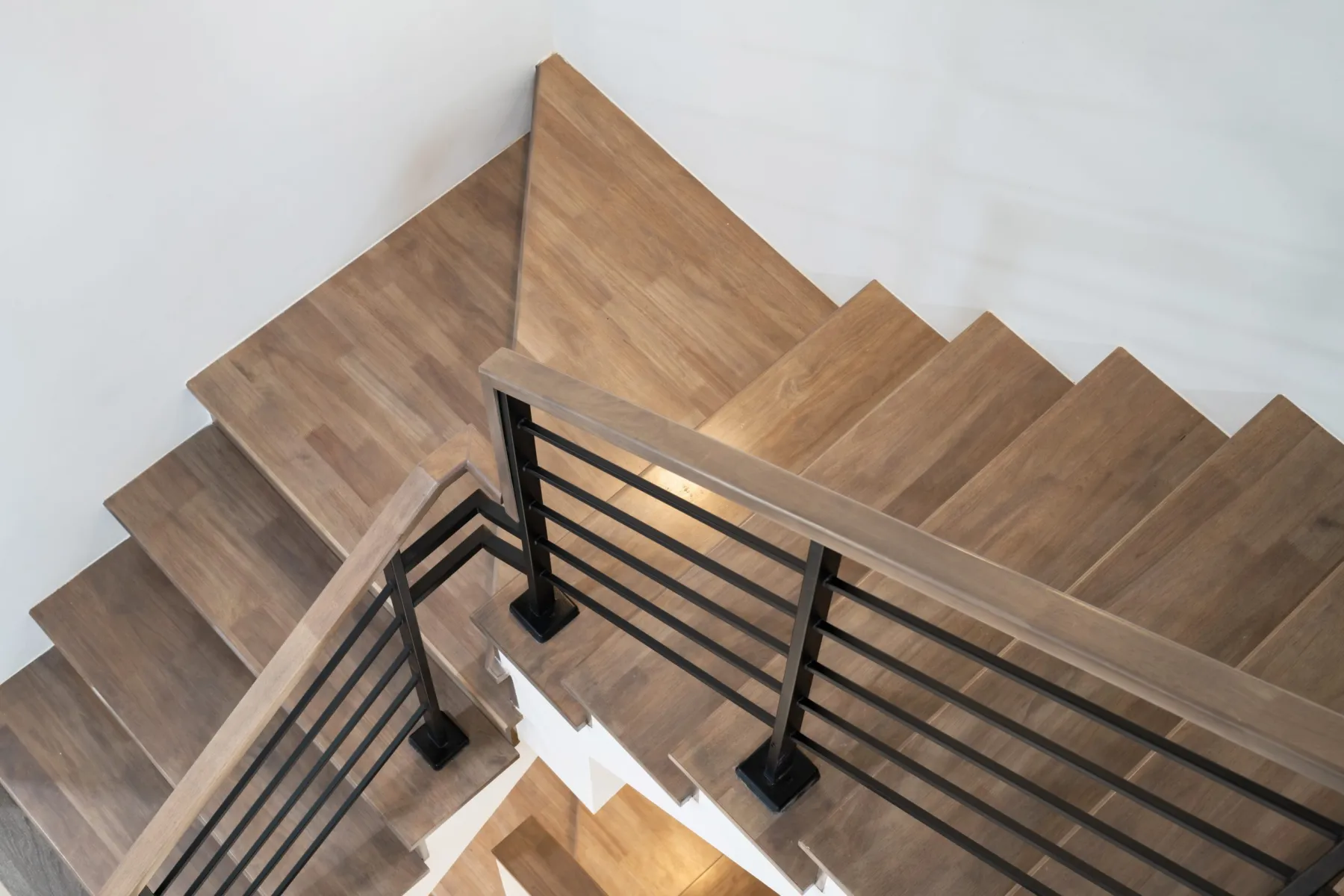
Stair types and where they suit
The structure and the finish are separate decisions. A stair can be concrete underneath and read as timber, glass and steel once it is finished.
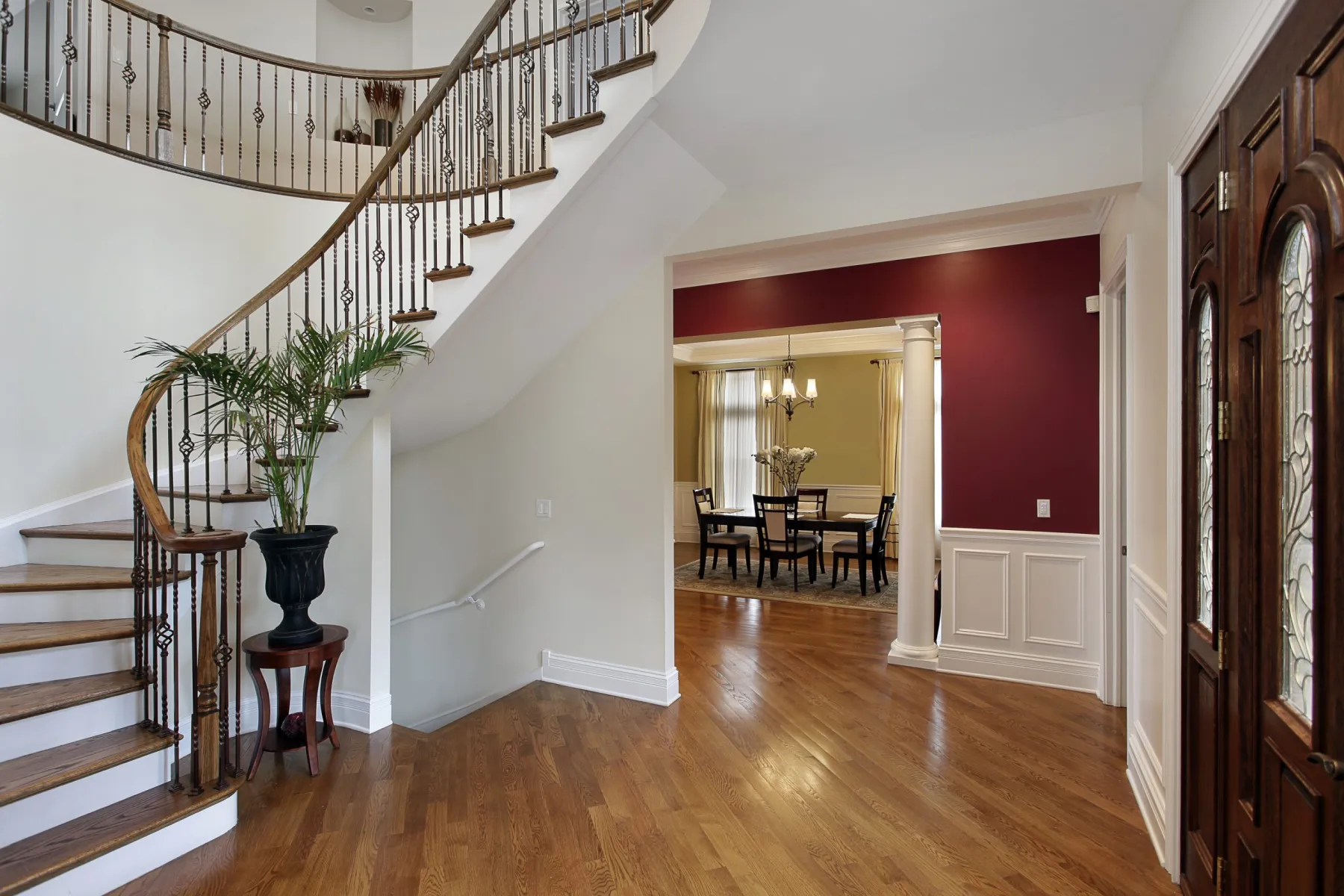
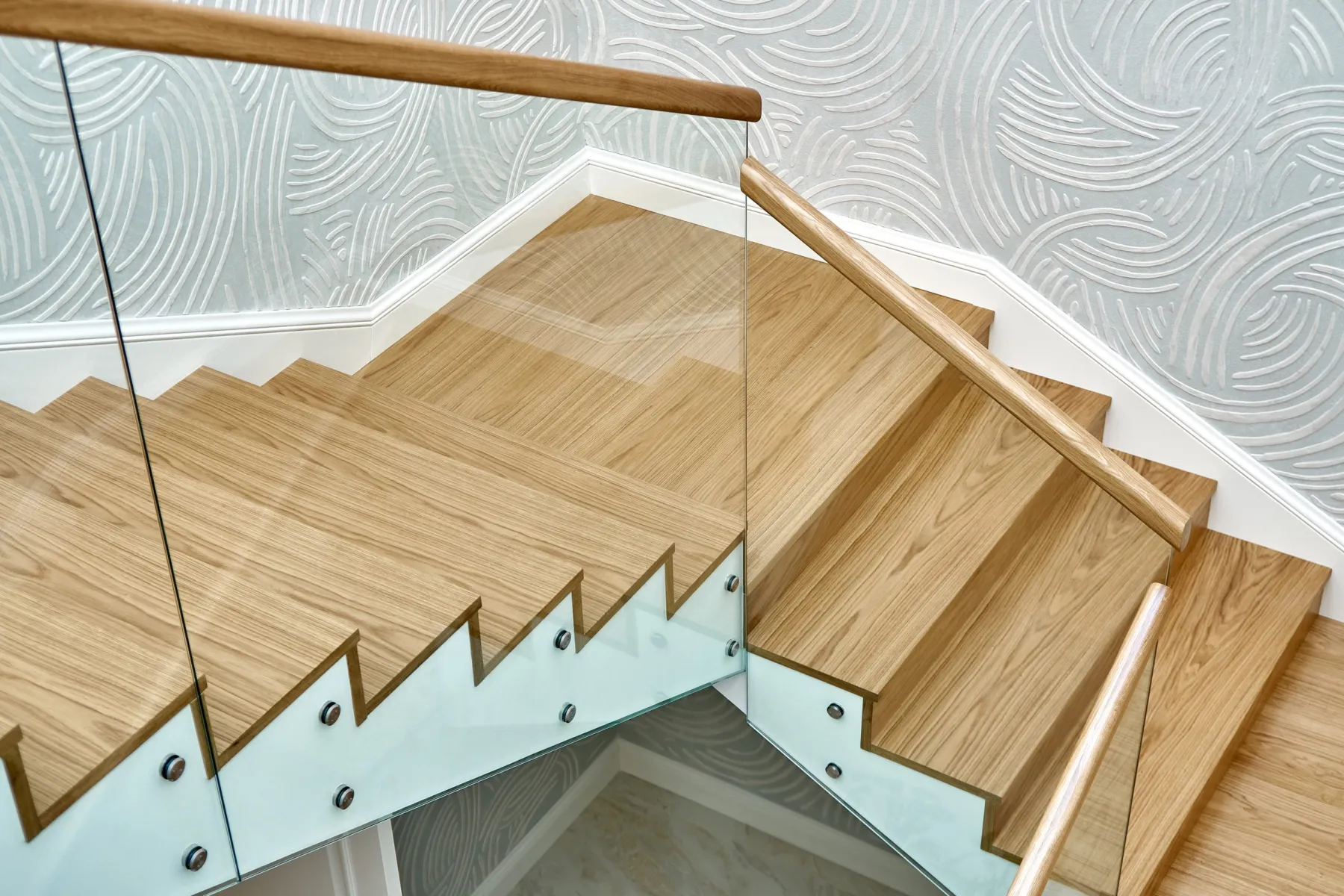
Concrete stair cladding and renovation. By far the most common job in Dubai. The existing flight is measured, levelled with a screed where needed, then clad in solid timber treads, engineered oak or stone, with new risers and nosings, and a new balustrade. The stair becomes a feature without any structural work.
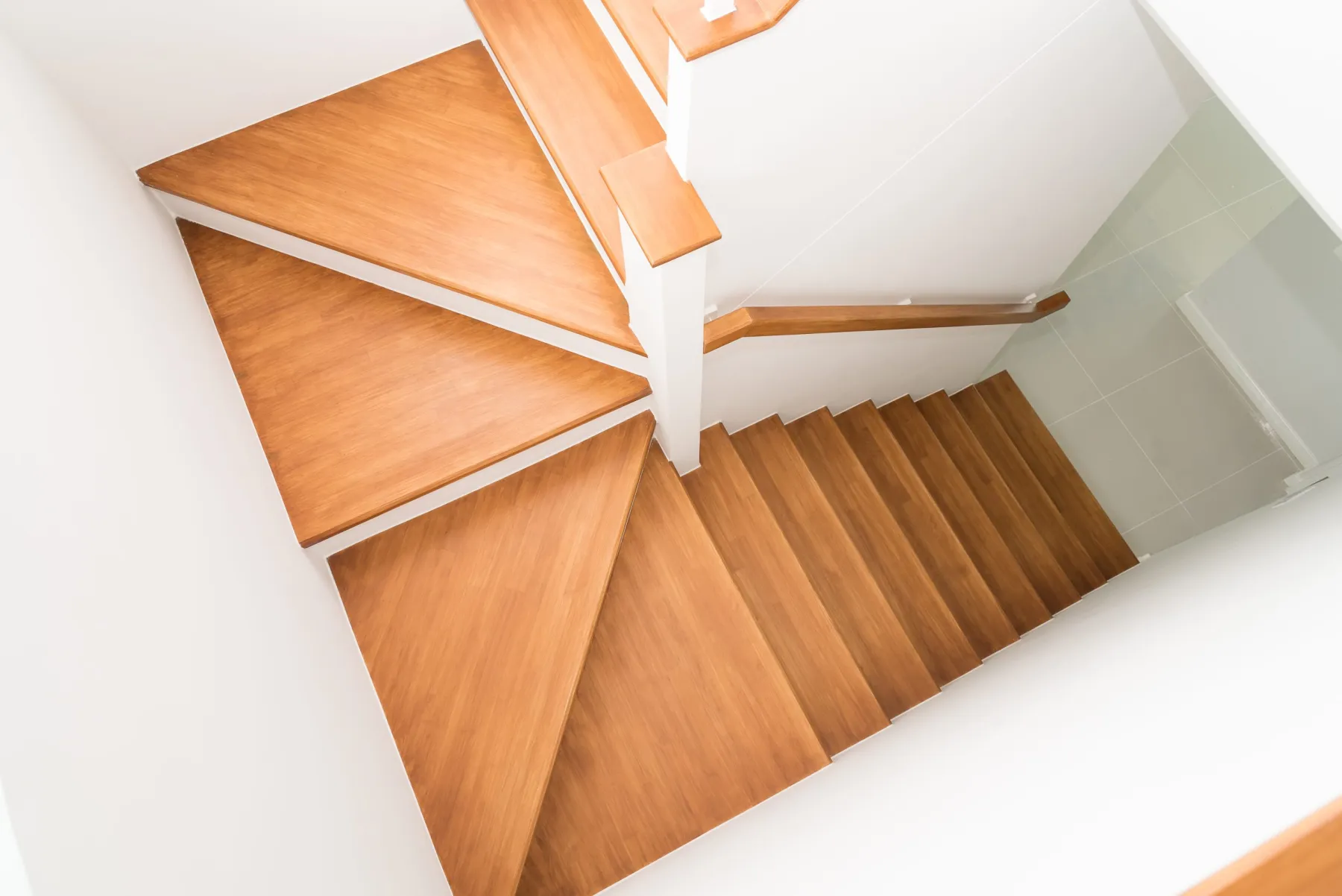
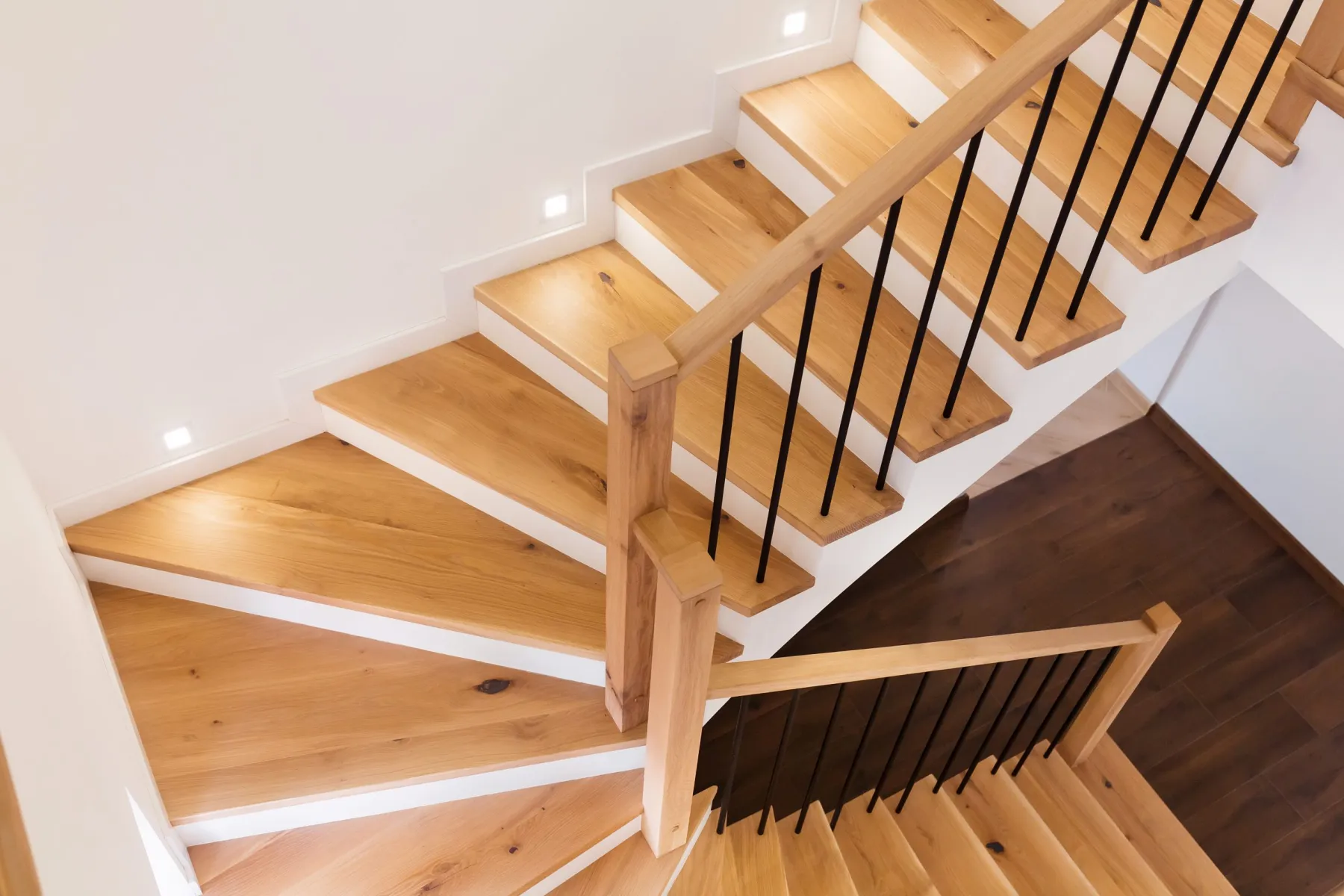
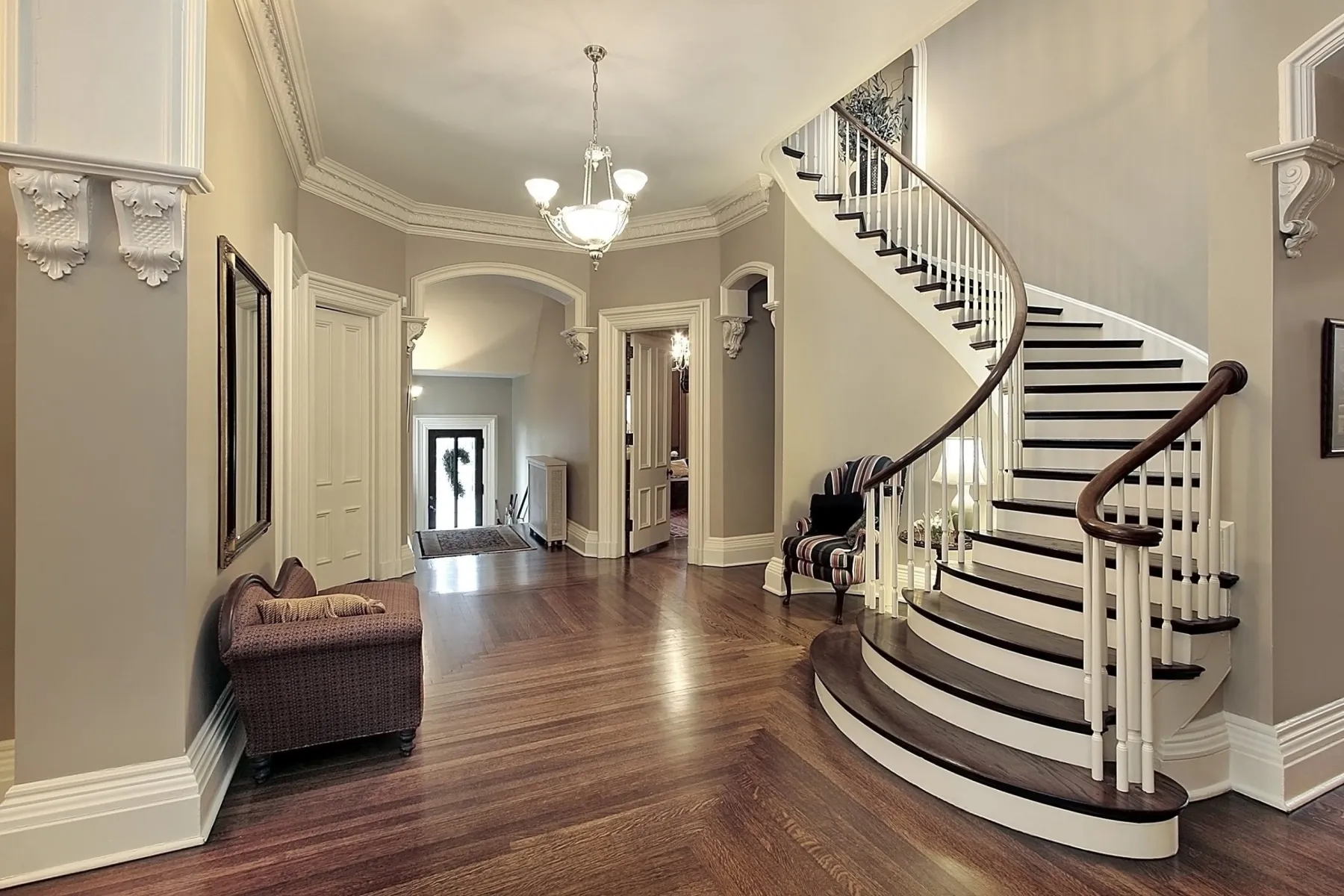
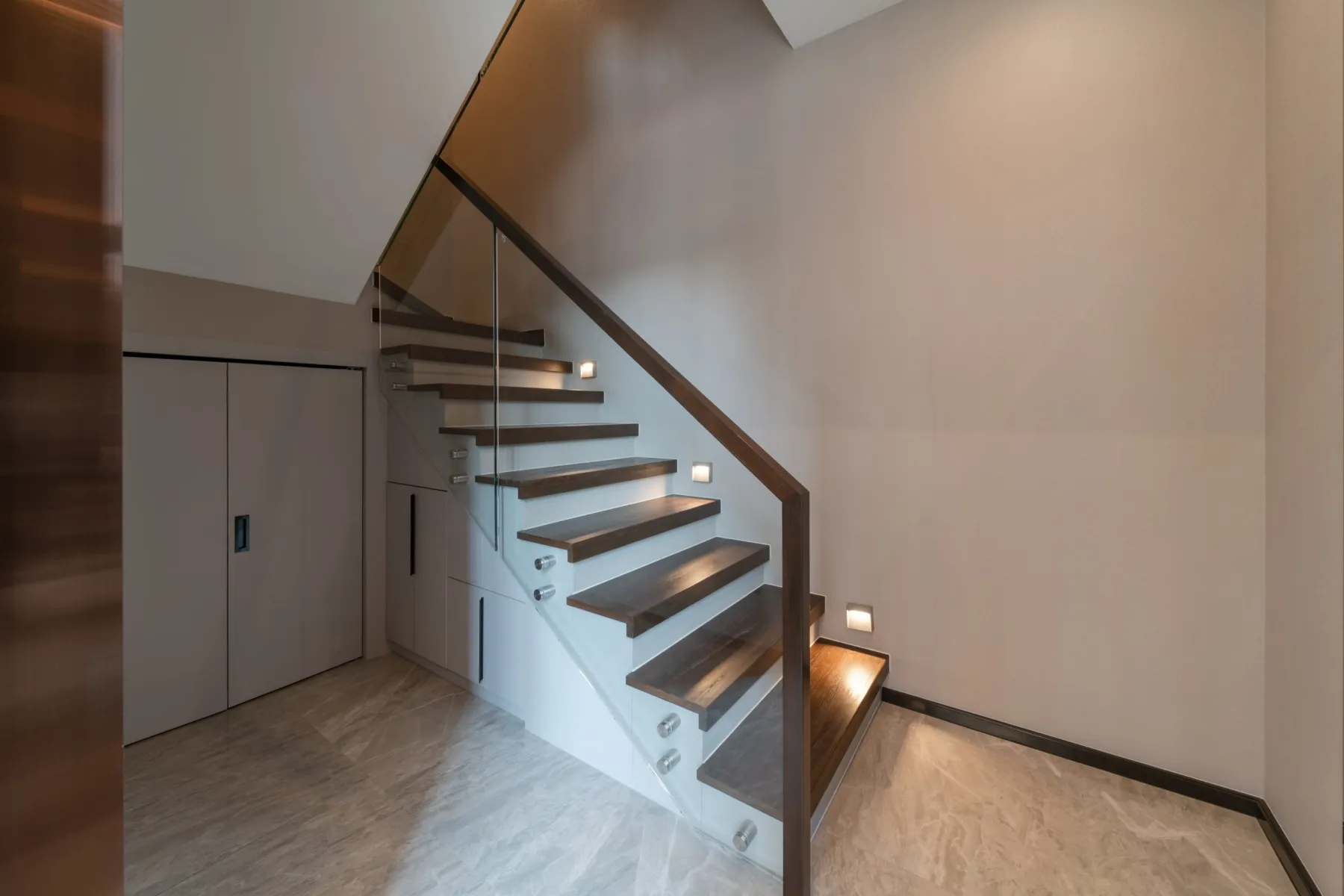
Timber staircases. Solid oak, walnut or ash, with closed or open risers, cut strings or housed strings. Warm underfoot, quiet, and repairable — a timber tread that gets damaged is replaced or sanded rather than lived with.
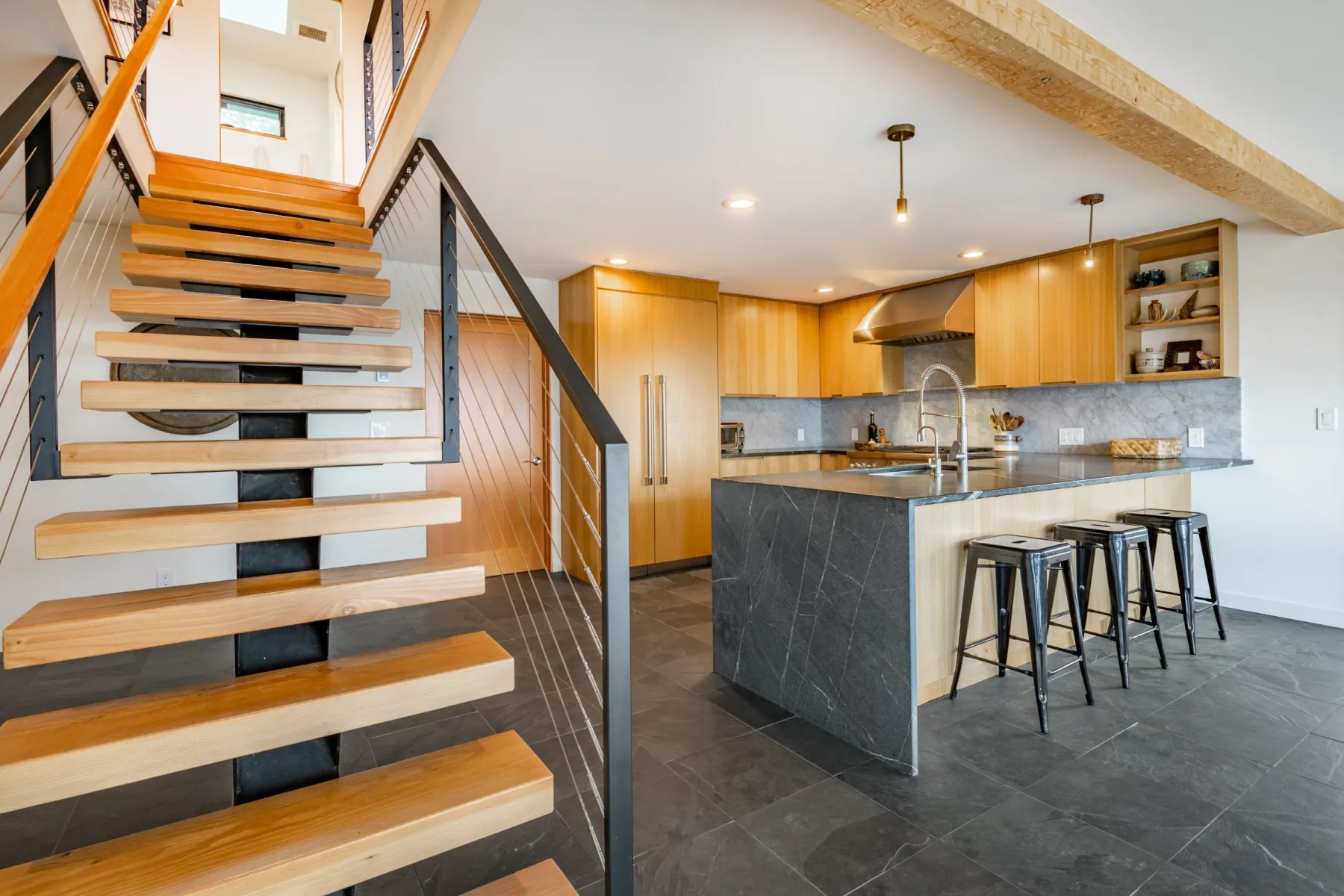
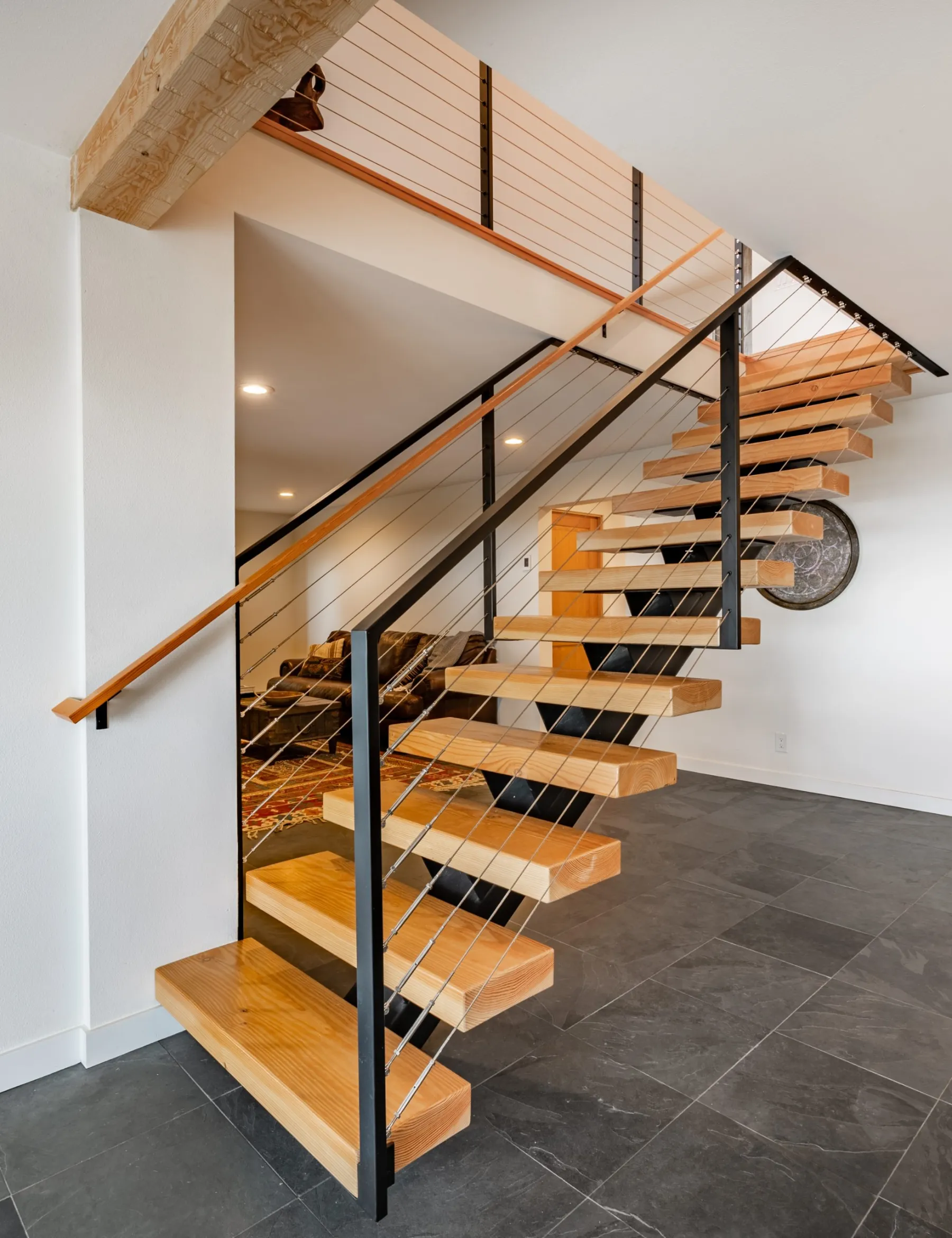
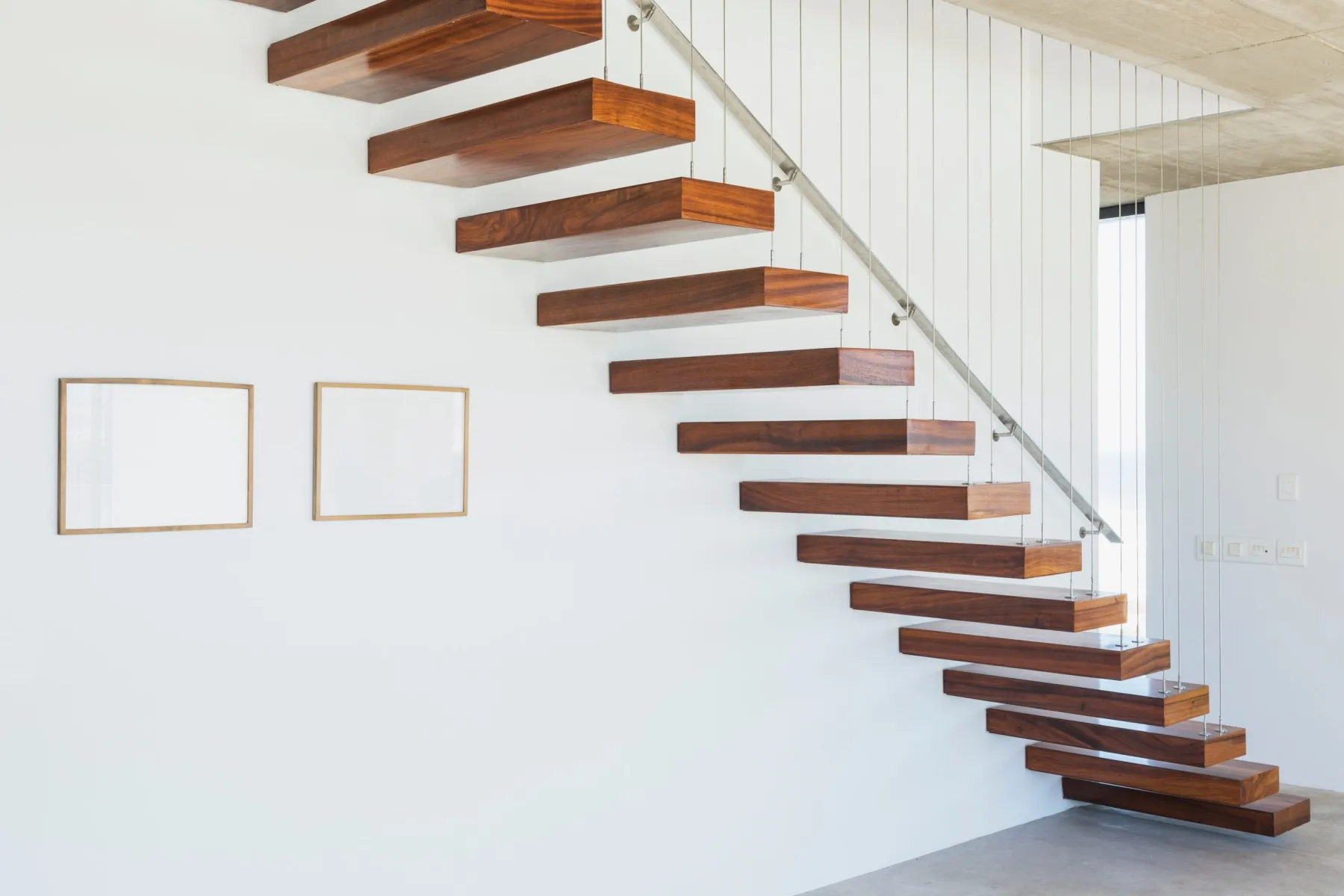
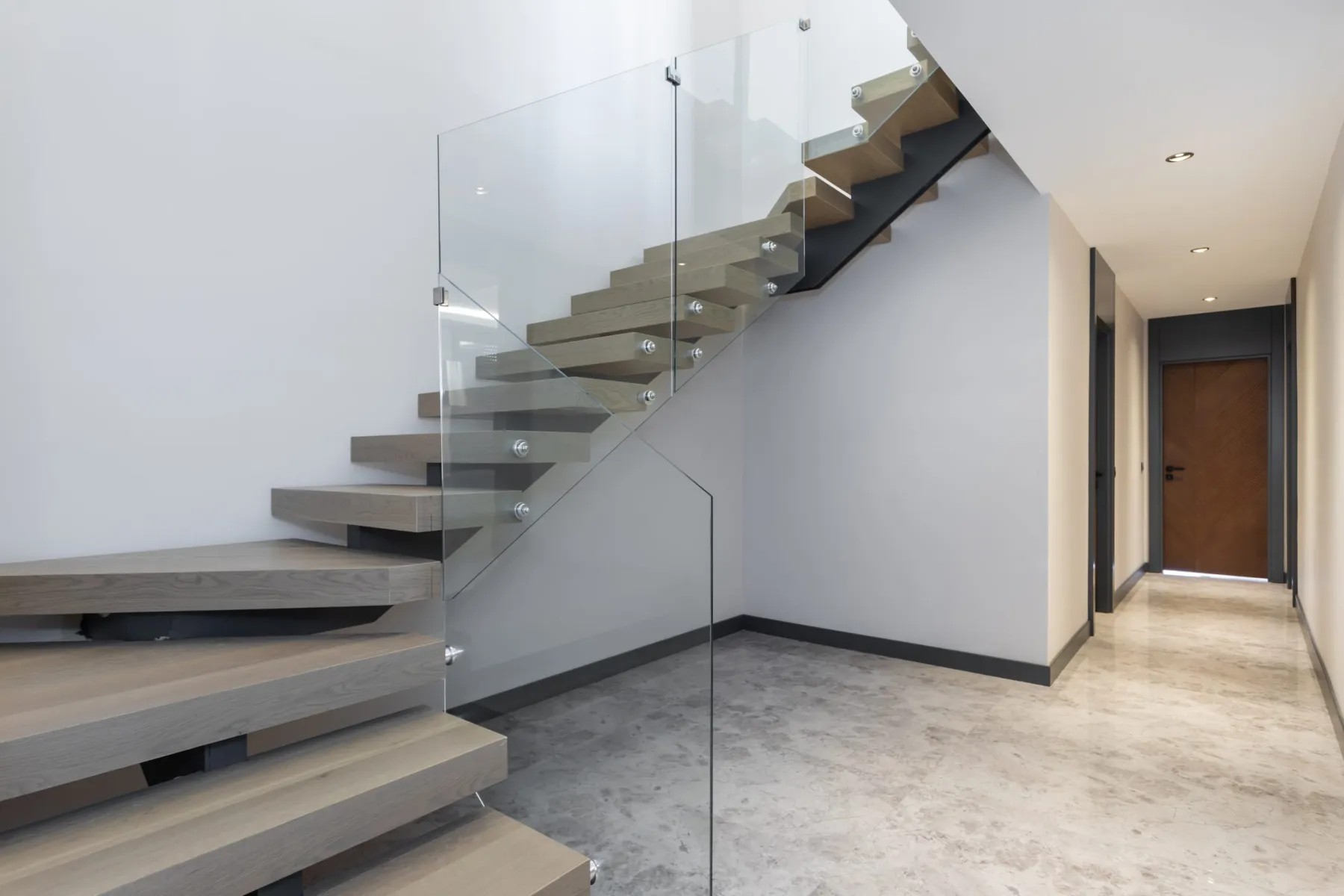
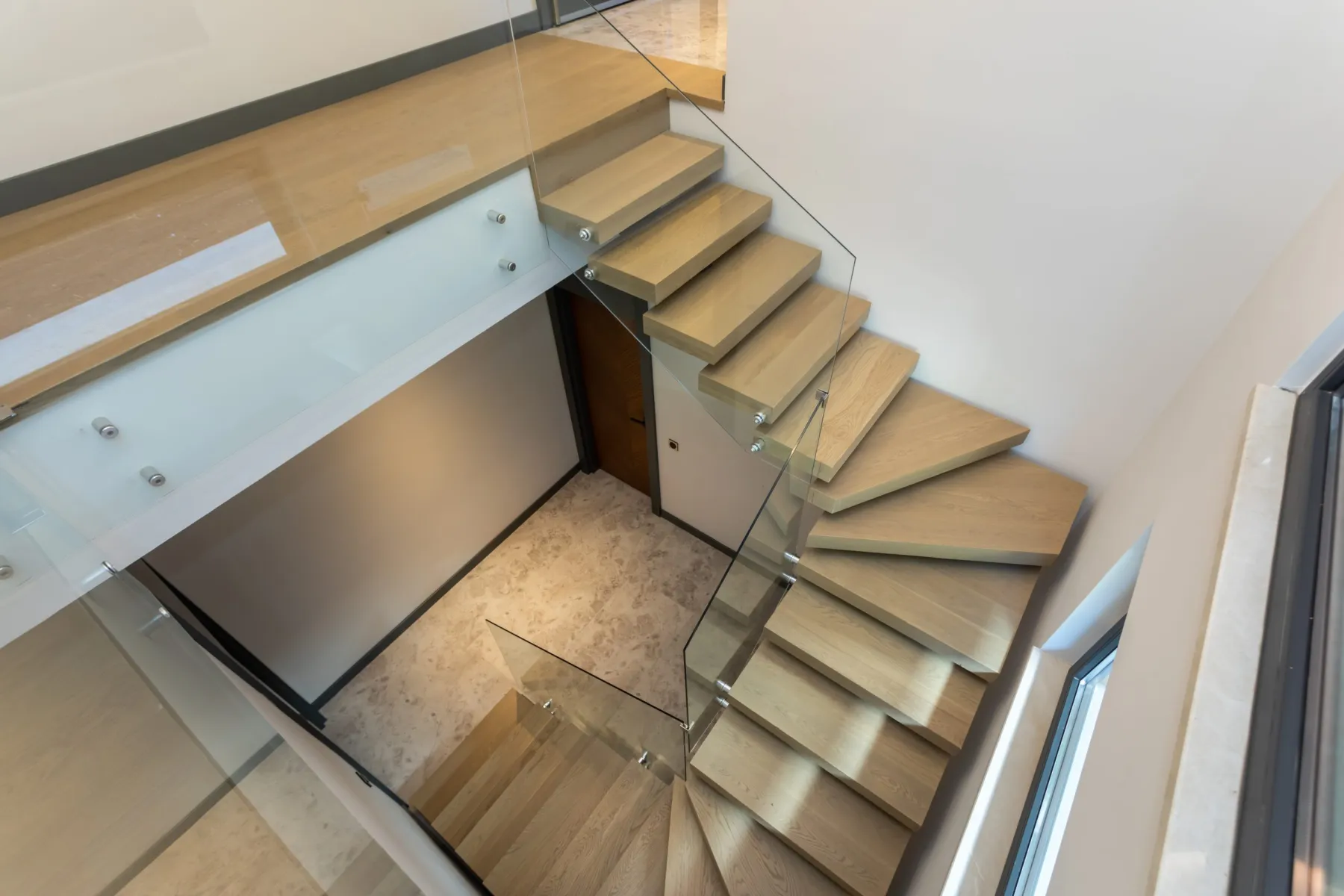
Steel and timber floating stairs. A steel stringer or spine carrying timber treads, often cantilevered from a wall so the treads appear to float. Structurally demanding, visually the most dramatic option, and entirely dependent on the wall behind having something real to fix into.
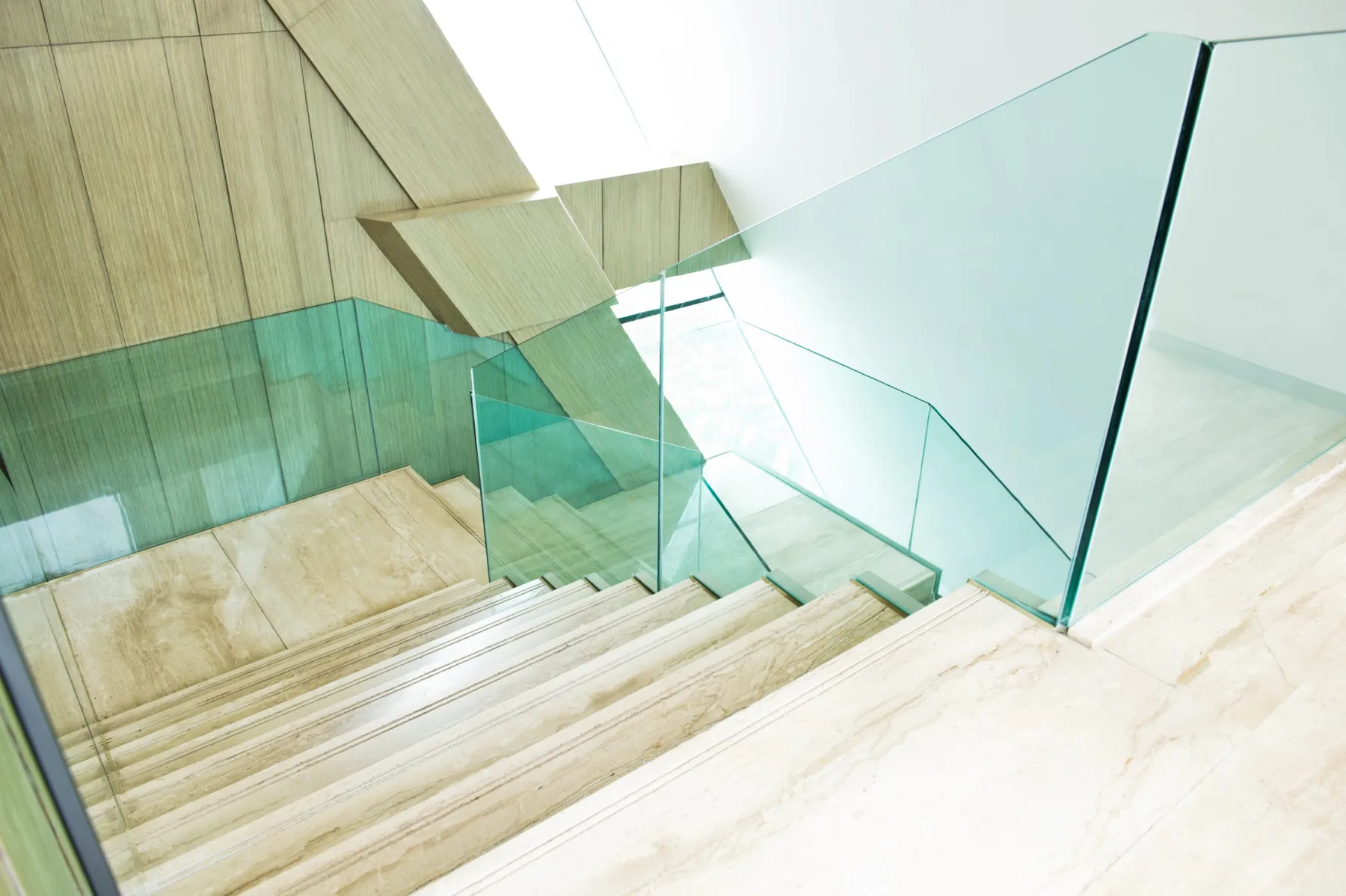
Stone staircases. Marble, granite or porcelain treads and risers on a concrete substrate, usually with a matching skirting that follows the rake. Hard-wearing, cool underfoot and the traditional Dubai villa finish. See stone works.
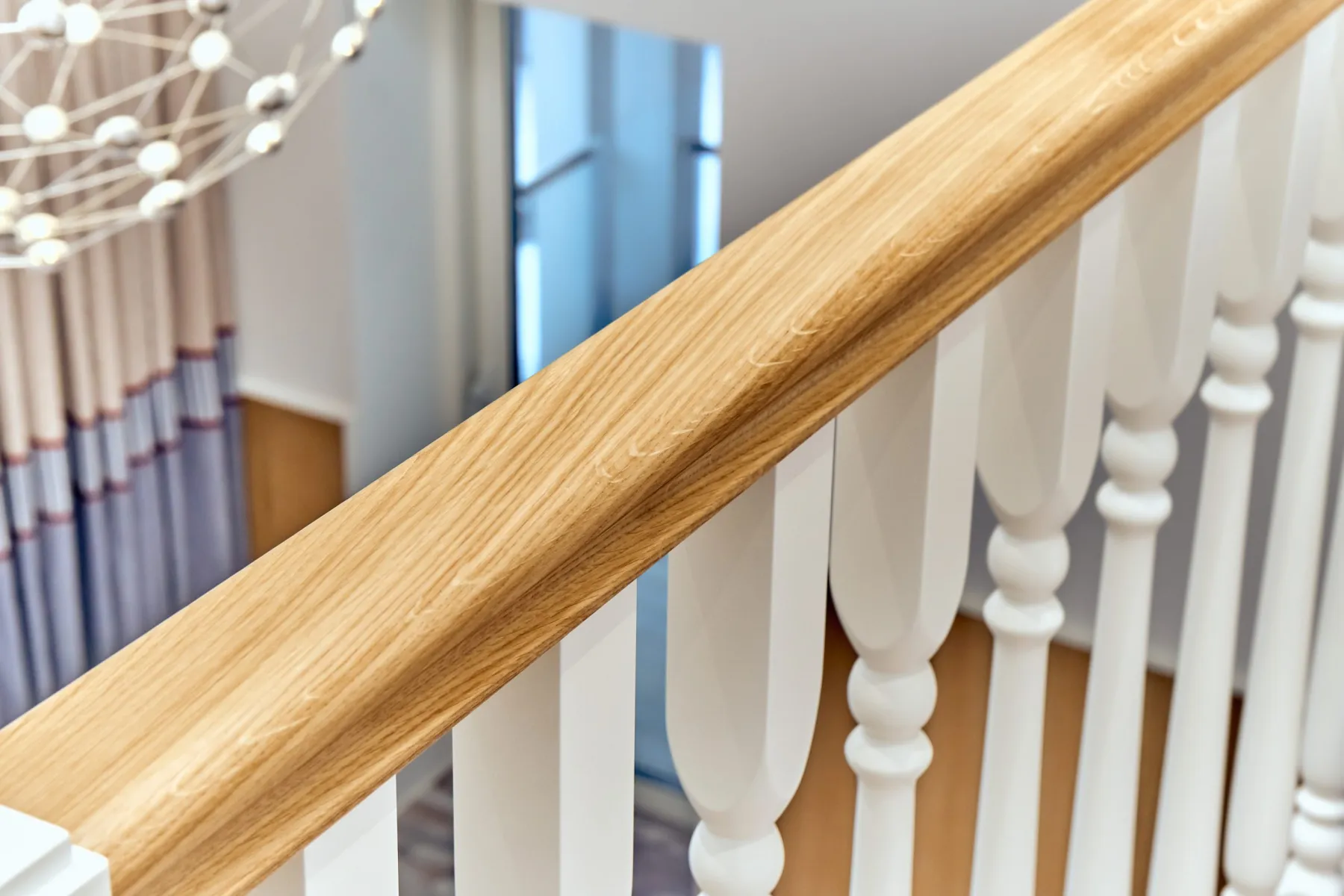
Balustrades and handrails. Glass on standoffs or in a base channel; metal with flat bar, rod or laser-cut infill; timber newels and spindles. Fabricated in-house so the handrail joints and returns are made for your stair rather than adapted from stock parts.
Under-stair joinery. The triangular space under a flight turned into drawers, cupboards, a wine store, a cloakroom or a study nook. One of the best value joinery jobs in a villa. See joinery.
Risers, going, headroom and the gaps that matter
Every riser in a flight must be the same height, and every going the same depth. That is not a preference, it is the whole basis of a stair being safe to use. On a renovation we measure the existing flight carefully first, because concrete stairs in Dubai villas are frequently built with the bottom or top riser out by 10 to 20 millimetres, and cladding without correcting it makes the problem permanent.
Headroom is checked at the tightest point, usually where a flight passes under a landing or a bulkhead. Two metres is the working minimum, and a gypsum bulkhead designed without checking this is a very expensive mistake to discover after boarding.
Balustrade details carry their own rules. Guarding height, the loading a handrail must resist, and — most importantly in a family home — the maximum gap in the infill, so a small child cannot pass through or climb it. Open-riser stairs need the riser gap limited for the same reason. We raise these at design stage because they change the appearance of the stair, and a client should choose knowing that.
 Equal riseChecked before cladding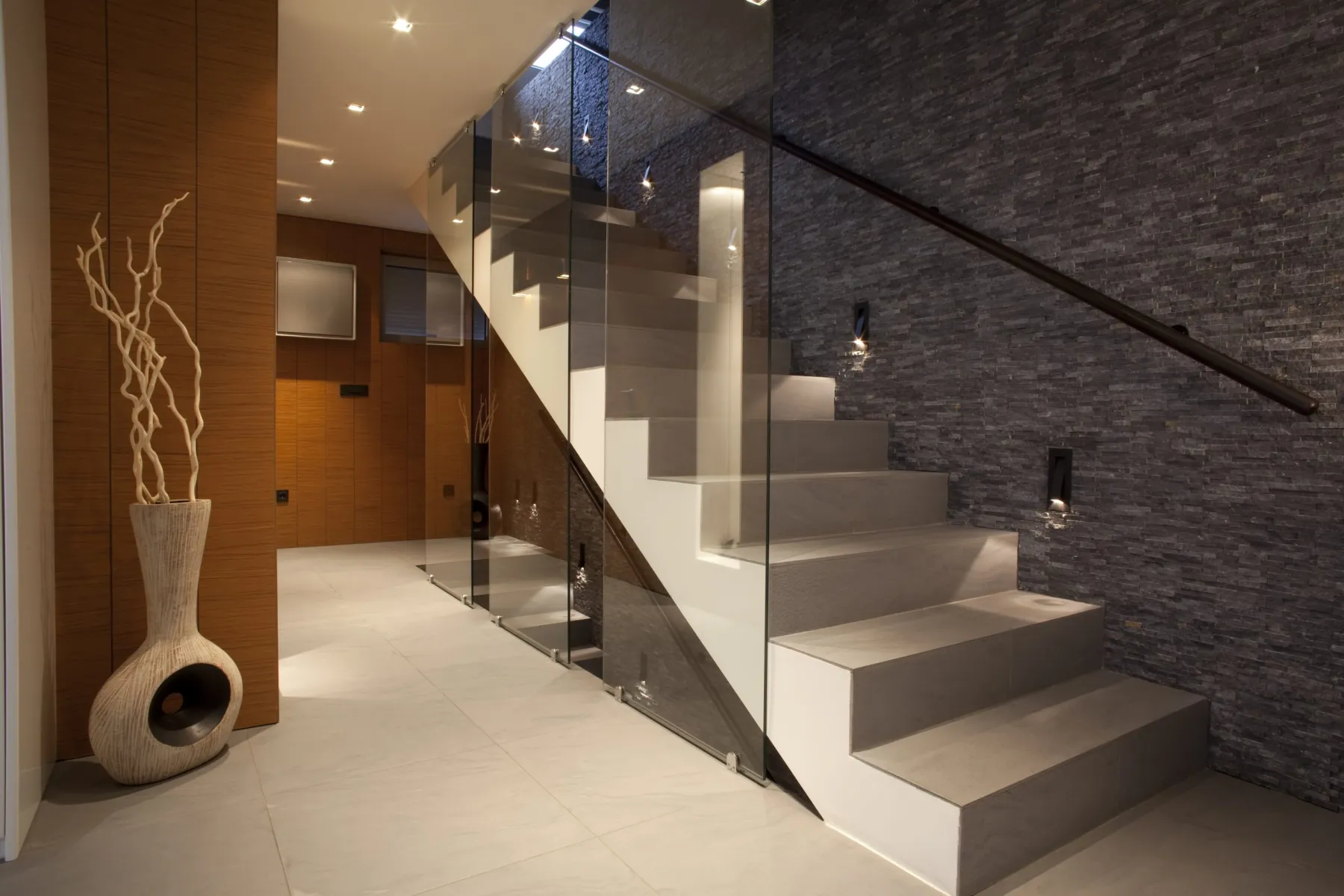
How a staircase job runs
Survey and measurement
Every riser and going measured individually, total rise recorded, headroom checked, and the structure behind the walls established. On a renovation this survey determines whether the flight needs levelling before cladding.
Design and drawings
Sections and elevations showing tread construction, nosing profile, balustrade fixing and handrail returns. Material and finish samples approved here, because oak stained on a sample board is the only reliable way to choose a colour.
Preparation
Old finishes and balustrades removed, the flight levelled and made good, and structural fixings installed where a floating stair or a standoff balustrade needs something solid to hold. Dust screens up before any of it starts.
Manufacture
Treads, risers, stringers and handrails machined to the surveyed dimensions in our workshop, and metalwork fabricated, welded, ground and finished. Everything arrives finished; almost nothing is cut on site.
Installation and finishing
Treads and risers fitted from the bottom up, balustrade posts set and glass or infill installed, handrail fitted with its returns, then final sanding, oiling or lacquering and a check that every step feels identical underfoot.
Staircase rates in Dubai
Supply, manufacture and install in Dubai. A stair price depends far more on the balustrade and the finish than on the structure underneath, which is why cladding an existing flight is such good value.
| Item | Unit | Typical range |
|---|---|---|
| Concrete stair clad in engineered oak | per step | AED 750 – 1,500 |
| Concrete stair clad in solid timber | per step | AED 1,100 – 2,400 |
| Concrete stair clad in stone | per step | AED 550 – 1,800 |
| New timber staircase, straight flight | each | AED 22,000 – 55,000 |
| Steel and timber floating staircase | each | AED 35,000 – 120,000 |
| Spiral or helical staircase | each | AED 45,000 – 180,000 |
| Glass balustrade, standoff fixed | per linear m | AED 900 – 1,700 |
| Glass balustrade, base channel | per linear m | AED 1,200 – 2,200 |
| Metal balustrade with rod or bar infill | per linear m | AED 750 – 1,900 |
| Timber handrail, shaped with returns | per linear m | AED 320 – 750 |
| Under-stair joinery, fitted | per project | AED 6,500 – 28,000 |
| Stair renovation, sand and refinish only | per step | AED 220 – 450 |
Cladding an existing concrete flight typically costs a quarter to a third of a new staircase and takes a week rather than a month. Where the existing risers are unequal, allow for levelling work before cladding.
Stairs in offices, hotels and retail
Commercial staircases in Dubai are regulated far more tightly than domestic ones. Escape stairs have required widths, handrails to both sides, non-slip nosings with a visual contrast, and finishes that meet fire spread requirements. A feature stair in a lobby still has to satisfy all of it while looking like nothing of the sort.
Slip resistance is the detail most often specified badly. A polished stone tread in a hotel lobby with a wet entrance is a claim waiting to happen. We specify honed or textured finishes and inset non-slip nosings where footfall and moisture combine.
Wear is the other consideration. A retail or office stair takes thousands of uses a week, and the nosing takes all of it. Solid timber or stone nosings, mechanically fixed, are replaceable; a thin veneer over a substrate is not, and will show wear within a year.
Staircase services: common questions
How much does it cost to renovate a staircase in Dubai?
Cladding an existing concrete flight in engineered oak runs AED 750 to 1,500 per step, so a typical 16-step flight is AED 12,000 to 24,000. Add AED 900 to 2,200 per linear metre for a new glass balustrade.
Can I clad my existing concrete stairs instead of rebuilding?
Yes, and in most Dubai villas that is the right answer. The concrete structure stays, the flight is levelled where needed, and new treads, risers, nosings and a balustrade transform it in about a week at a fraction of the cost of rebuilding.
How long does a staircase take?
A cladding and balustrade renovation is one to two weeks on site after a two to three week manufacturing period. A new steel and timber staircase runs six to ten weeks from approved drawings, most of it in fabrication.
Are floating staircases safe?
Yes, when they are engineered. The treads cantilever from a steel spine or from structure built into the wall, and that structure has to be designed for the load and fixed into something solid. The risk is not the concept, it is fixing a floating tread into a gypsum partition with nothing behind it.
What is the best timber for stairs in Dubai?
Oak for most jobs — hard enough for the traffic, stable in air conditioning, and it takes any stain. Walnut for a darker feature stair. Engineered timber is more dimensionally stable than solid for treads, which matters when a building runs AC nine months a year.
Can you make a staircase safe for young children?
Yes. The infill gap is limited so a child cannot pass through or climb it, open risers are closed or the gap reduced, and a second lower handrail can be added at child height. These decisions change the look, so we raise them at design stage.
Do you replace just the balustrade?
Often, yes. Swapping a dated metal or timber balustrade for frameless glass is one of the highest-impact changes available in a Dubai villa, and it can be done without touching the treads. We check the fixing substrate first.
Can stairs be worked on while we live in the house?
Yes, with planning. We work one flight at a time, keep a safe route available at all times, screen the area against dust, and schedule the noisy preparation work to agreed hours. A stair that is the only access does need a day or two of careful coordination.
Send photographs of your stair
A few photos and the total rise are enough for us to tell you whether cladding will work and roughly what it will cost. We will say honestly if rebuilding is the better option.