Home › Commercial › Hospitality sector
Hospitality fit-out in Dubai, repeatable to the last room
Hotel guest rooms and suites, lobbies and corridors, food and beverage outlets and back of house — built as a repeatable prototype and rolled out floor by floor while the property keeps trading.
What a hospitality fit-out involves and what it costs
A hospitality fit-out in Dubai covers guest rooms and bathrooms, corridors, lobbies and public areas, food and beverage outlets, back of house and staff areas, with the joinery, finishes, MEP, fire systems and acoustic performance a hotel requires. Expect AED 60,000 to 180,000 per guest room key for a mid-scale refurbishment and AED 180,000 to 500,000 for luxury, with public areas priced separately at AED 3,000 to 12,000 per square metre. Abdulla Carpentry EST builds a prototype room, gets it signed off, and rolls out against it.
Hotel work is a manufacturing problem more than a construction one. Two hundred rooms means two hundred identical headboards, two hundred identical wardrobes and vanity units, and the two hundredth has to match the first exactly. Consistency across that volume comes from a prototype and a system, not from craftsmanship applied repeatedly.
So we build one room completely — joinery, finishes, lighting, bathroom, the lot — and put it in front of the owner, the operator and the designer. Everything gets argued out there: the drawer that catches, the socket in the wrong place for a laptop, the light that glares off the desk, the colour that reads differently under the corridor lamps. Then it is signed off and becomes the standard, and the workshop produces against it.
The other constraint is that the hotel is usually trading. Floors are closed in sequence, work happens within noise windows, guest lifts stay guest lifts, and the corridor a guest walks down at nine in the morning has to look finished even though the rooms behind it are not. Managing that is most of the skill in hotel refurbishment.
 Prototype firstThen rolled out
The elements of a hospitality fit-out
A hotel is several different buildings in one: bedrooms, public areas, food and beverage, and back of house. Each has its own standards.
Guest rooms and suites. Headboards, wardrobes, minibar and luggage units, desks, vanity units and panelling, made as a set and installed room by room. Plus flooring, lighting, curtains and the bathroom fit-out. See joinery.
Guest bathrooms. Fully tanked and flood tested, with stone or porcelain, a vanity built for constant use, frameless glass templated to the finished opening, and ventilation that clears steam quickly between guests. See waterproofing.
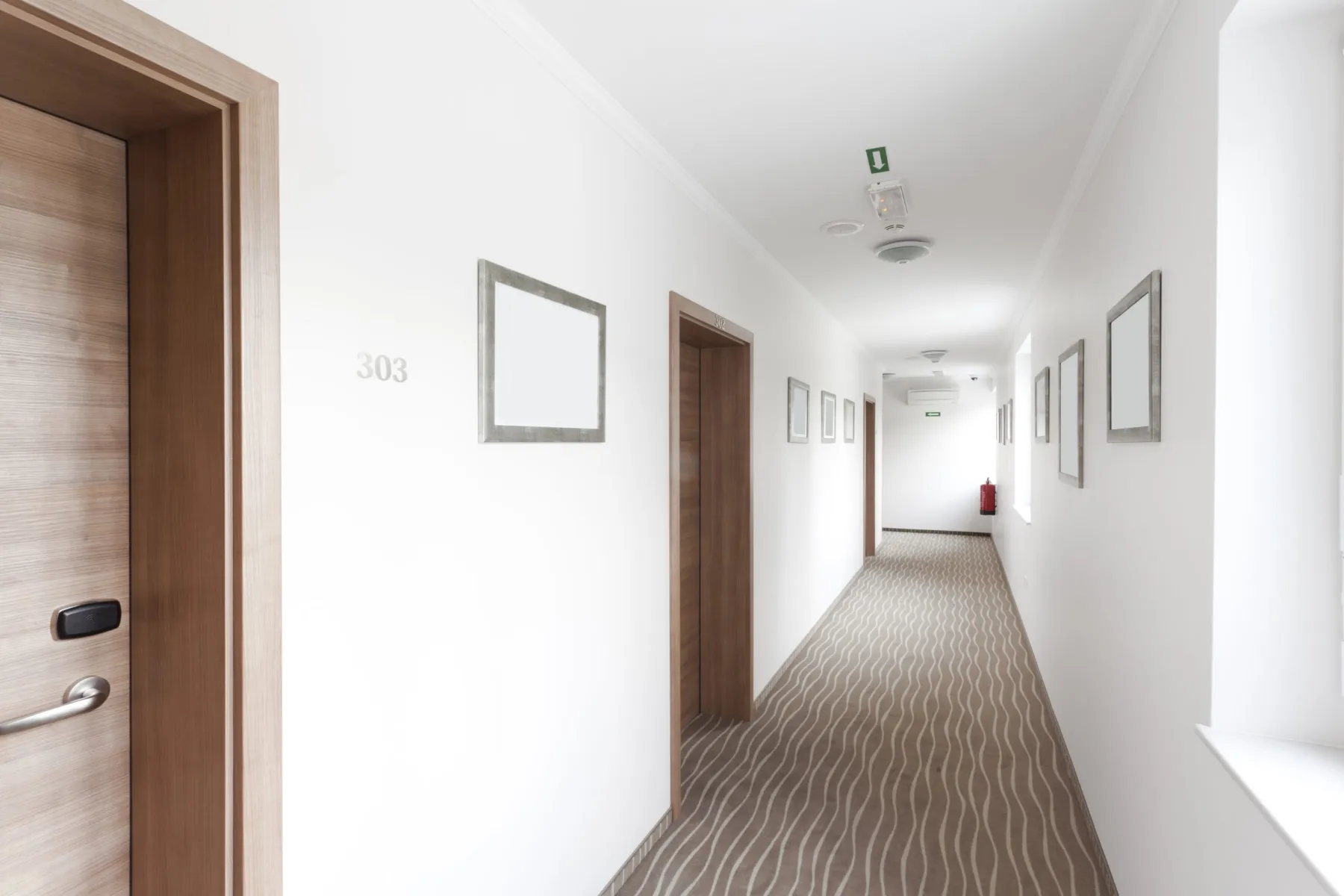
Corridors and circulation. Wall protection at trolley height, durable floor finishes, door sets with the correct fire rating and closers, signage and lighting. Corridors take more punishment than any other part of a hotel.
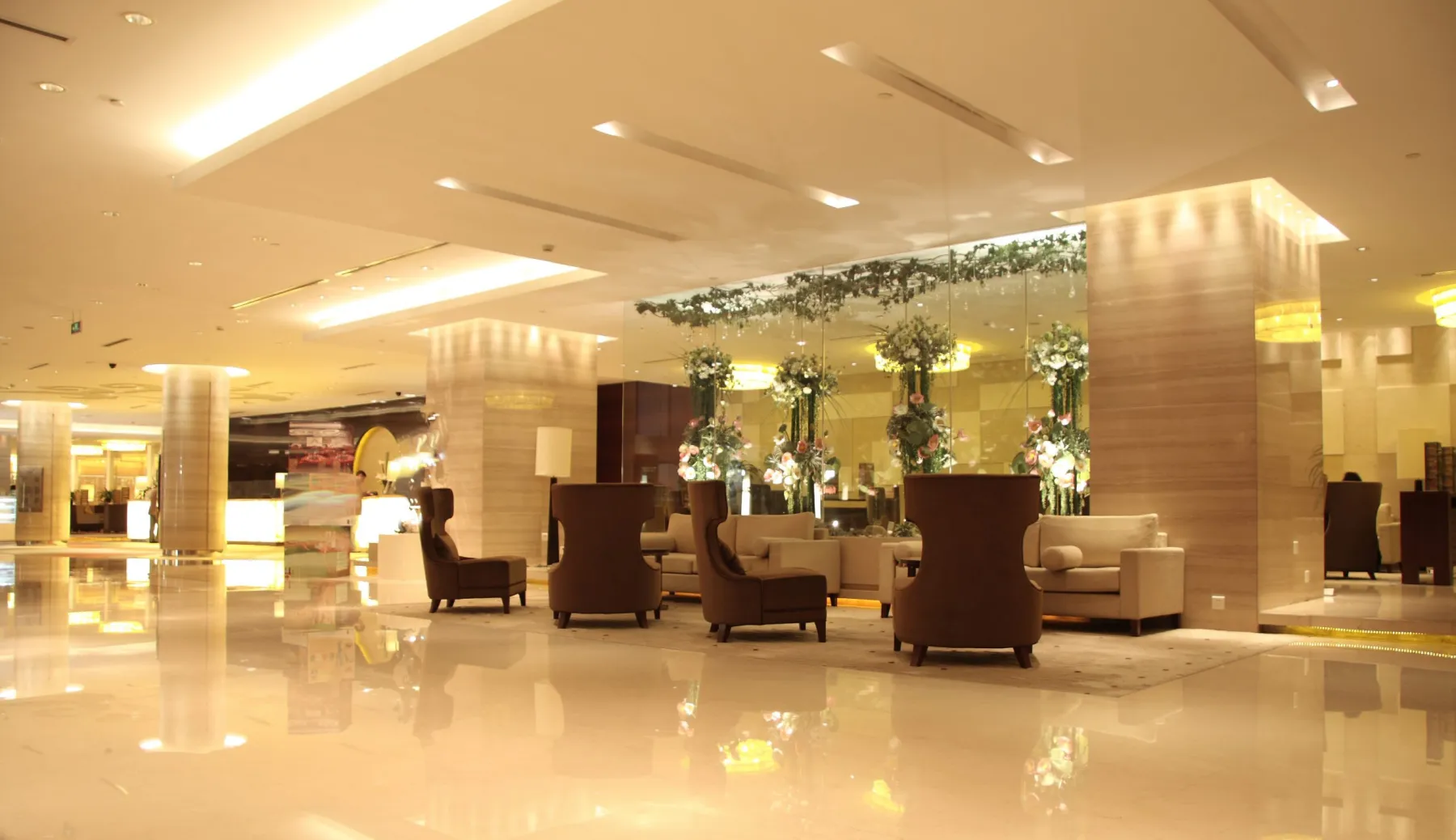
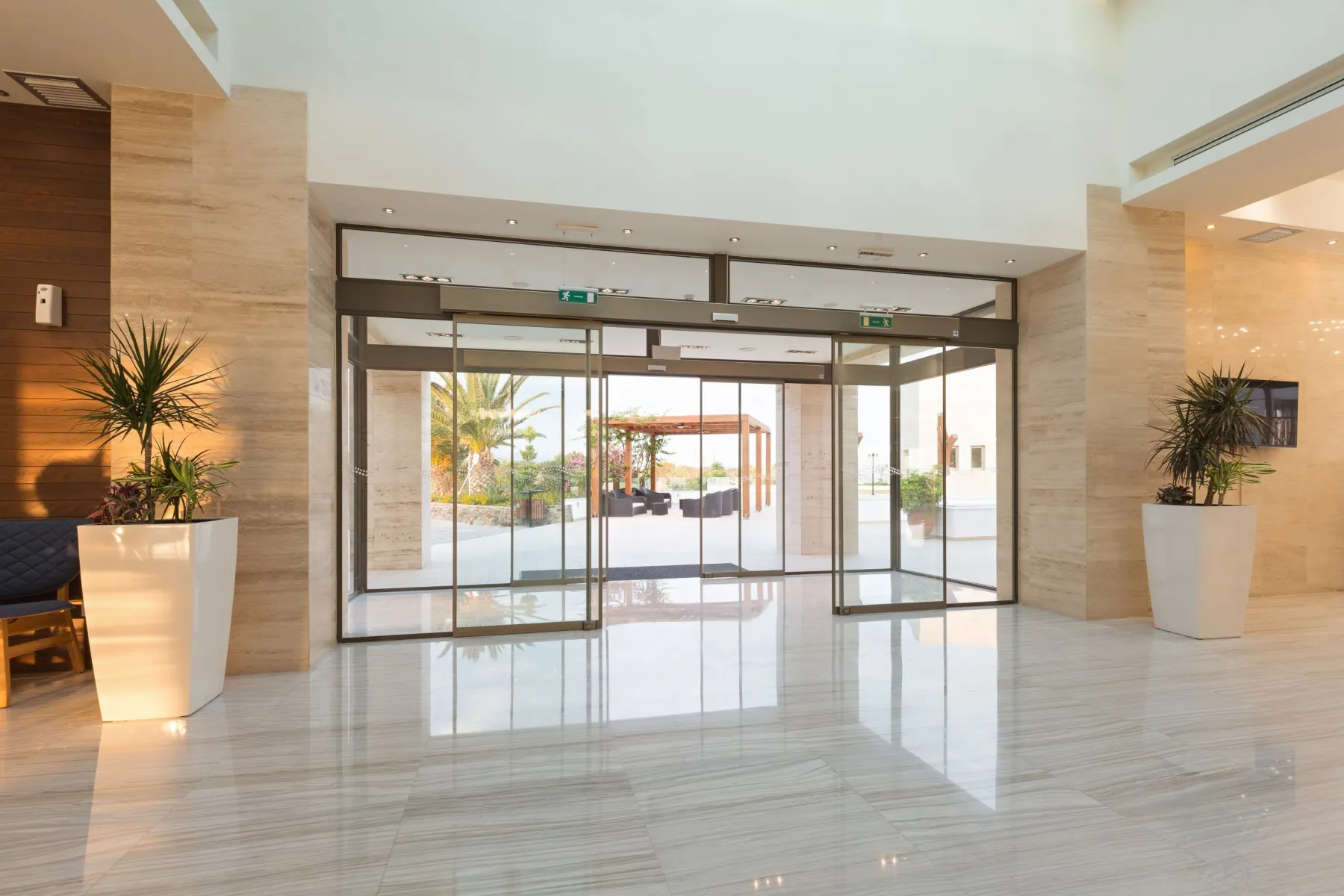
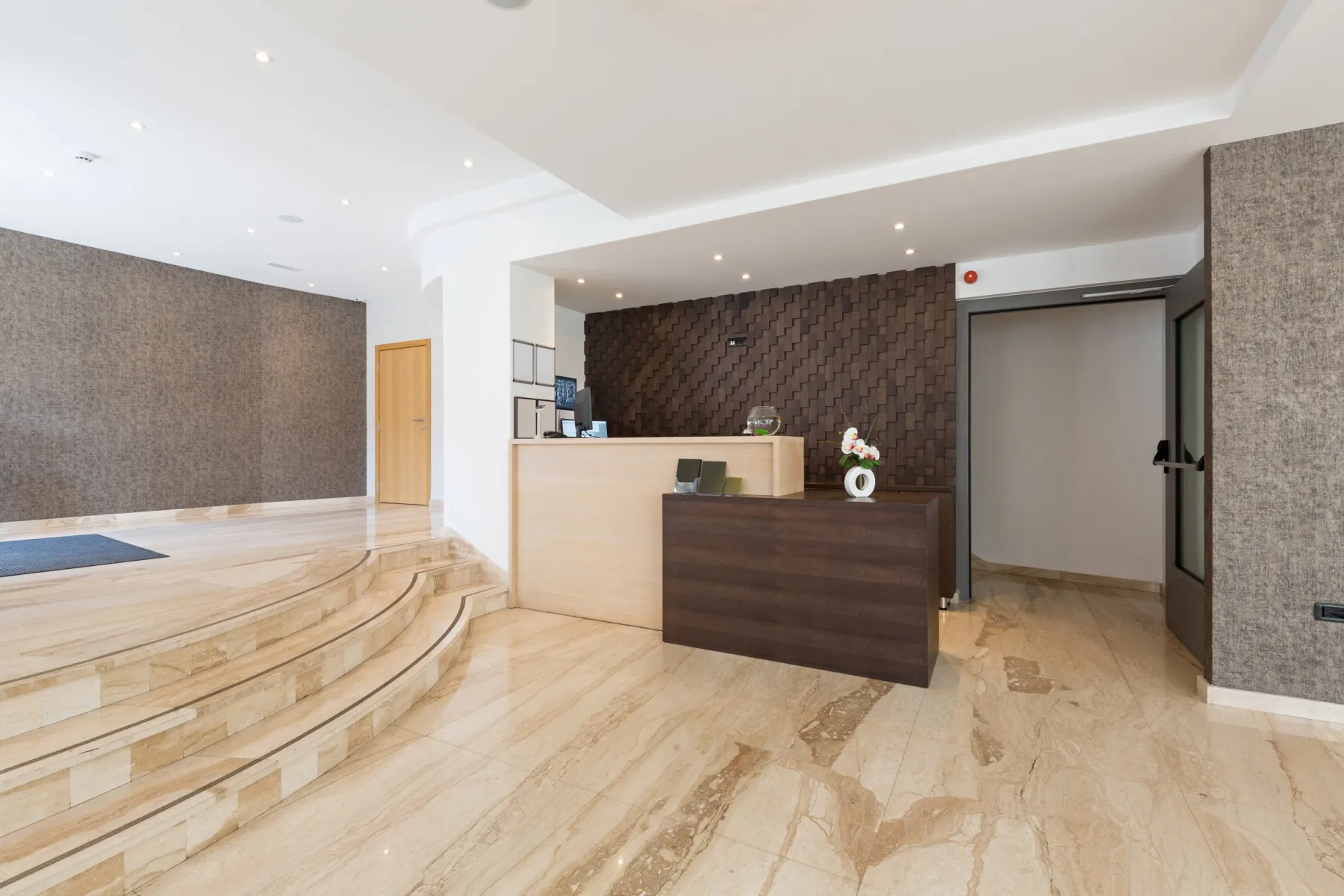
Lobbies and public areas. Reception desks, feature joinery and panelling, stone and metalwork, lighting and seating. This is where the property makes its first impression and where the bespoke work is concentrated. See stone and metal works.
Food and beverage. Restaurants, bars, cafes and lounges, with bar joinery, banquette seating, acoustics and the commercial kitchen interfaces. See our restaurant and cafe page.
Back of house. Staff areas, housekeeping stores, laundry, service corridors and offices — built robustly rather than decoratively, and usually the part of the programme that gets squeezed and should not be.
Refurbishing a hotel that is still trading
Almost every hotel refurbishment in Dubai happens around paying guests, and the planning that allows it is as important as the construction. Floors are taken out of service in blocks, usually with a buffer floor left empty above and below the working floor so noise does not reach occupied rooms. Rooms adjacent to the working area are blocked in the system rather than sold and complained about.
Access is entirely separate. Service lifts for material and waste, protected routes, and hoarding in the corridors that is finished on the guest side — a guest should see a clean wall, not a plywood barrier. Noisy work runs in agreed windows, typically mid-morning to late afternoon, and nothing loud starts before the property allows it.
Fire and life safety cannot be compromised for a single shift. Detection and sprinklers in the working area are isolated only with permits and reinstated at the end of each shift, escape routes stay clear and signed, and hot work is permitted and watched. A hotel is a sleeping occupancy, and the standards reflect that.
Then the rooms come back in blocks, cleaned, snagged and sellable. Getting rooms back into inventory quickly is what the owner is actually buying, so the programme is measured in keys returned per week rather than in percentage complete.
Keys per weekHow the programme is measuredHow a hospitality fit-out runs
Survey, standards and programme
We survey the property, work from the operator brand standards and the designer’s package, and build a programme around occupancy, buffer floors and the rate of keys to be returned each week.
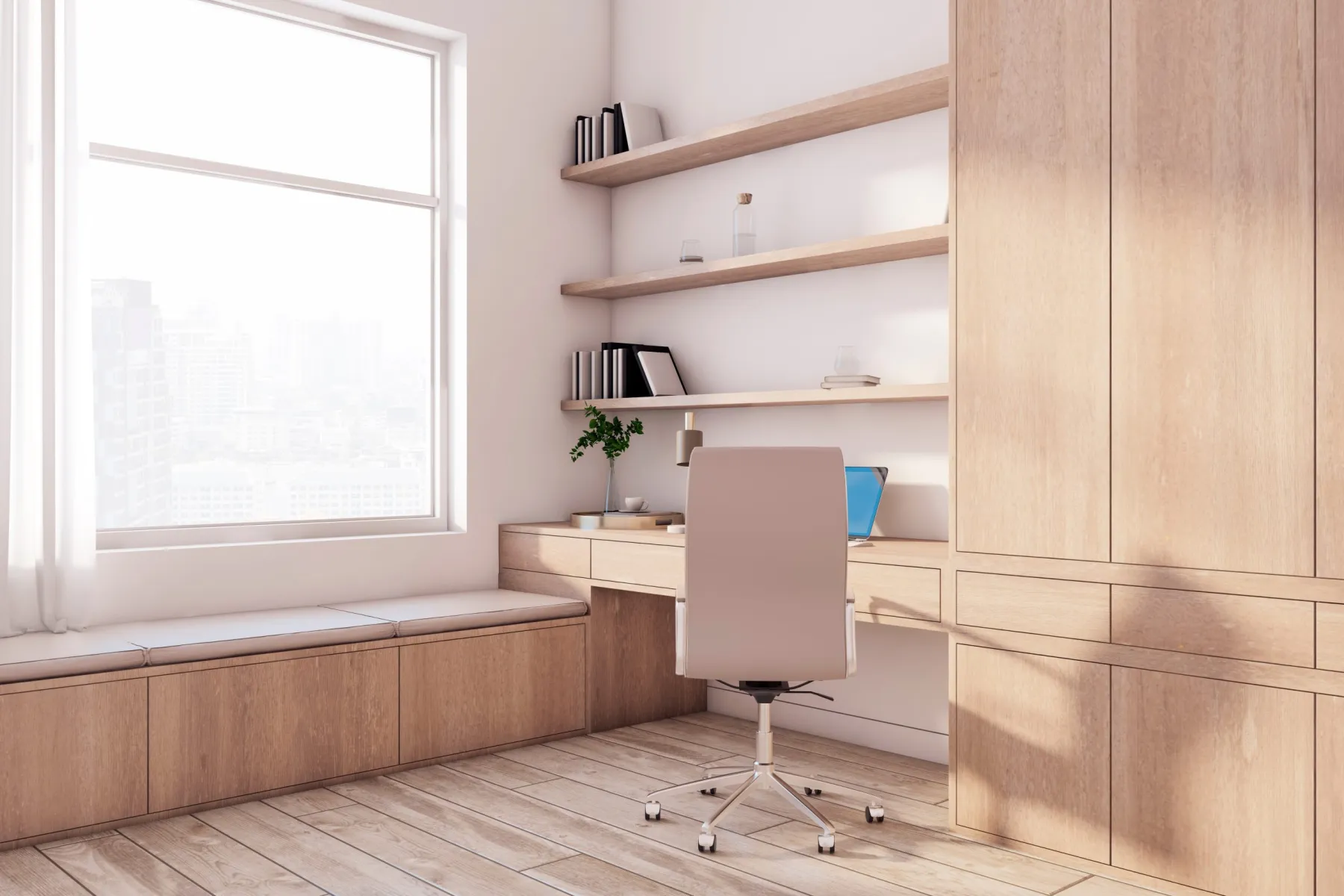
Prototype room
One room built complete and reviewed by owner, operator and designer together. Every detail argued out and resolved here, then signed off as the standard the rollout is measured against.
Manufacture and procurement
The full joinery package produced in our workshop against the approved prototype, with materials ordered in batches controlled for dye lot and grain so the last room matches the first.
Rollout by floor
Floors taken in blocks: strip-out, MEP and bathroom works, then joinery, finishes and dressing. Corridors kept presentable throughout and life safety systems reinstated at the end of every shift.
Snagging and return to inventory
Each block snagged, corrected and cleaned, then handed back to the operator for sale. Defects are closed on the floor rather than accumulating to the end of the project.
Hospitality fit-out costs in Dubai
Construction and joinery in Dubai. Loose furniture, artwork and operating equipment are usually a separate owner supply.
| Item | Unit | Typical range |
|---|---|---|
| Guest room refurbishment, mid-scale | per key | AED 60,000 – 120,000 |
| Guest room refurbishment, upper scale | per key | AED 120,000 – 180,000 |
| Guest room, luxury | per key | AED 180,000 – 500,000 |
| Guest bathroom, full refurbishment | each | AED 35,000 – 120,000 |
| Room joinery set, manufactured | per key | AED 18,000 – 75,000 |
| Corridor refurbishment | per linear m | AED 2,600 – 9,000 |
| Lobby and public areas | per sq m | AED 3,000 – 12,000 |
| Reception desk, bespoke | per project | AED 45,000 – 350,000 |
| Restaurant or bar fit-out | per sq m | AED 2,600 – 7,500 |
| Back of house areas | per sq m | AED 900 – 2,400 |
| Fire-rated door sets, certified | each | AED 2,800 – 6,500 |
| Prototype room, built and reviewed | each | AED 90,000 – 350,000 |
| Phasing, protection and out-of-hours working | per project | AED 45,000 – 250,000 |
Phasing and protection on an occupied property is a real cost and belongs in the budget explicitly. A refurbishment priced as though the hotel were empty will not be delivered at that price.
Building for a thousand guests a year
Hotel joinery is used by people who have no reason to be careful with it. Drawer runners rated for commercial cycles, edges that resist luggage impact, worktops that survive hot items and spills, and finishes that can be repaired in place rather than replaced. A domestic specification in a hotel room looks tired within a year.
Corridors take the worst of it. Trolley impact at a consistent height, luggage dragged along walls, and doors used thousands of times. Wall protection detailed into the design rather than added as a rail afterwards, robust door sets with commercial closers and kick plates, and floor finishes that can be spot-replaced.
And maintainability. A hotel operates continuously, so anything that will need servicing must be reachable without dismantling joinery: access panels at valves and dampers, serviceable light fittings, and bathroom details that allow a tap or a trap to be changed in half an hour rather than half a day.
Hospitality fit-out: common questions
How much does a hotel room refurbishment cost in Dubai?
AED 60,000 to 120,000 per key for mid-scale, AED 120,000 to 180,000 for upper scale and AED 180,000 to 500,000 for luxury, covering construction, joinery, bathroom and finishes. Public areas are priced separately per square metre.
How long does a hotel refurbishment take?
It depends on the rate of keys returned per week rather than on total area. A typical rollout returns one floor every two to four weeks after the prototype is approved, with the prototype itself taking six to ten weeks.
Why build a prototype room?
Because two hundred rooms have to be identical, and every detail argument is cheaper to have once, in one room, than two hundred times. The prototype is reviewed by owner, operator and designer together and becomes the standard for the rollout.
Can you work while the hotel is trading?
Yes, and almost all hotel work in Dubai is done that way — floors taken in blocks with buffer floors above and below, separate service access, finished hoarding on the guest side, agreed noise windows and life safety systems reinstated every shift.
How do you keep the last room matching the first?
Material batches controlled for dye lot and grain, joinery produced in our own workshop against the approved prototype rather than by multiple suppliers, and a recorded specification so replacements years later still match.
Do you build to operator brand standards?
Yes. We work from the operator’s standards and the designer’s package, and flag early where a standard conflicts with a local code or with what the existing building physically allows.
Do you do food and beverage outlets as well?
Yes — restaurants, bars, cafes and lounges, including bar joinery, banquettes, acoustics and the interfaces with the commercial kitchen. These are often phased separately from the rooms so the outlet can reopen sooner.
What about back of house?
Built as part of the same contract. Staff areas, housekeeping stores, laundry and service corridors are what make a hotel operate, and they are the part of the scope most often squeezed and most regretted afterwards.
Send the key count and the brand standards
The number of keys, the property’s occupancy pattern and the operator standards are enough for us to propose a prototype, a rollout rate and a realistic cost per key.