Custom joinery and carpentry in Dubai, cut and sprayed in our own workshop
Not a trading company that buys in flat packs. Board goes in one end of 32b Street in Ras Al Khor, and a finished, templated, hand-adjusted piece comes out the other — the same way it has since 1984.
Joinery company in Dubai
Abdulla Carpentry EST is a joinery company in Dubai with its own factory, not a middleman. We draw it, cut it, edge it, spray it and install it ourselves — wardrobes, TV units, kitchens, panelling, doors, vanities, shelving, reception counters and one-off furniture. Established 1984, based in Ras Al Khor Industrial Area 2, and priced from AED 1,100 per square metre of wardrobe face.
Most joinery works Dubai clients are quoted for never touch the hands of the company selling them. The order is placed, passed to whichever factory has capacity that month, and the site team meets the piece for the first time on the day it arrives. That is why so many fitted units land with a filler strip covering a wall that drifts, a drawer that fouls a skirting, or a door gap that reads 2 mm at the top and 6 mm at the bottom.
We are the factory. Our own draughtsman produces the shop drawings, our own machinists cut and edge the panels, our own spray booth lays the lacquer, and our own fitters hang and adjust it on site. When something is 3 mm out, it goes back to a bench two junctions away rather than into an email chain. That is the whole argument for using carpentry services Dubai clients can actually visit.
It also changes what we can say yes to. As a carpentry company Dubai owners and contractors come back to, we take the awkward jobs — a curved run, a raked ceiling, a unit that has to wrap a structural column — because the cost of a difficult shape is machine time we already own rather than a supplier surcharge we have to pass on.
 Since 1984Our own workshop, Ras Al Khor
We work for homeowners directly and for fit-out contractors as joinery contractors on their packages, which is a different discipline again: BOQ-driven, shop-drawing approvals, sequenced deliveries and site access windows. Both are quoted the same way — by the piece, itemised, with the material named. Among joinery manufacturers Dubai has plenty of, the ones worth using are the ones that will put the board specification in writing.
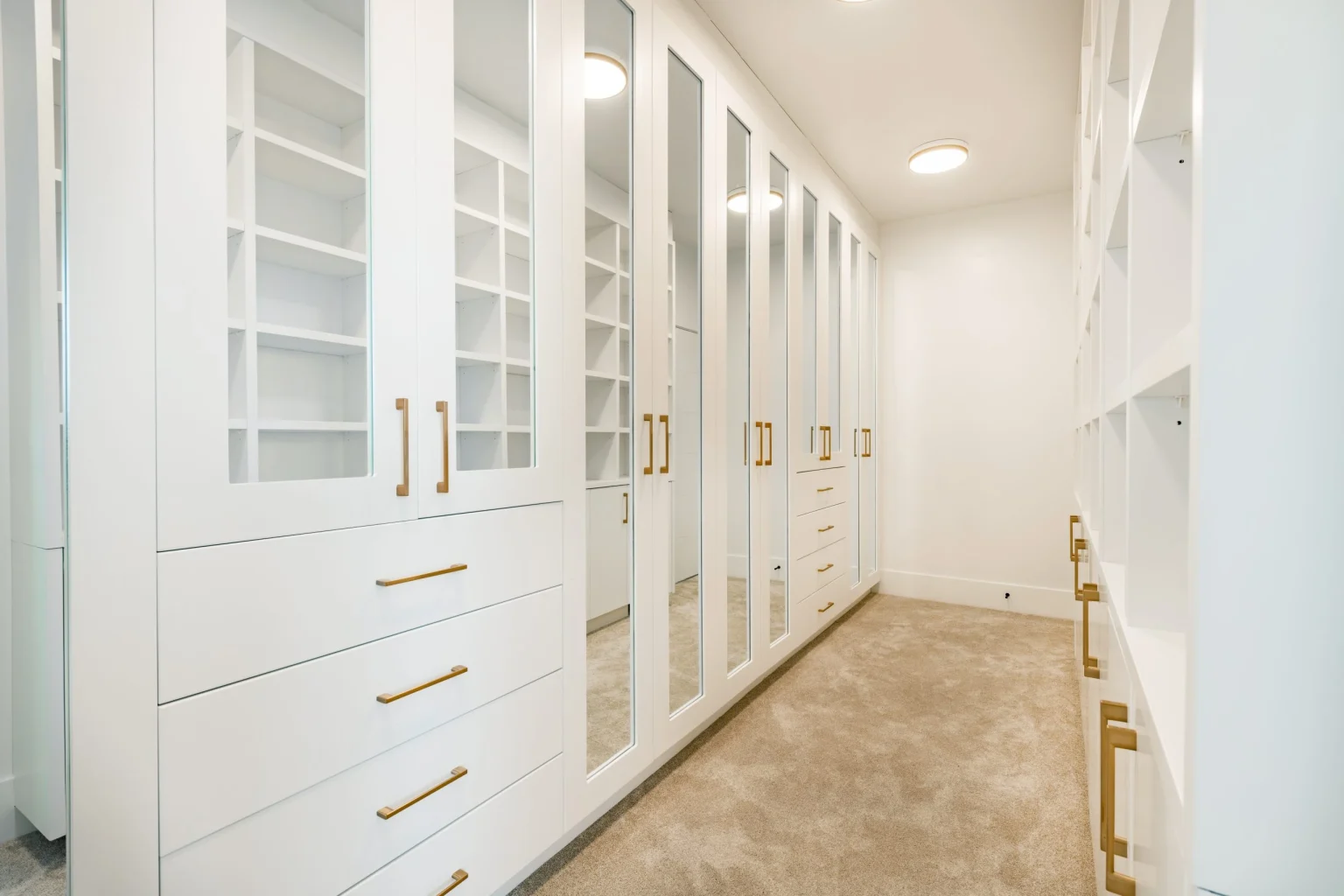
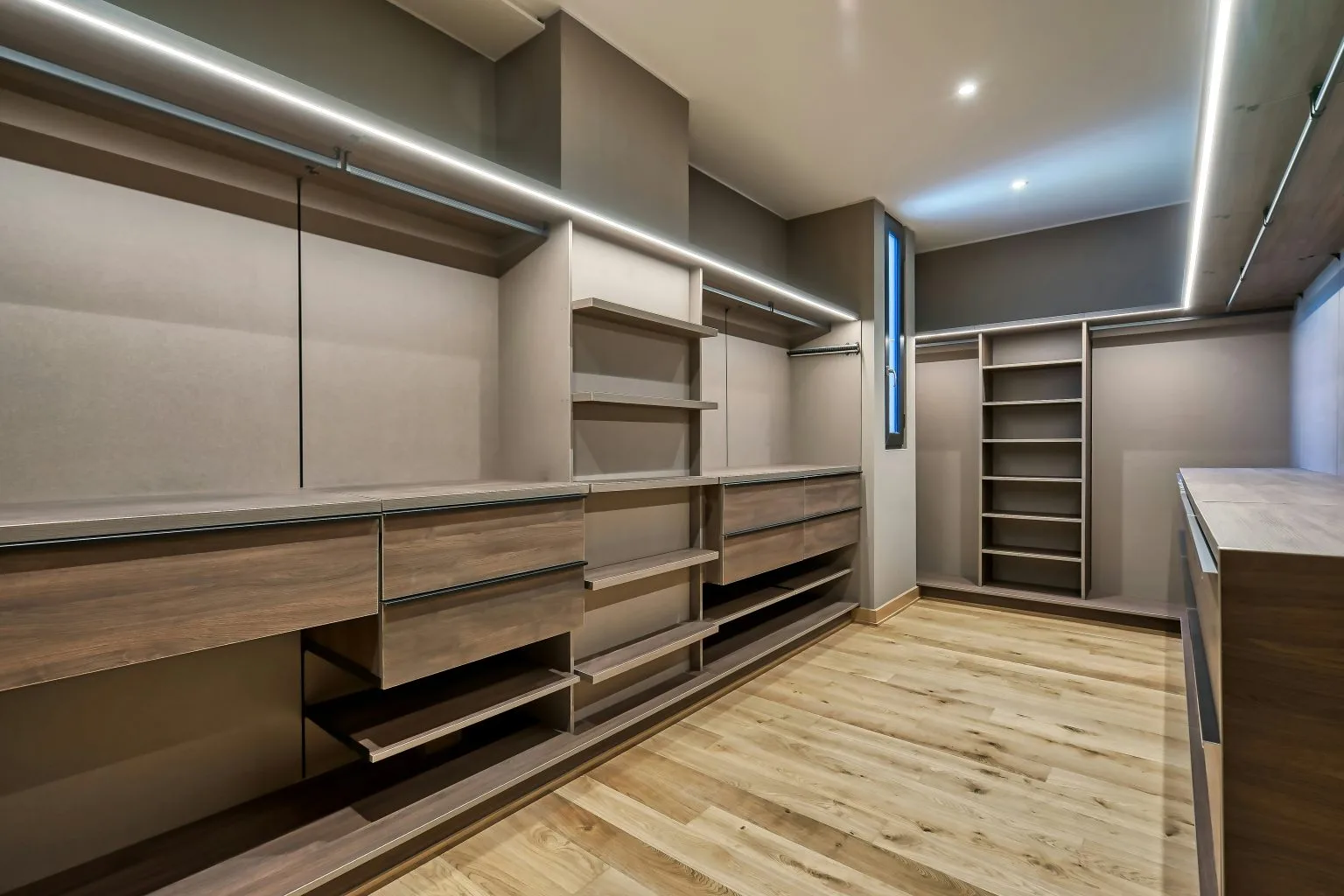
Custom wardrobes and walk-in closets
Wardrobes are the piece we make most, and the one where the difference between a fitted unit and a bought one shows up soonest.
Wardrobe design Dubai starts with the wall, not the catalogue. Almost no wall in a Dubai apartment is plumb over 2,700 mm, so we measure at floor, mid and ceiling height, and build a scribe into the end panel rather than hiding the gap behind a filler. Built-in wardrobes also have to clear the AC grille, the light switch and the door swing, which is why the design starts as a site survey rather than a rendering.
Sliding door wardrobes are the right answer in a narrow room, where a hinged door would eat 600 mm of floor you need for the bed. The trade-off is honest: a sliding system means you only ever see half the interior at once, and the track is the part that wears, so we specify a top-hung aluminium system with an adjustable bottom guide rather than a bottom-roller track that collects dust and jumps.
Internally, we plan around what you own. Hanging heights split for shirts and dresses, drawer banks sized to actual drawer contents, a pull-down rail where the ceiling is high, a lockable drawer for documents, and LED strips on a door sensor. It is the least photogenic part of the design conversation and the part clients thank us for two years later.
 From AED 1,100Per sq m of wardrobe face
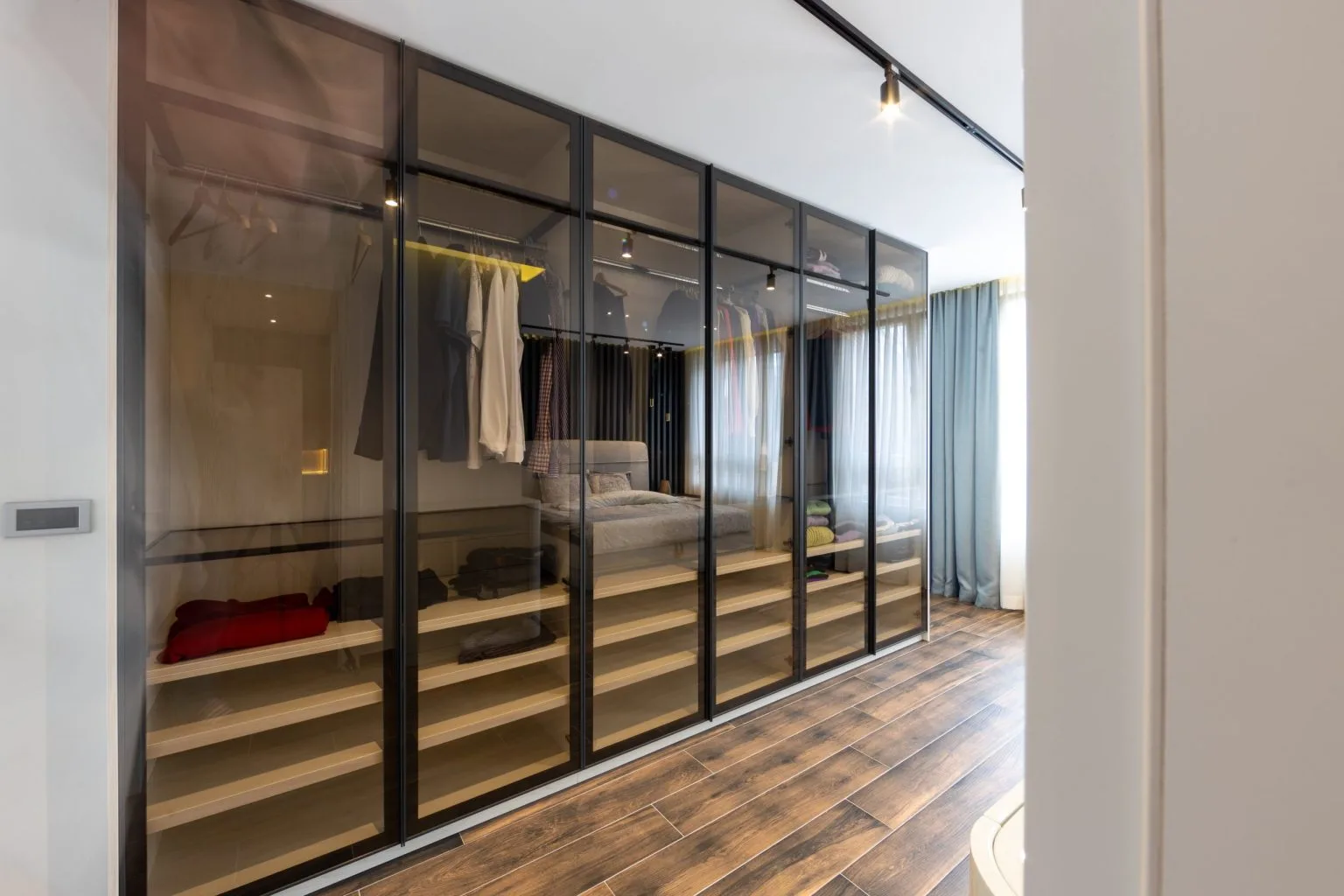
Walk-in closet design is a room, not a cupboard, so it gets planned like one: a circulation zone you can dress in, an island only where there is genuinely 1,000 mm clear all round, display doors in smoked or clear glass for the pieces worth showing, and closed drawers for everything else. Lighting matters more here than anywhere — a 4000 K strip inside the hanging space and a warmer light in the room, so colours read true when you choose and warm when you stand back.
TV units and media walls
A media wall is the one piece of joinery everybody in the house looks at every evening, and the one most often ruined by cables.
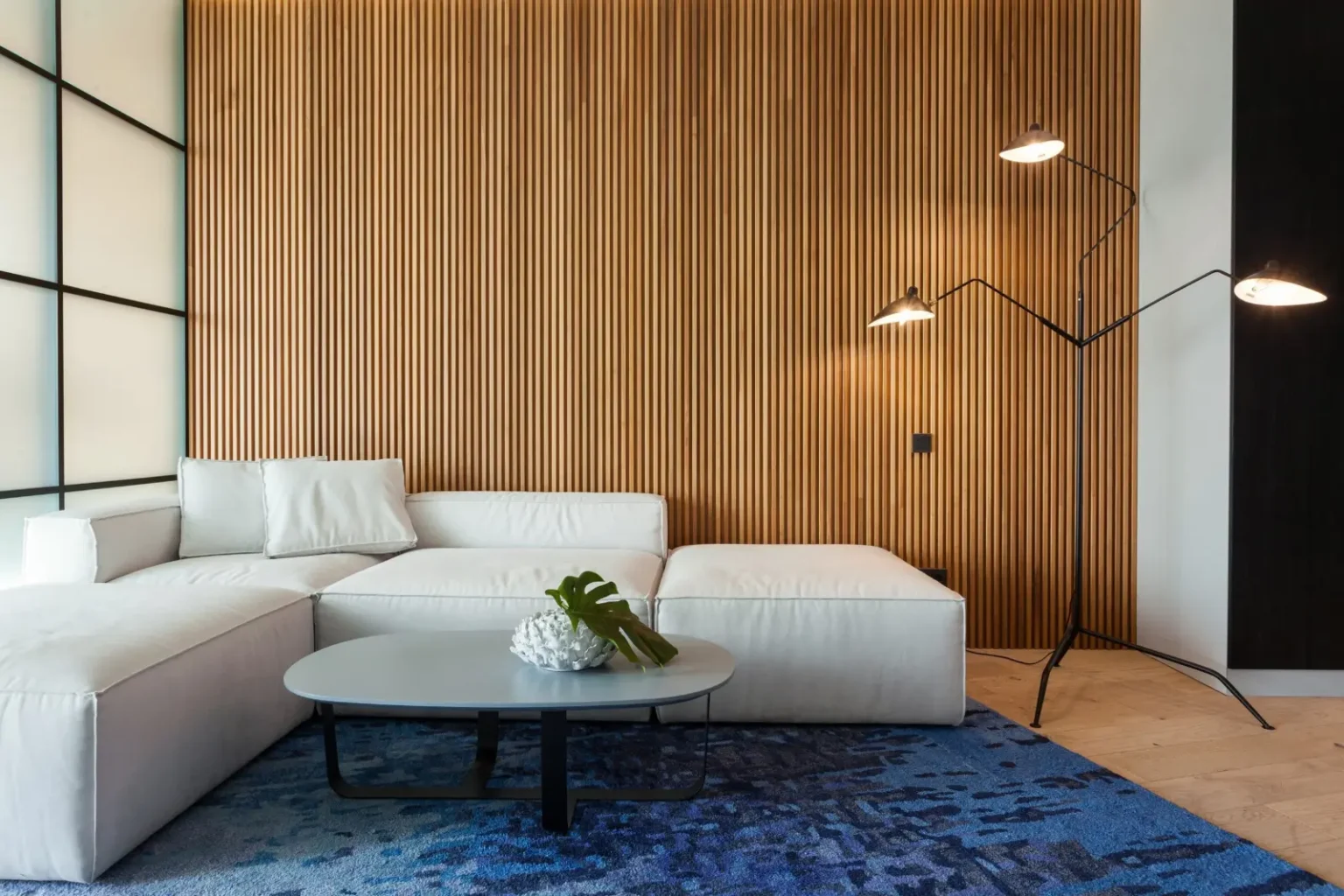
TV unit design begins behind the panel. Before any material is chosen we agree where the socket, the data point and the HDMI runs land, because a TV wall unit built without conduit means either a visible trunking or a wall opened up again later. We run flexible conduit from the screen position down to the cabinet and out to the AV position, so a future soundbar or console is a five-minute job.
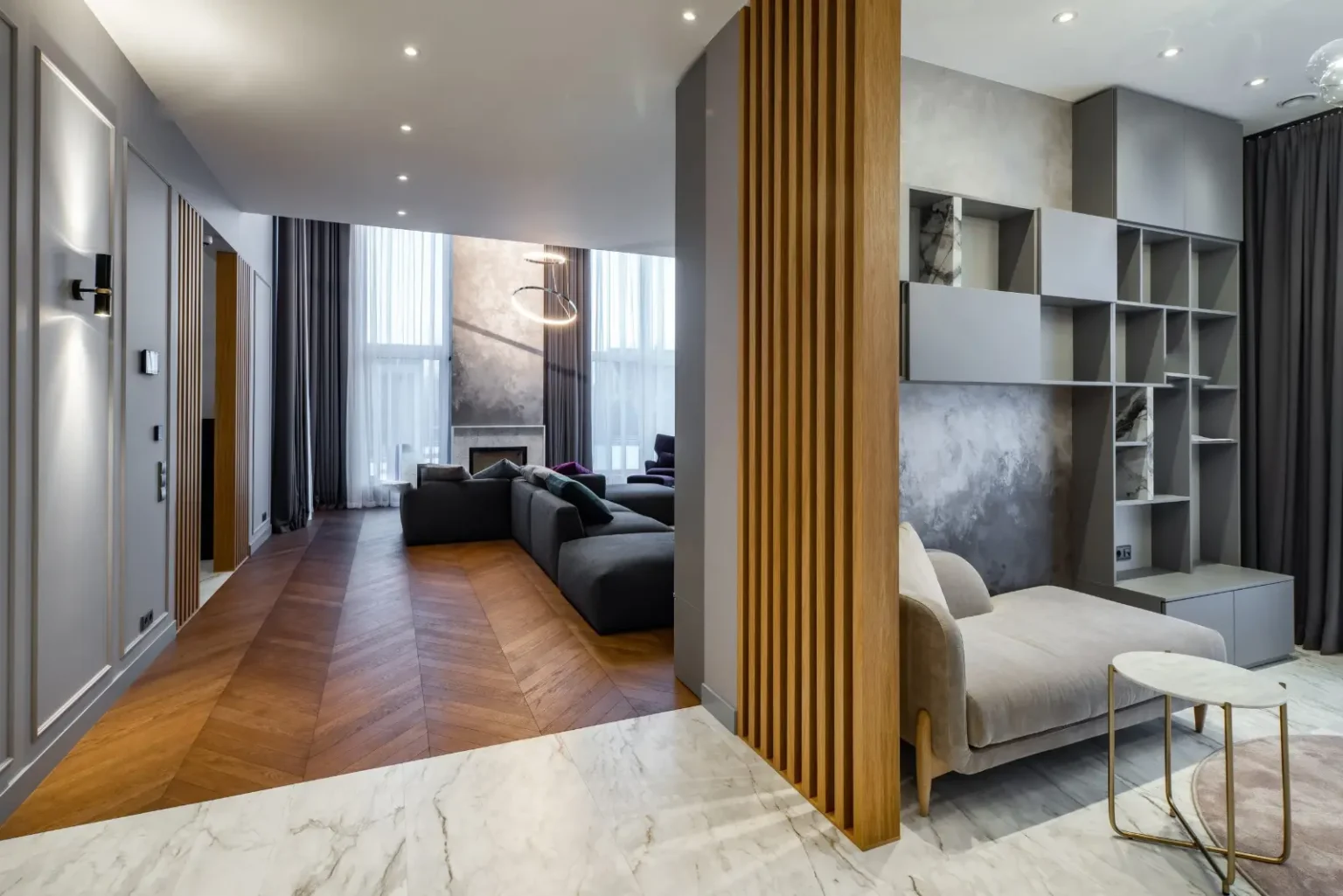
The media wall itself is where we use texture. Fluted panels in MDF or solid timber give a fine vertical rhythm that hides small wall movement and reads well under a wall-washer. Slat wall panels on an acoustic felt backing do the same job while genuinely killing echo in a hard-surfaced living room — worth doing in any apartment with porcelain floors and glass on two sides. Half-round panels are the heaviest look of the three and the most expensive to make, because each bead is a separate machined section that has to be sequenced and sprayed as one.
Screen height is the argument we have most often, and we usually win it. Centre of screen at seated eye level, not above a fireplace, and the recess cut 60 mm taller and wider than the screen so a future replacement fits. We also leave the back of the recess removable rather than glued, so an AV bracket can be swapped without cutting into the panelling.
Kitchen cabinets and pantry units
Kitchen carcasses take more abuse than any other joinery in a home, so this is where board specification stops being a detail.
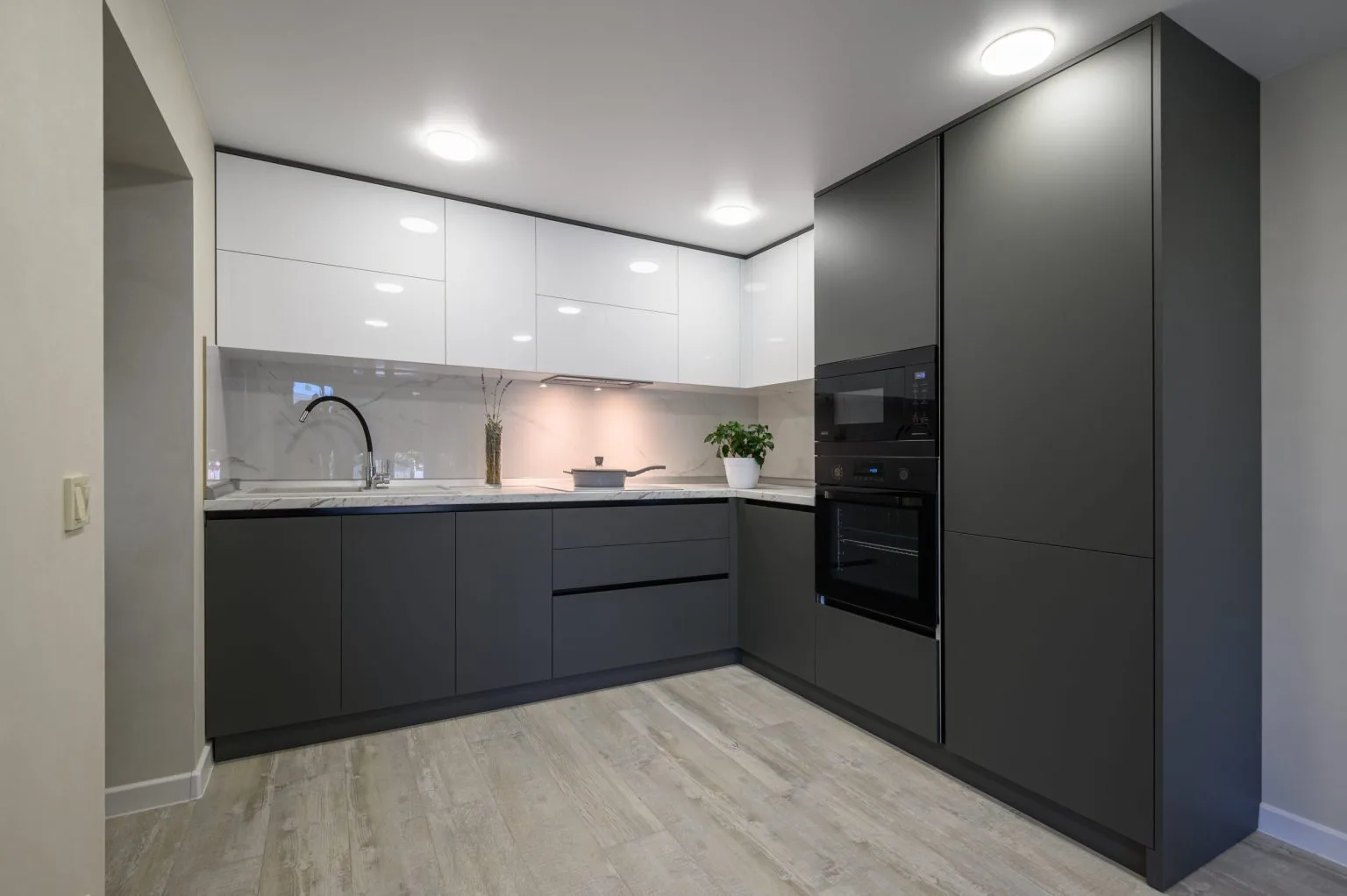
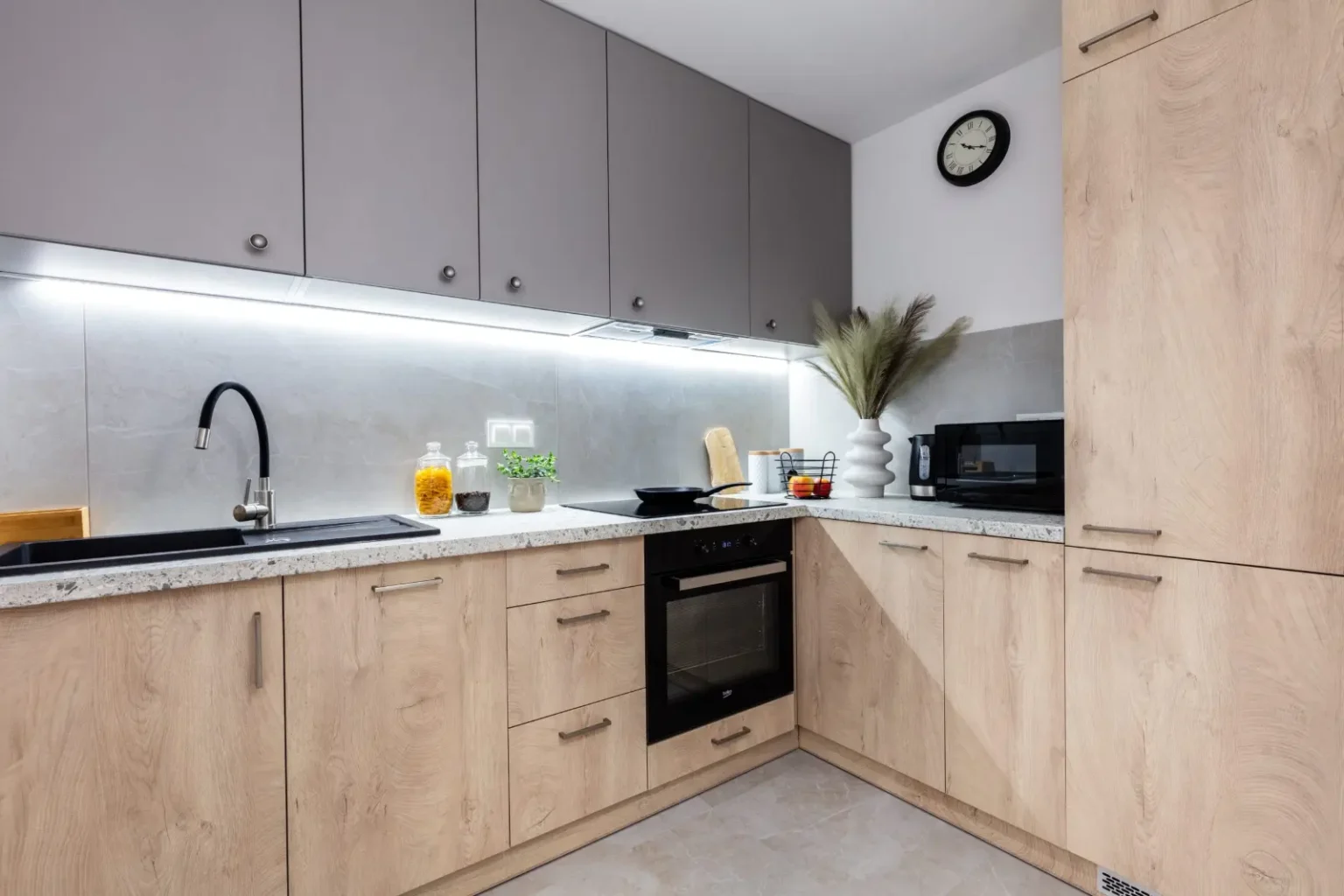
Kitchen cabinets we build use 18 mm moisture-resistant board for every carcass, not standard chipboard with a laminate face, and every cut edge is sealed rather than left raw behind a plinth. Under the sink the base gets an aluminium tray, because that is the panel that fails first in every kitchen we are ever called to repair. Hinges and runners are soft-close as standard — not an upsell line on the quotation.
Pantry units earn their cost in a Dubai apartment, where dry-goods storage is usually an afterthought. A tall pull-out with full-extension runners puts the back of the cupboard in your hand instead of on your knees, and a shallow 300 mm larder beside the fridge holds more usable stock than a 600 mm deep cupboard you have to excavate. Where there is a recess, we build a walk-in pantry with a counter for the appliances that otherwise clutter the worktop.
Doors are where the budget moves. A vinyl-wrapped or laminate door is the sensible choice for a rental or a busy family kitchen. A PU-lacquered door photographs better and repaints better but shows fingerprints in gloss. A veneered door is the one that has to be planned, because the grain must be sequenced across the whole run before anything is cut.
Survey to installation, three to six weeks
Five stages, all of them ours. Nothing is passed to a third-party factory and nothing is ordered before you have signed the drawing.
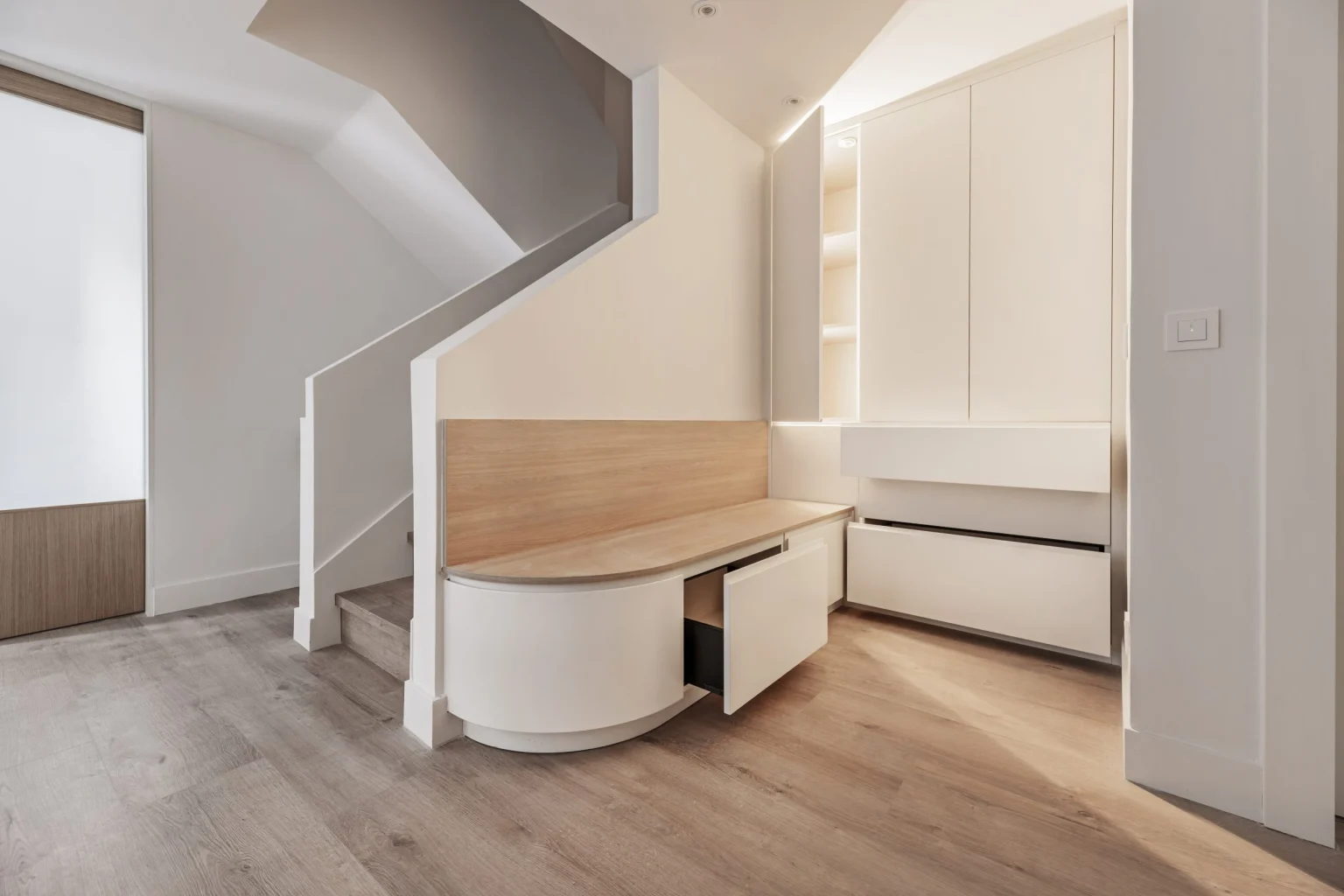
Survey and 3D design
We measure the opening at three heights, then issue a 3D design and shop drawings for you to sign off on.
Material and finish sign-off
Boards, veneer and lacquer samples are sprayed and sent, so that colour is agreed before anything is cut.
Cutting and edging
Panels are cut, edged and drilled on our own machines at Ras Al Khor, to the numbers on the approved set.
Spraying and assembly
Lacquer goes on in our own spray booth, then a piece is dry-assembled and checked square before it ships.
Delivery and installation
Our own fitters install, scribe to the wall and adjust every door and drawer, then we snag and hand over.
3D design and shop drawings are issued on every job, not just the large ones, because a drawing is the only place a mistake is cheap. Three to six weeks is the usual run from approved drawing to installed piece, longer if a veneer has to be sourced in a particular log or a lacquer colour matched to an existing finish.
Wall panelling and wall cladding
Panelling is the cheapest way to make an ordinary room look designed, and the easiest to get wrong by ignoring the wall behind it.
Wall panelling design is a setting-out exercise before it is a style choice. The module has to divide evenly into the wall so you do not end with a 40 mm sliver in the corner, it has to resolve against the door architrave and the skirting, and it has to allow for a socket landing mid-panel rather than mid-flute. We draw the elevation, mark the wall, and get it approved before a single batten goes up.
We panel in solid timber, veneered MDF, PU-lacquered MDF, upholstered fabric and acoustic felt with a slat face. Cladding across a full wall goes onto a battened and shimmed subframe rather than being glued flat, because no Dubai blockwork wall is flat enough to take a 2,700 mm panel directly — glue it and every hollow telegraphs through under raking light.
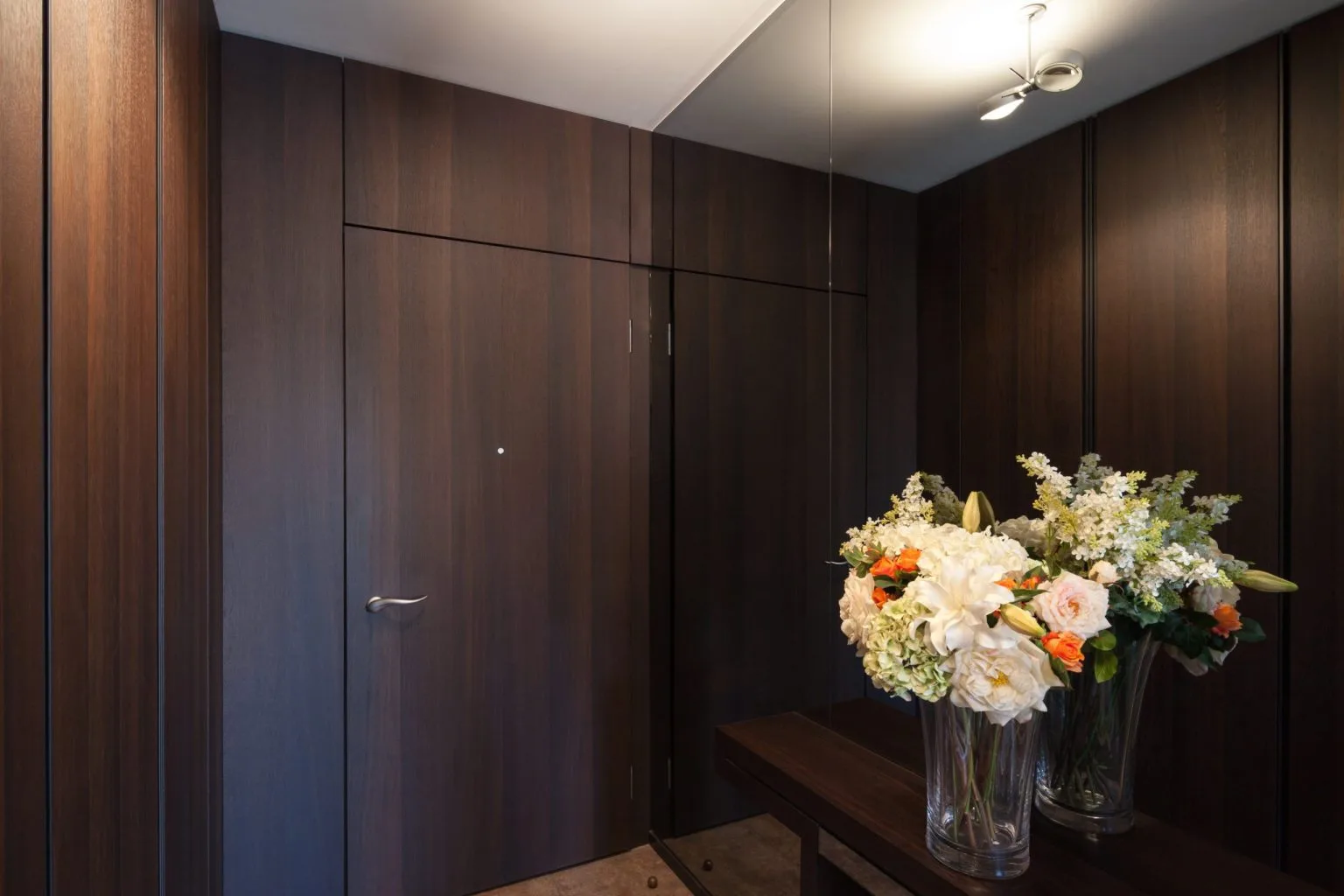
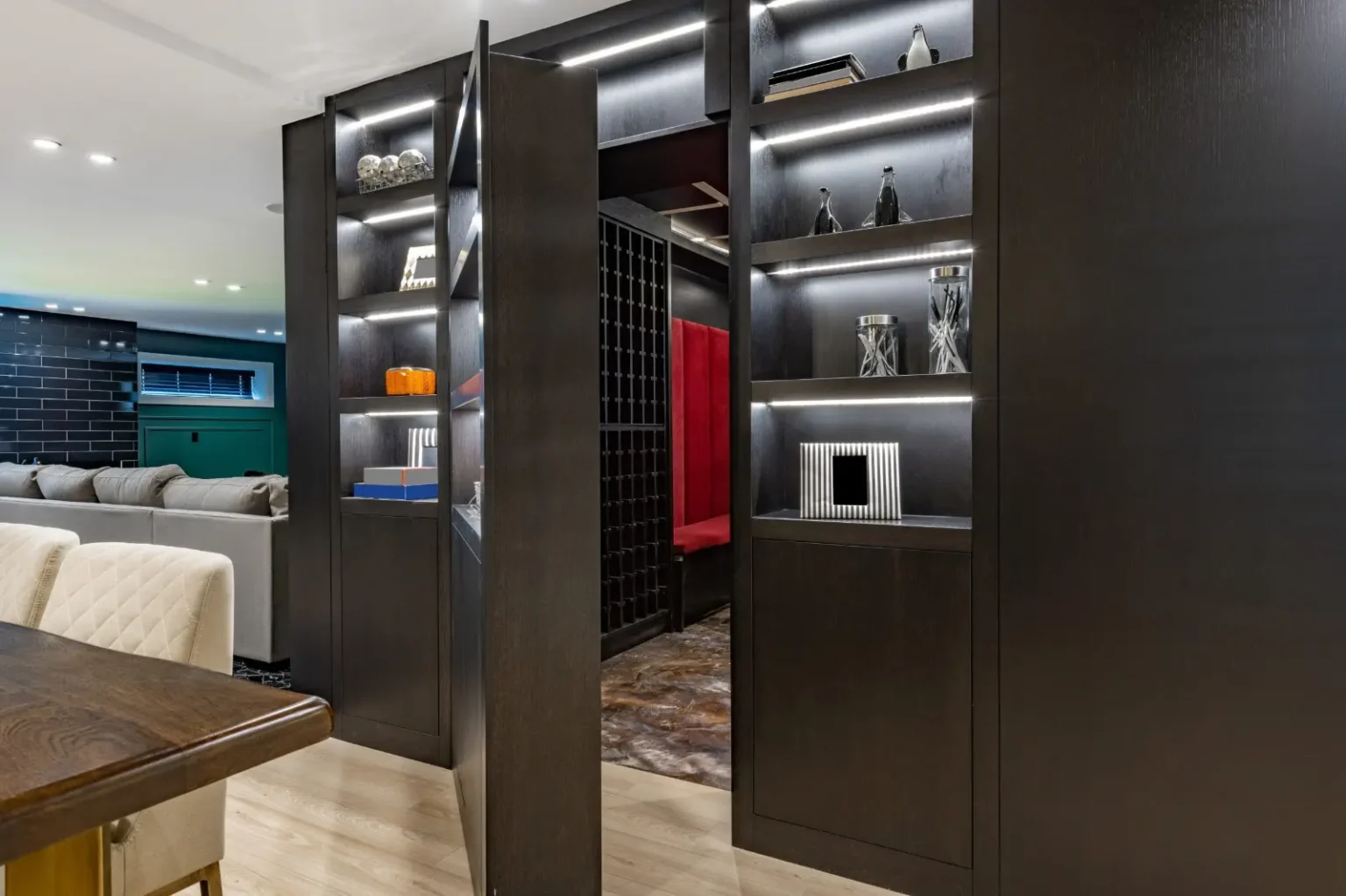
Panelling also hides things well. A concealed door into a store, a pantry or a wine room disappears completely into a panelled run when the module is set out to absorb it, with a push-latch instead of a handle and a hinge set chosen for the leaf weight. It is a piece of joinery that only works if it is planned with the wall, which is exactly why we draw the whole elevation first.
Doors and door frames
A door is judged on a 3 mm gap. Everything else about it — the veneer, the ironmongery, the finish — is noticed second.
We make wooden doors to size rather than trimming a standard leaf to fit, because a bought door cut down loses its lock block and its stile proportion. Flush doors are built on an engineered or tubular core with a hardwood lipping all round, then veneered or lacquered, which is what stops a large leaf bowing in a hot, dry hallway.
Entrance doors are a different build again: a heavier core, a thicker leaf, a reinforced hinge stile for three or four hinges, and a frame fixed back into blockwork rather than into a stud. Where the door faces direct sun or a courtyard, we say so at quotation stage and specify accordingly, because a veneer and lacquer that is fine internally will fade and check outdoors within a season.
Frames matter as much as leaves. We make the frame and architrave from the same material as the door, scribe the architrave to the wall, and hang every leaf on site with adjustable hinges so the gap can be set after the building has settled and the flooring is down. Existing doors that only bind or sag get rehung and adjusted rather than replaced — that is usually a morning of work, not a new door.
Bathroom vanities
Bathroom joinery fails for one reason: it was built like bedroom joinery and then put in a room that gets steamed twice a day.
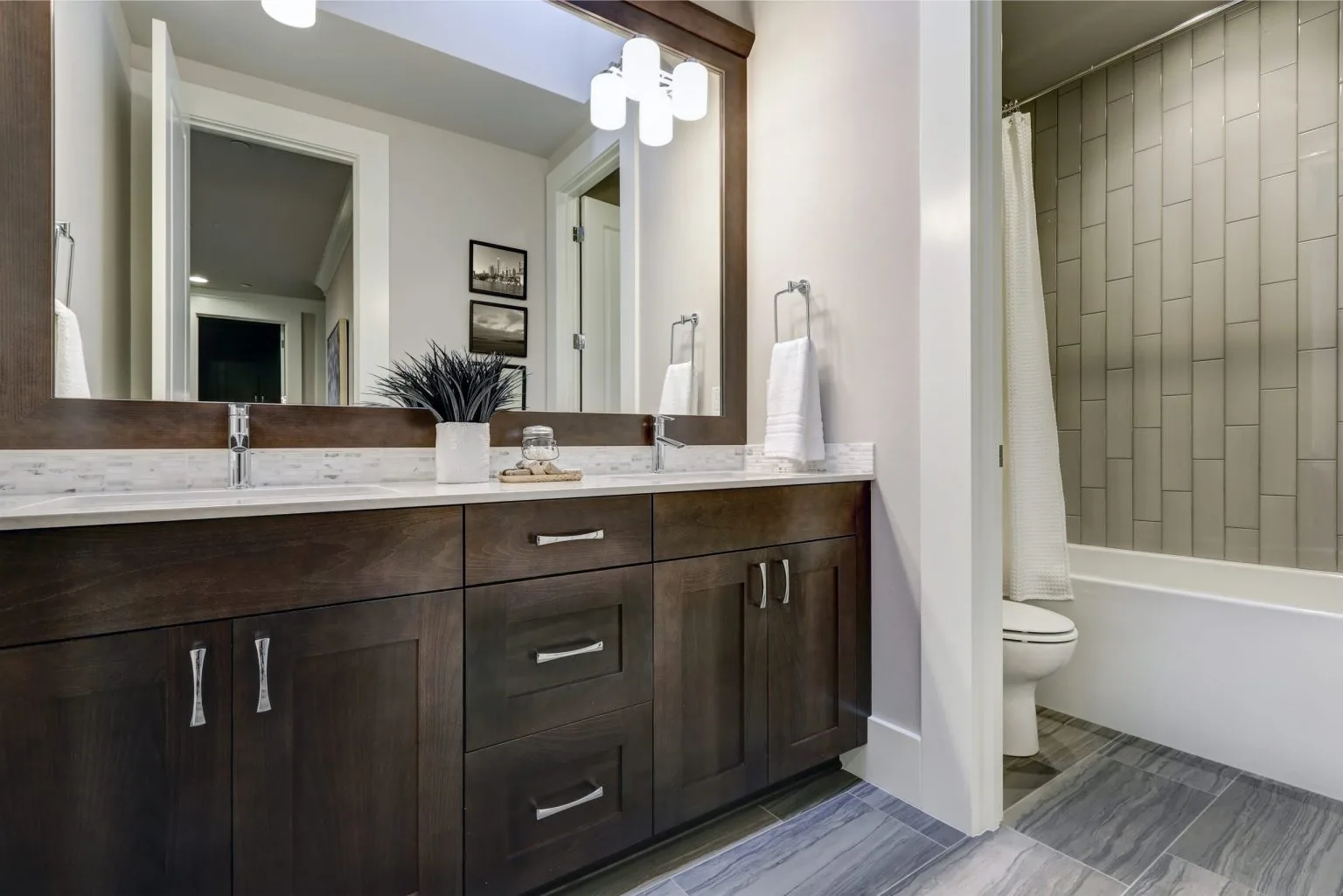
Our vanity units are built on moisture-resistant board with every cut edge sealed, a back panel cut around the pipework rather than roughly notched, and either a recessed plinth void or no contact with the floor at all. A floating unit is the specification we recommend in almost every Dubai bathroom, because it keeps the carcass clear of standing water and lets the floor tile run underneath.
We template the vanity on site after the tiling is finished, so it lands tight to the wall with no filler strip, and we set the drawer boxes out around the trap so the top drawer still opens fully. The stone top is templated separately, on the installed cabinet, which is the only way to get a consistent overhang on a wall that is not square.
Mirror cabinets are the best value storage in any bathroom — they use the wall depth above the basin that is otherwise wasted, and they clear the vanity top completely. We build ours with a recessed socket inside for shavers and toothbrushes, and where a client wants integrated lighting we wire the driver to stay accessible rather than burying it behind tile.
Study units, bookshelves and shelving
Shelving is simple to draw and easy to build badly. Everything here comes down to span, load and how the shelf meets the wall.
A study unit is planned around the chair, not the wall. Desk height 740 mm, a clear 600 mm of leg depth with no cross rail to bark a shin on, a grommet and a socket at the back so the laptop charger stays put, and drawer banks on the side you do not turn to. Where the study doubles as a guest room, we build the desk to fold or the wardrobe to swallow it, which is a joinery problem rather than a furniture purchase.
Bookshelves live or die on span. An 18 mm shelf loaded with books will visibly sag past about 800 mm, so we either divide the run, thicken the shelf to 30 mm with a lipped front edge, or build in a concealed steel flat. We say which of the three we have used, and we would rather add a division than hand over a bookcase that bows in its second year.
Shelving in the rest of the home follows the same rule. Floating shelves are cantilevered on a steel rod frame let into the wall — not glued brackets — and the depth is capped at what the fixing will genuinely hold. Pelmets and curtain boxes are the quiet ones on the list: a recessed curtain box built into the ceiling before the gypsum closes hides the track completely and makes a standard window look like a design decision, but it has to be coordinated with the ceiling contractor, not added afterwards.
Reception desks and office joinery
Commercial joinery is the same craft with a different design life. A home cabinet is opened four times a day; a retail one is opened four hundred.
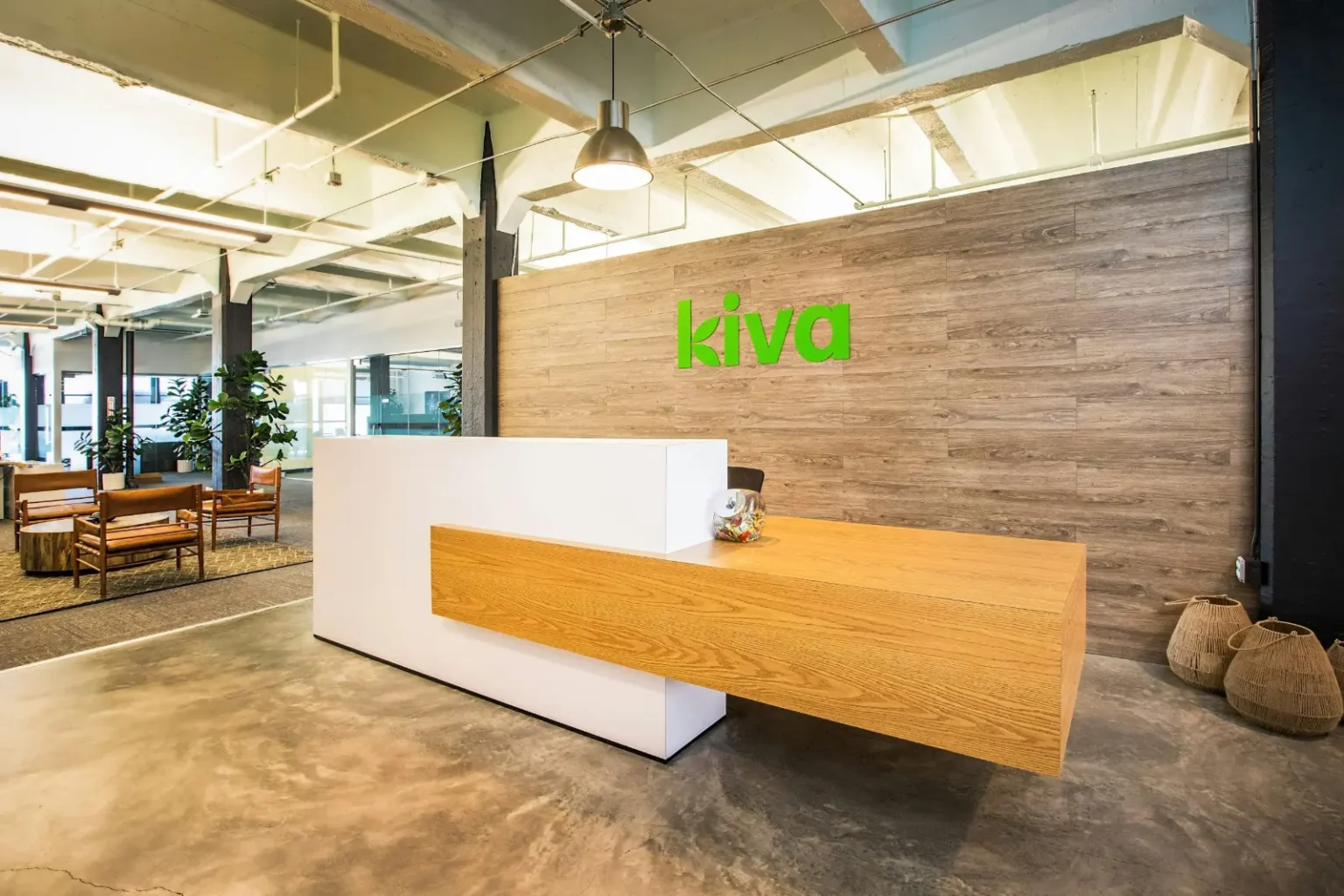
A reception counter is the piece a visitor touches first, so we build it to be leaned on. That means a stone or solid-surface transaction top rather than a laminate edge that chips, a raised back rail that hides the working clutter, a cable management route from the floor box to the monitor position, and a kick-recess so staff can sit close. The client-facing skin can be anything — veneer, fluting, stone, back-painted glass — but the carcass underneath is built heavier than a domestic one.
Office cabinets and meeting room joinery follow the same logic: full-extension runners rated for real weight, locks where files are stored, a credenza sized to the AV equipment rather than to a standard module, and a boardroom table with a genuine cable route rather than a hole drilled at the end. We also build the unglamorous items — pantry runs, storage walls, IT cupboards — because those are what an office actually uses.
Restaurant and retail joinery is the hardest wear of all. Counters take spills and cleaning chemicals, display units get rebuilt seasonally, and everything has to survive a landlord fit-out inspection. Our shop fittings are built with replaceable wear surfaces and demountable fixings, so a display can be reconfigured without rebuilding the shell, and we work to the mall or landlord handbook rather than discovering it at handover.
Bespoke furniture and built-in furniture
If it is made of board or timber and it has to fit a space exactly, it is a drawing before it is a price.
Shoe cabinets
Shallow tilt-out fronts where a hallway is tight, or a full storage cabinet run with a bench and hooks where there is depth to spare.
Bar and dining cabinets
Bar cabinets with bottle and stemware storage, dining cabinets for the everyday china, and display units lit from within on a dimmer.
Dressing tables and beds
Dressing tables set at a proper working height with a drawer for daily items, and bed headboards upholstered or veneered to the room.
Made to measure is the whole point of a workshop. A bought unit of custom-made furniture Dubai showrooms sell is 600 or 900 mm wide and your alcove is 847 mm, so you either lose 250 mm to a filler or you have it built. Custom joinery Dubai owners commission from us — what the trade calls bespoke joinery — starts as a measured survey and a drawing, is approved before cutting, and is made to the number on the drawing rather than to the nearest standard module.
We also do the work nobody photographs. Furniture painting and refurbishment is a real service and often the better value one: a sound carcass with dated doors does not need replacing, it needs stripping, filling, priming and respraying, and it comes back looking new for a fraction of a new unit. Cabinet repainting in the spray booth gives a finish you cannot get with a brush on site, and we will tell you honestly when a carcass is too far gone to be worth it.
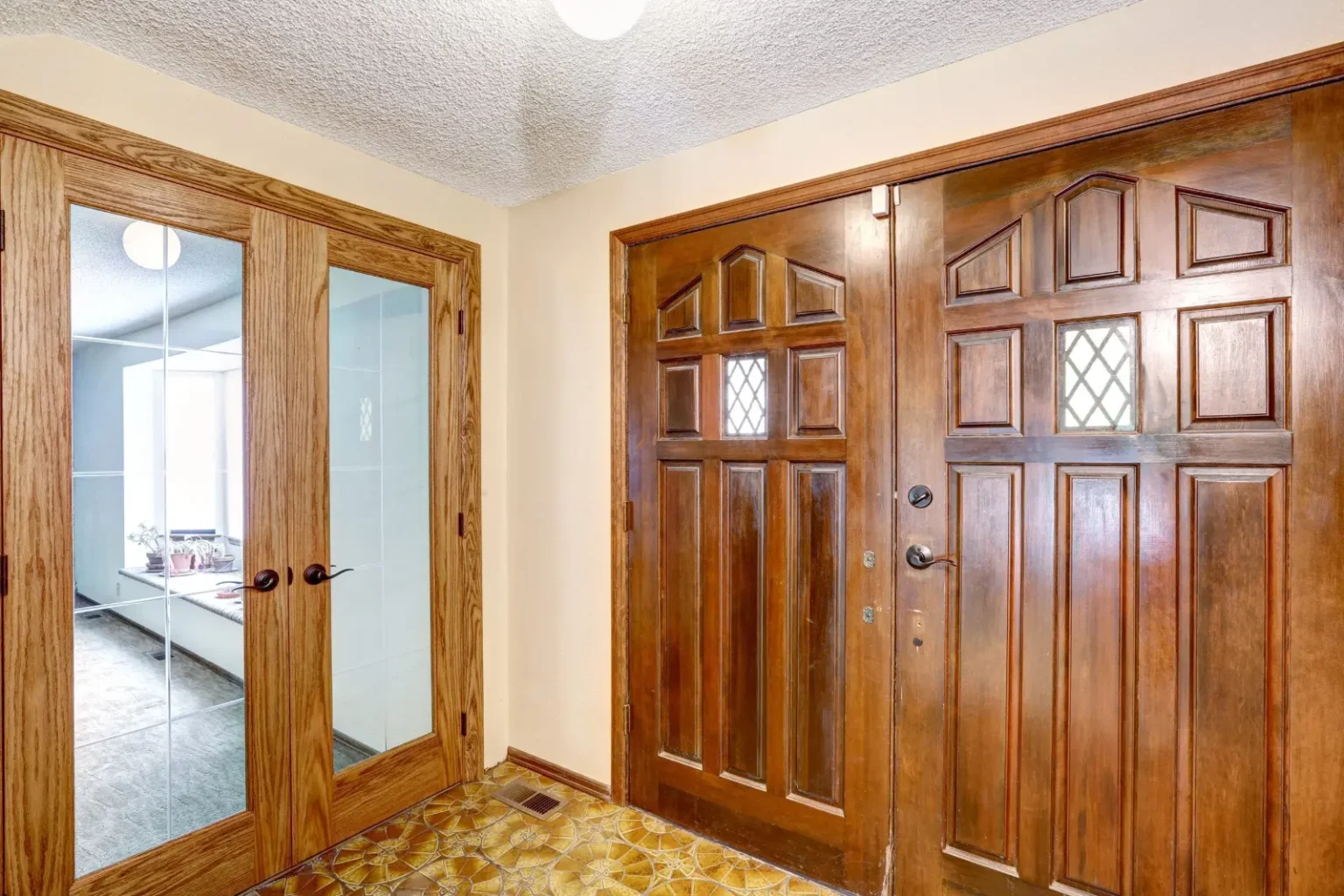
Joinery repair and rectification is the other half of that. Doors that bind, drawers that drop, veneer lifting at an edge, a worktop joint that has opened, panelling that has moved — all of it is repairable and most of it is a day or two of work. We take on rectification of other contractors’ joinery as well, which is usually how a client first meets us, and we will say plainly whether a piece can be saved or should be rebuilt.
Veneer, lacquer and laminate finishes
Three words get used interchangeably on quotations and they are not the same thing. Here is the difference, plainly.
| Finish | What it actually is | Where it belongs |
|---|---|---|
| Wood veneer | A real timber slice bonded to a board core, then lacquered | Wardrobes, doors, feature walls — wherever grain matters |
| PU lacquer | A sprayed polyurethane coat, matt, satin or gloss, any colour | Colour-matched joinery; the only finish you can respray later |
| Matte lacquer | The same coat in a low sheen, so it hides marks and reflections | Dark colours and large flat doors where gloss shows every wave |
| Laminate | A printed sheet pressed onto board, sealed at the edge | Kitchens, kids’ rooms, rentals — the hardest wearing face |
| Melamine | A thinner sheet fused to board, usually on the inside faces | Carcass interiors, shelving and the back of every unit we build |
Underneath the finish sits the substrate, and that is where quotations differ most. Solid wood is used for lippings, frames, staircase treads and anything that takes a fixing or an impact. Oak is the workhorse — stable, open-grained, takes a stain or a natural oil. Walnut is darker, softer and more expensive, and it needs sequencing across a run or the tonal variation reads as a mistake.
MDF is the right core for anything sprayed, because it has no grain to telegraph through lacquer and it machines cleanly for fluting and profiles. Plywood is stronger and lighter for long spans and structural carcasses, and it holds a screw far better than MDF. We use moisture-resistant grades of both in kitchens and bathrooms, and we will put the grade in writing on the quotation.
Every one of those finishes is applied in our own booth, which is the practical benefit of an in-house joinery workshop — the same factory that cuts the panel sprays it, so a colour can be matched, corrected and resprayed without shipping the piece across town. A Dubai factory that only assembles bought-in components cannot do that, and it is the reason a respray is a normal request for us and a new order for them.
Joinery prices in Dubai
Our own published ranges. They are ranges because material and complexity move the number far more than size does.
| Item | Typical range | Notes |
|---|---|---|
| Fitted wardrobe, laminate finish | AED 1,100 – 1,500 / sq m face | Soft-close hardware included as standard |
| Fitted wardrobe, PU lacquer or veneer | AED 1,800 – 2,600 / sq m face | Veneer sequenced across the run |
| Walk-in wardrobe, full room | AED 28,000 – 75,000 | Depends on run length and internal fittings |
| TV and media wall | AED 9,000 – 45,000 | Joinery, panelling, stone and concealed lighting |
| Wall panelling | AED 550 – 1,400 / sq m | Fluted, slatted, flat-panel or upholstered |
| Bathroom vanity | AED 4,500 – 16,000 | Moisture-resistant board, stone top extra |
| Internal door with frame, made to size | AED 2,200 – 6,500 | Solid, veneered or lacquered, hung and adjusted |
| Kitchen, supply and install | AED 25,000 – 120,000+ | Carcasses, doors and fitting; stone quoted separately |
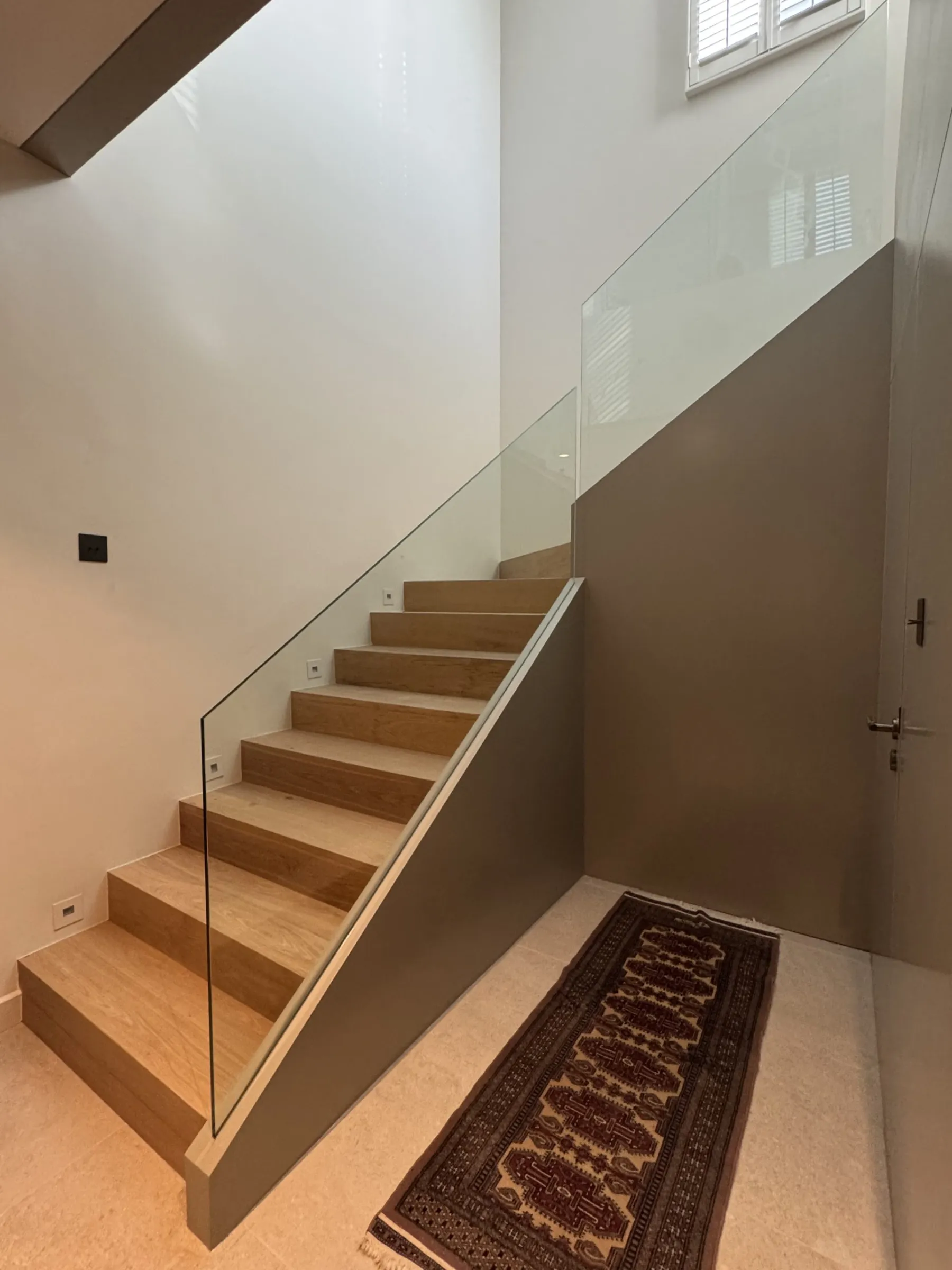
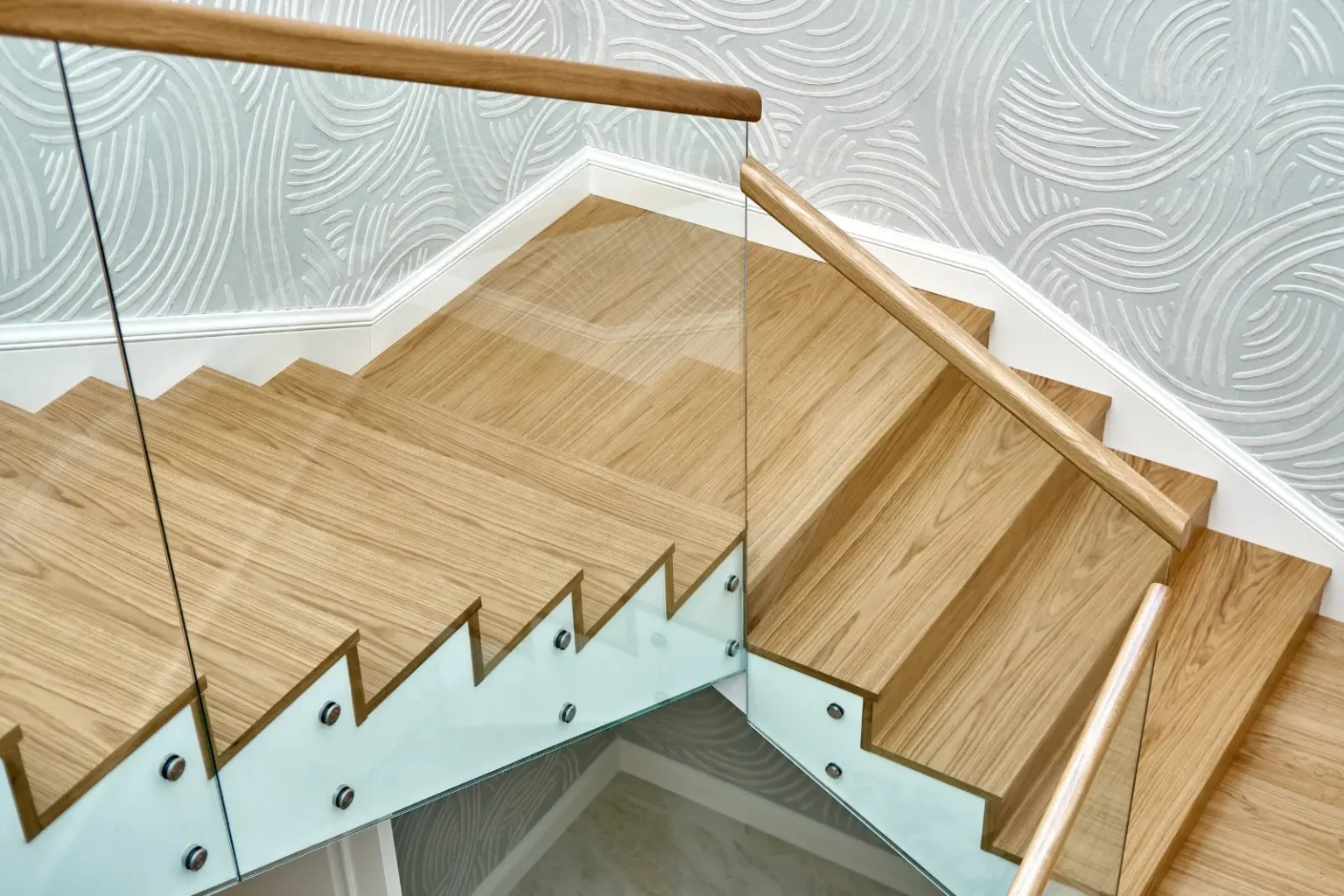
| Staircase cladding and balustrade | AED 22,000 – 80,000 | Timber treads with glass or metal balustrade |
| Reception counter, commercial | AED 12,000 – 45,000 | Built for commercial wear, with cable management |
Wardrobes are priced per square metre of visible face — width times height of the front elevation — because that is what drives the material and the labour, not the depth. Internal fittings, drawer banks, pull-down rails and lighting are quoted as extras against a list, so you can see exactly what each one adds instead of finding it folded into a rate.
Everything we quote is supply and installation unless the line says otherwise, and that includes delivery, protection, fitting, adjustment and removing our own waste. Where a stone top, an appliance or a glass element is bought through a specialist, we show it as a separate line at cost plus our stated margin rather than burying it.
Custom joinery and carpentry in Dubai
How much does a custom wardrobe cost in Dubai?
A custom wardrobe is priced per square metre of visible face. Laminate runs AED 1,100 to 1,500 per sq m, and PU lacquer or veneer AED 1,800 to 2,600 per sq m. A typical 3 m wide by 2.7 m tall wardrobe is about 8 sq m of face, so roughly AED 9,000 to 12,000 in laminate or AED 14,500 to 21,000 in lacquer or veneer. A full walk-in room is AED 28,000 to 75,000. Internal fittings, drawer banks, pull-down rails and LED lighting are quoted as separate lines so you can see what each one adds.
How much does a TV unit cost in Dubai?
A TV and media wall runs AED 9,000 to 45,000. The bottom of that range is a straightforward floating cabinet with a panelled back in laminate; the top is a full wall in fluted or slatted timber with stone, concealed lighting, integrated storage and conduit run for the AV. What moves the number most is the panelling treatment and whether stone is involved, not the width of the wall.
What is the difference between veneer, lacquer and laminate?
Veneer is a real slice of timber bonded to a board core, then lacquered — it has genuine grain that has to be sequenced across a run, and it can be sanded and refinished. Lacquer is sprayed polyurethane in any colour, matt, satin or gloss, and it is the only one of the three that can be resprayed years later. Laminate is a printed sheet pressed onto board — the most hard-wearing face of the three and the cheapest, but it cannot be repaired if it chips, only replaced.
Do you have your own joinery workshop in Dubai?
Yes. Our workshop is at 15 32b Street, Ras Al Khor Industrial Area 2, and it has been running since 1984. Cutting, edging, drilling, spraying and assembly all happen there, and our own fitters install. You are welcome to visit and see your own job on the bench — call 056-5608073 and we will arrange a time. It is the fastest way to tell a real in-house joinery workshop from a trading company.
Do you work with fit-out contractors as well as homeowners?
Both, and they are quoted the same way. For contractors we work to the BOQ, issue shop drawings for approval, and sequence deliveries to your site programme and access windows. For homeowners we survey, design, make and install directly. Roughly half our work is each.
Can you match joinery to something I already have?
Usually. We take a sample or a photograph of the existing piece, spray a match in our booth and send it to you before committing. Lacquer colours match very closely. Veneer is harder to match exactly, because timber varies by log, so we will show you the closest we can get and let you decide rather than promise a perfect match.
Do you repair or repaint existing joinery?
Yes, and it is often the better value option. A sound carcass with dated or damaged doors gets stripped, filled, primed and resprayed in our booth, which gives a finish no on-site brush or roller will match. We also rehang binding doors, replace failed runners and hinges, and take on rectification of joinery another contractor has left. If a piece is genuinely beyond saving, we will say so.
How long does a joinery job take?
Three to six weeks from approved drawing to installed piece for most items. The survey and 3D usually take a few days, sample approval a few more, and the rest is machine time, spraying and curing. A special veneer or a matched lacquer colour can add a week or two, and we will say so at quotation rather than at week five.
What board do you use, and will you put it in writing?
Moisture-resistant 18 mm board for kitchen and bathroom carcasses, MDF where a piece is to be sprayed, plywood for long spans and structural carcasses, and solid timber for lippings, frames and anything taking an impact. Yes — the grade goes on the quotation, because a quote that says only ‘wood’ is not a quote you can compare.
Do you deliver and install, or supply only?
Every price we quote is supply and installation unless the line says otherwise, and that covers delivery, floor and lift protection, fitting, scribing, adjustment and taking our own waste away. Supply-only is possible if you have your own fitters, but we price it separately and the fit is then your responsibility.
Which areas of Dubai do you cover?
All of Dubai, and the other emirates case by case. Our workshop and stores are in Ras Al Khor Industrial Area 2, which is central enough that a missing bracket or a door that needs re-spraying is a same-day problem rather than a lost week on site.
How do I get a quotation?
Call or WhatsApp 056-5608073, or email contact@abdullacarpentryest.ae with the room dimensions and a few photographs. We arrange a free site measurement and quotation, usually within a couple of days. The written quotation is itemised by piece, with the board, finish and hardware named on each line.
Useful official references
Joinery sits inside a wider set of rules on building materials, fire performance and timber sourcing. These are the primary sources we work to, and they are worth reading before you compare quotations from anyone.
Come and see it being made
A free site measurement and quotation, anywhere in Dubai — and an open invitation to visit the workshop at 15 32b Street, Ras Al Khor Industrial Area 2, and watch your own job on the bench. That is an offer a trading company cannot make. Call or WhatsApp 056-5608073, or email contact@abdullacarpentryest.ae.