Home › Residential › Bar and cellar
Home bars and cellars in Dubai, insulated before they are beautiful
Bespoke bar joinery, stone and solid-surface counters, glass-fronted climate-controlled cellars, under-counter services and lighting — built so the storage conditions are right and the room looks the way you wanted.
What a bar and cellar project involves and what it costs
A home bar and cellar project in Dubai covers bar joinery and counters, under-counter refrigeration and a sink, glass and bottle storage, seating, lighting, and — for a cellar — insulation, a vapour barrier, a cooling unit and racking that holds the correct temperature and humidity. Expect AED 18,000 to 55,000 for a home bar and AED 35,000 to 180,000 for a climate-controlled cellar depending on size and glazing. Abdulla Carpentry EST builds the insulation envelope before the joinery, because a cellar that is not sealed cannot hold its conditions.
A wine cellar in Dubai is a refrigeration problem wearing joinery. The target is roughly 12 to 14 degrees with 60 to 70 per cent relative humidity, held steady, in a building where the ambient outside can be 45 degrees and the air conditioning next door is drying the air to 40 per cent. That gradient is severe, and it is the whole engineering challenge.
Which is why the order matters. Insulation to the walls, floor and ceiling; a vapour barrier on the warm side, continuous and sealed, because without it moisture migrates into the structure and condenses; an insulated door with a proper seal; then a cooling unit sized for the heat load rather than the floor area. Only after all of that does the racking and the joinery go in.
Cellars built the other way round — beautiful racking installed in an uninsulated room with a domestic split unit — do not hold humidity, dry out corks, and grow condensation inside the wall build-up. It is an expensive mistake and it is invisible until the wine tells you.
A bar has none of that complexity. It is joinery, services and a counter, and it is one of the most enjoyable things we build.
 12–14°CHeld with 60–70% humidity
The elements of a bar and cellar
Bars and cellars are usually built together, and they have almost nothing in common technically.
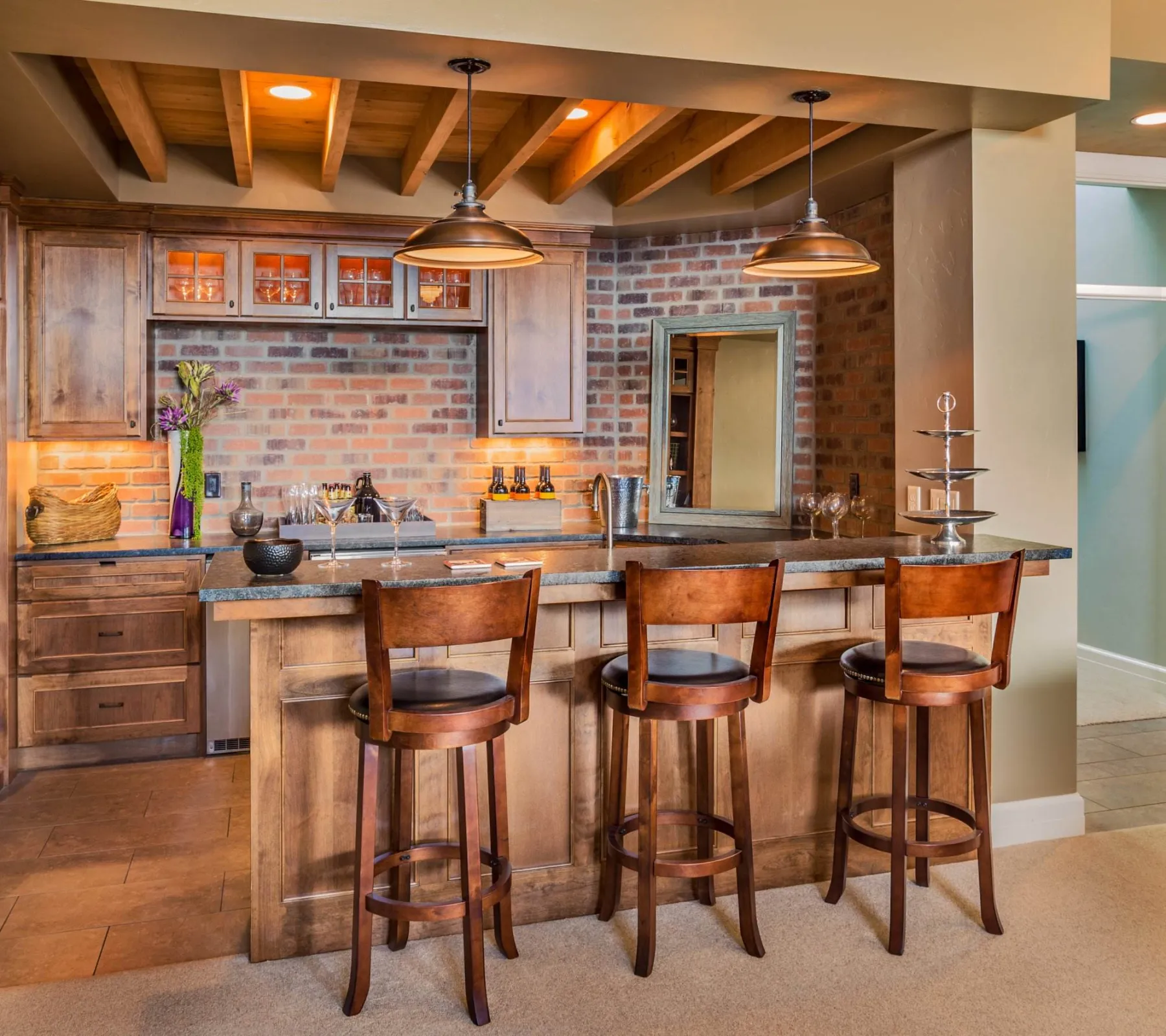
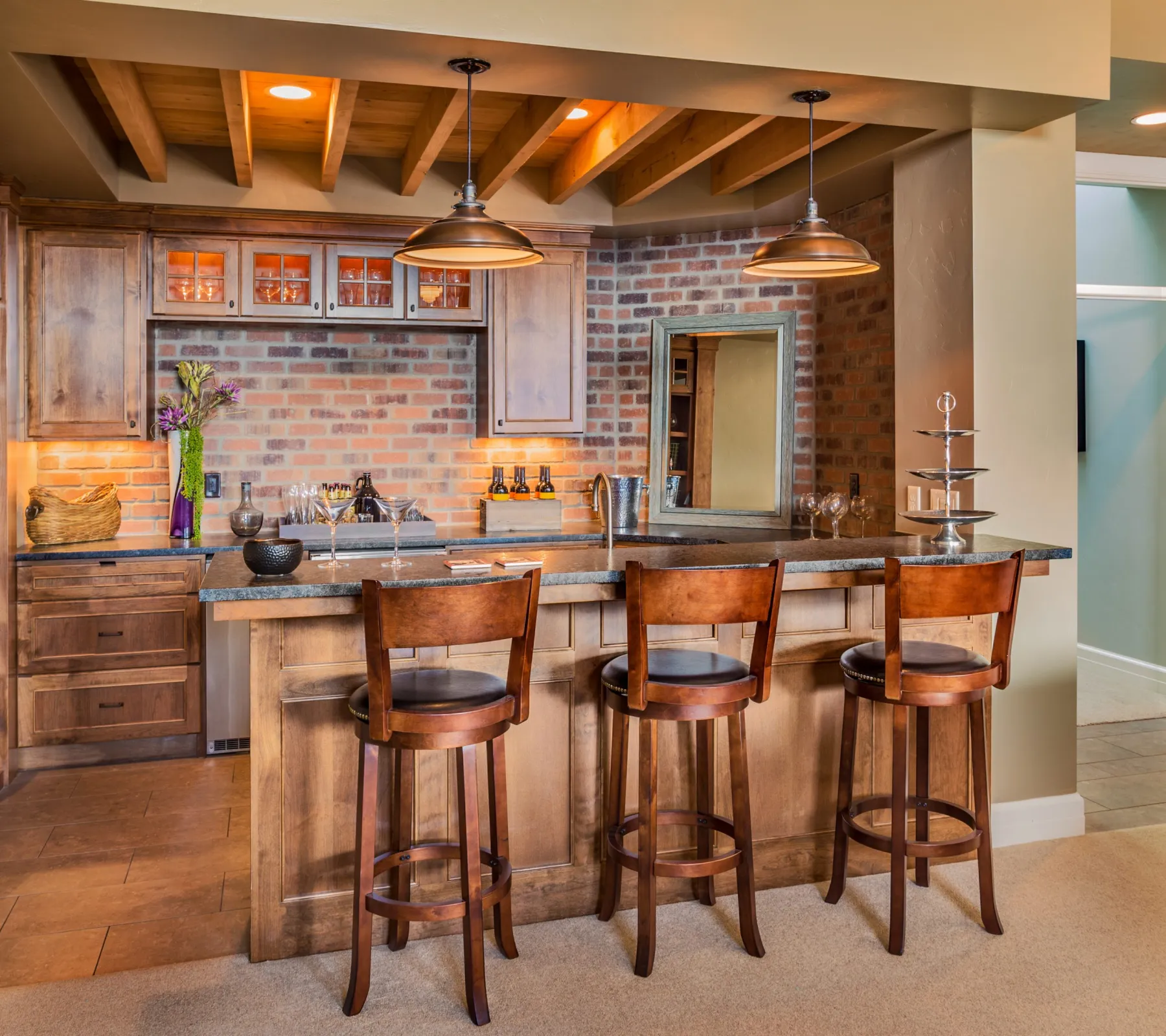
Bar joinery and counter. A back bar with bottle and glass storage, an under-counter run with refrigeration, an ice maker and a small sink, and a counter at 1.05 to 1.1 metres for standing and stool height. Counter in stone, solid surface or timber with a durable finish. See stone works.
Back bar display. Glass shelving with integrated lighting, an antique or bronze mirror backing that doubles the apparent depth, and bottle storage arranged so it displays well rather than merely stores. See mirror works.
Under-counter services. Waste and supply for the sink, dedicated circuits for refrigeration and an ice maker, ventilation for under-counter appliances, and a drip tray and drainage where a tap system is fitted. See plumbing.
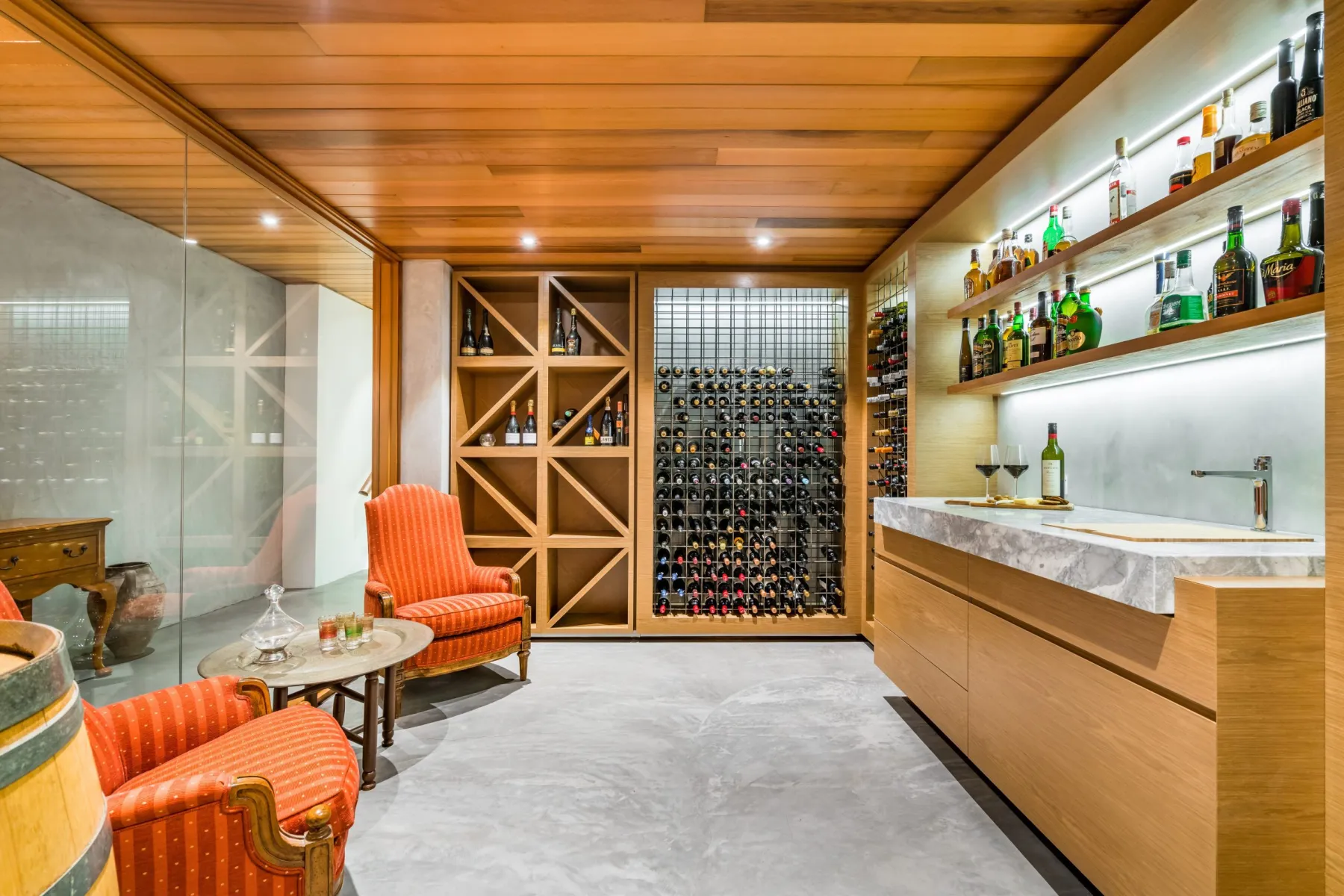
Cellar envelope. Insulation to walls, ceiling and floor, a continuous sealed vapour barrier on the warm side, an insulated door with a full perimeter seal, and a cooling unit ducted or through-wall, sized for the heat load and the glazing.
Racking and storage. Timber, metal or acrylic racking sized to the bottle formats actually stored, with case storage, a tasting or decanting shelf, and lighting that does not heat the bottles or expose them to ultraviolet.
Glass walls and display. Double-glazed glass walls and doors so the cellar is visible from the living space, with thermally broken frames and seals. This is the detail that makes a cellar a feature rather than a cupboard, and the one that most affects the cooling load. See glass works.
Insulation, vapour barrier and cooling
Insulation levels for a Dubai cellar are higher than most people expect, because the temperature difference across the wall is large and constant. We insulate walls, ceiling and floor, and we pay particular attention to the ceiling, since the slab above is often the warmest surface in the build-up.
The vapour barrier is the detail that is most often omitted and most damaging when it is. It goes on the warm side of the insulation, it must be continuous, and every penetration — cable, pipe, light fitting, door frame — has to be sealed. Without it, warm moist air migrates into the wall build-up, reaches the dew point somewhere inside it, and condenses. The result is damp insulation, mould and eventually structural damage, none of which is visible from the room.
Cooling is a dedicated wine unit rather than a domestic air conditioner. A standard split unit will hold a temperature but strips humidity out of the air, drying corks and letting air into the bottles. A wine cooling unit is designed to maintain humidity as well as temperature, and it is sized against the calculated heat load, including the glazing, the door and the lighting.
Glass adds enormously to that load. A glass-walled cellar is spectacular and needs double glazing with a thermal break and good seals, plus a larger cooling unit. It is entirely doable; it just has to be designed rather than assumed.
Vapour barrierContinuous on the warm sideHow a bar and cellar project runs
Survey and requirements
We measure the space, establish the bottle count and formats for a cellar, and go through how the bar will be used — serving for large gatherings or a quiet corner of a living room. The bottle count sizes everything.
Design and heat load calculation
Joinery elevations and racking layout, plus a cooling load calculation for the cellar that accounts for the glazing, the door, the lighting and the surrounding rooms. Unit selected from that number rather than from the floor area.
Envelope and services
Cellar insulation, sealed vapour barrier, insulated door frame, then cooling unit installation and ducting. For the bar: waste, water, dedicated circuits and appliance ventilation first-fixed.
Manufacture
Bar joinery, back bar, counters and racking machined and finished in our workshop, with stone templated after the carcasses are installed. Four to six weeks.
Installation and commissioning
Joinery and racking installed, glass fitted and sealed, appliances connected, then the cellar run up and monitored over several days to confirm it holds temperature and humidity before any wine goes in.
Bar and cellar costs in Dubai
Design, build and install in Dubai. Cellar prices include the insulated envelope and the cooling unit; appliances and stock are separate.
| Item | Unit | Typical range |
|---|---|---|
| Home bar, joinery and counter | per project | AED 18,000 – 55,000 |
| Bar joinery | per linear m | AED 4,500 – 12,000 |
| Stone or solid surface bar top | per sq m | AED 350 – 1,400 |
| Back bar with glass shelving and lighting | per linear m | AED 3,200 – 9,000 |
| Under-counter services and circuits | per project | AED 2,500 – 8,500 |
| Wine cellar, small, insulated and cooled | per project | AED 35,000 – 75,000 |
| Wine cellar, large or glass walled | per project | AED 75,000 – 180,000 |
| Cellar insulation and vapour barrier | per sq m | AED 260 – 550 |
| Wine cooling unit, supplied and fitted | each | AED 9,000 – 35,000 |
| Insulated cellar door | each | AED 4,500 – 14,000 |
| Double-glazed cellar glass wall | per sq m | AED 1,400 – 3,200 |
| Timber or metal wine racking | per linear m | AED 1,400 – 4,500 |
| Cellar lighting, low heat and UV safe | per room | AED 1,800 – 7,500 |
| Bar seating and stools | each | AED 650 – 3,500 |
The insulated envelope and the cooling unit typically account for half a cellar budget before any racking is made. Spending it the other way round — beautiful racking in an uninsulated room — produces a cellar that does not work.
Where a bar and cellar belong in a Dubai villa
Bars sit naturally at the edge of a living or game room, or in a dedicated entertainment space where they can serve seating without being walked through. The practical constraints are waste and water for the sink, and a dedicated circuit or two for refrigeration — both easier on a ground floor near an existing wet area.
Cellars want to be somewhere structurally cool and away from direct sun: an internal room, an under-stair space, a store room, or a converted section of a garage. The worst position is against an external west-facing wall, where the cooling unit fights the afternoon sun all summer.
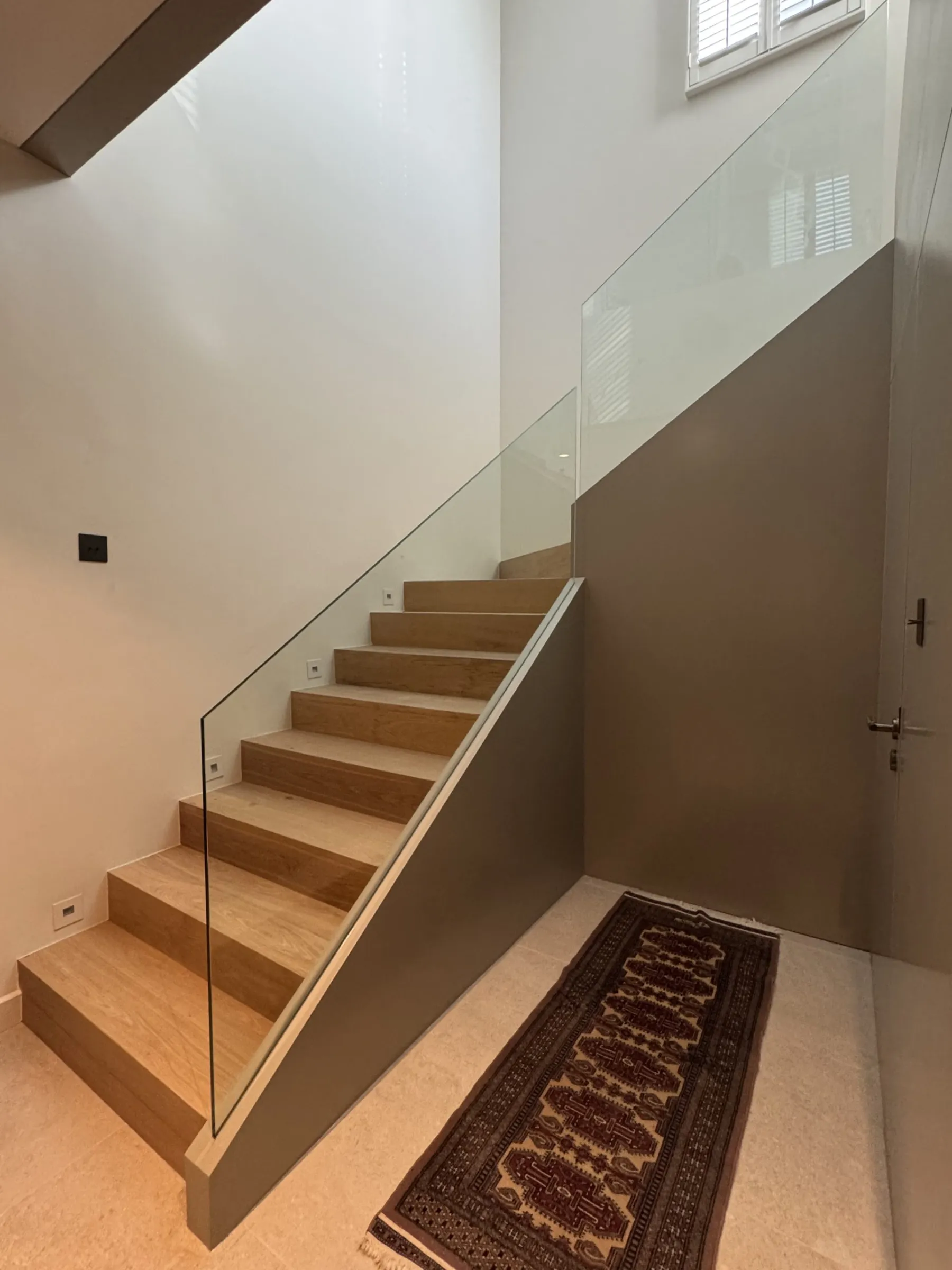
Under-stair cellars are one of the better uses of otherwise dead space, and the glazed version — visible from a hallway — is one of the most striking things you can do in a villa. The constraint is usually the cooling unit, which needs somewhere to reject its heat that is not into the room next door.
Bar and cellar: common questions
How much does a wine cellar cost in Dubai?
AED 35,000 to 75,000 for a small insulated and cooled cellar, and AED 75,000 to 180,000 for a large or glass-walled one. Roughly half of that is the insulated envelope and the cooling unit before any racking is made.
What temperature and humidity should a cellar hold?
Around 12 to 14 degrees Celsius with 60 to 70 per cent relative humidity, held steady. Stability matters as much as the number — repeated cycling is harder on wine than a constant temperature slightly off target.
Can I use a normal air conditioner in a cellar?
No. A domestic split unit will hold a temperature but strips humidity out of the air, which dries corks and lets air into the bottles. A dedicated wine cooling unit maintains humidity as well as temperature.
Why does a cellar need a vapour barrier?
Because warm moist air migrates towards the cold side and condenses inside the wall build-up. A continuous sealed vapour barrier on the warm side prevents that. Without it you get damp insulation and mould that is invisible from inside the room.
Can a cellar have a glass wall?
Yes, and it makes a striking feature. It needs double glazing with a thermal break and proper seals, and it substantially increases the cooling load — so the unit is sized from a calculation that includes the glass, not from the floor area.
How long does a bar or cellar take?
Four to six weeks for a home bar including joinery manufacture. Eight to twelve weeks for a cellar, because the insulated envelope, the cooling installation and the commissioning period all come before the racking.
Where is the best place for a cellar in a villa?
Somewhere internal and away from direct sun — an under-stair space, a store room or an internal room. Avoid west-facing external walls, where the unit fights the afternoon heat all summer and runs constantly.
Do you supply the racking and refrigeration?
Yes, we supply and install both, or work with equipment you have specified. The racking is made in our workshop to your bottle formats and the room dimensions, which uses the space far better than modular systems.
Tell us the bottle count
The number of bottles, the formats and the space available are enough for us to size a cellar, calculate the cooling load and come back with a design and a price.