Home › Residential › Tea room
Tea rooms in Dubai, the room that serves the majlis
Tea and Arabic coffee preparation rooms — serving counters, dallah and samovar provision, crockery storage, water and waste, and extraction, built beside the majlis so hospitality happens without anyone crossing the house.
What a tea room involves and what it costs
A tea room in a Dubai home is a small preparation and serving room, usually adjoining the majlis, fitted with a counter, a sink, storage for dallah, finjan, glassware and serving trays, power for kettles, samovars and coffee equipment, and extraction. Expect AED 12,000 to 35,000 for a compact tea room and AED 35,000 to 85,000 for a larger preparation room with extensive joinery and appliances. Abdulla Carpentry EST builds the joinery around the serving pieces the household actually uses.
Hospitality in a Dubai home has a rhythm, and a tea room exists to serve it. Guests arrive, they are received in the majlis, and Arabic coffee, tea, dates and sweets follow within minutes and keep following for as long as the visit lasts. If that service has to come from the main kitchen at the other end of the house, every round is a journey, and the person doing it misses the gathering.
So the tea room is placed where it belongs: directly adjoining or immediately behind the majlis, often with a serving hatch or a discreet door, and sized to the service rather than to the idea of a kitchen. It needs a counter to work on, hot water, somewhere to wash up, and storage for the specific pieces — dallah, thermos flasks, finjan cups, tea glasses, trays, date dishes and incense.
It is a small room and an intensely practical one. Get the layout, the power and the extraction right and hosting becomes effortless. Get it wrong and it becomes a store cupboard with a kettle in it.
Beside the majlisService without the journey
The elements of a tea room
Everything in a tea room is sized to the serving pieces. That is what makes a bespoke one so much more useful than a small kitchen.
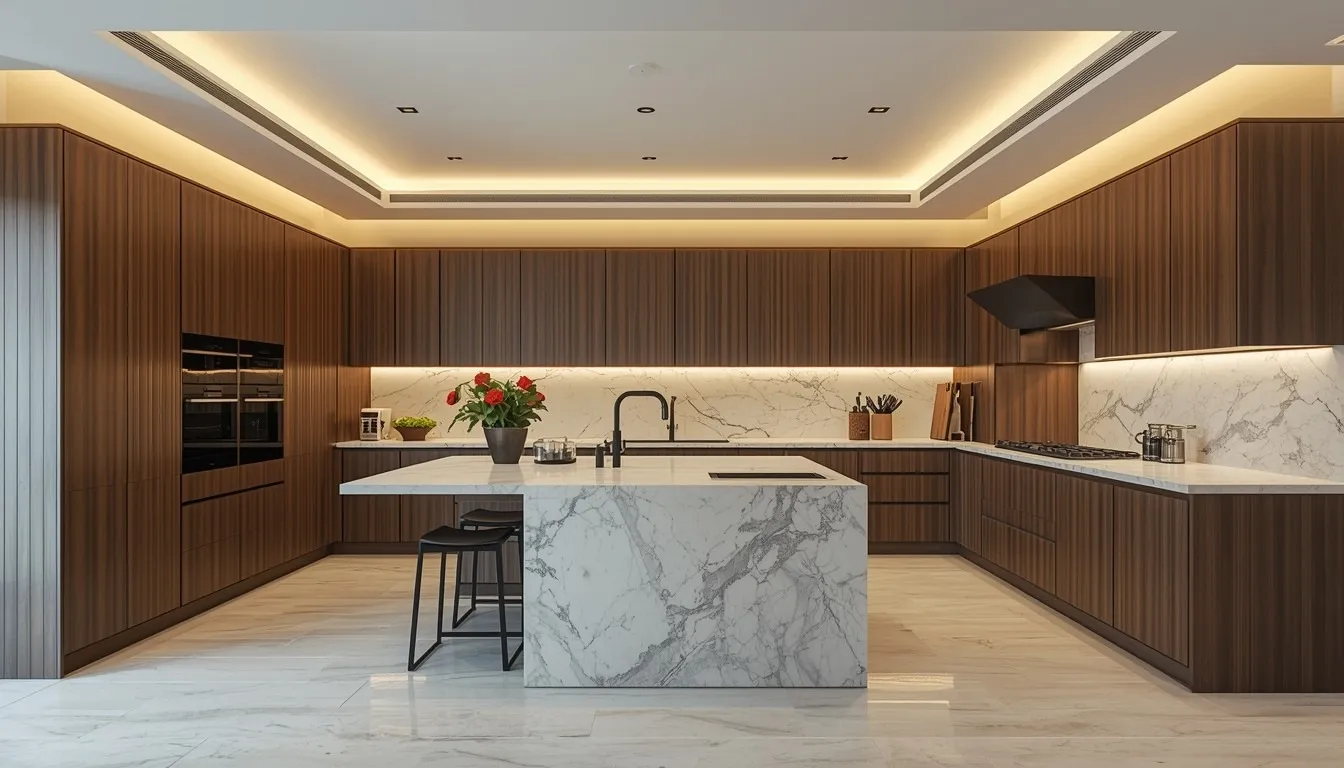
Counter and preparation surface. A continuous run at 900 millimetres with space to set out a full tray, load it and check it before it goes out. Stone, solid surface or a durable laminate — it will see hot pots, spills and constant wiping. See stone works.
Dallah, thermos and samovar provision. A dedicated section with sockets at counter level, height clearance for tall flasks and samovars, and a heat-tolerant surface. Thermos flasks in particular need more height than a standard wall unit allows, which is the most common fault in retrofitted tea rooms.
Crockery and glassware storage. Adjustable shelving sized to finjan cups, tea glasses, saucers and date dishes, with a section for trays stored upright on edge rather than stacked flat. Glazed doors where the pieces are worth displaying.
Sink and water. A sink deep enough to wash a dallah and a tray, a mixer with height to fill a flask, and ideally a filtered or boiling water tap, which removes the kettle from the counter entirely. See plumbing services.
Appliances. An under-counter fridge for water, juice and laban, a warming drawer or a small oven for sweets, and space for a coffee machine. Power circuits sized for all of it together, because a tea room draws more than it looks like it should.
Extraction and finishes. Extraction for the smell of coffee roasting, cardamom and incense, wipeable surfaces throughout, and a floor that takes spills. A tea room without extraction pushes every aroma into the majlis next door.
Where the tea room belongs
The single most important decision is position, and it is nearly always the same: directly adjoining the majlis, with either a serving hatch, a discreet door, or both. A hatch lets trays pass without the preparation being on view; a door lets someone work without being seen. Most households want both, and where there is a separate men’s and women’s majlis, a tea room positioned between the two can serve both.
The second decision is whether it connects to the main kitchen. A connecting door is extremely useful for restocking and for washing up in bulk, but it also makes the tea room a through route, which defeats the purpose during a gathering. A door that can be closed during hosting solves both.
Services decide feasibility. The room needs water, waste and a good electrical supply, so proximity to an existing wet area — a guest bathroom, the main kitchen or a riser — keeps the cost sensible. Where a tea room is being created in a villa that never had one, the waste run is usually the item that determines exactly where it can go.
Ventilation is the third. Arabic coffee, cardamom, saffron and bukhoor are all part of the hospitality and all of them carry. A properly ducted extract keeps the aromas where they belong rather than in the curtains of the majlis.
AdjoiningWith a hatch and a doorHow a tea room project runs
Survey and service brief
We measure the space, locate the nearest water, waste and electrical supply, and go through the serving pieces — the dallah sizes, the flasks, the tray dimensions. Those measurements set the joinery.
Design and layout
Counter run, appliance positions, hatch or door location, storage sized to the pieces, and the extraction route. Presented in 3D with a finish board matched to the majlis next door.
Services and preparation
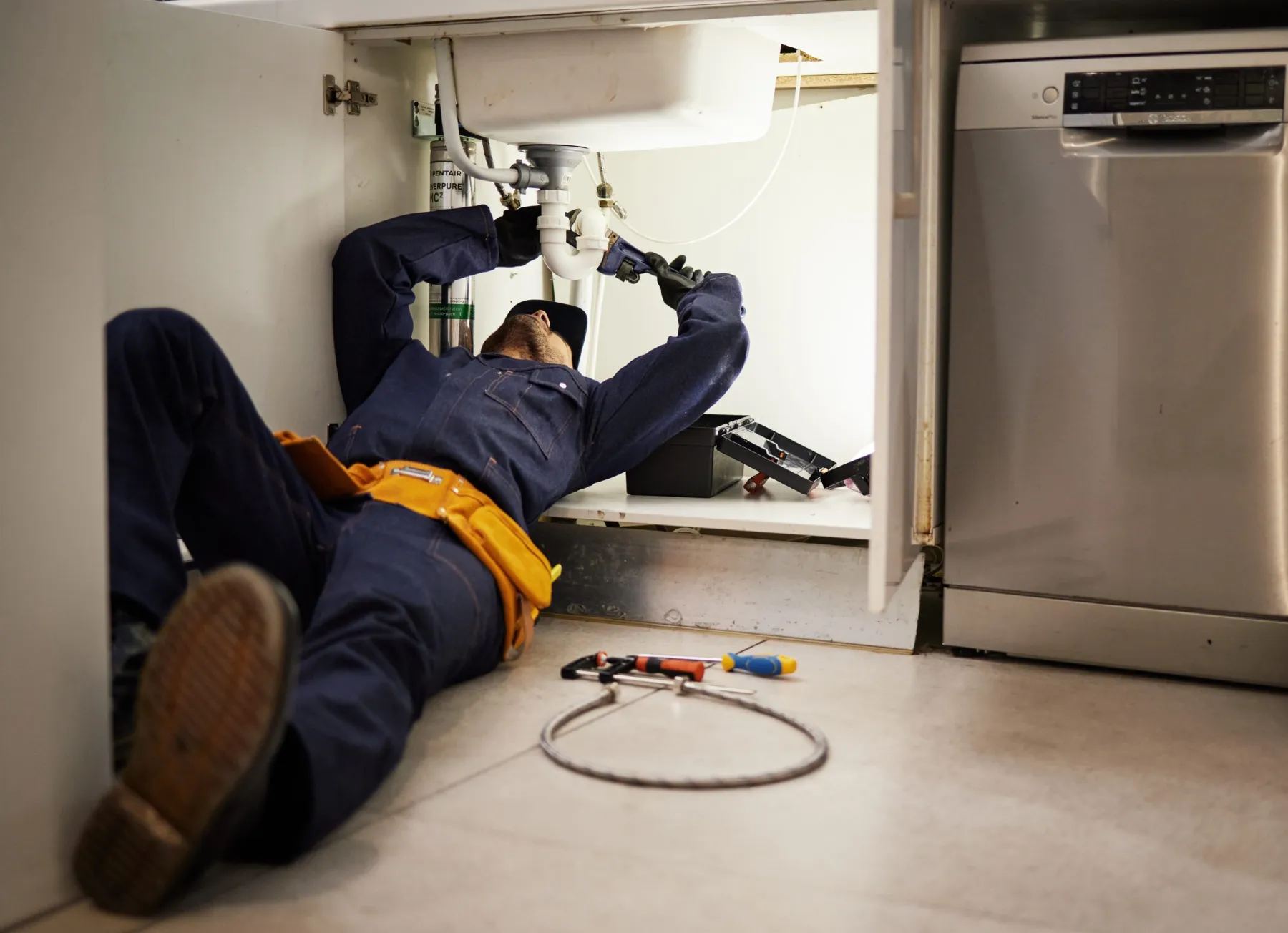
Water and waste run to the new position, dedicated circuits installed, extraction ducted to outside, waterproofing to the floor and wall upstands, then tiling and painting.
Manufacture
Joinery and any glazed doors made and finished in our workshop, sized to the serving pieces rather than to standard module dimensions. Three to five weeks, with the stone templated after installation.
Installation and handover
Carcasses installed and levelled, worktop templated and fitted, sink and appliances connected, extraction commissioned and the room handed over with everything in its planned place.
Tea room costs in Dubai
Design, manufacture and install in Dubai. Appliances excluded unless supplied by us.
| Item | Unit | Typical range |
|---|---|---|
| Compact tea room, fitted out | per room | AED 12,000 – 35,000 |
| Large preparation room | per room | AED 35,000 – 85,000 |
| Joinery, lacquered finish | per linear m | AED 3,200 – 7,500 |
| Joinery, laminate finish | per linear m | AED 1,900 – 3,800 |
| Stone or solid surface worktop | per sq m | AED 280 – 1,400 |
| Sink and mixer, fitted | each | AED 900 – 3,200 |
| Boiling or filtered water tap | each | AED 2,200 – 7,500 |
| Glazed display doors, uplift | per sq m face | AED 850 – 2,200 |
| Tray storage, upright dividers | each | AED 350 – 950 |
| Under-counter refrigeration | each | AED 2,500 – 9,000 |
| Serving hatch formed and finished | each | AED 1,800 – 6,500 |
| Extraction, ducted to outside | each | AED 900 – 3,200 |
| Waterproofing, floor and upstands | per sq m | AED 55 – 120 |
| Water and waste run to new position | per project | AED 2,500 – 9,000 |
Where a tea room is being created in a villa that never had one, the drainage run is usually the item that decides both the position and a significant part of the cost. We establish it at survey before designing anything.
Small things that make hospitality easier
Tray storage on edge, in vertical dividers, rather than stacked flat. Trays are the item reached for most often during a gathering and the most awkward to extract from a stack. Upright storage with a divider per tray turns a two-handed operation into a one-handed one.
Sockets at counter level and more of them than seems reasonable. A samovar, two flasks, a coffee machine and a kettle can all be live at once during a large gathering, and a tea room with two sockets behind a fixed appliance is the reason extension leads end up on the floor.
And a second waste bin position. Hospitality generates cups, wrappers and date stones quickly, and a pull-out bin inside the joinery close to the door — separate from the main kitchen bin — keeps the majlis clear without anybody leaving the room.
Tea room: common questions
How much does a tea room cost in Dubai?
AED 12,000 to 35,000 for a compact tea room with joinery, a worktop, a sink and extraction. A larger preparation room with appliances and extensive storage runs AED 35,000 to 85,000.
Where should a tea room be located?
Directly adjoining the majlis, ideally with both a serving hatch and a door. Its position is usually limited by where water and waste can reach, so proximity to an existing wet area or riser keeps the cost sensible.
How long does it take?
Four to six weeks. Services and preparation take one to two weeks on site, joinery manufacture runs three to five weeks in parallel, and installation plus worktop templating takes a further week or two.
Does a tea room need a sink?
It should have one. A sink deep enough to wash a dallah and a tray, with a tap high enough to fill a flask, is what allows service to run for hours without anybody carrying things back to the main kitchen.
Does it need extraction?
Yes. Arabic coffee, cardamom, saffron and bukhoor all carry strongly, and without a ducted extract every aroma goes straight into the majlis and settles in the soft furnishings.
Can a tea room be created where there was not one?
Usually, yes — from a store room, part of a corridor, a section of the main kitchen or a space beside the majlis. The drainage run is the limiting factor, and we establish what is possible at survey before designing.
Should it connect to the main kitchen?
A connecting door is very useful for restocking and bulk washing up, provided it can be closed during a gathering. An open through route defeats the purpose, because the tea room becomes a corridor at exactly the moment it is needed.
Can the finishes match the majlis?
Yes, and they usually should. We match or deliberately complement the majlis joinery and panelling, working from samples sprayed in our own workshop so the two rooms read as one scheme.
Send the space and your serving pieces
The dimensions, a photo and a note on what you serve with are enough for us to design the joinery around the actual pieces and come back with a price.