Painting in Dubai, where the preparation is the job
Fill, sand, prime, then two finish coats in Jotun or Dulux systems. Cut lines that stay straight, ceilings that do not show roller lap in low sun, and furniture resprayed in our own booth.
What painting in Dubai actually costs and involves
Painting in Dubai costs AED 12 to 22 per square foot of wall and ceiling area for a full repaint including preparation. The work is: protect and mask, make good cracks and holes, sand back, prime bare or repaired areas, then apply two finish coats. Abdulla Carpentry EST paints with Jotun and Dulux systems, carries out specialist finishes including microcement and Venetian plaster, and resprays existing furniture and joinery in our own spray booth in Ras Al Khor.
Painting is the cheapest trade to quote badly and the easiest to spot afterwards. A crew can be in and out of an apartment in three days for a very attractive price, and you will live with the result for five years.
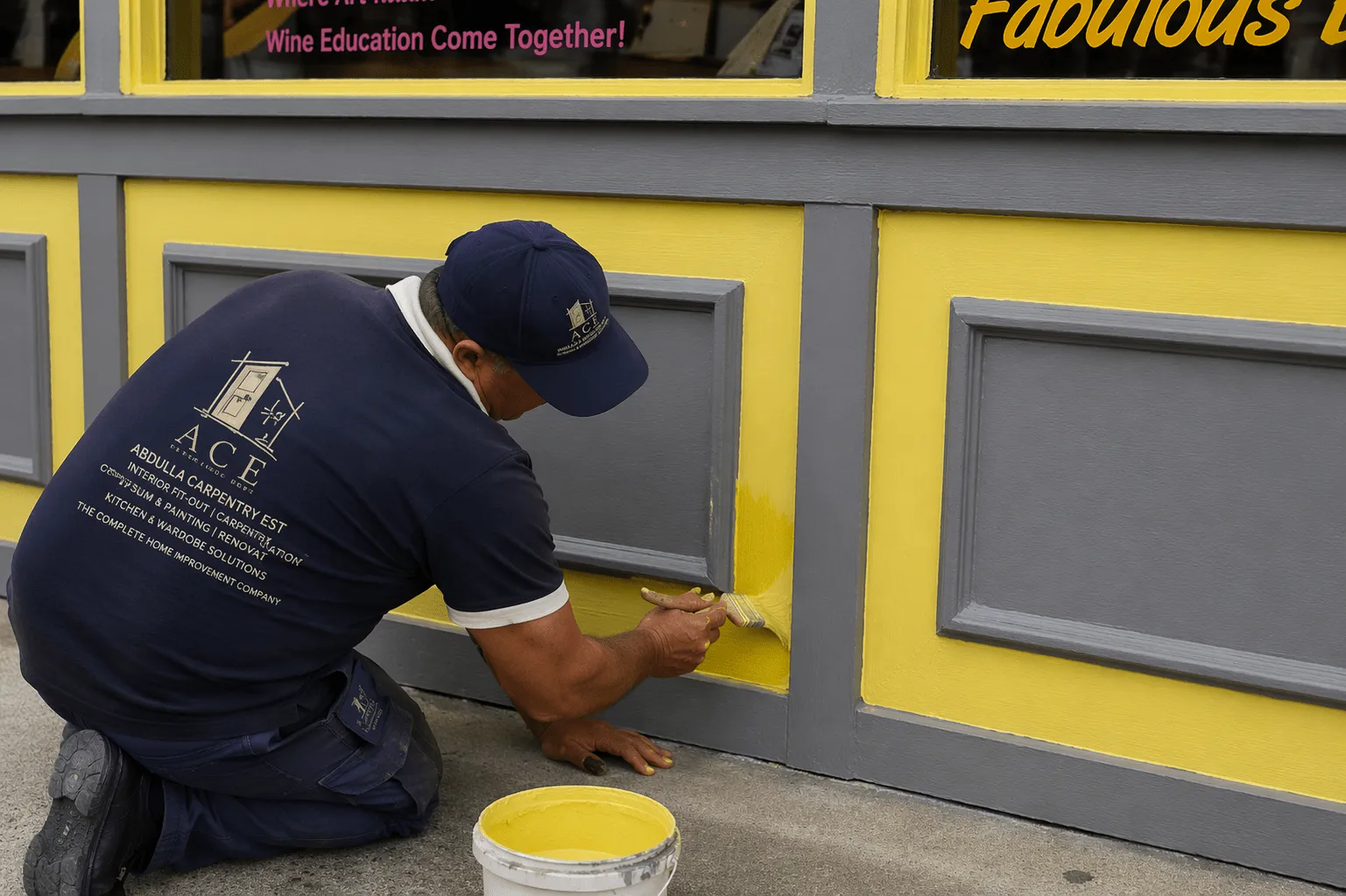
What you are actually buying is the preparation. Filling and sanding back properly, priming what needs priming, and cutting a line that is straight because the painter took the time rather than because tape was stuck over the problem. Two coats over unprepared wall is one job; the same two coats over properly prepared wall is a different product entirely, and it costs perhaps thirty per cent more.
The tell is always the same three places: the line where the wall meets the ceiling, the corners, and the ceiling itself under raking afternoon light. Look at those on any painted room and you will know what was done underneath.
 AED 12–22Per sq ft, fully prepared
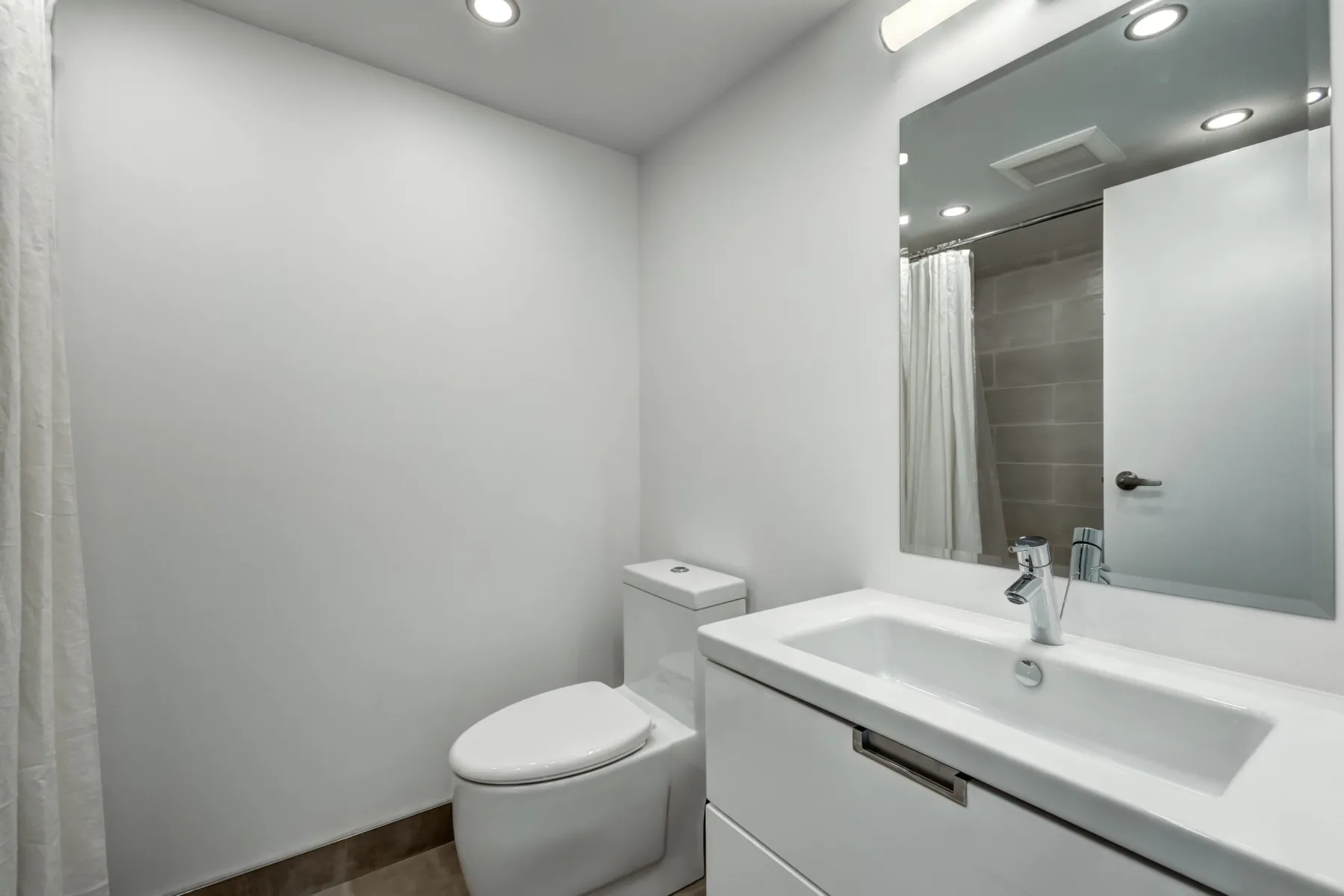
The stages nobody photographs
This is where a painting quotation is won or lost, and where a cheap one has saved its money.
Protection first. Floors covered, furniture sheeted and moved to the centre, sockets and switches removed rather than masked around, skirting and frames protected. In an occupied property the route in and out is covered too. Paint on a floor is a repair; paint on a marble floor is an expensive one.
Making good, properly. Cracks raked out and filled rather than smeared over, screw holes and impact damage filled in two passes because filler shrinks, and old flaking coatings scraped back to a sound edge. Filling a crack without raking it means the crack reappears in the same line within a year.
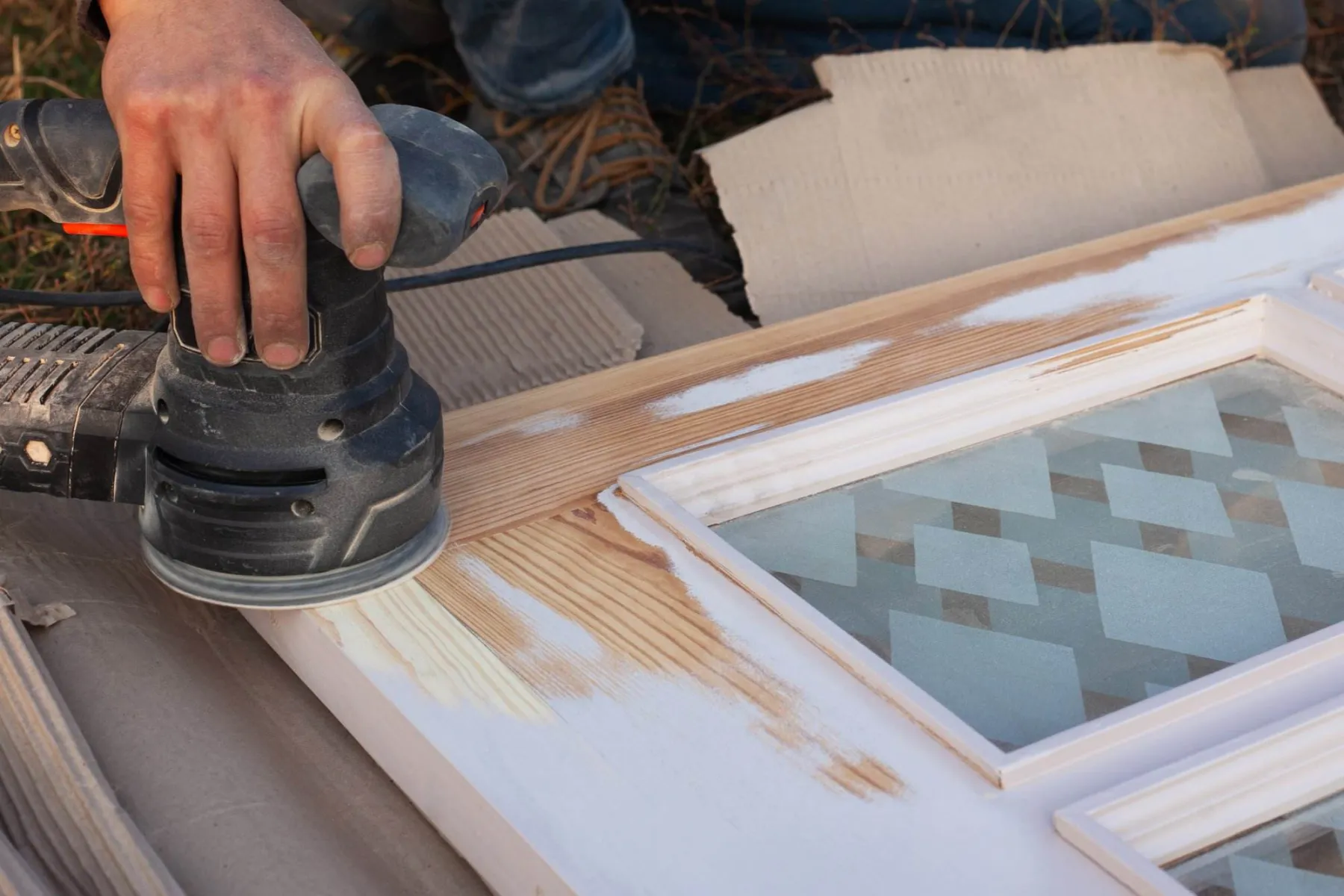
Sanding, and the dust that comes with it. Every filled area is sanded flush and feathered into the surrounding wall. This is the messiest hour of the job and the one most often skipped. We use extraction where we can and seal the room where we cannot.
Priming what needs it. Bare plaster, new skim, filled areas and any bare substrate all need primer or the finish coat sinks and flashes — the patchy dull areas you see on a wall that was painted straight over filler. Stain-blocking primer where water marks or nicotine are present, because emulsion alone will not hold them back.
Then two coats, not one. One coat over a colour change is never enough, whatever the tin claims. Two full coats, cut in by hand at the edges, rolled in a consistent direction so there is no lap line.
What we put on the wall, and why
Paint is not one product. The right system depends on the room, the substrate and what the surface has to survive.
Matt emulsion for ceilings and low-traffic walls. It hides imperfection better than any other finish, which is exactly why ceilings are painted in it. It marks when scrubbed, so it belongs where hands do not go.
Washable matt and silk for corridors, children’s rooms, kitchens and anywhere that gets touched. Slightly more sheen, considerably more durable, and it takes a clean cloth without burnishing.
Anti-fungal and moisture-resistant systems for bathrooms, laundries and any room with a humidity problem. Worth saying plainly: these help, they do not fix a ventilation fault. If mould keeps returning, the extract is undersized and paint is treating the symptom.
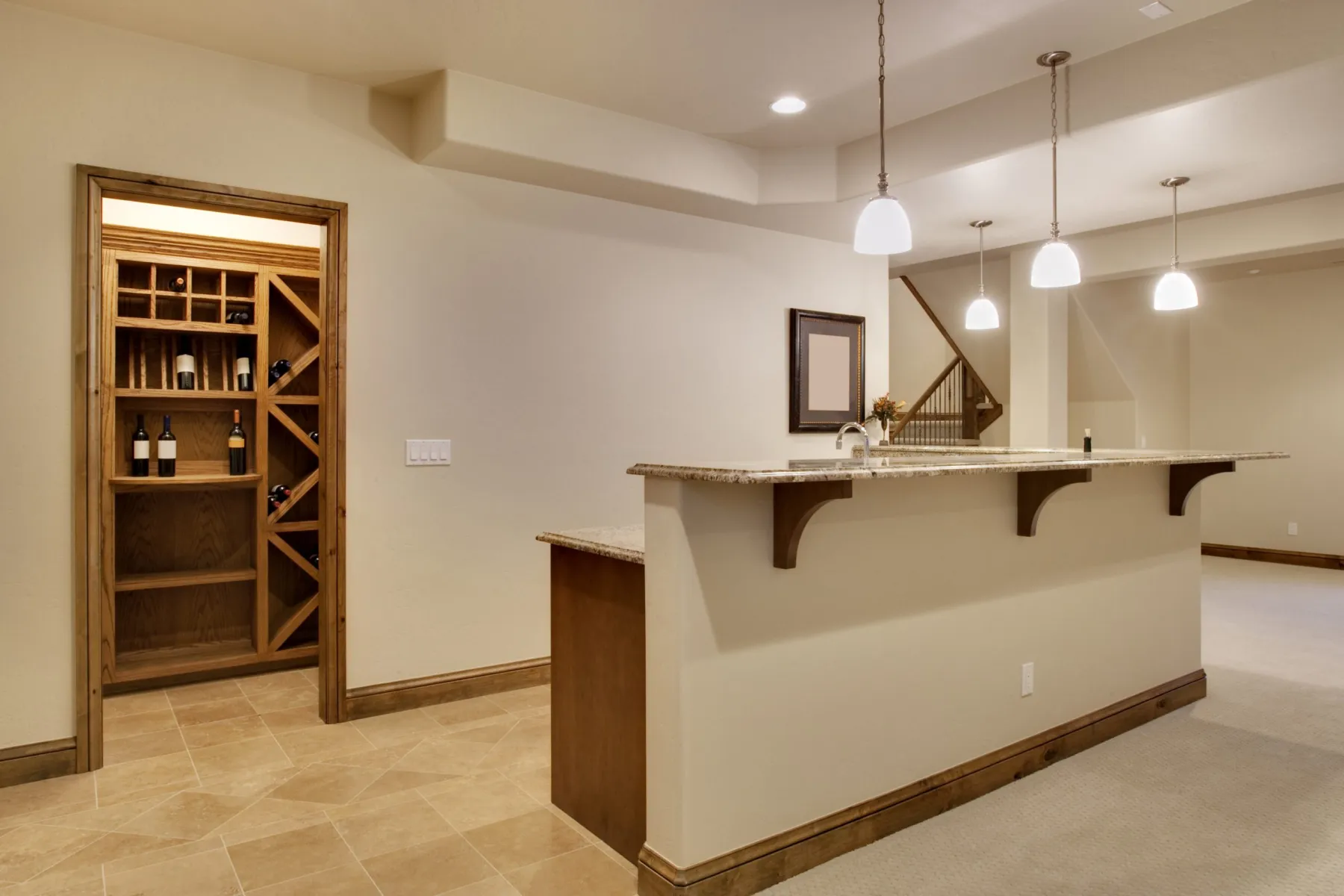
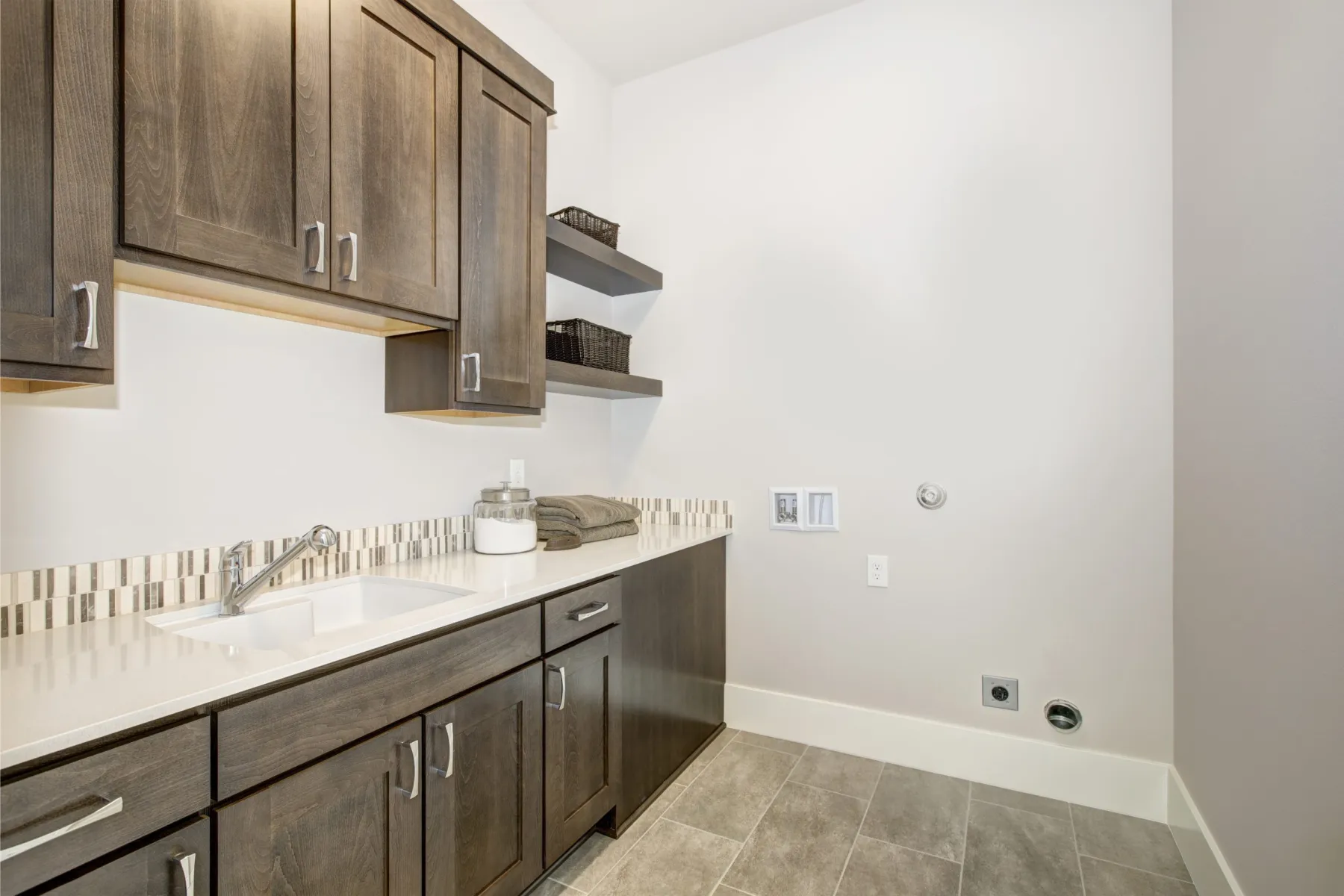
Enamel and PU on joinery and metal. Doors, frames, skirting and railings need a harder film than a wall does. Brush-applied enamel for site work, or — far better where it is possible — removed and sprayed in our booth for a finish with no brush marks at all.
Exterior systems for facades, boundary walls and terraces, which in this climate means UV stability and elasticity over everything else. A standard interior emulsion put on an external wall in Dubai will chalk within a season.
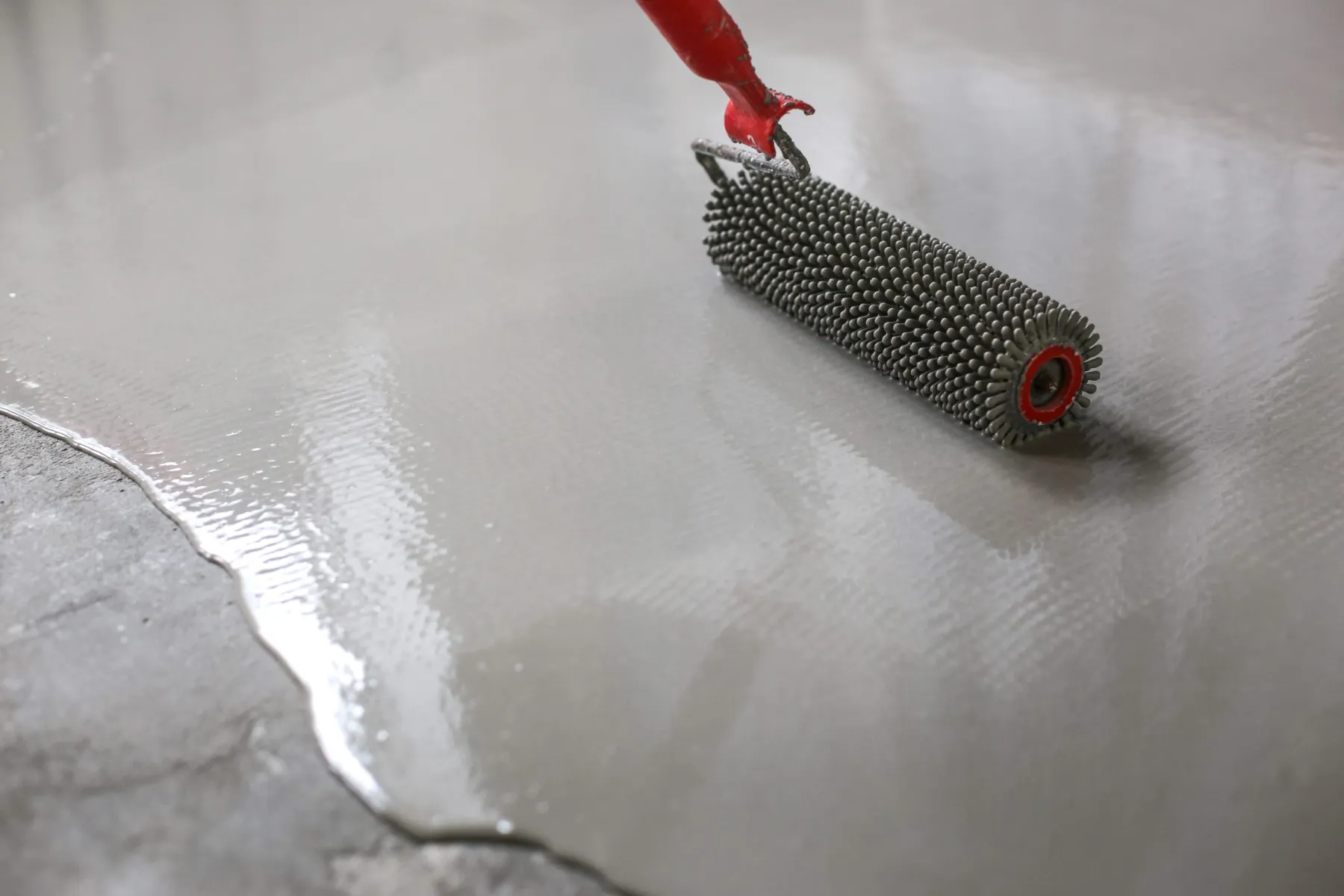
Epoxy for garage and plant room floors, where the surface has to take vehicles, chemicals and dragged equipment.
Beyond flat colour
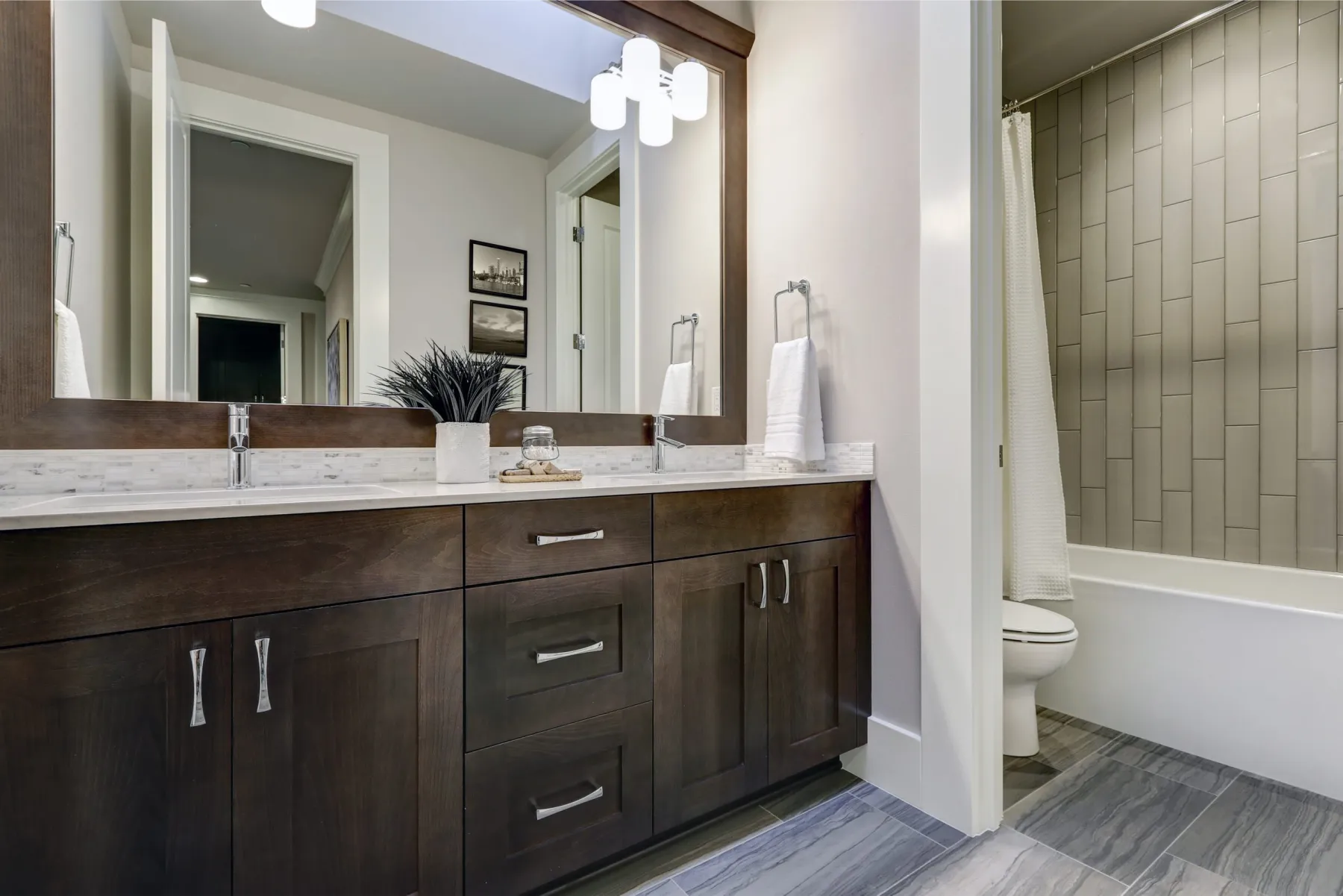
Microcement gives a seamless mineral surface over walls, floors and even worktops, with no grout lines. It is applied in thin layers and burnished, and it is entirely dependent on the skill of the applicator — there is no forgiving stage. We only quote it where the people who have done it before are available.
Venetian plaster and lime finishes for depth and movement in a surface, particularly effective on a single feature wall or in an entrance where the light rakes across it.
Textured and metallic finishes where a wall needs to carry a room on its own. These photograph poorly and look remarkable in person, which is the opposite of most finishes.
Wallpaper hung properly — walls lined where the paper demands it, pattern matched across drops, seams rolled. Bad wallpapering is more visible than bad painting because the errors run in straight lines.
Furniture and joinery, resprayed rather than replaced
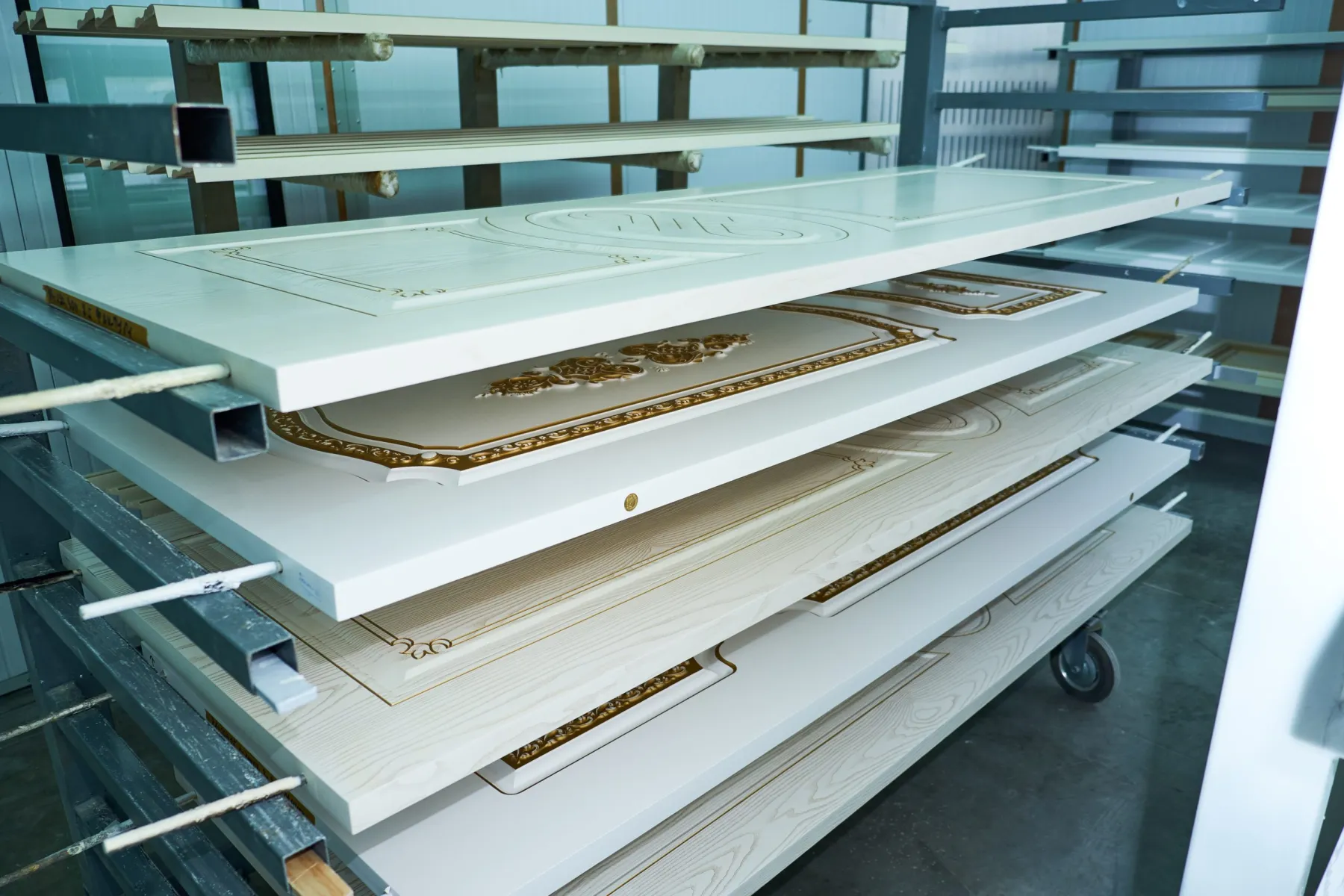
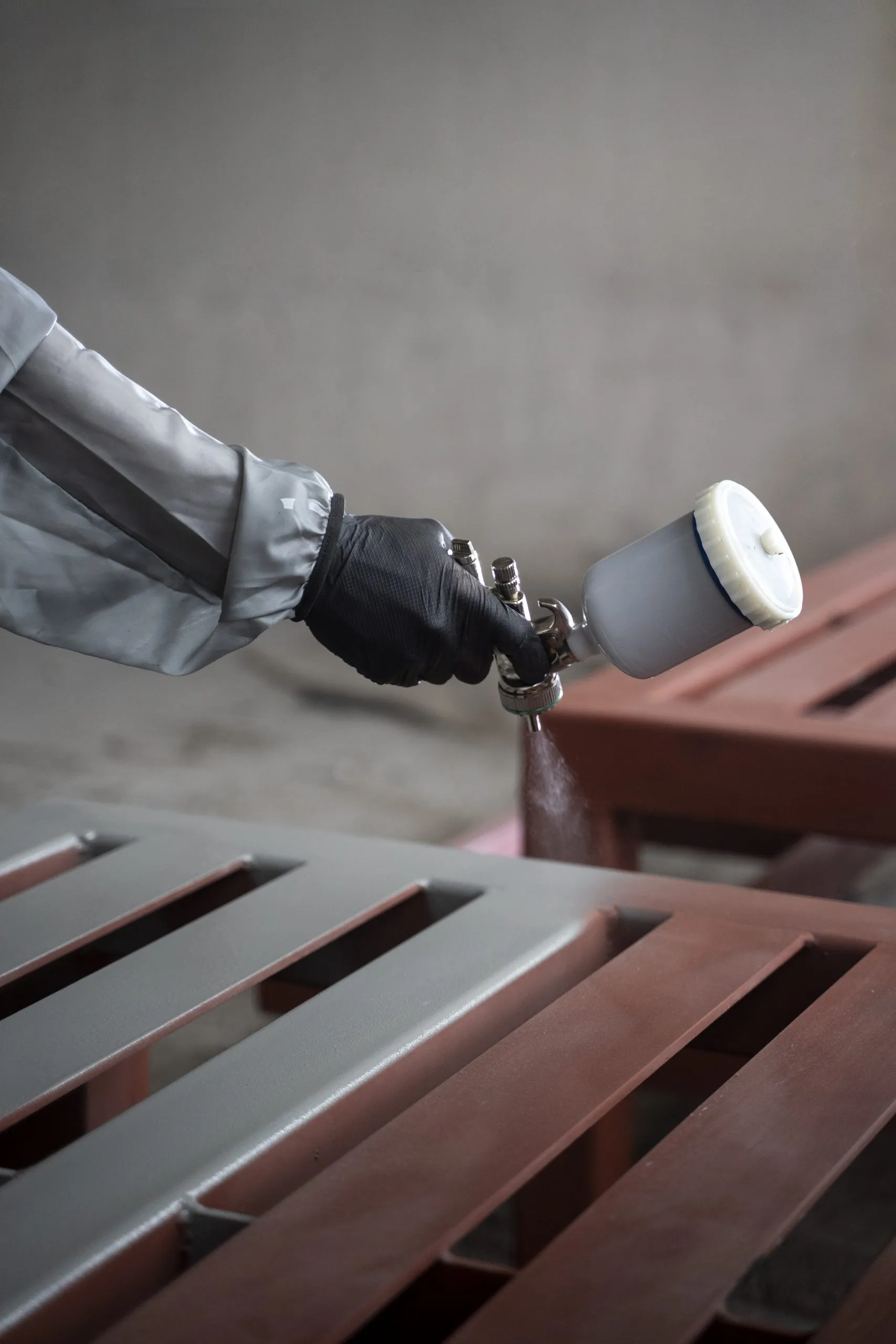
We have a spray booth with extraction in Ras Al Khor, which means we can offer something most painting contractors cannot: taking the item away and finishing it properly.
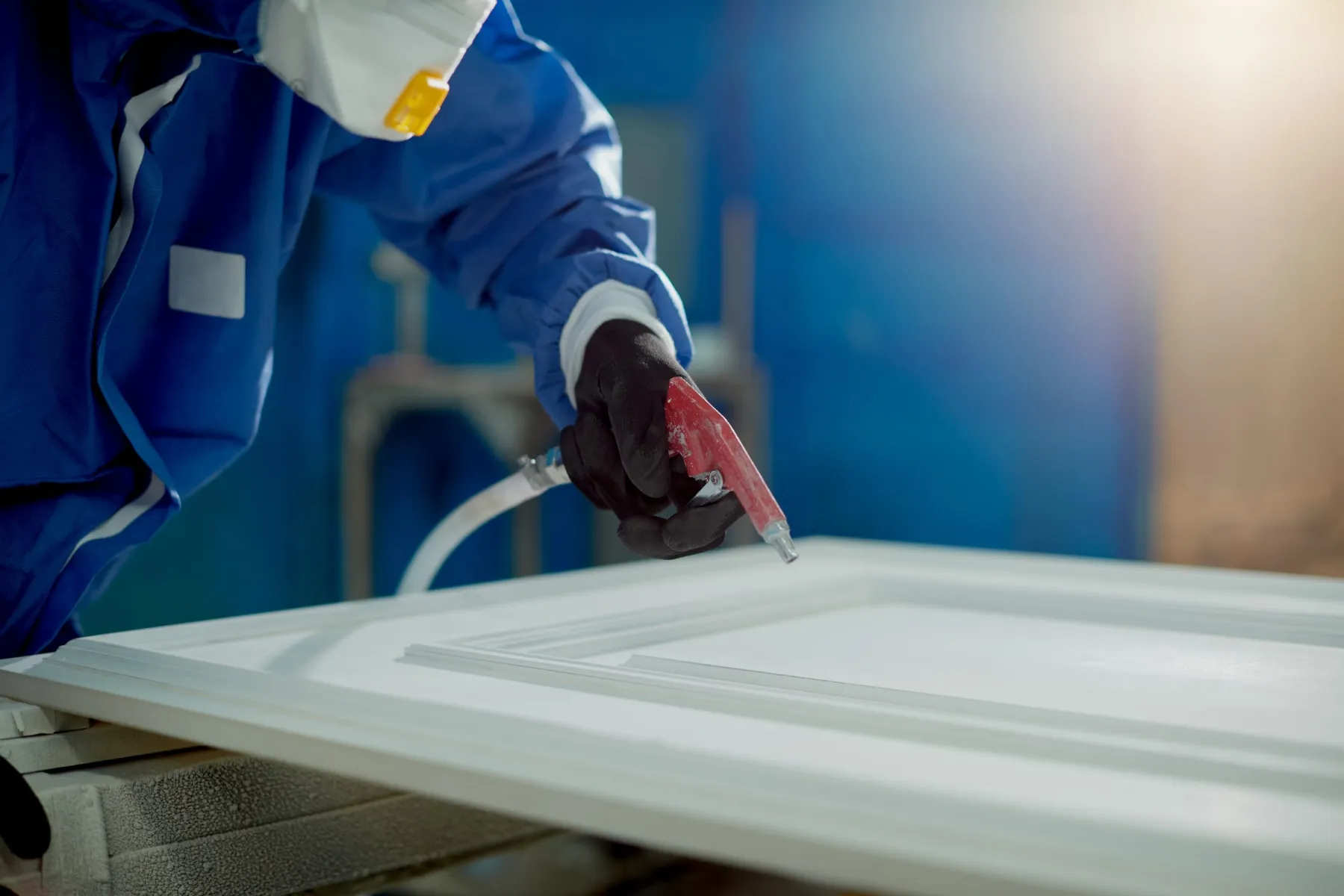
A door brush-painted in situ will always show brush marks and dust nibs, because a home is not a clean room. The same door removed, stripped, filled, sanded, sprayed in a booth and rehung comes back with a factory finish. It costs more than a site repaint and considerably less than a new door.
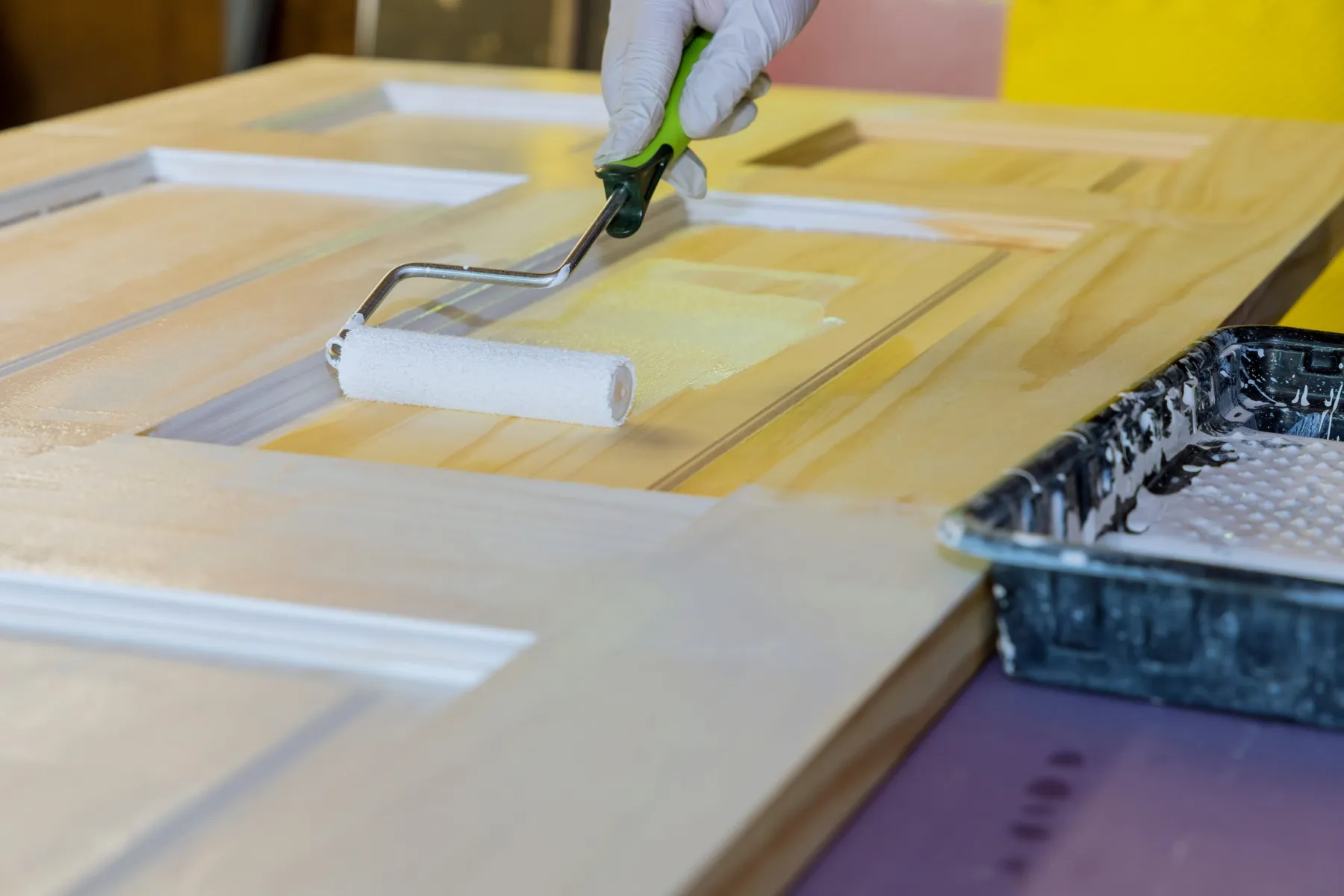
The same applies to kitchen doors, wardrobe fronts, dining tables, cabinet carcasses and metal items. Where the structure is sound and only the finish is dated or damaged, respraying typically costs a quarter to a third of replacement — and produces no site dust, because the messy work happens in our workshop rather than your home.
We will tell you when it is not worth it. A swollen, delaminating carcass is at the end of its life and no finish will rescue it. But a solid kitchen with tired fronts, or a set of good doors in the wrong colour, is exactly the kind of job where this is the right answer, and we say so even though it is the smaller invoice.
One to two weeks for a typical apartment
Protect and mask
Floors covered, furniture sheeted and moved in, socket and switch plates removed, frames and skirting protected. In an occupied property the route in and out is covered too.
Make good
Cracks raked and filled, holes and impact damage filled in two passes, flaking coatings scraped back to a sound edge. Anything structural is flagged rather than filled over.
Sand and prime
Filled areas sanded flush and feathered, then primer to bare substrate, new skim and every repair. Stain block where water marks or nicotine are present.
Two finish coats
Ceilings first, then walls, then joinery. Cut in by hand at every edge, rolled in a consistent direction, with proper drying time between coats rather than a same-day recoat.
Inspect and reinstate
Walls checked under a lamp held flat to the surface, touch-ups done, plates refitted, protection lifted and the property cleaned. Paint codes recorded on your handover sheet.
Painting prices in Dubai
Interior painting is priced per square foot of the surface being painted — walls and ceilings, not floor area. Rates below include preparation, primer and two finish coats.
| Scope | Typical range | Notes |
|---|---|---|
| Repaint, existing colour, sound walls | AED 12 – 16 / sq ft | Light making good, two coats |
| Repaint with colour change or heavy prep | AED 16 – 22 / sq ft | Full fill, sand and prime before two coats |
| New plaster or skim, first decoration | AED 15 – 20 / sq ft | Mist coat plus two finish coats |
| Feature wall in a specialist finish | AED 120 – 400 / sq m | Microcement, Venetian or metallic |
| Wallpaper hanging | AED 45 – 90 / sq m | Labour only; lining extra where required |
| Door and frame, sprayed in our booth | AED 700 – 1,800 each | Removed, stripped, filled, sprayed, rehung |
| Kitchen respray, existing carcasses | AED 9,000 – 22,000 | Fronts removed and sprayed off site |
| Exterior wall coating | AED 18 – 32 / sq ft | UV-stable, elastomeric where movement exists |
| Epoxy floor coating | AED 22 – 45 / sq ft | Garages, plant rooms, utility areas |
A quotation far below these rates has saved the money in preparation, in the number of coats, or in the paint itself. Ask which system is being used, how many coats are priced, and whether primer is included — three questions that separate the quotes very quickly.
Practical advice, from having painted a great many Dubai rooms
Colour is personal and we will paint whatever you choose. But there are a few things about this specific climate and light that are worth knowing first.
Dubai light is strong, warm and low in the afternoon. A grey that reads cool and sophisticated in a European catalogue frequently turns lilac or green here. Always test on the actual wall, and look at it at three times of day before committing.
Test big, not small. A tester patch the size of a postcard tells you almost nothing. Paint an A2 area on two different walls in the room — one facing the window, one facing away — and leave it a day.
Whites are not interchangeable. There are warm whites, cool whites and true whites, and the difference is obvious once they are side by side on a wall and invisible on a chart. Match the white to the flooring and the joinery rather than choosing it in isolation.
Ceilings in matt, walls a shade lighter than you think. Colour reads darker over a large area than it does on a sample. Clients who choose from a chart almost always find the finished room a step darker than expected.
Feature walls work when they have a reason. Behind a bed, behind a sofa, in an entrance — somewhere the eye already goes. A feature wall on a random wall in the middle of a room just makes the room look unfinished.
Keep a record. We note the exact product, colour code and finish for every surface on your handover sheet. In three years when a wall needs patching, that piece of paper is worth more than it looks.
Why paint behaves differently in the UAE
Advice written for a temperate climate does not transfer here. Four things about painting in the Gulf are genuinely different.
Heat shortens working time. Emulsion on a hot wall skins over before it can be laid off, which is what causes visible roller lap lines and brush marks. We work with the AC running, avoid painting a wall in direct afternoon sun, and keep a wet edge by working in manageable sections rather than trying to cover a whole wall in one pass.
Humidity slows drying even when the surface feels dry. A wall can feel touch-dry in an hour and still not be ready for a second coat. Recoating too early is the single most common cause of a finish that looks fine on handover and patchy a month later. We work to the manufacturer’s recoat times rather than to the programme.
Dust gets into everything. Fine airborne dust in this region settles on a wet surface and stays there. Windows and balcony doors stay closed while coating, the room is cleaned before the finish coat rather than after sanding, and we do not sand and coat in the same space on the same day where it can be avoided.
UV destroys exterior coatings. An external wall here takes an intensity of sunlight that will chalk a standard emulsion within a season. Exterior work needs UV-stable systems, and elastomeric coatings where the substrate has hairline movement. This is the area where using the wrong product is most expensive, because the failure is total rather than cosmetic.
Offices, retail and schools, painted around the business
Commercial painting is rarely about the paint. It is about doing it without closing the space, and meeting a specification somebody else wrote.
Out of hours, almost always. Offices are painted at night and over weekends, retail after close, schools during term breaks. Crews mobilise after the space empties, work with low-odour systems, and everything is cleared, cleaned and ventilated before opening. Staff arrive to a finished room, not a dust sheet.
Low-VOC and low-odour systems where the space is occupied within hours. Standard solvent-based products need a ventilation period that a trading business does not have, and specifying around that is part of the job rather than an afterthought.
Brand colours matched, not approximated. Retail and hospitality clients arrive with a brand guideline and a Pantone reference. We match to the specified reference and produce a sample board for sign-off before a wall is touched, because a brand colour that is nearly right is worse than one that is clearly different.
Durability specified by zone. Corridors, stairwells and back-of-house take abuse that a boardroom does not. Scrubbable and stain-resistant systems in the high-traffic zones, standard finishes elsewhere — specifying one product throughout is either over-spending or under-specifying.
Make-good at lease end. Landlords routinely require walls returned to the original colour and condition. We record the existing finish before starting, so reinstatement is a known cost rather than a negotiation when you are trying to release a deposit.
Painting in Dubai
How much does it cost to paint an apartment in Dubai?
AED 12 to 16 per square foot of wall and ceiling for a repaint in the same colour on sound walls, and AED 16 to 22 where there is a colour change or significant making good. For a typical two-bedroom apartment that lands somewhere between AED 9,000 and 18,000 including preparation and two coats.
How long does painting take?
One to two weeks for a typical apartment including preparation and proper drying time between coats. Rushing recoats is the most common cause of a finish that looks patchy a month later.
Can you paint while I am living there?
Yes, room by room. Furniture is moved to the centre and sheeted, the room is sealed while sanding, and we clean down at the end of each day. We paint bedrooms in sequence so you always have somewhere to sleep.
Which paint do you use?
Jotun and Dulux systems as standard, specified to the room — matt for ceilings, washable for corridors and kitchens, anti-fungal for bathrooms, enamel or PU for joinery. The exact product is named on your quotation.
How many coats do you apply?
Two finish coats over primer, always. One coat over a colour change will not cover evenly regardless of what the tin claims, and it is the most common corner cut in a cheap quotation.
Why does mould keep coming back after painting?
Because the cause is ventilation, not paint. Anti-fungal coatings slow it down; they do not fix an undersized extract fan. We check the extract when we survey and tell you what actually needs doing.
Can you respray my kitchen instead of replacing it?
Yes, if the carcasses are sound. Fronts are removed, taken to our booth, stripped, filled, sanded and sprayed, then rehung. Typically a quarter to a third of the cost of a new kitchen, with almost no dust in your home.
Do you do exterior and villa facade painting?
Yes, with UV-stable exterior systems and elastomeric coatings where the substrate moves. Interior paint on a Dubai external wall will chalk within a season, so the system matters more outside than in.
Get a painting quotation
We will measure the wall and ceiling areas, assess what preparation is genuinely needed, and quote the system by name — itemised, with the number of coats stated.