Flooring installation and tiling in Dubai, set out from the substrate up
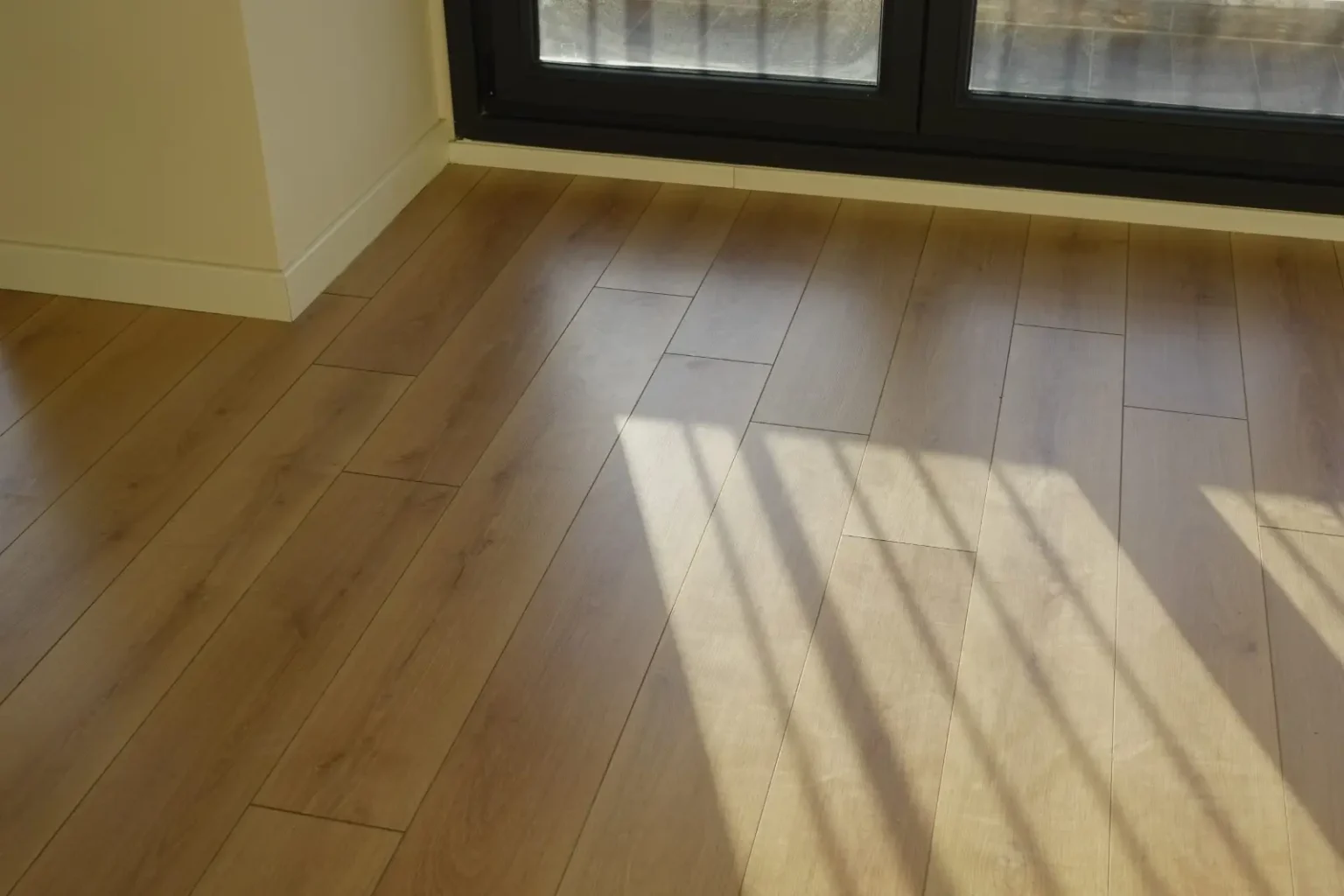
The floor is the largest surface in the room and the least forgiving. We level it first, set it out from the sightline, and lay it with our own tilers and floorers — porcelain, marble, SPC, timber and parquet.
Flooring contractors Dubai
Laying rates in Dubai run from AED 15 per sq ft for laminate to AED 50 to 90 per sq ft for natural stone, with standard porcelain at AED 30 to 45. Abdulla Carpentry EST has laid floors from Ras Al Khor since 1984, with our own tilers, floorers and levelling crew — not a labour broker.
Nearly every complaint about flooring works Dubai owners have paid for traces back to the same thing: the substrate. A slab that deviates 8 mm over two metres will show as lippage on a 1200 mm porcelain tile, cup an engineered board, or telegraph through SPC within a season. The material gets blamed; the screed was the problem.
So we survey the floor with a laser and a straightedge before quoting, and we price the levelling as its own line rather than hiding it. If the base needs 6 mm of compound, you see that on the quotation. If it does not, you are not paying for it.
That is the difference between a flooring company in Dubai that subcontracts by the square foot and one that employs the men laying it. Flooring installation Dubai clients get from us is done by our own crew, and the tiling contractors Dubai sites meet — the tiler, the stone mason, the floorer — carry our own ID. Tile installation is a trade, not a day rate.
 From AED 15Per sq ft, laying rate
Porcelain tile flooring
Porcelain is the default floor in Dubai for good reasons, and the bigger the tile the more the setting-out matters.
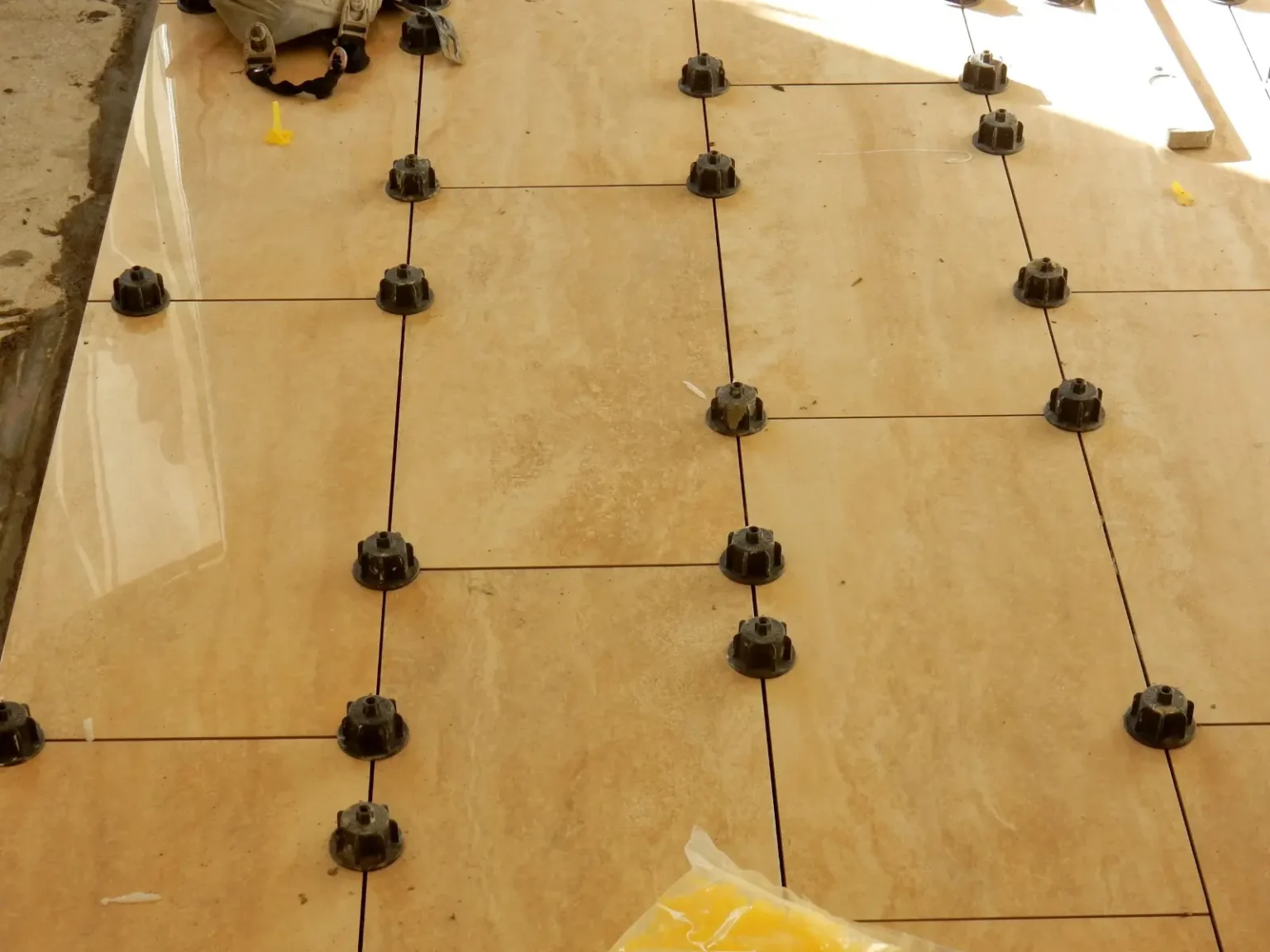
Porcelain tiles take heat, water, UV and cleaning chemicals without changing, which is why they cover most of this city. Standard formats lay at AED 30 to 45 per sq ft including adhesive, grout and setting out. Where a client wants the seamless look, large-format tiles — 900 mm and up — go in at AED 45 to 65, and that gap is almost entirely levelling and labour, not material.
120×60 tiles are the most requested size we lay and the least forgiving. A 1200 mm tile amplifies any hollow in the slab into visible lippage at the joint, so it needs full back-buttering, levelling clips across every edge, and a substrate checked with a two-metre straightedge first. A cheap quote for large-format tiling is a quote that has skipped one of those three.
Setting out comes before the first tile. We dry-lay the run, start from the sightline as you enter rather than from a wall, and place the cuts where they are least seen — under the joinery, not across the doorway. Anti-slip tiles go into bathrooms, kitchens and around pools as standard, with a wet-rated finish rather than the same polished tile used in the living room.
Marble flooring
Stone is the one floor that has to be laid twice — once dry, to see the veining, and once for real.
Marble flooring installation starts on the slab yard floor, not the site. Slabs are numbered, dry-laid and photographed so the veining runs the way you want it before a single piece is cut. Skip that and you get a floor that is technically marble and visually random. Our laying rate for natural stone is AED 50 to 90 per sq ft, and it includes sealing on installation.
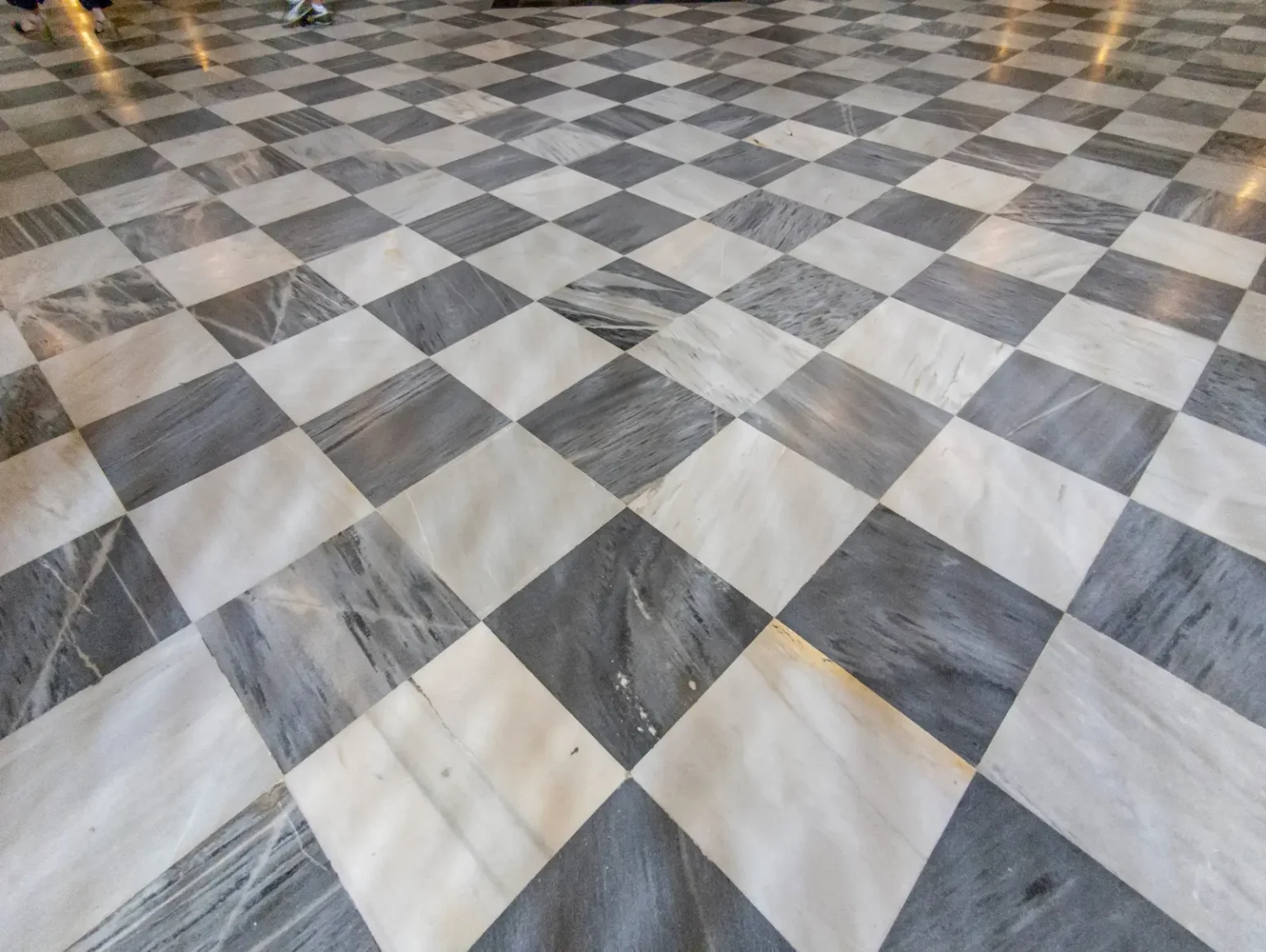
Italian marble is what most clients mean when they say marble, and Carrara is what most mean by Italian — grey-white with soft grey veining, the safest and most available of the Italian whites. We are honest about what it does: it etches with anything acidic, it needs sealing on a schedule, and a honed finish hides wear far better than a polished one in a family home.
Stone also needs a different bed. It goes down on a full, solid bed rather than notched ridges, because a void under a slab is where it cracks, and light-coloured marble will show a dark patch wherever the adhesive is uneven. Sealing goes on before grouting so the grout cannot stain the face.
Five stages, in this order
Our own crew from the strip-out to the skirting. Nothing is laid before the slab has been lasered, because that is the one step you cannot revisit.
Survey and laser check
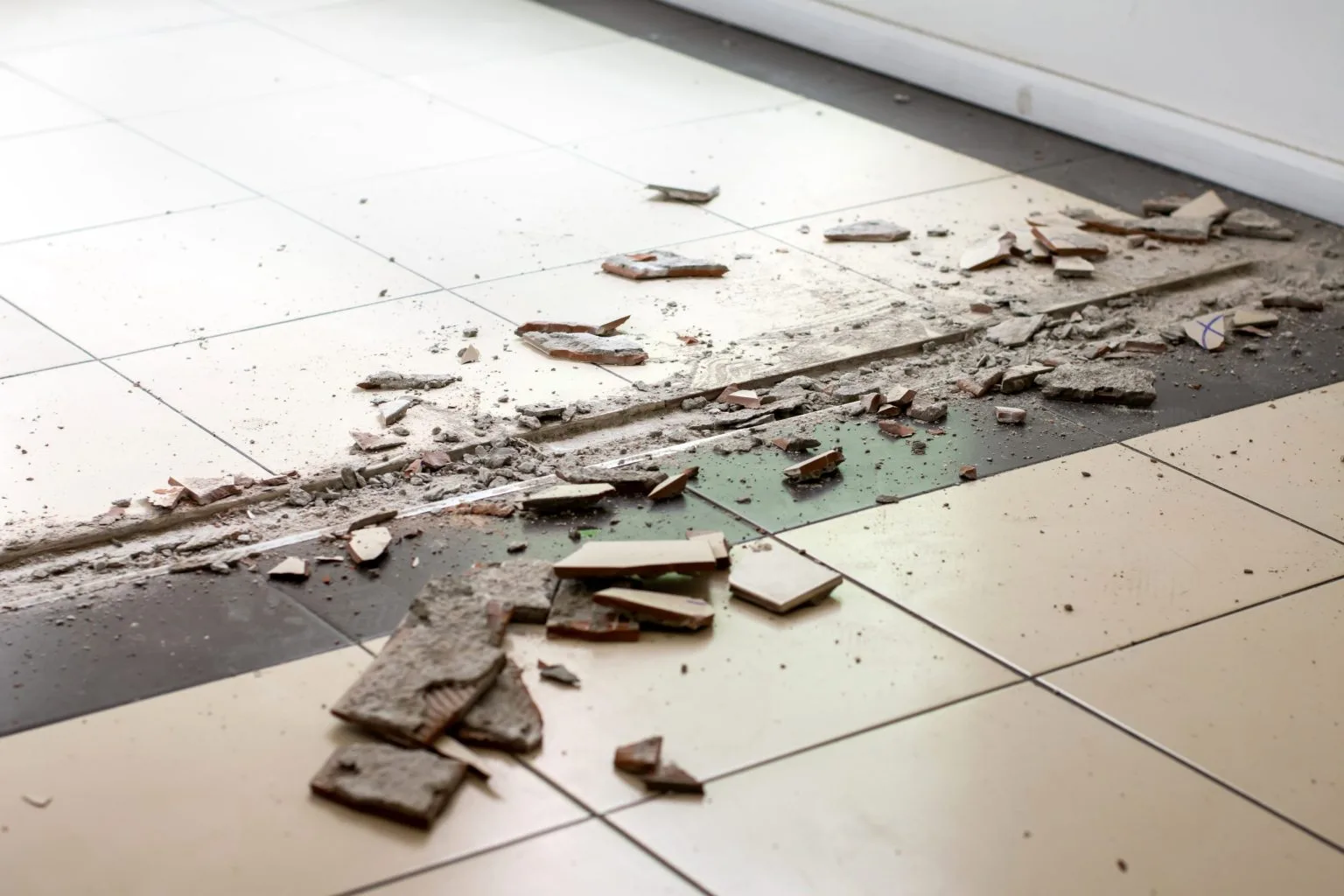
We measure the room, lift one tile, laser the slab for deviation and price levelling as its own line.
Strip-out and preparation
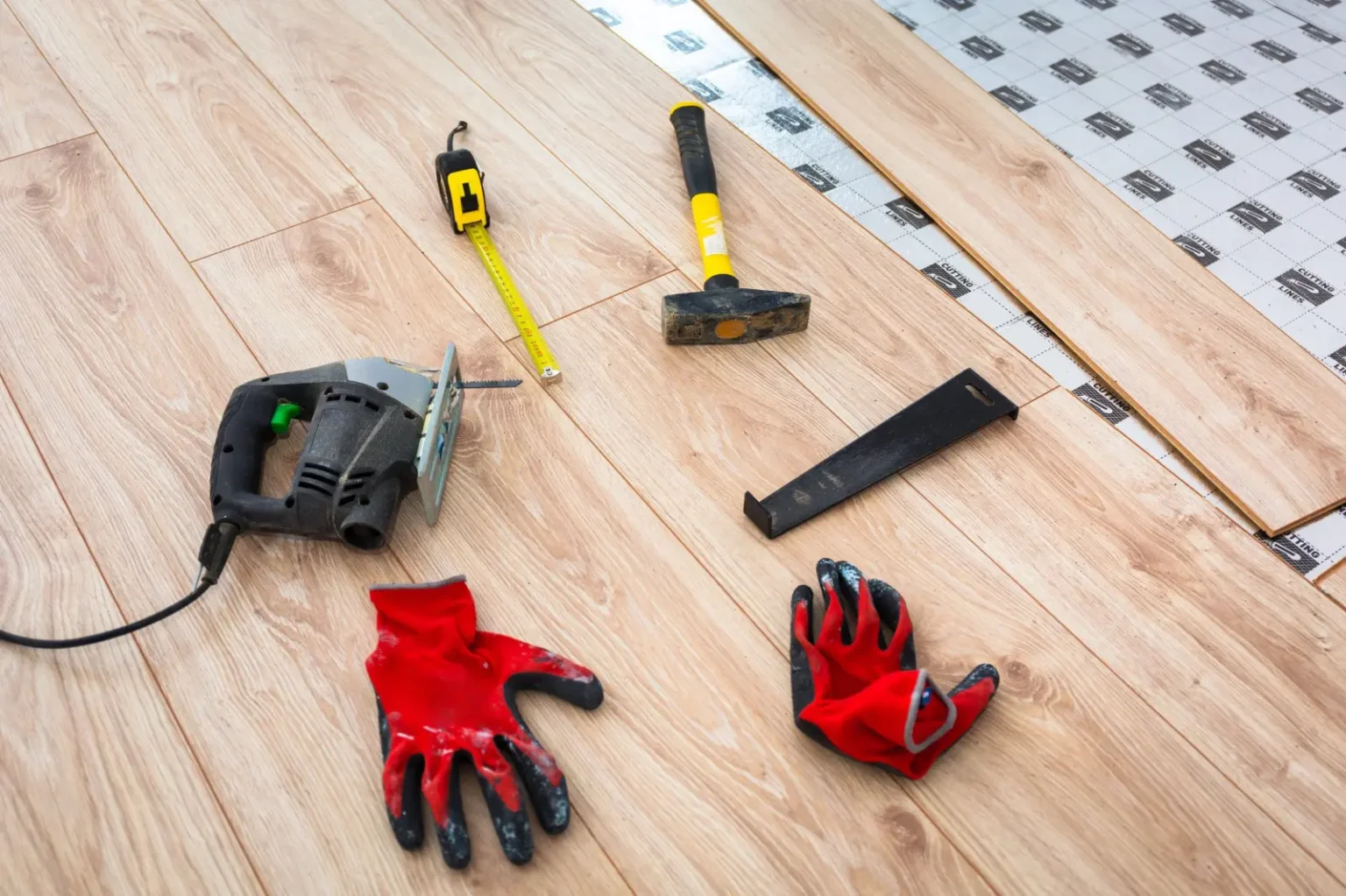
The old floor comes up, then the slab is ground, vacuumed and primed, and a membrane goes down first.
Levelling and setting out
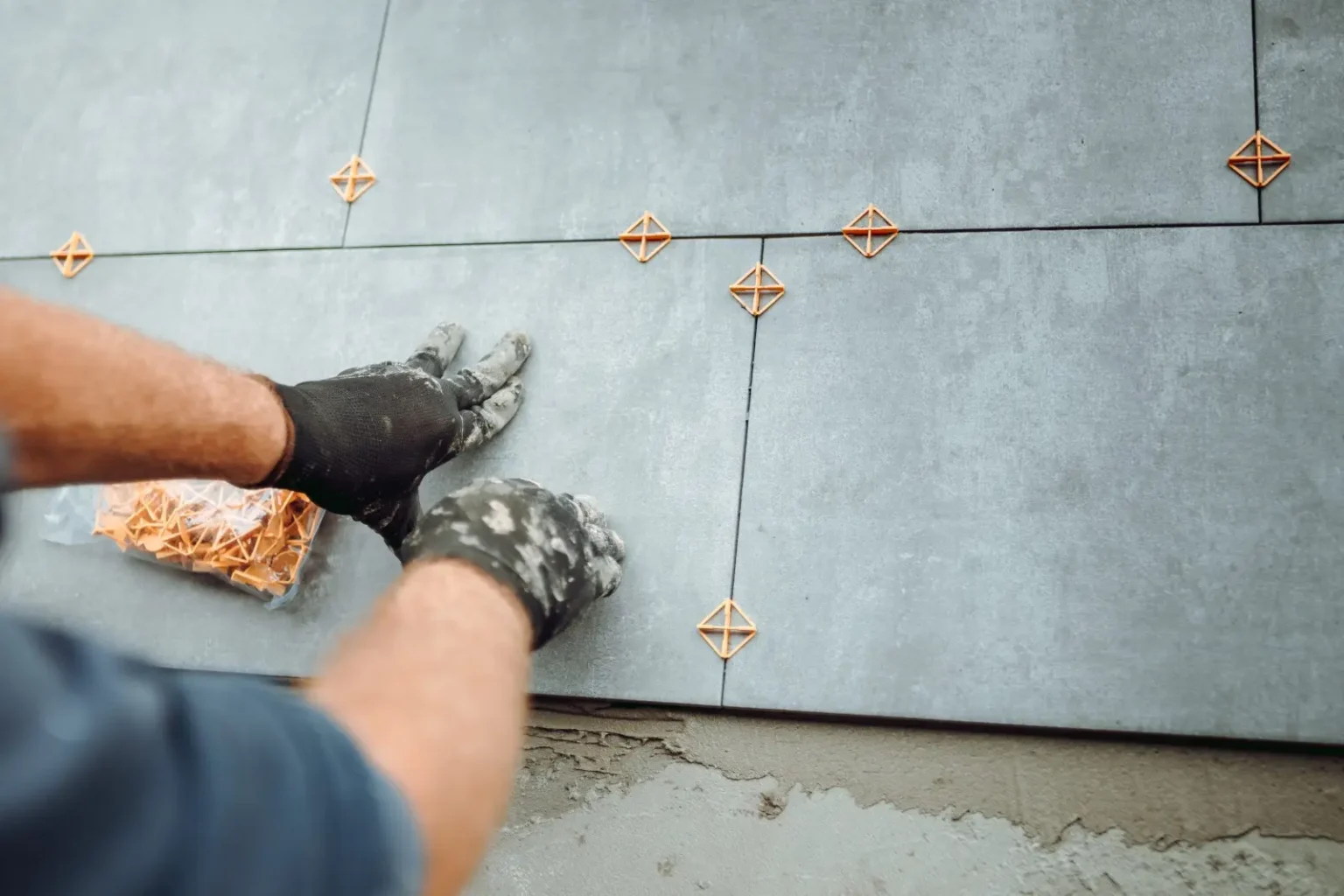
Compound is poured where the survey called for it, then we dry-lay and mark the centre line with you.
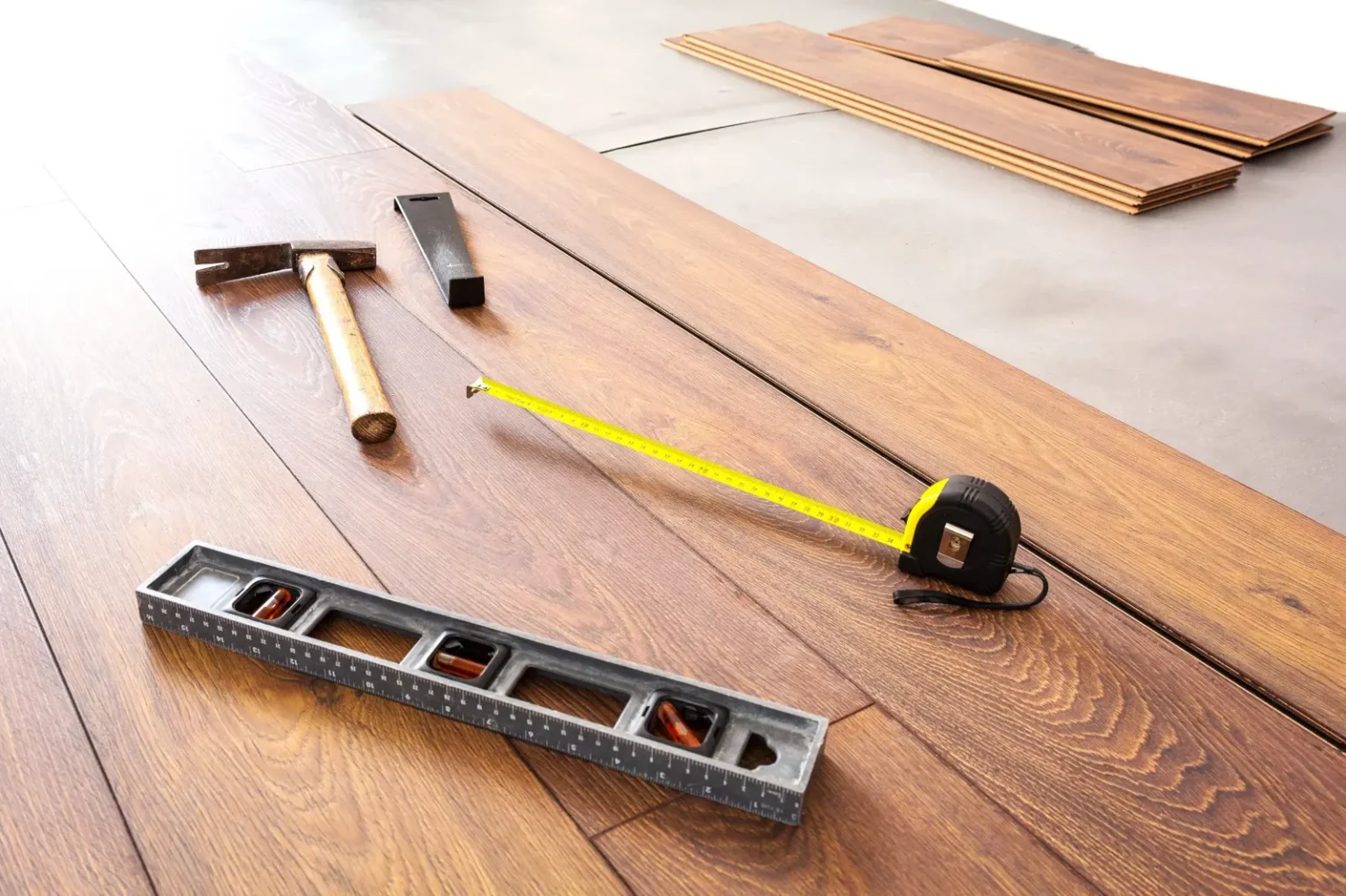
Laying, cutting and grouting
Tile, stone, board or plank goes down to the approved setting-out, then it is grouted or profiled in.
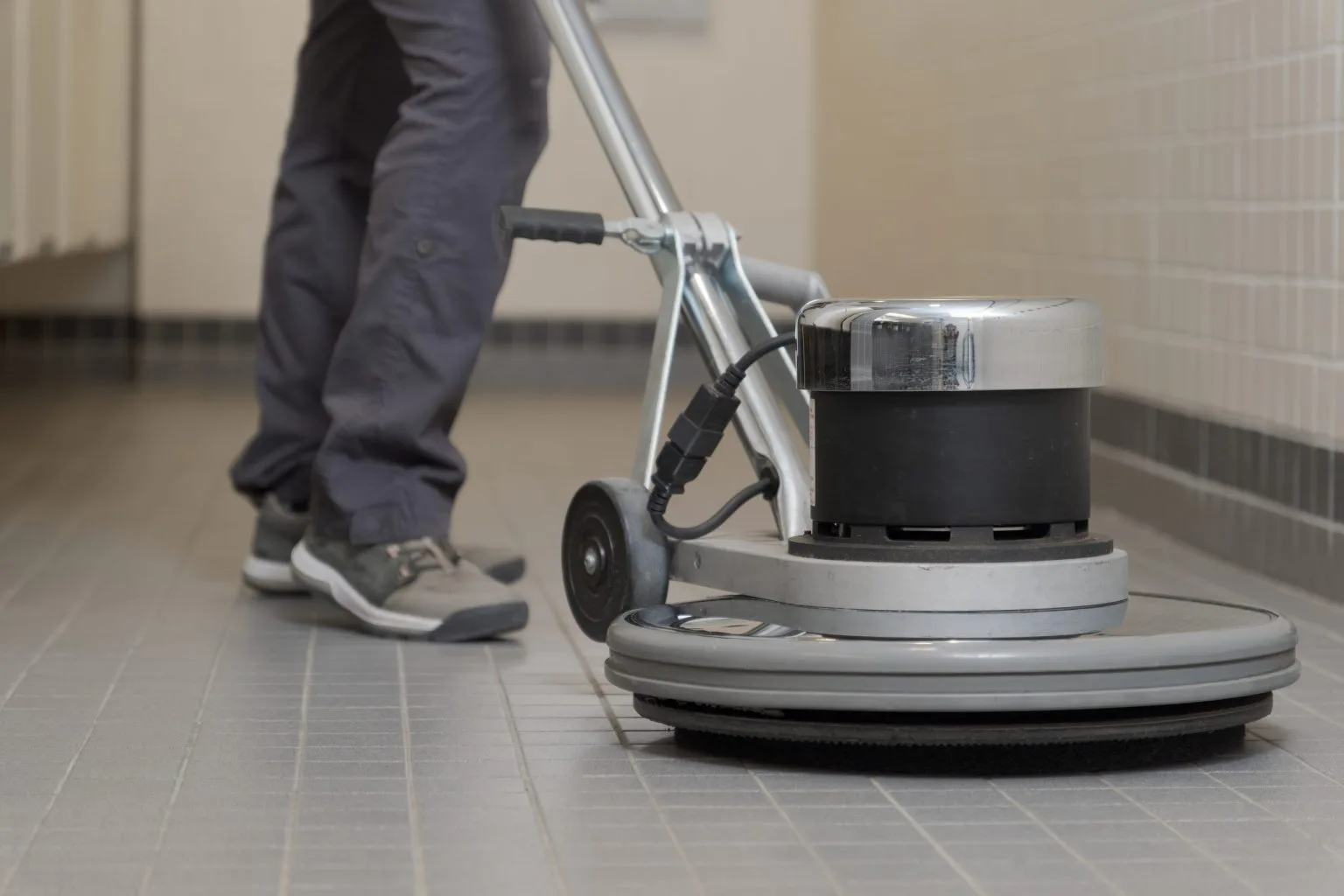
Skirting, sealing, handover
Skirting and thresholds go on, stone is sealed, then we clean, snag and hand the finished floor over.
A single room is usually three to five days including levelling and curing; a full apartment is two to three weeks alongside the other trades. Stone and pattern floors take longer because the dry-lay is real work, and we would rather add two days at the setting-out than hand over a floor with the cuts in the wrong place.
SPC and vinyl flooring
The smart-money floor for a rental, a fast turnaround or anywhere water is a real risk — provided the base under it is flat.
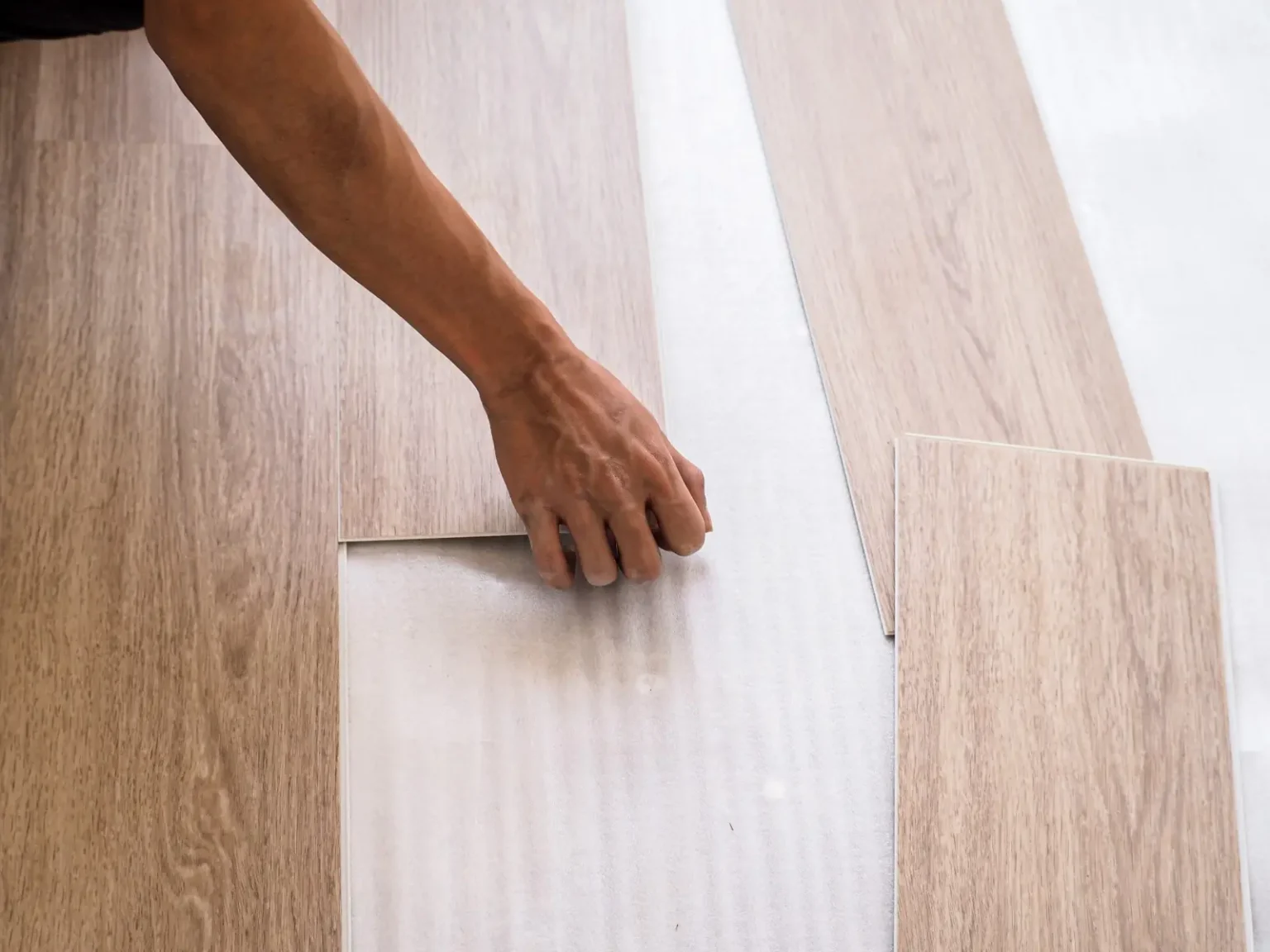
SPC flooring is a rigid stone-polymer core with a printed wear layer, and it is the resilient floor we specify most in Dubai. It is genuinely waterproof flooring, it does not expand and contract the way laminate does in a hot apartment, and it clicks together over a dry, level base at AED 18 to 30 per sq ft. It is the right answer for a rental turnaround, a whole-apartment refresh on a budget, or anywhere a washing machine sits.
LVT is the glued-down, thinner cousin — luxury vinyl tile, laid piece by piece onto a prepared base. It is more forgiving about height at doorways, quieter underfoot, and better where a floor has to pass over a slight slope. Vinyl plank flooring is the same product in a long board format, and it reads far more like real timber when it is laid in a proper stagger rather than an H-pattern.
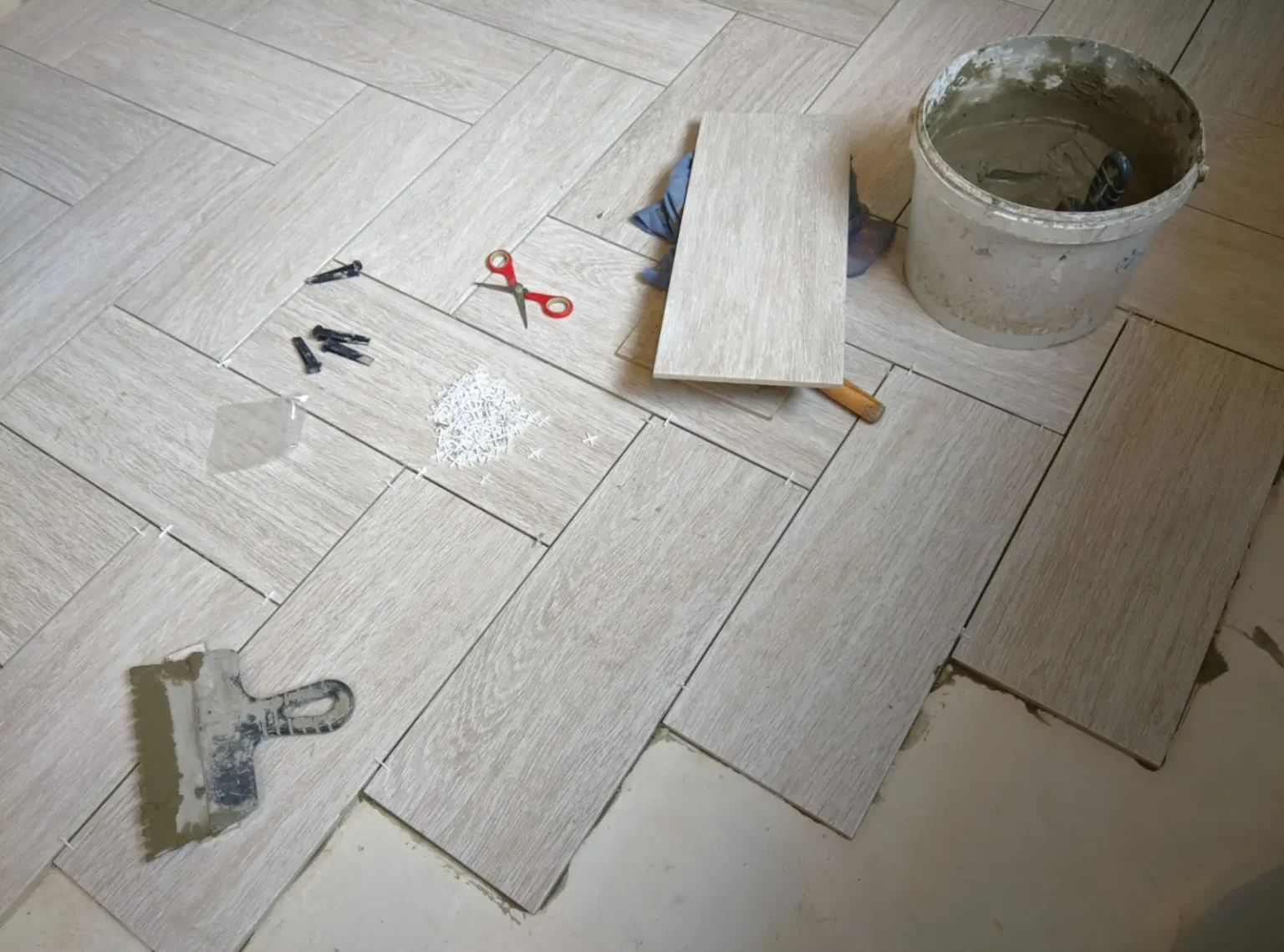
The one honest limitation: click-fit rigid core telegraphs every bump. It is not a levelling system. A slab that reads 5 mm out over two metres will show as a spongy patch and eventually as an opened joint. That is why we survey and price levelling separately rather than laying over a bad base and hoping.
Wooden and laminate flooring
Real timber in a Dubai apartment is a humidity problem before it is an aesthetic one. Which board you choose decides whether it survives.
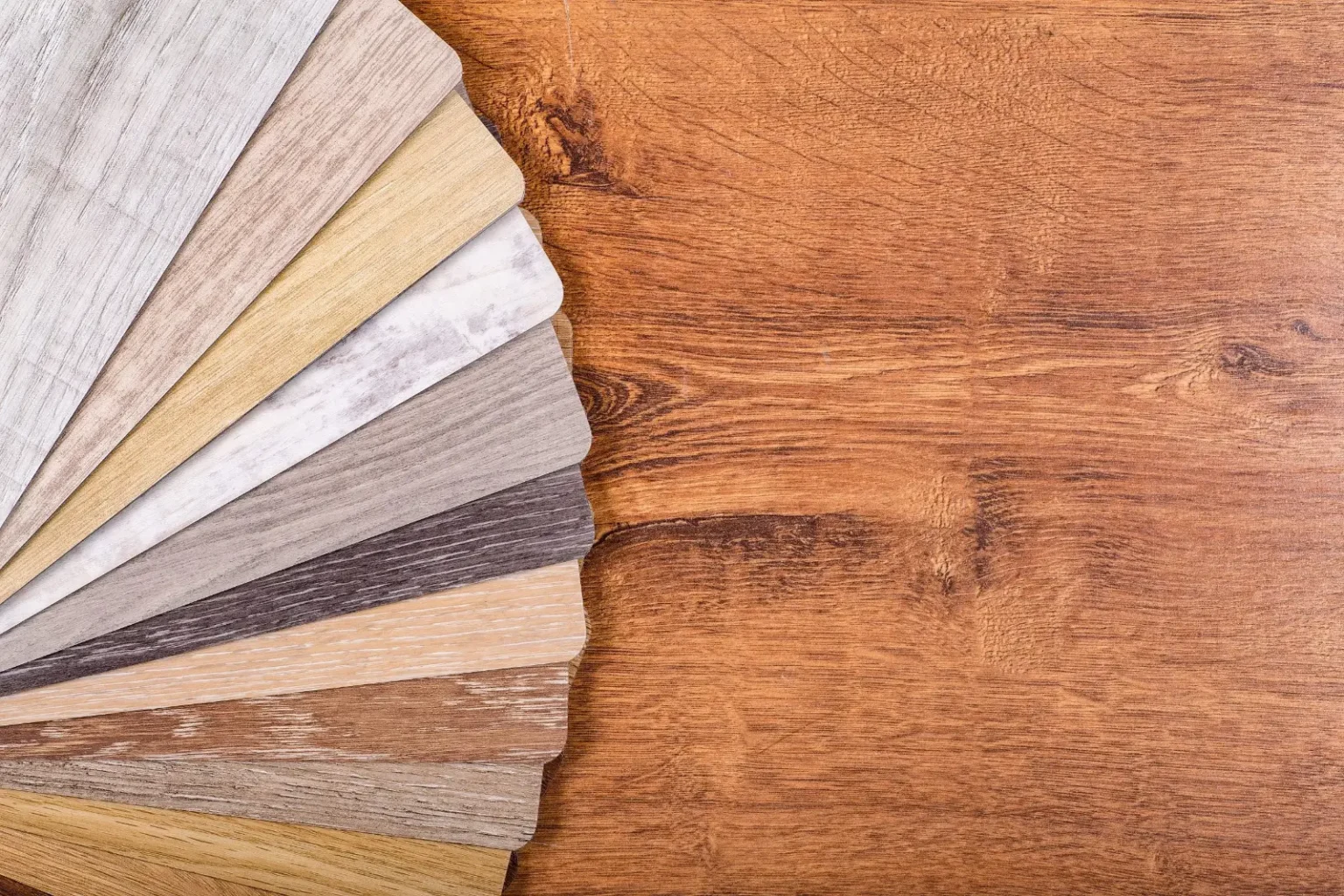
Laminate flooring is a printed decor over an HDF core, and it is the cheapest wood look there is at AED 15 to 25 per sq ft. We lay it in dry areas only and we say so on the quotation: an HDF core that gets wet swells at the joints and does not go back. For a bedroom or a study it is perfectly good value; for a kitchen or anywhere near a bathroom door, SPC is the sensible swap.
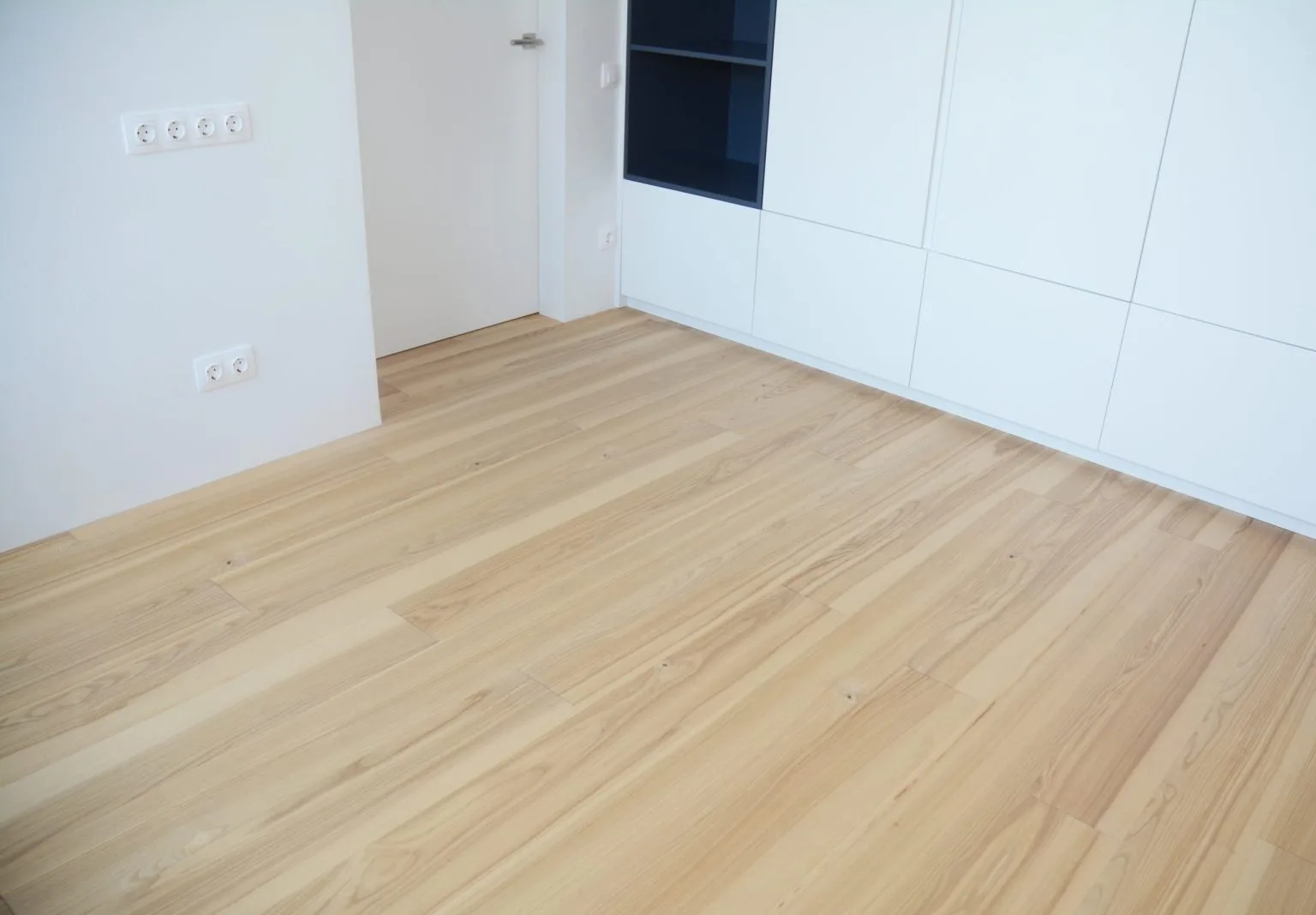
Engineered wood is the one we recommend for most Dubai homes that want real timber. A genuine hardwood wear layer on a cross-bonded plywood core moves far less with humidity than solid board, it can be sanded back once or twice, and it lays either glued down or floating at AED 25 to 45 per sq ft. Every pack is acclimatised on site before it goes down, which is the step most often skipped.
Solid hardwood is still the best floor in the world and the hardest to keep here. It needs a controlled environment, real expansion gaps at every perimeter, and an owner who accepts that it will move. Oak flooring is the safest species for it — stable, open-grained, and it takes a stain or a natural oil without going blotchy the way maple or birch can.
Parquet and engineered wood flooring
In a pattern floor the labour is not the laying. It is the setting out, and it happens before a board is cut.
Parquet flooring lays at AED 45 to 80 per sq ft, against AED 25 to 45 for the same board laid straight. The material is identical. What you are paying for is geometry: a pattern floor has to be centred on the room, squared to the dominant sightline, and worked outwards so the perimeter cuts land symmetrically on both sides. Get the centre line wrong by 20 mm and every cut down one wall is visibly different from the other.
Herringbone is the classic — boards at 90 degrees to each other, stepping down the room. It reads busier than people expect, so it suits a larger room or a corridor where the rhythm leads the eye. It also generates a lot of waste, and we allow for that in the material take-off rather than discovering it at 80% complete.
Chevron is the quieter one: boards mitred at 45 degrees so the points meet in a continuous V down the room. It needs pre-mitred boards bought as a left and right set, so it cannot be cut from a standard pack, and it has to be ordered that way from the start. We draw the setting-out and get it approved before ordering, because a chevron floor cannot be adjusted once the boards arrive.
Outdoor, balcony and pool deck flooring
Outside, the floor is a waterproofing detail with a finish on top. Get the falls and the membrane right and the rest is easy.
Outdoor tiles in Dubai have to survive 50-degree surface temperatures, driving rain twice a year, and constant UV. We lay 20 mm outdoor porcelain, either bedded on a screed to falls or dry-laid on adjustable pedestals over a membrane, and we specify an R11 or R12 slip rating as standard. A polished indoor tile carried out onto a terrace is a fall waiting to happen.
A balcony is a waterproofing job first. The membrane goes on before anything else, turned up behind the threshold and under the balustrade fixings, with the falls set away from the building. Where the existing balcony already leaks, we open it, fix the membrane and re-lay — tiling over a failed membrane just moves the water somewhere you cannot see.
Wood-look tiles are the honest answer for most Dubai terraces: the look of timber with none of the annual maintenance. Where a client wants real texture, a wood deck in hardwood needs oiling every season here, while composite decking takes the sun far better and needs almost nothing — but it gets hot underfoot, so around a pool we run it in the shaded zones and use pale porcelain in the sun.
Pool surrounds get their own specification: a barefoot-rated anti-slip finish, a bullnose or pencil-round coping to the water edge, and a drainage channel that actually takes water away rather than a fall that runs it back to the house.
Floor removal and replacement
Taking the old floor up is the dirtiest, loudest and most underestimated part of the job. It is also where the surprises live.
Tile removal and old flooring removal runs AED 8 to 16 per sq ft on our rate card, higher where stone or tile was bedded on a thick sand-cement screed rather than stuck to a slab. That is a real difference: a thin-bed tile comes off with a breaker in a day, while a bedded marble floor takes the screed with it and leaves you 40 mm lower than you started.
So we always lift a tile at survey and look. It tells us the bed thickness, the slab condition, whether there is a membrane, and what the finished height will be afterwards — which decides whether your doors still close and whether the threshold to the balcony still works.
Tile-over-tile is a legitimate shortcut and we will do it when the conditions allow: the existing floor has to be sound, well bonded, flat, and you have to be able to afford the added height at every door and threshold. We test bond by tapping the whole floor for hollows first. Where more than a few tiles sound hollow, a floor overlay is a bad idea and we say so.
Floor levelling and screed is priced as its own line at AED 8 to 18 per sq ft, applied only where the survey shows it is needed. Every strip-out includes protection to the lift and corridor, dust sheeting, and taking our own waste away rather than leaving it in the service area.
Tile repair, regrouting and marble polishing
Most tired floors do not need replacing. They need the grout cut out, the stone ground back, or four tiles swapped.
Tile regrouting is the cheapest transformation in any apartment. Grout absorbs everything, darkens unevenly and eventually crumbles at the corners. We rake the old grout out mechanically rather than skimming new colour over it, clean the joint, and re-grout. Where the floor is a kitchen, a bathroom or a shower, we use epoxy grout — it is harder to work and worth every extra dirham, because it does not stain and does not need sealing.
Cracked tile replacement is a precision job, not a demolition one. We cut the grout line, break the tile out from the centre, clear the bed without disturbing the neighbours, and set the replacement flush. The honest warning: an exact match depends on the batch, and tile batches change. If you kept spares, keep them safe; if not, we will show you the closest available before we lift anything.
Marble polishing and restoration is the one that surprises people most. A dull, scratched, traffic-worn marble floor is ground back with diamond pads through progressive grits, honed flat, then polished — and it comes back looking like a new floor at a fraction of replacement. Marble crystallisation is the chemical alternative: a harder, glassier surface layer built by heat and a fluorosilicate compound, faster and cheaper, but it needs redoing periodically where full polishing lasts.
We will tell you which one your floor actually needs. A floor with deep scratches and lippage needs grinding, not crystallisation — and putting a shine on a damaged surface just makes the damage easier to see.
Villa and apartment flooring
A villa and an apartment are the same trade with different constraints: one has a driveway and a slab, the other has a lift slot and neighbours.
In an apartment the programme is set by access. There is a service lift booking, a protection run from the lift door to the flat door, a noise window the building enforces, and a waste route. We plan around all four before day one, because a flooring job that gets stopped at 10am on day two by the building manager costs more than the levelling did.
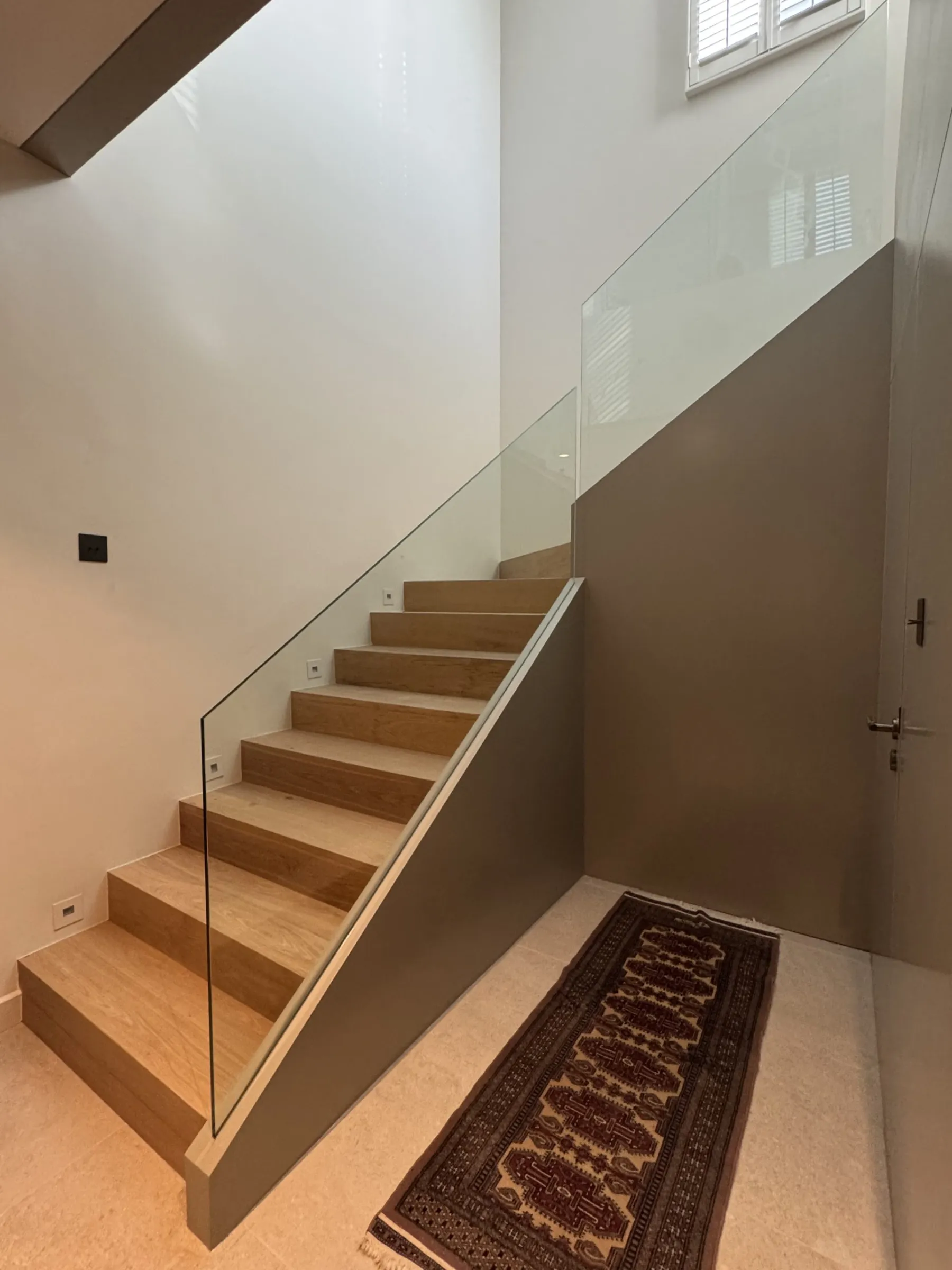
Villas open up options an apartment cannot take. Stone can be cut on site rather than pre-cut off plan, a full staircase flooring package makes sense — treads and risers in matching stone or timber with a bullnose or pencil-round nosing — and stair cladding over an existing concrete flight transforms a stairwell without rebuilding it. Stairs are priced per step, because that is how the labour works.
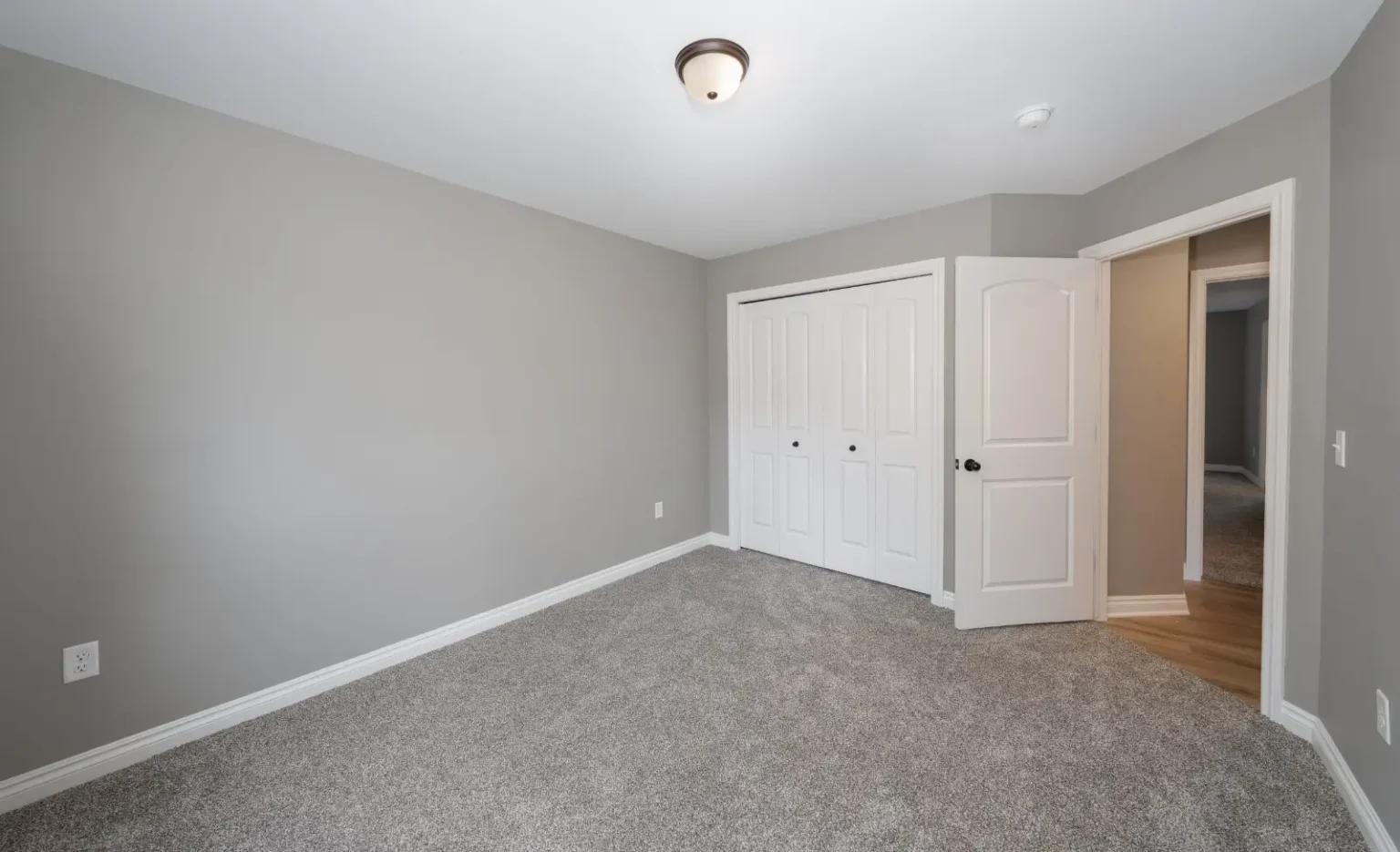
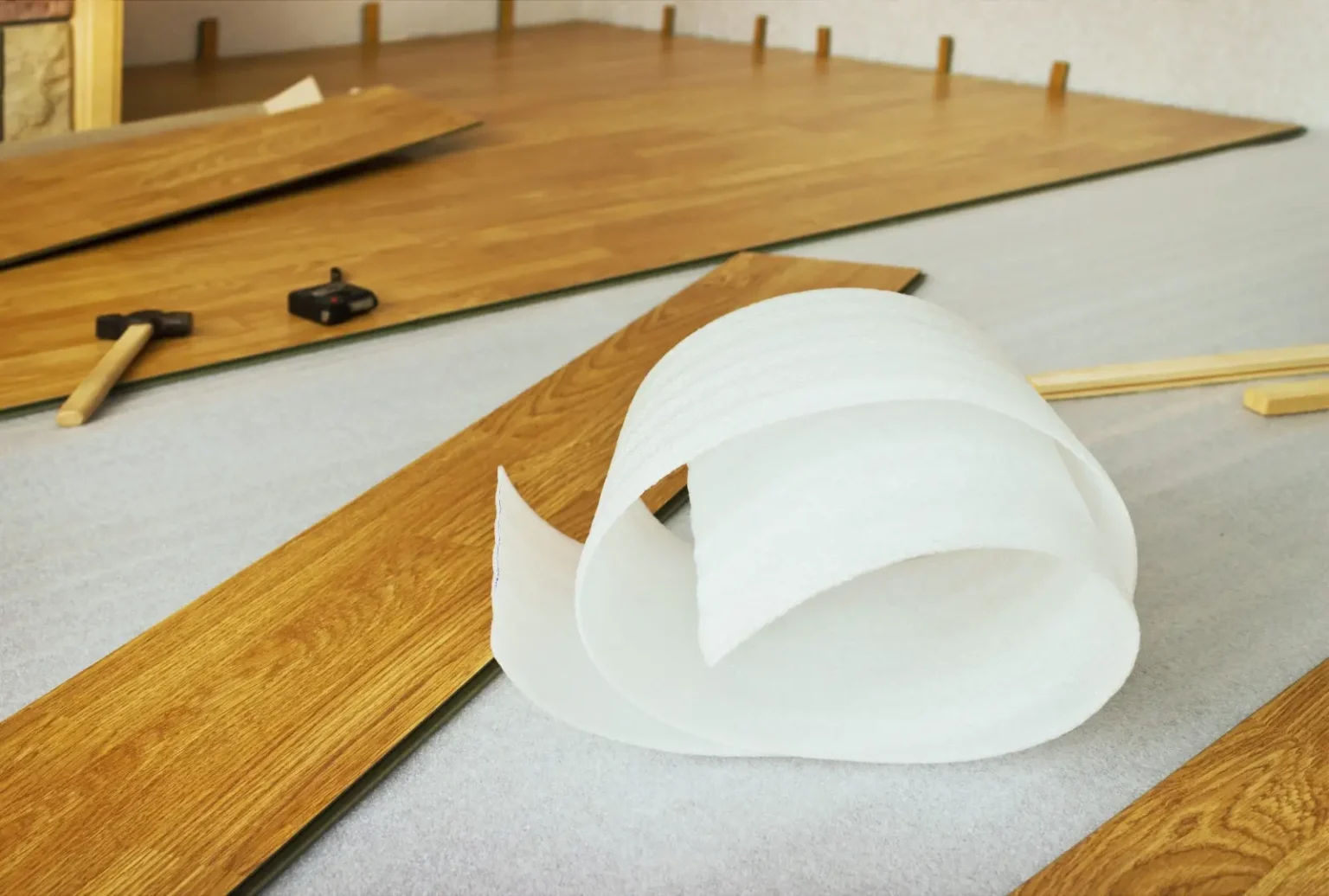
Room by room we specify differently: anti-slip porcelain to bathroom and kitchen floor tiles over a proper membrane and falls, engineered timber or SPC to bedrooms, large-format porcelain through the living and dining spaces so the eye reads one surface, and underfloor insulation or an acoustic mat under timber on upper floors where footfall carries. Soundproofing underlay is cheap during the works and impossible afterwards.
Skirting finishes it. Floor skirting hides the expansion gap that timber and SPC both need — tile skirting cut from the floor tile for a monolithic look, or wooden skirting in MDF or solid timber, scribed to the wall and painted in. We fit it after the floor, never before.
Office and commercial flooring
A commercial floor is judged on how it looks in year three, not on handover day. Access and replaceability beat appearance.
Carpet tiles and raised flooring are the two systems that make an office work. Carpet tiles lay at AED 14 to 28 per sq ft including underlay and gripper where needed, and their real advantage is that a stained or worn tile is a one-minute swap rather than a re-carpet — so we always hand over a box of attic stock. Laid quarter-turned, they also hide wear patterns far better than broadloom.
Raised access flooring is the answer wherever cabling density is high: a pedestal system with removable panels over the slab, so power and data run under the floor and every position stays reachable. It costs more upfront and saves it back the first time the desk layout changes.
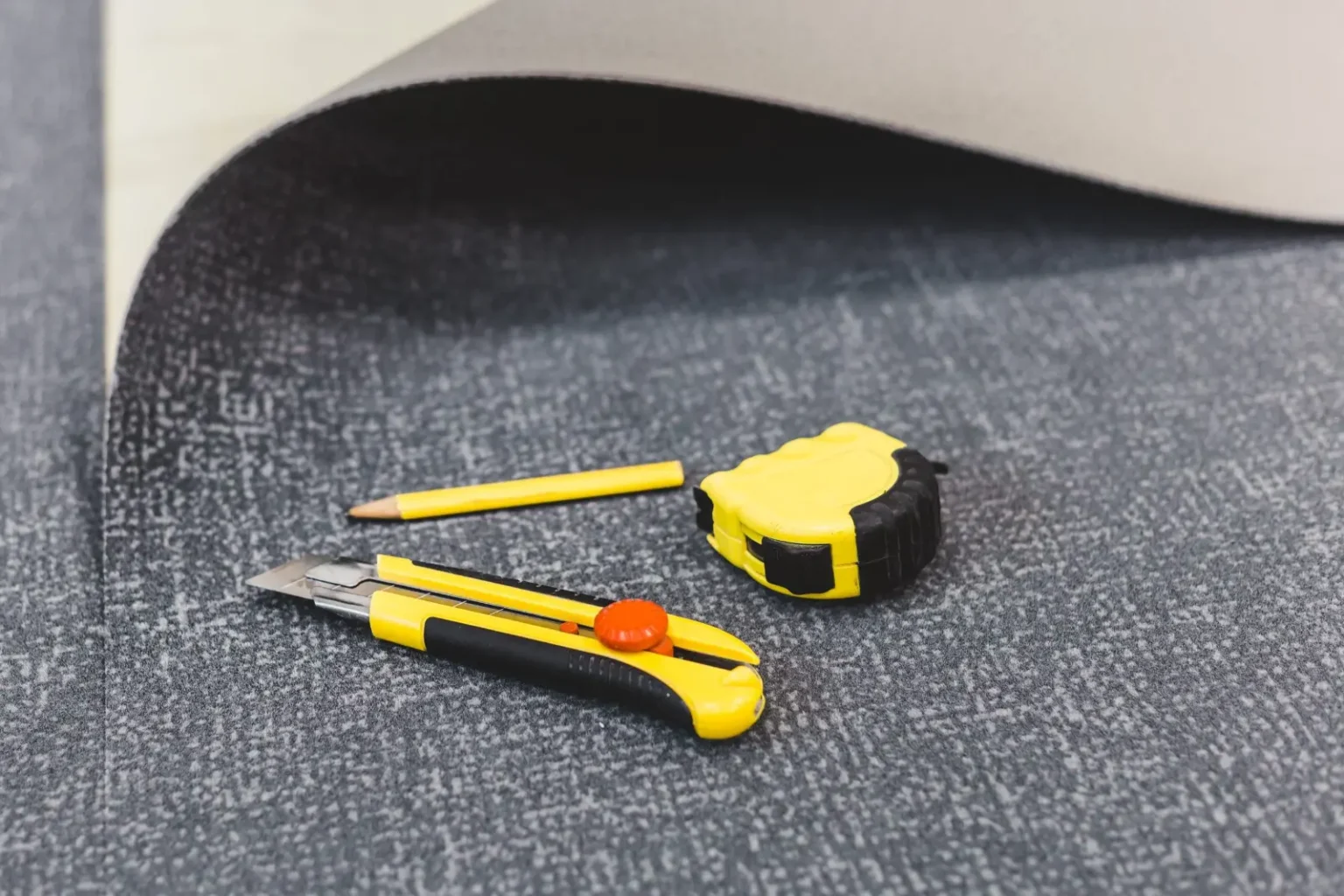
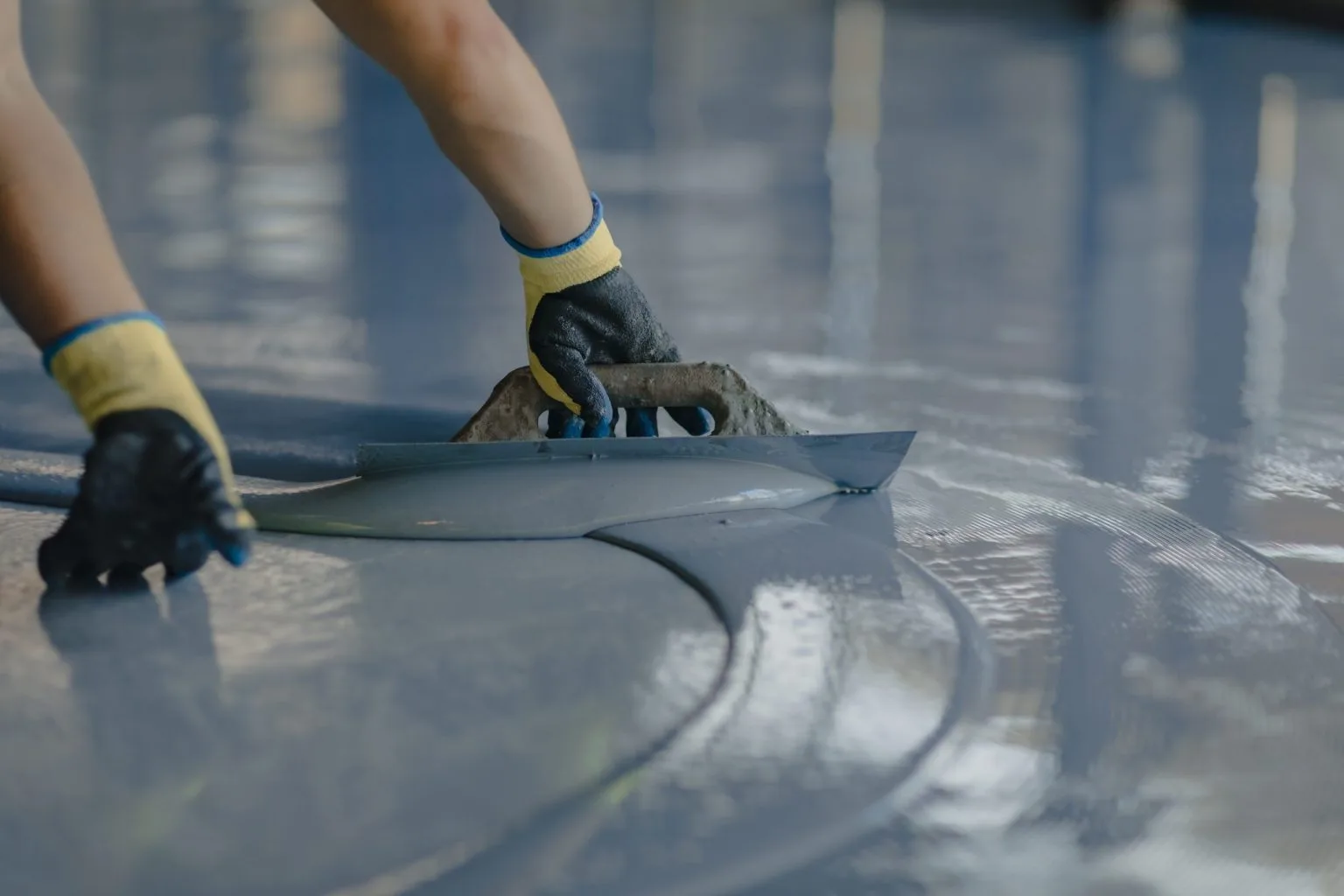
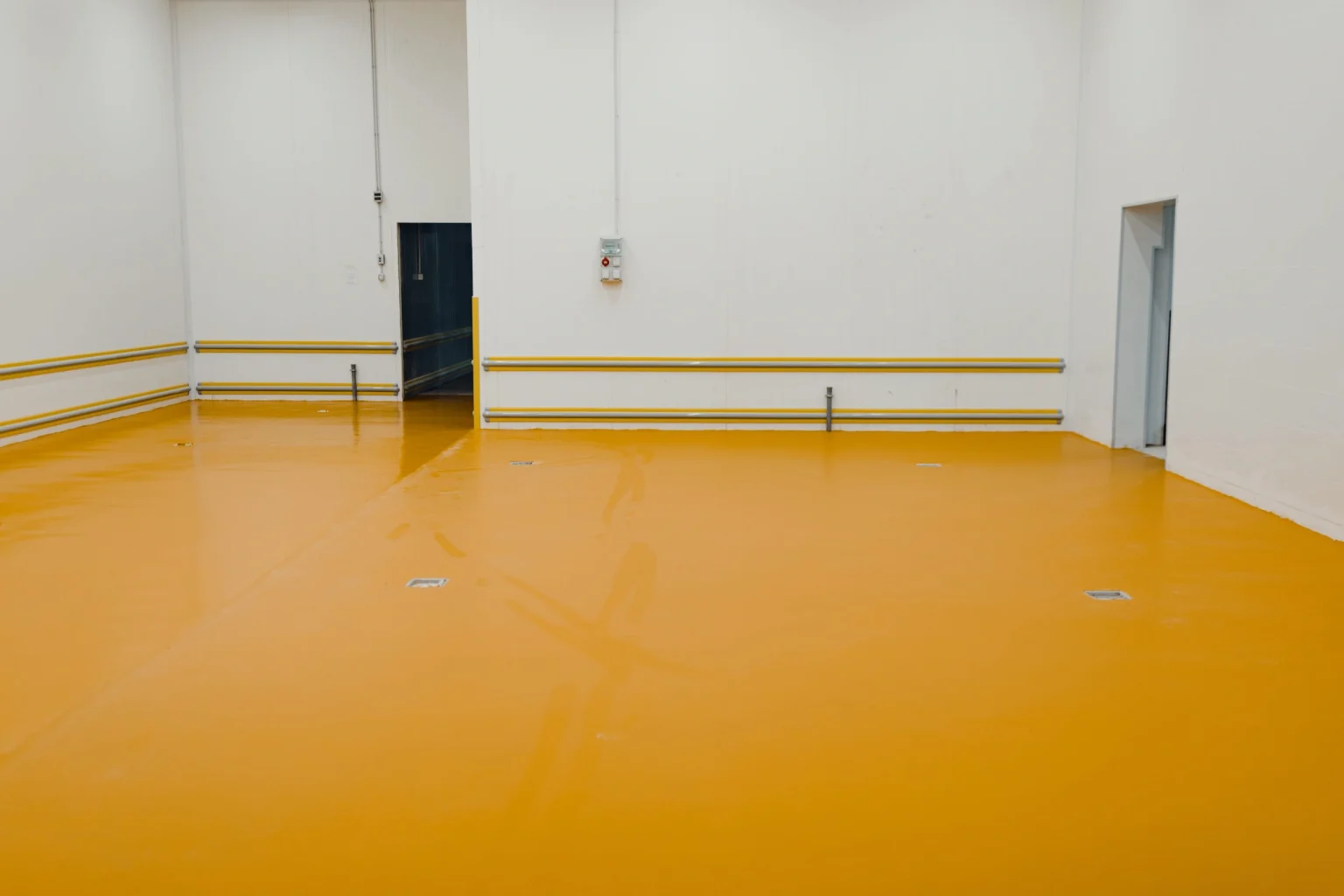
Epoxy flooring at AED 22 to 45 per sq ft is what we lay in garages, warehouses, plant rooms and back-of-house. It is seamless, chemical resistant and takes forklift traffic, and its performance is decided almost entirely by preparation — the slab is diamond-ground, vacuumed, primed and moisture-tested before a drop of resin goes down. Epoxy over a dusty or damp slab will delaminate, and no amount of product quality prevents it.
Retail, clinics, salons and restaurants each get their own specification: R11 anti-slip behind a counter or in a kitchen, a coved skirting where hygiene is audited, and hard-wearing porcelain or LVT where trolleys and chairs move all day. We work to the mall or landlord fit-out handbook rather than meeting it at the inspection.
Flooring cost in Dubai
Our own published laying rates. These are labour and consumables — the material is yours to choose, and we quote it separately so you can see both.
| Material | Laying rate | Notes |
|---|---|---|
| Porcelain, standard format | AED 30 – 45 / sq ft | Includes adhesive, grout and setting out |
| Porcelain, large format (900mm+) | AED 45 – 65 / sq ft | Levelling usually required; priced separately |
| Natural stone (marble, granite) | AED 50 – 90 / sq ft | Includes sealing on installation |
| Engineered timber | AED 25 – 45 / sq ft | Glue-down or floating, acclimatised first |
| Parquet (chevron, herringbone) | AED 45 – 80 / sq ft | Setting out is the bulk of the labour |
| SPC and LVT | AED 18 – 30 / sq ft | Click-fit over a level, dry base |
| Laminate | AED 15 – 25 / sq ft | Dry areas only |
| Carpet and carpet tile | AED 14 – 28 / sq ft | Includes underlay and gripper |
| Rubber gym matting | AED 25 – 45 / sq ft | Over a checked and levelled base |
| Epoxy coating | AED 22 – 45 / sq ft | Garages, plant and utility areas |
| Levelling compound | AED 8 – 18 / sq ft | Where substrate deviation requires it |
| Lift out and dispose existing floor | AED 8 – 16 / sq ft | Higher for bedded stone or tile on screed |
Flooring cost per sq ft Dubai splits into two numbers that most quotations blur into one: the laying rate and the material. Our laying rates run from AED 15 per sq ft for laminate to AED 50 to 90 for natural stone. Tile installation cost for standard porcelain is AED 30 to 45 per sq ft including adhesive, grout and setting out — large format is AED 45 to 65, and the difference is levelling and labour, not a better tile.
We quote flooring supply and installation as two lines whenever you want us to source the material, showing our cost and our margin, because a single blended rate makes it impossible to tell whether you are paying for a better tile or a bigger markup. If you buy your own material, we lay it at the rates above and tell you the take-off quantity including wastage before you order.
What sits outside the rate: levelling compound where the survey shows it is needed, lifting and disposing of the existing floor, skirting, thresholds and profiles, and any waterproofing to wet areas. Each is its own line on the quotation so you can decide on it separately rather than finding it as a variation at week two. And yes — we photograph the flooring before and after, including the substrate, and it goes in your handover pack.
Flooring installation and tiling in Dubai
How much does flooring cost per sq ft in Dubai?
Flooring cost per sq ft Dubai depends on which of two numbers you mean. Our laying rates run from AED 15 to 25 for laminate, 18 to 30 for SPC and LVT, 25 to 45 for engineered timber, 30 to 45 for standard porcelain, 45 to 65 for large-format porcelain, 45 to 80 for parquet and 50 to 90 for natural stone. The material is separate and is your choice. Levelling compound (AED 8–18), lifting the old floor (AED 8–16) and skirting are quoted as their own lines.
What is the best flooring for Dubai villas and apartments?
Porcelain for anywhere that gets water, sun or heavy traffic; engineered wood or SPC for bedrooms and living rooms; natural stone where budget and maintenance appetite allow. Solid hardwood and laminate are the two we are cautious about — solid timber moves with humidity and laminate swells if it gets wet. For a rental or a fast turnaround, SPC is almost always the right call. We recommend room by room at the survey rather than picking one floor for the whole home.
What is the difference between SPC, vinyl and laminate flooring?
Laminate is a printed decor over a wood-fibre (HDF) core — cheapest, dry areas only, swells permanently if it gets wet. Vinyl and LVT are flexible PVC, glued down, waterproof, quiet underfoot, and forgiving about small height changes. SPC is rigid vinyl with a stone-polymer core — waterproof like vinyl but far more dimensionally stable in a hot apartment, and it clicks together rather than being glued. In Dubai, SPC is usually the best of the three.
Can new tiles be installed over existing tiles?
Sometimes. Tile-over-tile works when the existing floor is sound, well bonded and flat, and when you can afford the added height at every door and threshold. We tap the whole floor first to find hollows — if more than a few tiles sound loose, laying over them simply transfers the problem to the new floor. A floor overlay also raises the finished level 12 to 20 mm, which can mean doors need trimming and a balcony threshold stops working.
Do you supply the material or only lay it?
Both. If you buy your own tile, stone or board, we lay it at our published rates and give you the take-off quantity including wastage before you order. If you want us to supply, we quote the material as its own line at our cost plus a stated margin, so you can see exactly what you are paying for the product and what for the work.
How long will my floor take?
Three to five days for a single room including levelling and curing, and two to three weeks for a full apartment alongside the other trades. Stone and pattern floors take longer because the dry-lay and setting-out are real work. Adhesive and grout also need curing time before the floor takes traffic — usually 24 to 48 hours — and that cannot be rushed.
Do I need to move out during the works?
Not usually. We work room by room where you are living in the property, protect the route in and out, and keep the dust down with extraction on the cutting. A full-apartment strip-out is noisier and dustier, and most clients prefer to be out for the demolition days at least. We agree the sequence with you before starting.
Will my doors still close afterwards?
We check this at survey and tell you the finished height before you commit. Most floors land within a few millimetres of the original level; a tile-over-tile overlay or a thick levelling compound will not. Where a door needs trimming or a threshold profile changes, it is on the quotation rather than discovered on the day.
Do you waterproof bathrooms and balconies before tiling?
Yes, and we treat it as a separate line so you can see it. Wet areas get a membrane taken up the wall and across the floor, with the falls set to the drain before tiling. On a balcony the membrane turns up behind the threshold and under the balustrade fixings. Tiling over a failed membrane just moves the water somewhere you cannot see.
Can you polish my marble instead of replacing it?
Almost always, and it is a fraction of the cost. Grinding, honing and polishing takes a dull, scratched marble floor back to a new-looking surface; crystallisation is the faster, cheaper chemical alternative that needs periodic redoing. We look at the floor and tell you which one it actually needs — putting a shine on a damaged surface only makes the damage easier to see.
Which areas of Dubai do you cover?
All of it — Dubai Marina, Downtown, Business Bay, JVC, Dubai Hills, Arabian Ranches, Damac Hills, Mirdif and Al Quoz among them. Our stores are in Ras Al Khor Industrial Area 2, so a short delivery, a replacement box of tiles or an extra bag of compound is a same-day fix rather than a lost day.
How do I get a quotation?
Call or WhatsApp 056-5608073, or email contact@abdullacarpentryest.ae with the room sizes and a few photographs of the existing floor. We arrange a free site visit and flooring quotation, usually within a couple of days. The survey lasers the slab, lifts a tile and checks the door heights, and the written quotation follows itemised by area, by material and by preparation.
Useful official references
Flooring sits under building rules, slip-resistance standards and material conformity. These are the primary sources we work to, and they are worth a look before you compare quotations from anyone.
Book a free flooring survey
A free site visit and flooring quotation, anywhere in Dubai. We laser the slab, lift a tile to see what is under it, check your door heights, and send a written quotation itemised by area, material and preparation. Call or WhatsApp 056-5608073, or email contact@abdullacarpentryest.ae.