What furniture painting and refinishing involves
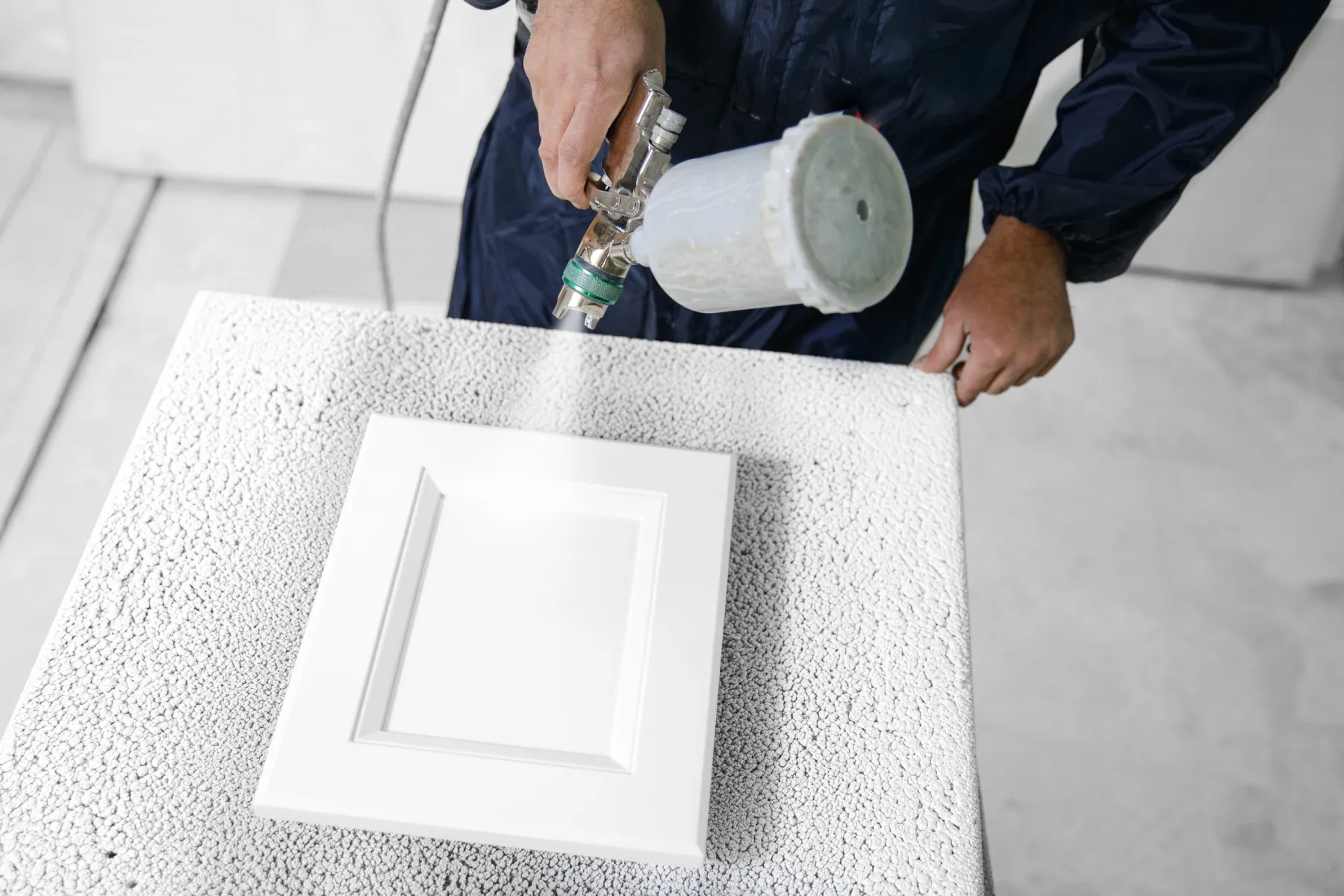
Furniture painting in Dubai means removing the item or its doors, stripping the old finish, repairing damage, sanding, priming and spraying a new finish in a controlled booth, then reinstalling. A kitchen respray costs AED 9,000 to 22,000 against AED 25,000 to 120,000 for replacement. Abdulla Carpentry EST has a spray booth with extraction in Ras Al Khor, which is what makes a genuine factory finish possible rather than a brushed approximation.
There is a straightforward reason most painting contractors cannot offer this: a home is not a clean room. Brush or roller applied to a door in situ will always show brush marks, and airborne dust settles into wet lacquer within minutes. You can tell a site-painted door from a sprayed one across a room.
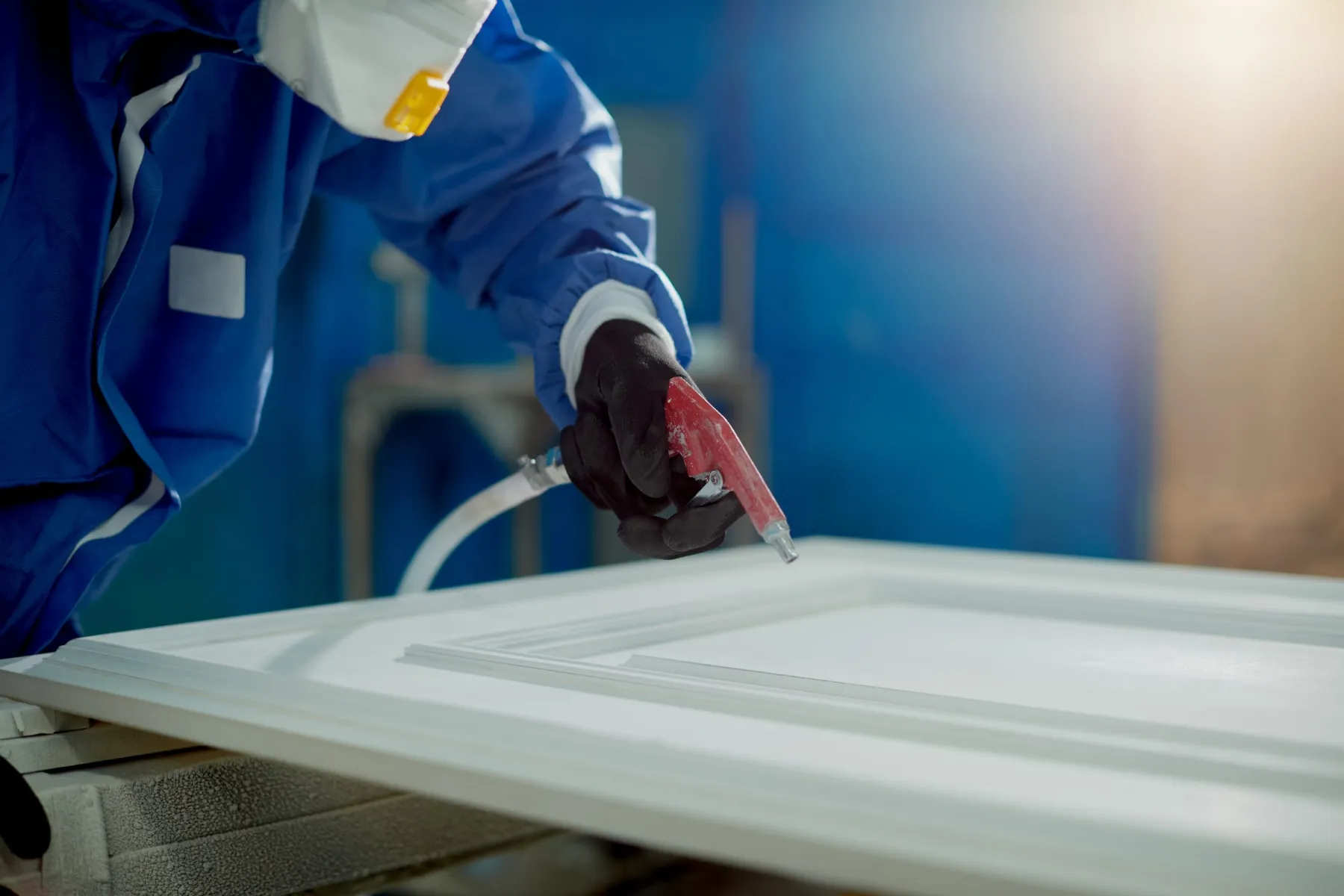
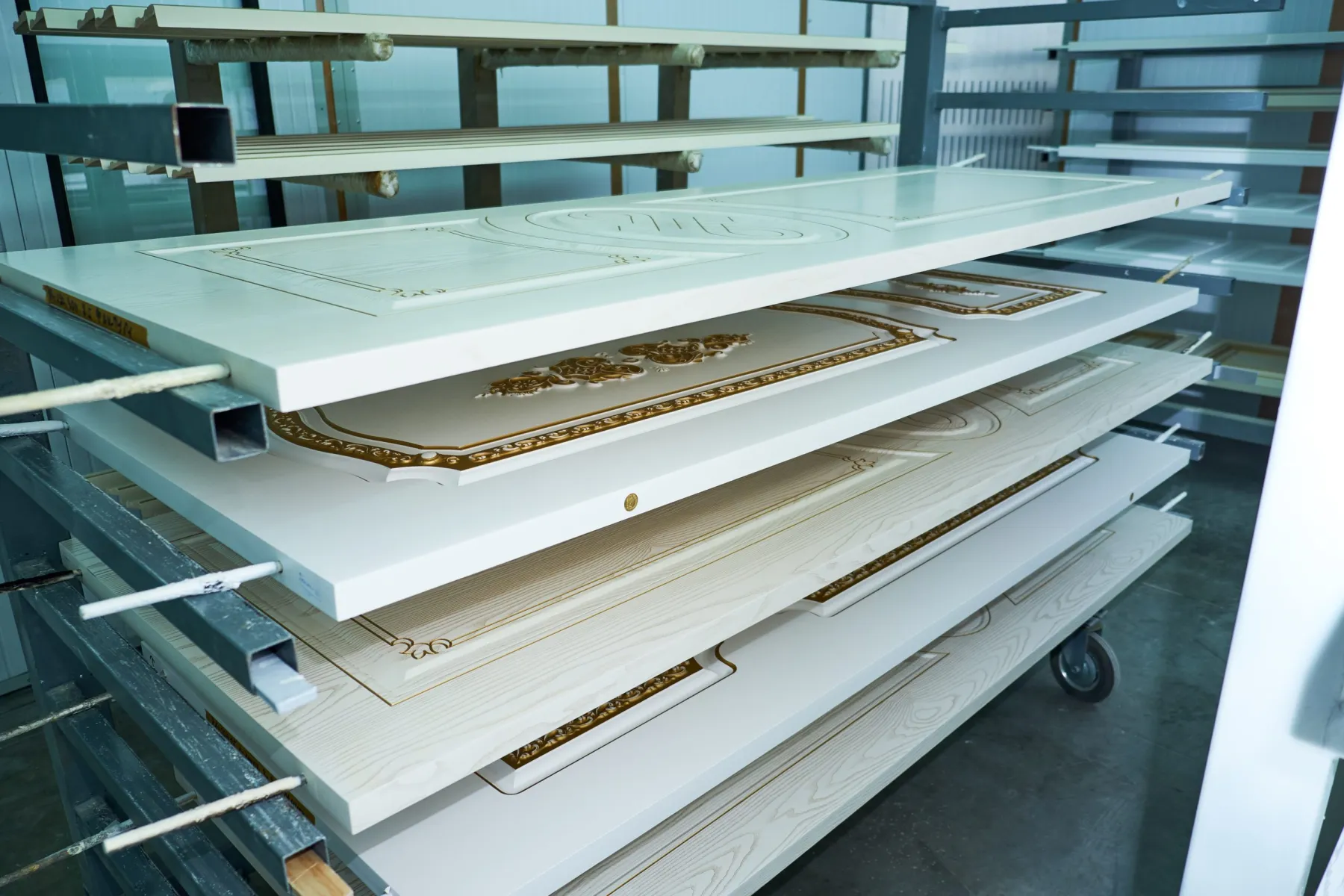
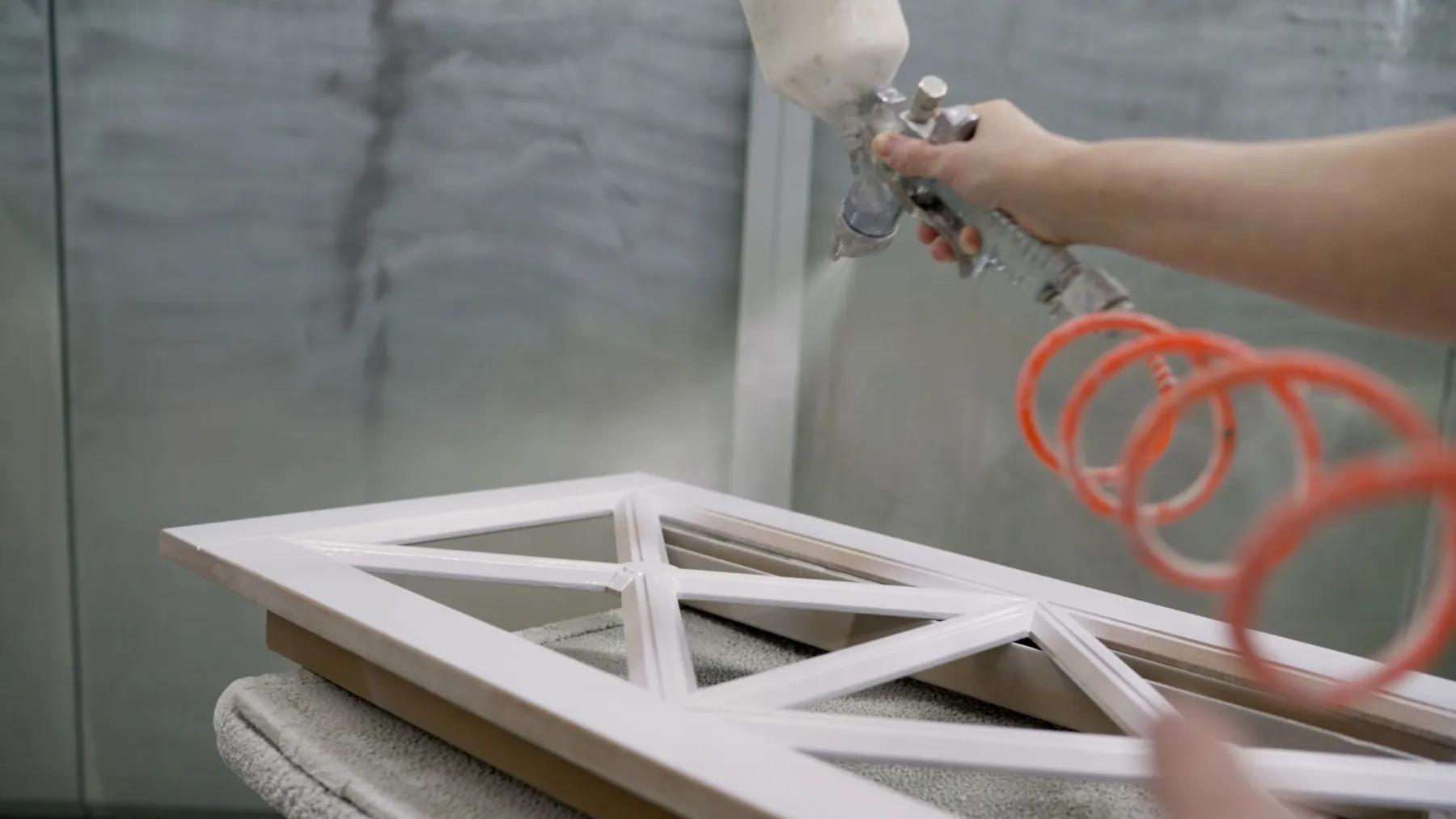
Taking the item to a booth changes the physics. Filtered air, controlled conditions, the piece laid flat or hung properly, and an even film applied in passes rather than worked with a brush. What comes back has no brush marks, no nibs, and an even sheen across the whole face.
It also moves the mess out of your property. The stripping, sanding and spraying — the genuinely dirty parts — all happen on 32b Street rather than in your kitchen.
 ¼ the costVersus replacement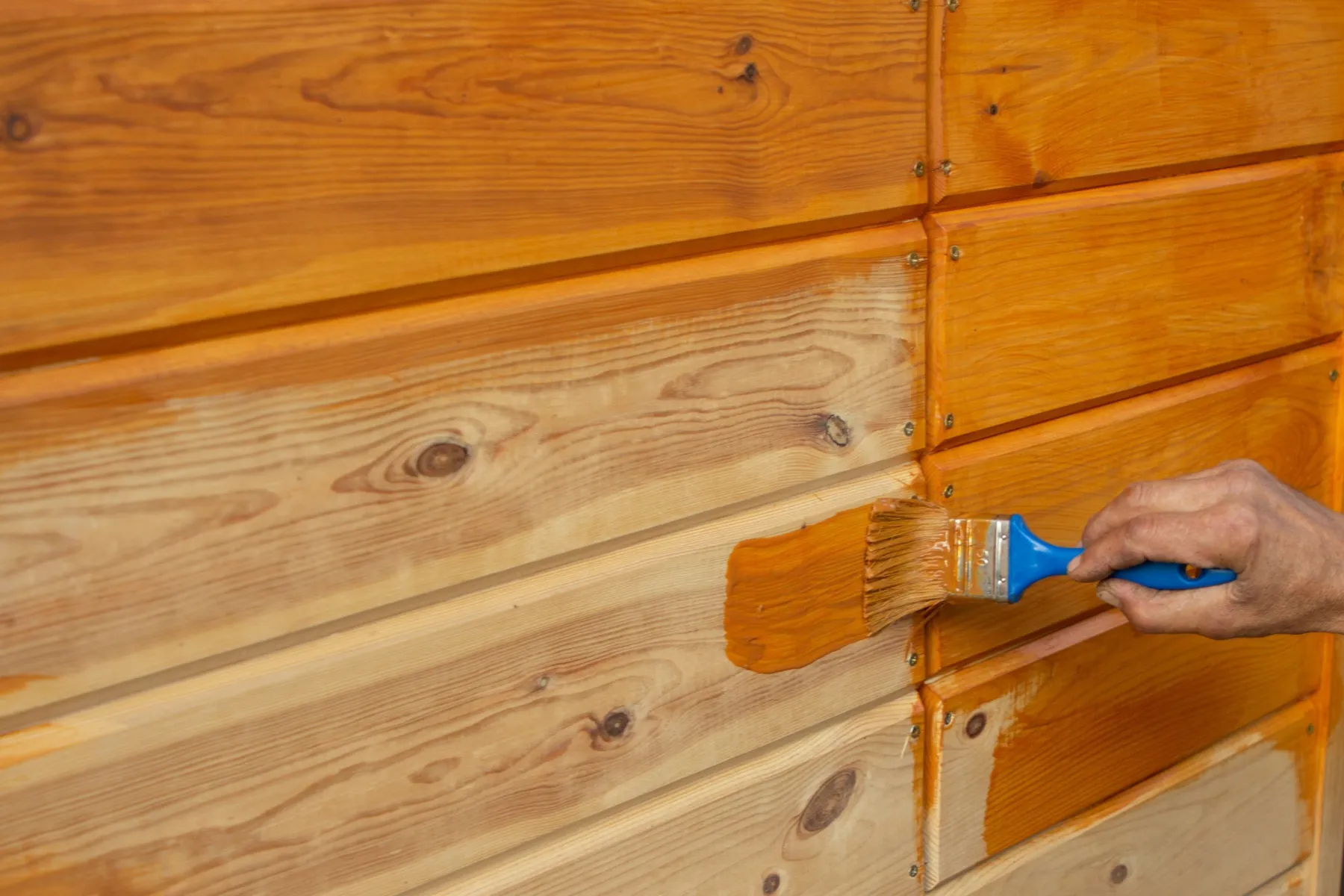
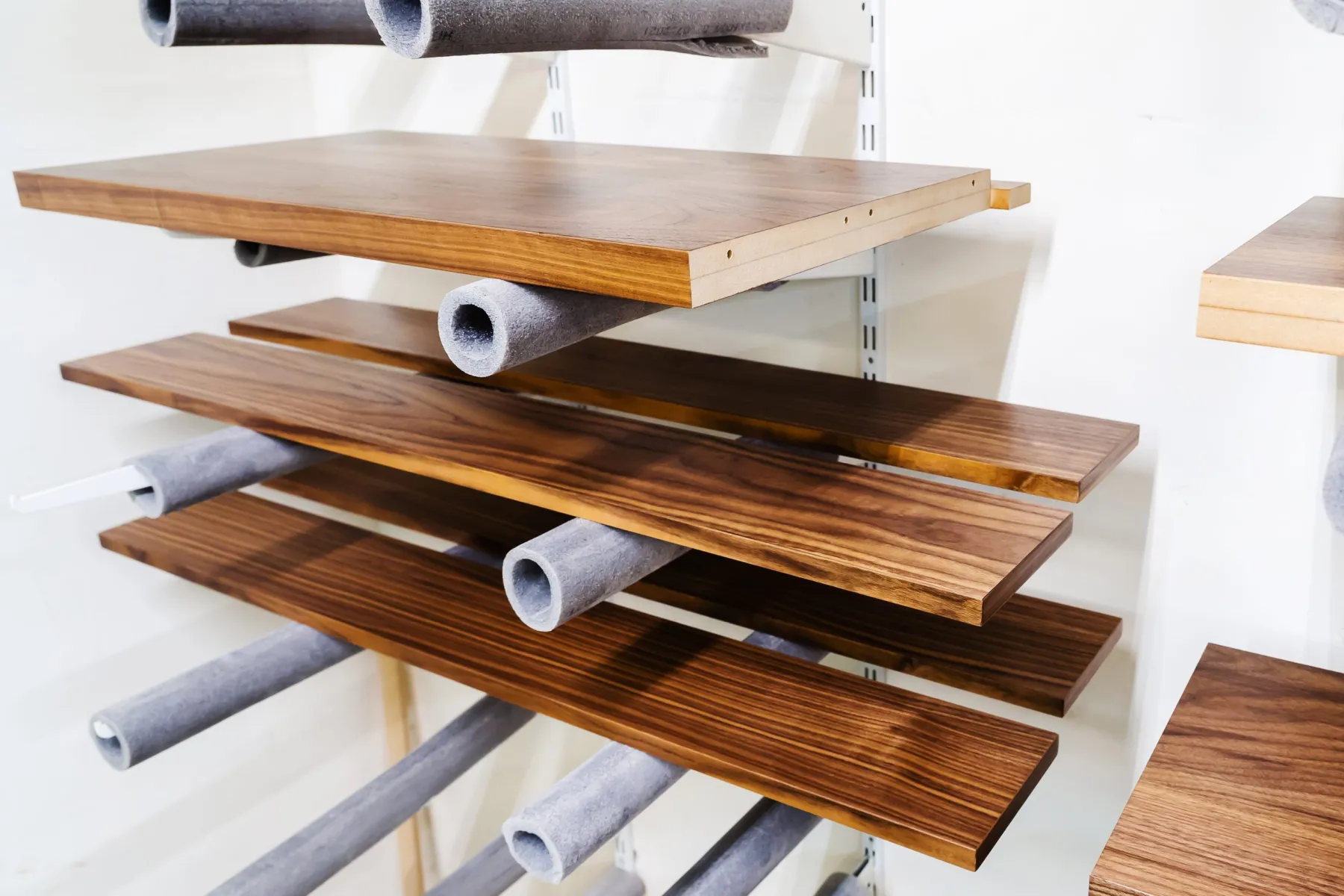
Items worth respraying rather than replacing
The test is always the same: is the structure sound? If the carcass, frame or joint is good and only the finish is wrong, refinishing is almost always the better answer.
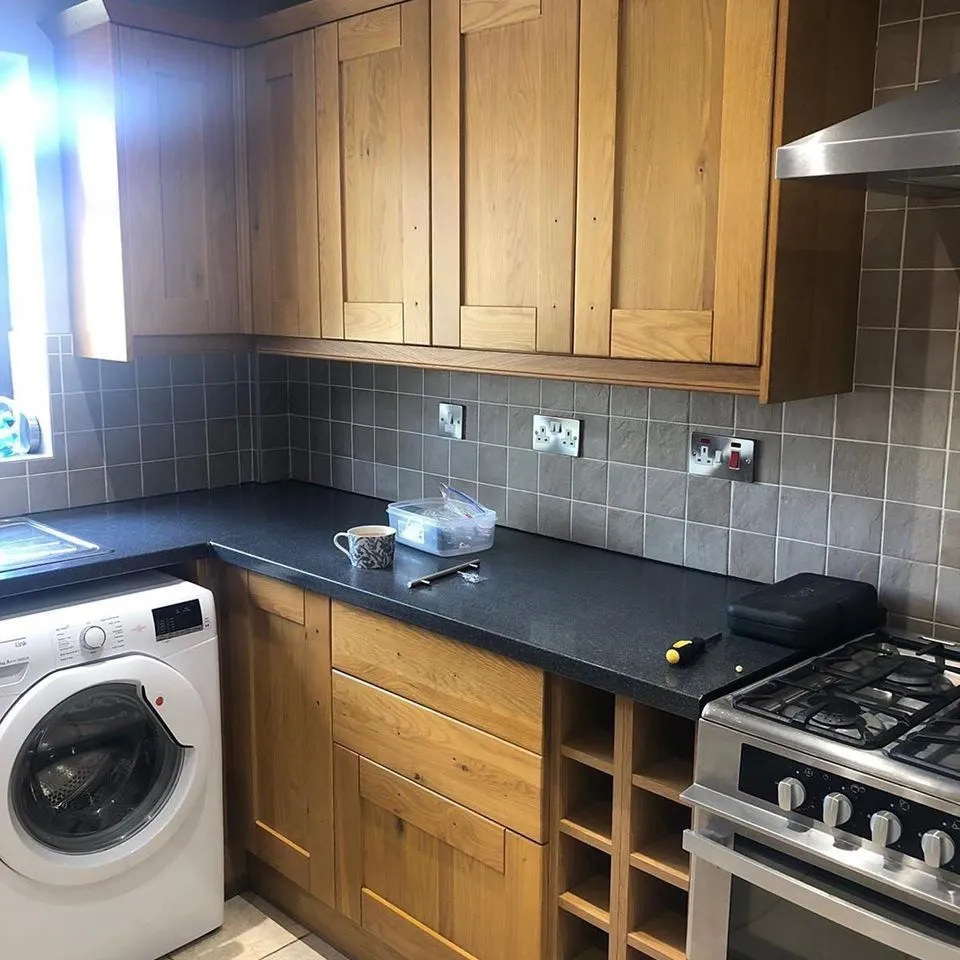
Kitchen doors and fronts. The most common job we do in this category. A kitchen with sound carcasses and a dated colour is transformed for a fraction of replacement cost, in about two weeks, with the carcasses staying in place throughout. We remove the doors and drawer fronts, spray them, and rehang with new hardware if the old is tired.
Wardrobe fronts. Same logic. Where the internals still work and the finish has dated, the doors come off and go to the booth.
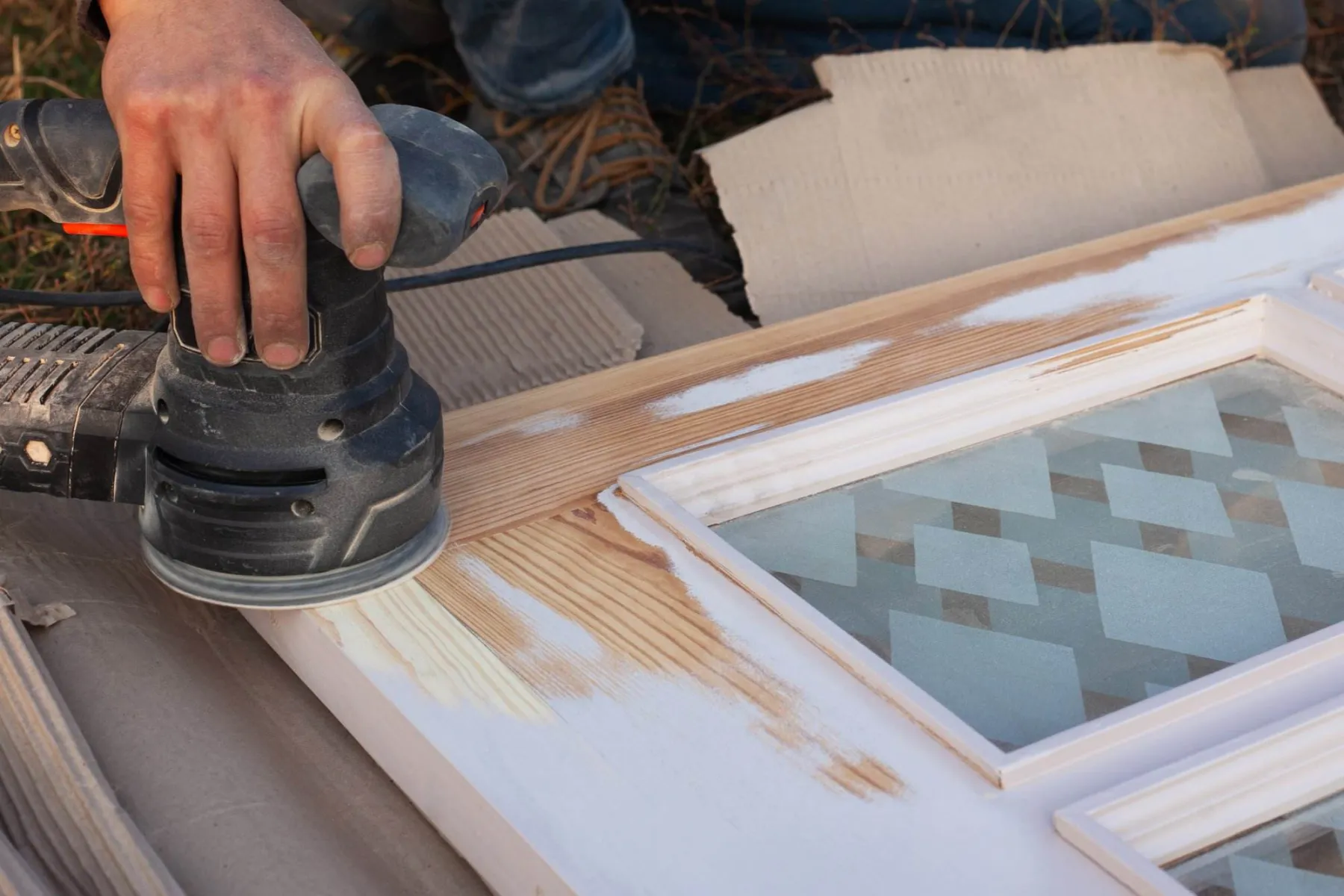
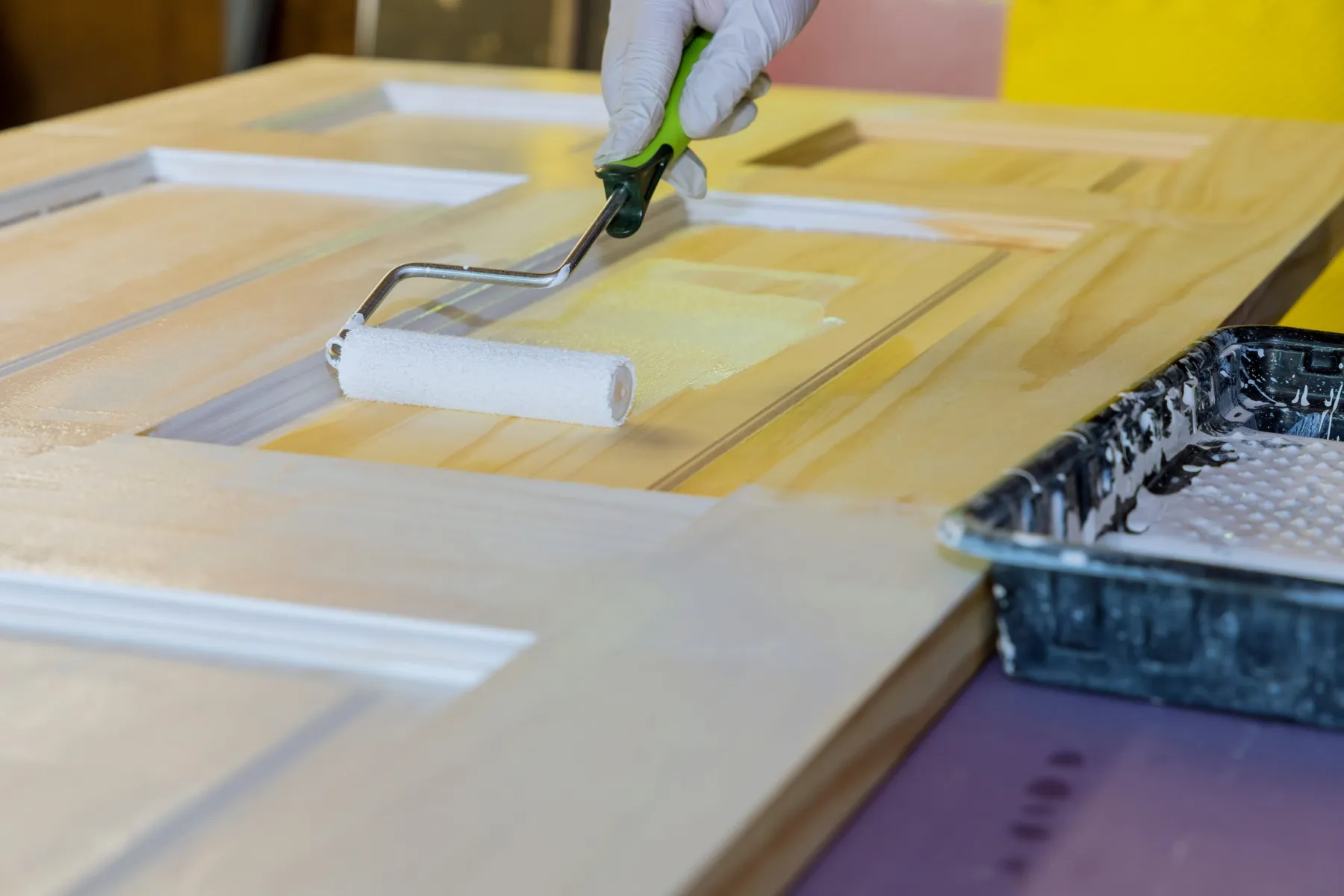
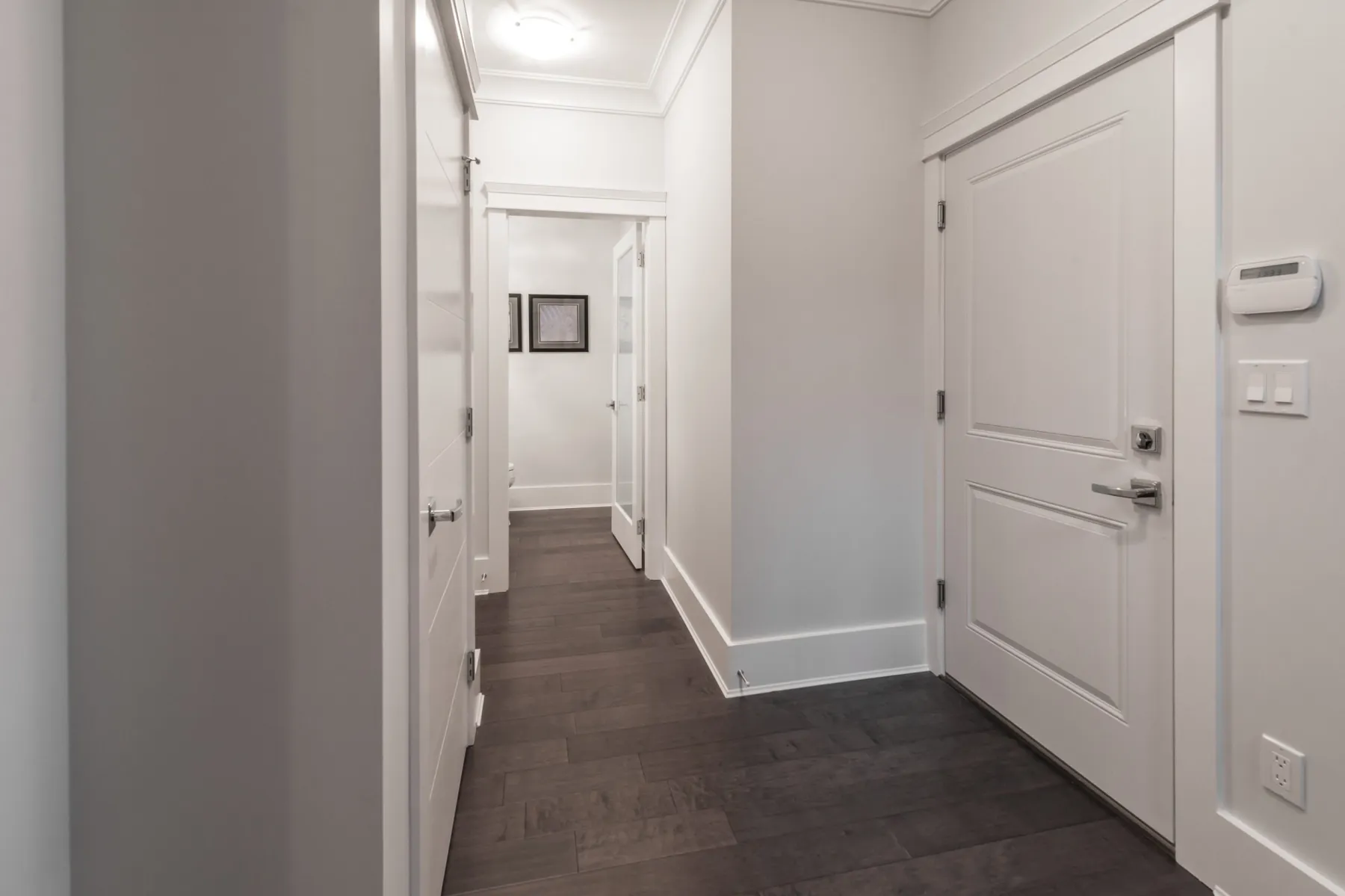
Internal doors and frames. Removed, stripped, filled, sprayed and rehung. Frames and architraves are sprayed in situ where removal is not practical, with proper masking and a dust-controlled setup. A set of tired doors in the wrong colour is one of the highest-impact, lowest-cost changes available in a property.
Free-standing furniture. Dining tables, sideboards, bed frames, cabinets and chairs. Solid timber pieces in particular are usually worth restoring — they were built better than most of what replaces them.
Timber restoration and polishing. Where the timber itself is the feature, stripping back and re-polishing rather than covering it. Staining and dyeing to change tone while keeping the grain visible.
What actually happens to your doors
Removal and labelling. Every door, drawer front and panel is numbered as it comes off, along with its hinge positions. A kitchen has doors that look identical and are not, and rehanging them in the wrong openings is how a refinished kitchen ends up with doors that do not sit flush.
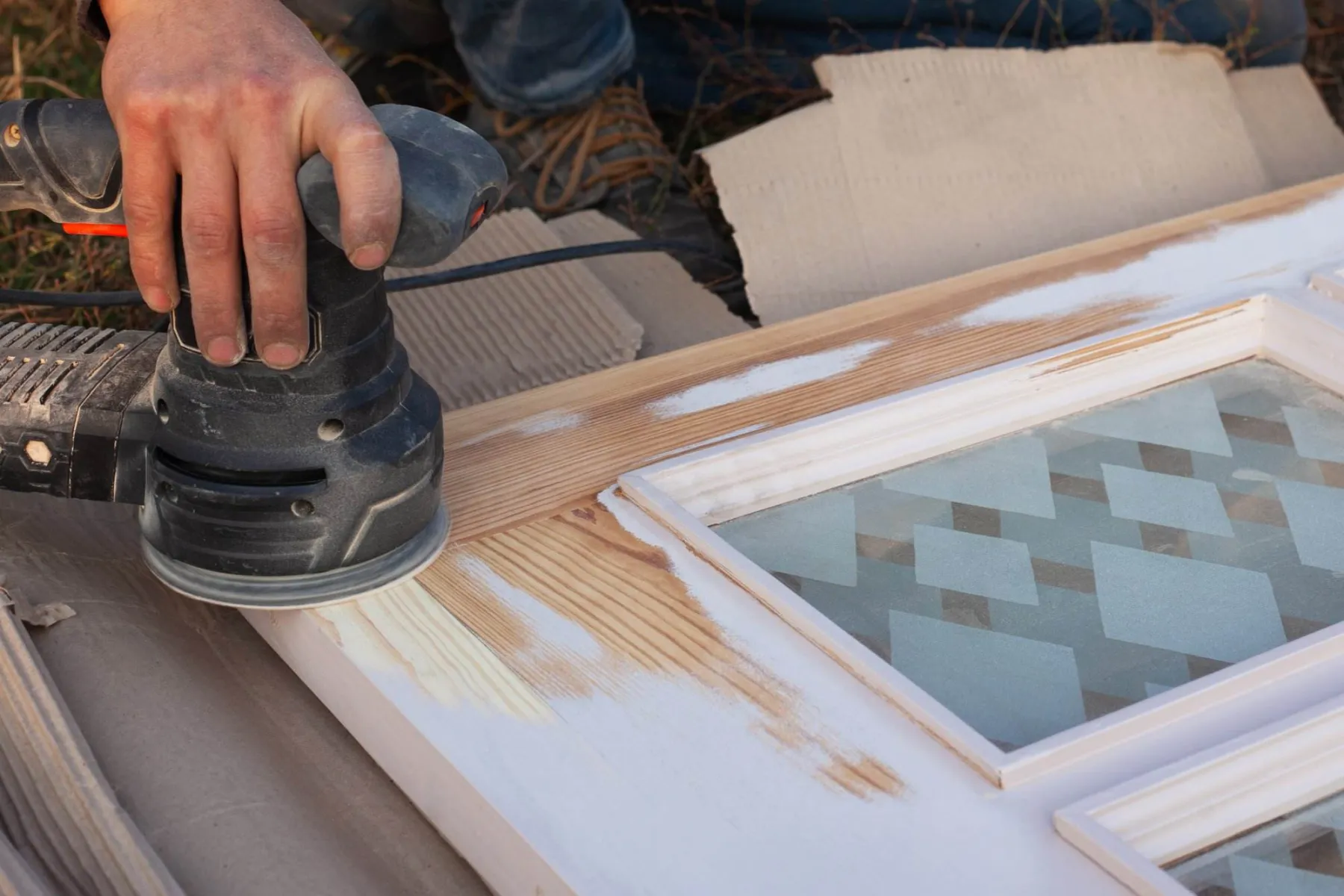
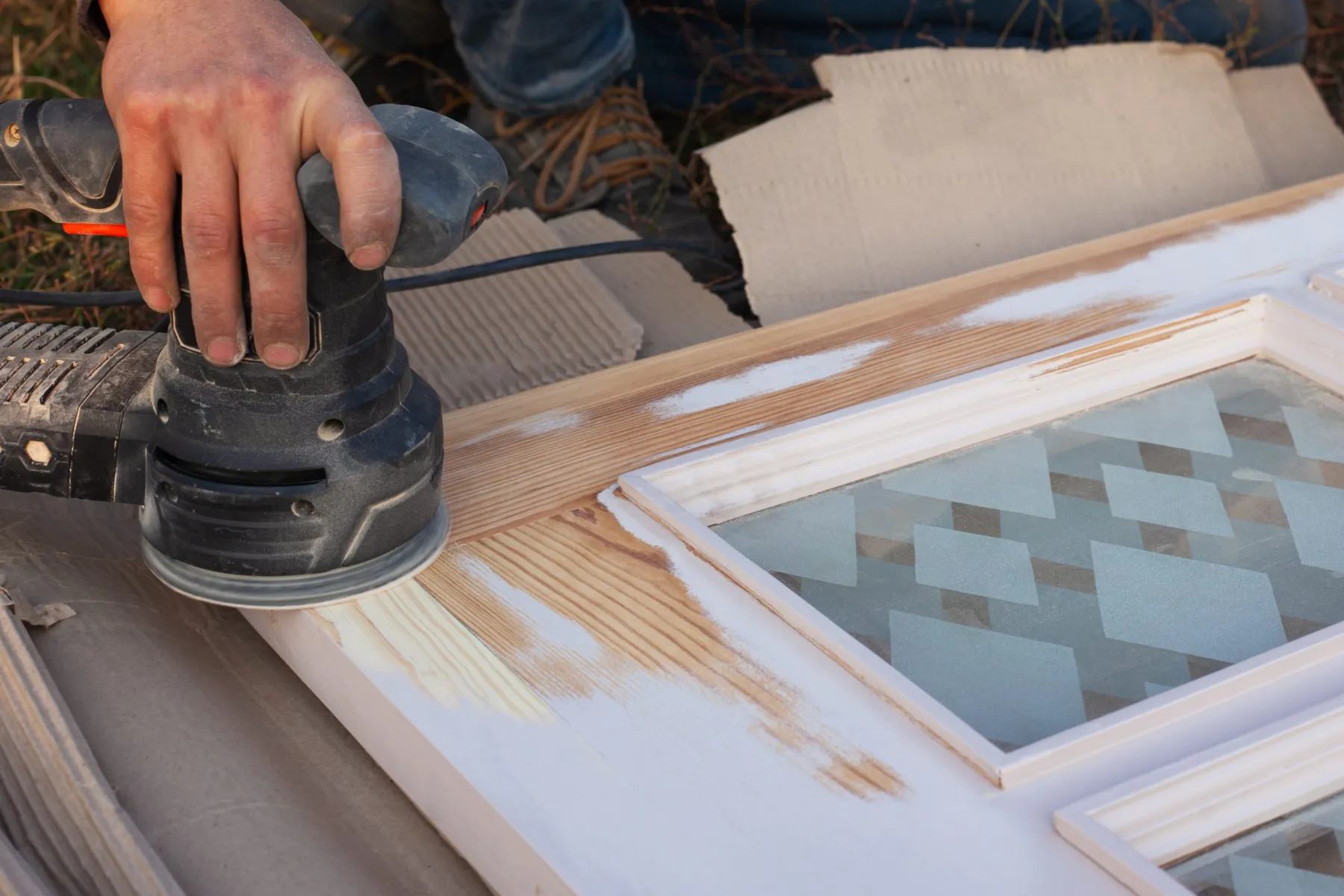
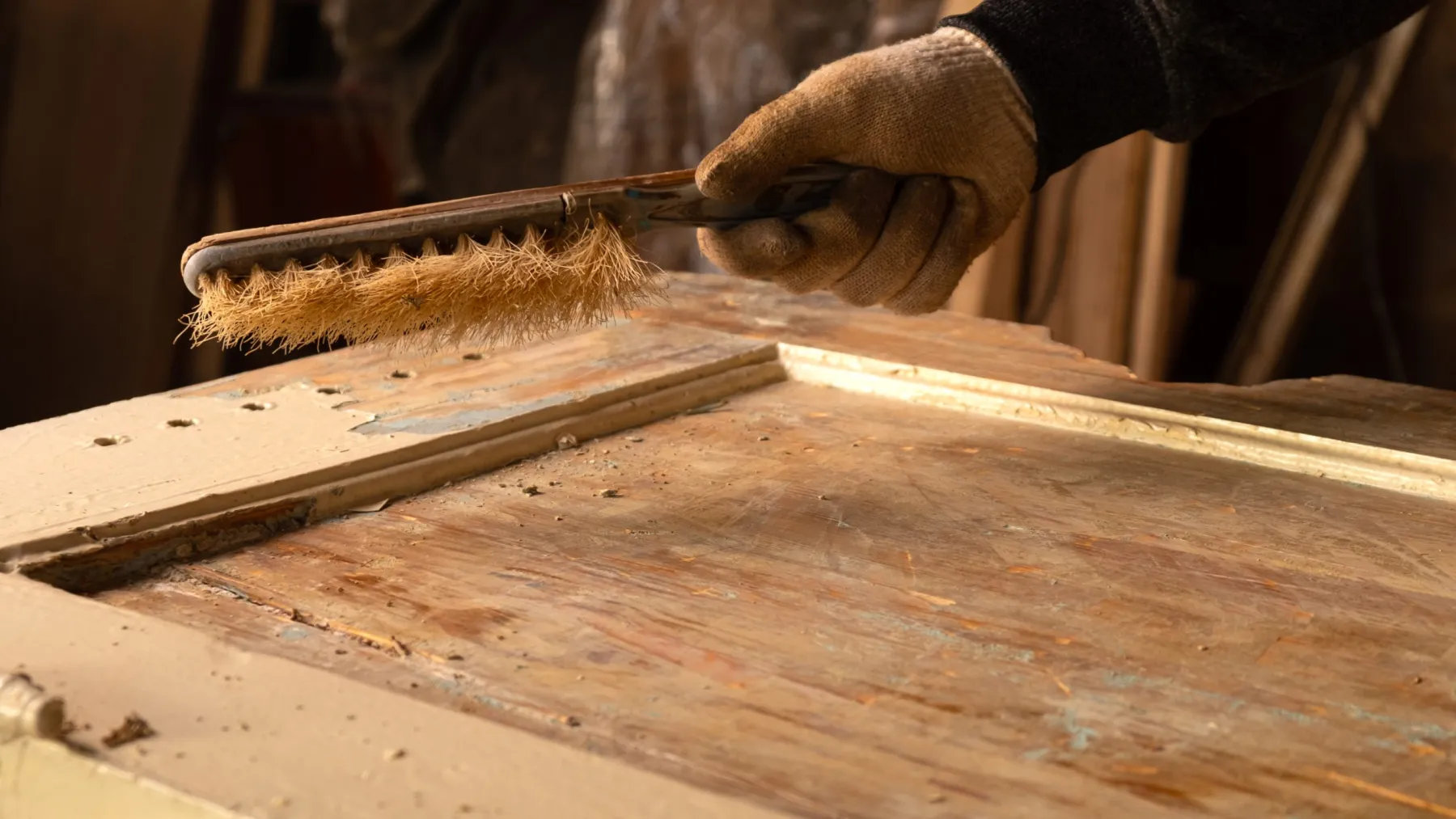
Stripping and assessment. Old lacquer or paint removed back to a sound substrate. This is also when we find out what the item is really made of — and occasionally when we tell a client honestly that it is not worth continuing.
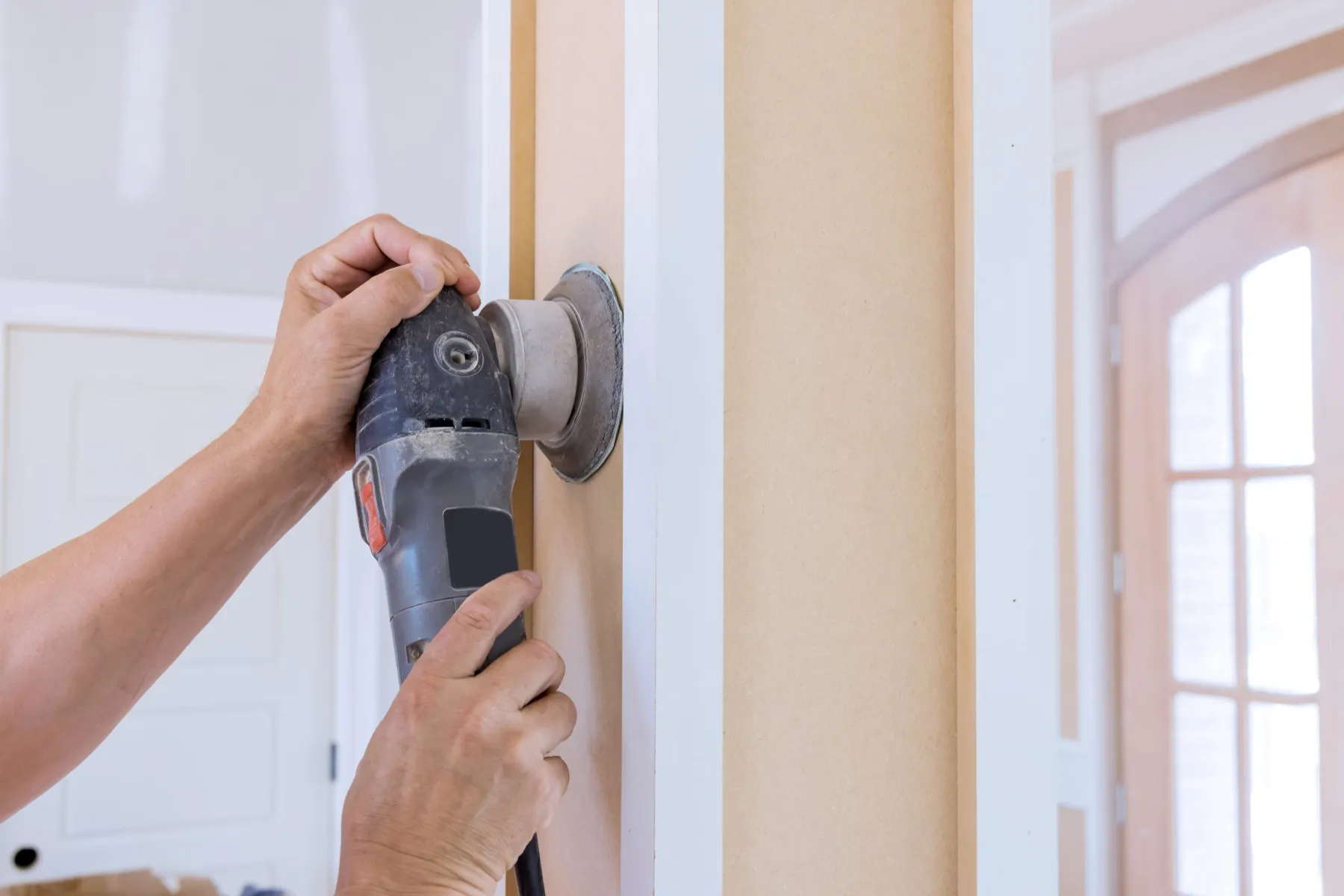
Repair and fill. Chips, dents, water damage at the base of a unit, screw holes from old hardware. Filled in stages because filler shrinks, then sanded flush.
Priming. The step that determines adhesion and how the finish sits. Different substrates need different primers, and getting this wrong is why a badly resprayed door peels at the edges within a year.
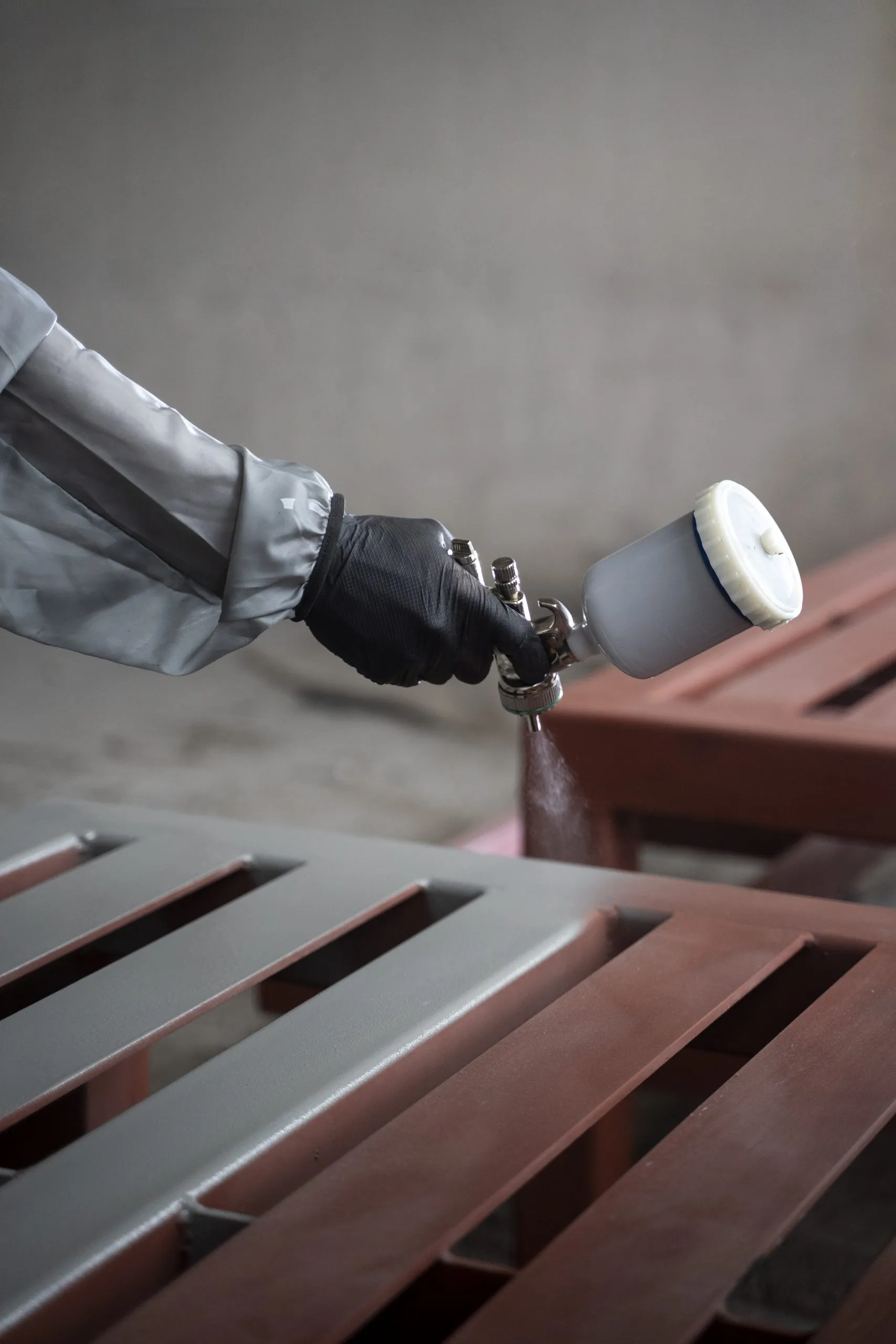
Spraying. Multiple thin coats rather than one heavy one, flatted between coats, in a booth where dust is not landing on the wet film.
Curing. The part that cannot be rushed. Lacquer needs time to harden before it is handled, stacked or hung. A job returned too quickly will mark from a fingernail.
What we can put on it
The finish is chosen against how the item is used, not only how you want it to look.
PU lacquer. The workhorse for kitchens, wardrobes and doors. Hard-wearing, available in any RAL or NCS colour, and in matt, satin or gloss. Matt hides fingerprints and shows scuffs; gloss does the reverse. Satin is the sensible middle for a family kitchen.
2K and high-build systems. Where maximum durability is needed — commercial joinery, heavily used doors, anything in a rental property.
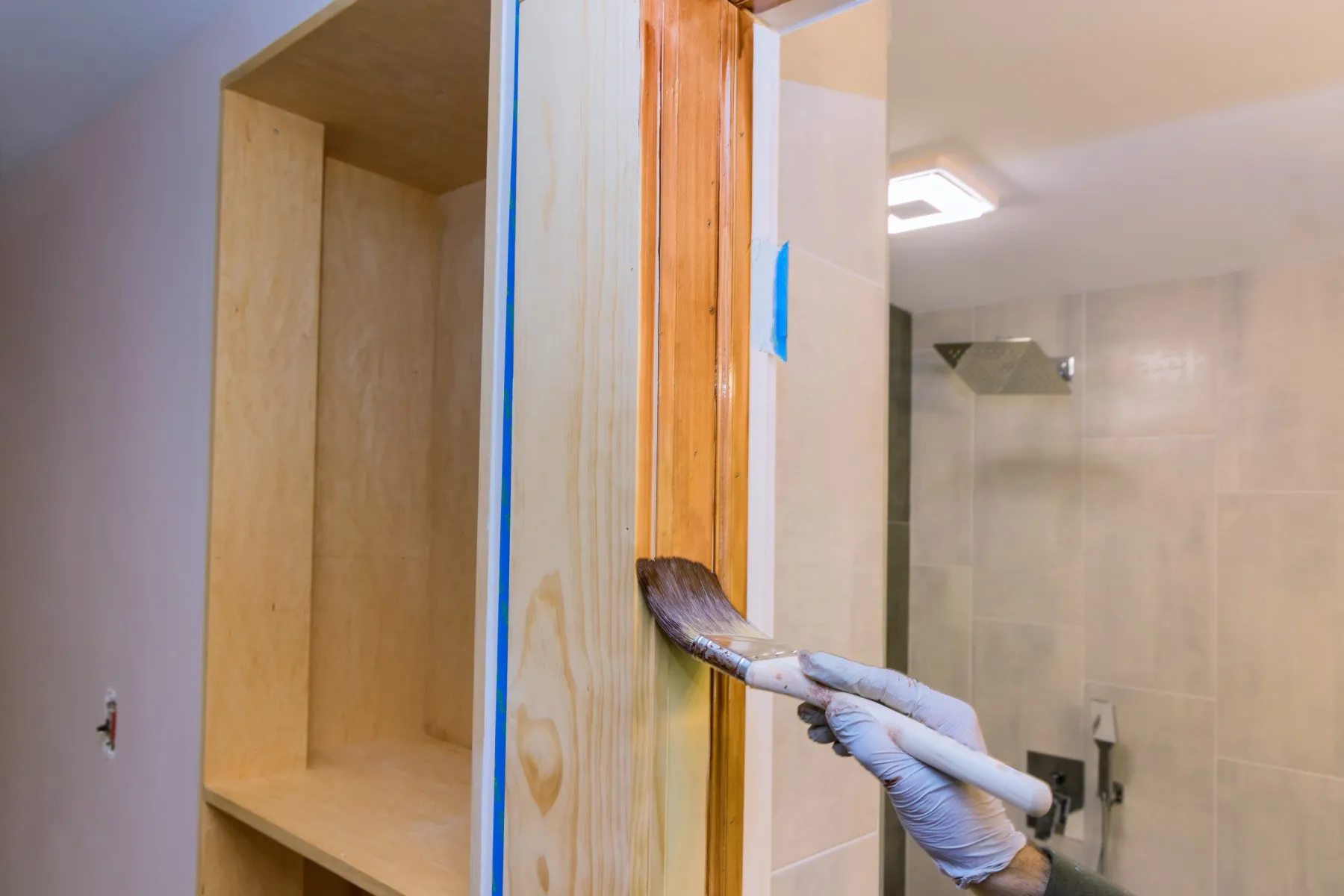
Stain and dye. Where you want to change the tone of timber but keep the grain visible. A dark-stained oak can be lifted several shades, or a pale timber deepened, without losing what makes it wood.
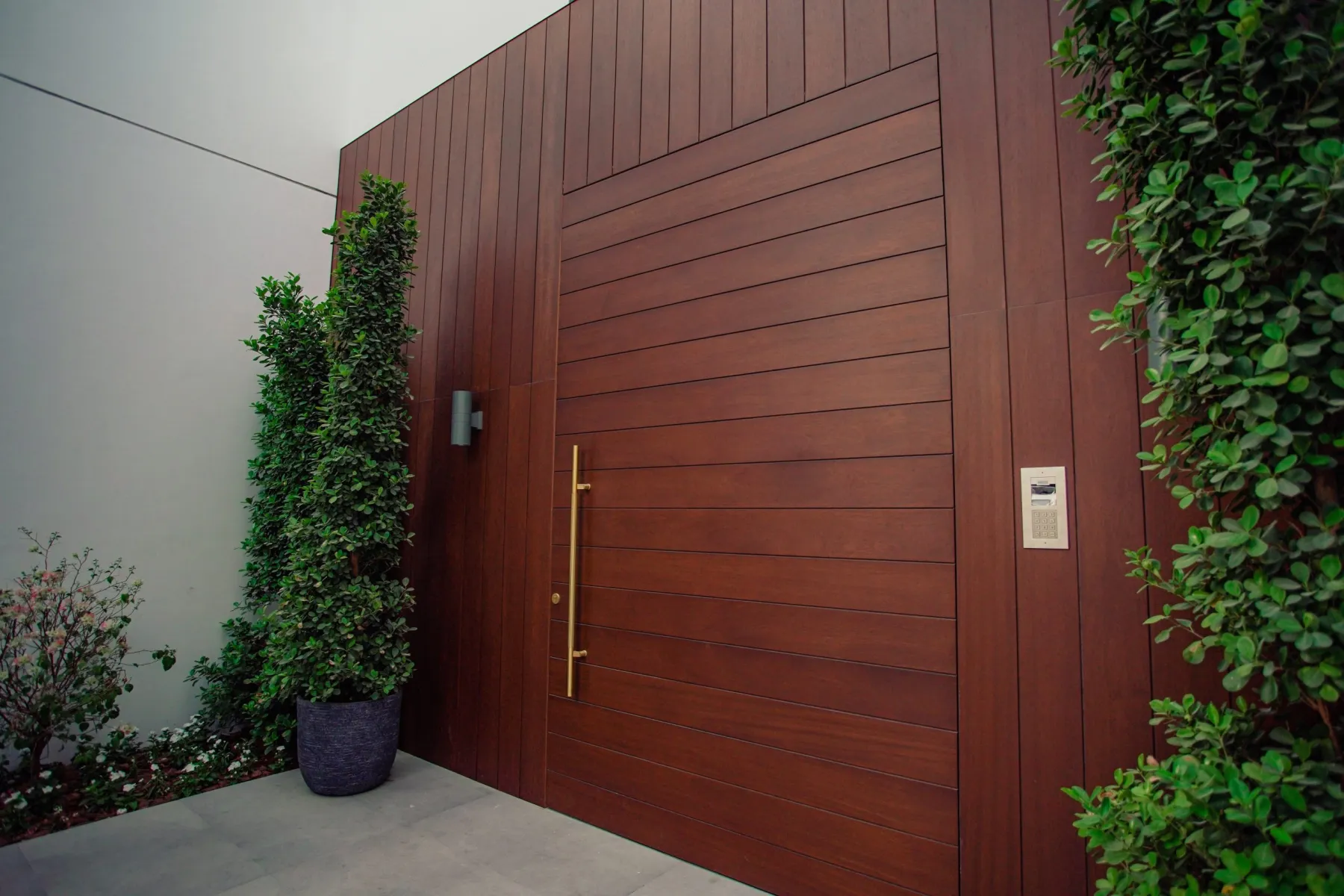
Clear and natural finishes. Oil, wax or clear lacquer where the timber is the point. Best on solid pieces with figure worth seeing.
Metallic, pearl and special effects. For feature pieces and commercial work where the item has to be noticed.
Vinyl wrapping as an alternative. Where budget or timescale rules out spraying, architectural vinyl over sound doors is faster and cheaper, with no curing time. It is a different product with a different lifespan, and we will explain the trade-off rather than presenting it as the same thing.
Two weeks for a kitchen, less for doors
Assessment and colour
We look at the item, establish what it is made of and whether the structure justifies refinishing, then agree the colour and sheen — sprayed on a sample board in the actual finish rather than chosen from a chart.
Remove, label and transport
Doors and fronts numbered with their openings and hinge positions, hardware bagged, and everything transported to Ras Al Khor. Carcasses stay in your property and remain usable.
Strip, repair and prime
Old finish removed, damage filled in stages, sanded flush, then the correct primer for the substrate. This stage is most of the labour and all of the eventual quality.
Spray and cure
Multiple thin coats, flatted between, in a booth with filtered air. Then curing time, which is not negotiable — a job returned too early marks from a fingernail.
Return and rehang
Everything back in its original opening, hinges adjusted, doors aligned and gaps set consistently. New handles fitted if you are changing them.
Furniture painting prices in Dubai
Priced per item or per door rather than per square metre, because the labour is in the preparation. Compare these against the replacement cost of the same item.
| Item | Typical range | Versus replacement |
|---|---|---|
| Kitchen respray, standard size | AED 9,000 – 16,000 | New kitchen AED 25,000 – 60,000 |
| Kitchen respray, large or villa | AED 16,000 – 22,000 | New kitchen AED 60,000 – 120,000 |
| Wardrobe fronts, per door | AED 350 – 750 | New wardrobe from AED 1,100 / sq m face |
| Internal door, sprayed off site | AED 700 – 1,400 | New door with frame AED 2,200 – 6,500 |
| Door frame and architrave, in situ | AED 350 – 700 | — |
| Dining table refinish | AED 1,800 – 5,500 | Depends on size and timber |
| Sideboard or cabinet | AED 1,200 – 4,000 | — |
| Bed frame and headboard | AED 1,500 – 4,500 | — |
| Timber stripping and re-polishing | AED 180 – 420 / sq m | Clear or stained, grain retained |
| Vinyl wrapping, kitchen | AED 5,000 – 14,000 | Faster alternative, different lifespan |
We will tell you when refinishing is not worth it. A swollen, delaminating carcass is at the end of its life and no finish rescues it. But a solid kitchen with tired fronts, or good doors in the wrong colour, is exactly the job this service exists for — and we say so even though it is the smaller invoice.
Offices, hotels and retail, refreshed without replacement
For a business, refinishing solves two problems at once: a tired interior and the cost and downtime of replacing joinery that still works.
Hotels and serviced apartments. Guest room furniture takes constant use and dates faster than it wears out. Wardrobes, headboards, desks and door sets can be refinished floor by floor while the property keeps trading, which is why refurbishment cycles increasingly use this route rather than full replacement.
Offices. Reception counters, meeting room tables and storage joinery resprayed over a weekend, with the floor usable again on Monday. Brand colour changes after a rebrand are a common trigger — a colour update across existing joinery costs a fraction of new furniture.
Retail. Display units, counters and shopfront joinery refreshed between seasons. Fixtures are often structurally fine and simply the wrong colour for a new range, which is exactly the case refinishing was made for.
Restaurants and cafes. Tables, bar fronts and banquette frames restored during closure periods. High-durability systems specified because these surfaces take more abuse than anything in a home.
How we phase it. Items are taken in batches so the space stays operational — a floor at a time in a hotel, a section at a time in a restaurant. Removal and reinstallation happen outside trading hours where the landlord permits, and we work to a fixed return date because your reopening depends on it.
Whether your piece is a candidate
Send us photographs and we will tell you honestly. In the meantime, here is roughly how we assess it.
Good candidates. Solid timber anything. Kitchen and wardrobe carcasses that are square, dry and structurally sound. Doors of any material where the core is intact. Veneered pieces where the veneer is unlifted. Lacquered MDF fronts that are chipped or dated but not swollen.
Poor candidates. Anything with a swollen, crumbling base — the classic failure of standard MDF in a wet area. Laminate that is lifting from its substrate. Pieces where the joints have failed and the item racks when pushed. In these cases the finish is not the problem and spending on it is wasted.
The borderline case. A kitchen where most units are sound and two under the sink have gone. Usually the answer is replacing those two carcasses and respraying everything, which gets you a uniform finish for far less than a new kitchen. We do this regularly.
Colour matching an existing item. Possible and worth managing expectations on. We spray a sample board and compare it in your own light before committing. An exact match to aged timber is hard; a close, deliberate match is achievable, and sometimes the better answer is to refinish everything rather than chase one piece.
How long you lose the item. Kitchen doors are away about two weeks and the carcasses stay usable throughout, so you keep a working kitchen minus the doors. Free-standing furniture is away one to three weeks depending on the finish.
Durability afterwards. A properly prepared and sprayed PU finish is as hard-wearing as a factory finish on a new unit, because it is the same material applied the same way. What shortens its life is poor preparation underneath, which is why most of the cost sits there.
Spray or wrap — an honest comparison
We do both, so we have no reason to push one. They solve the same problem differently and the right choice depends on budget, timescale and how the item is used.
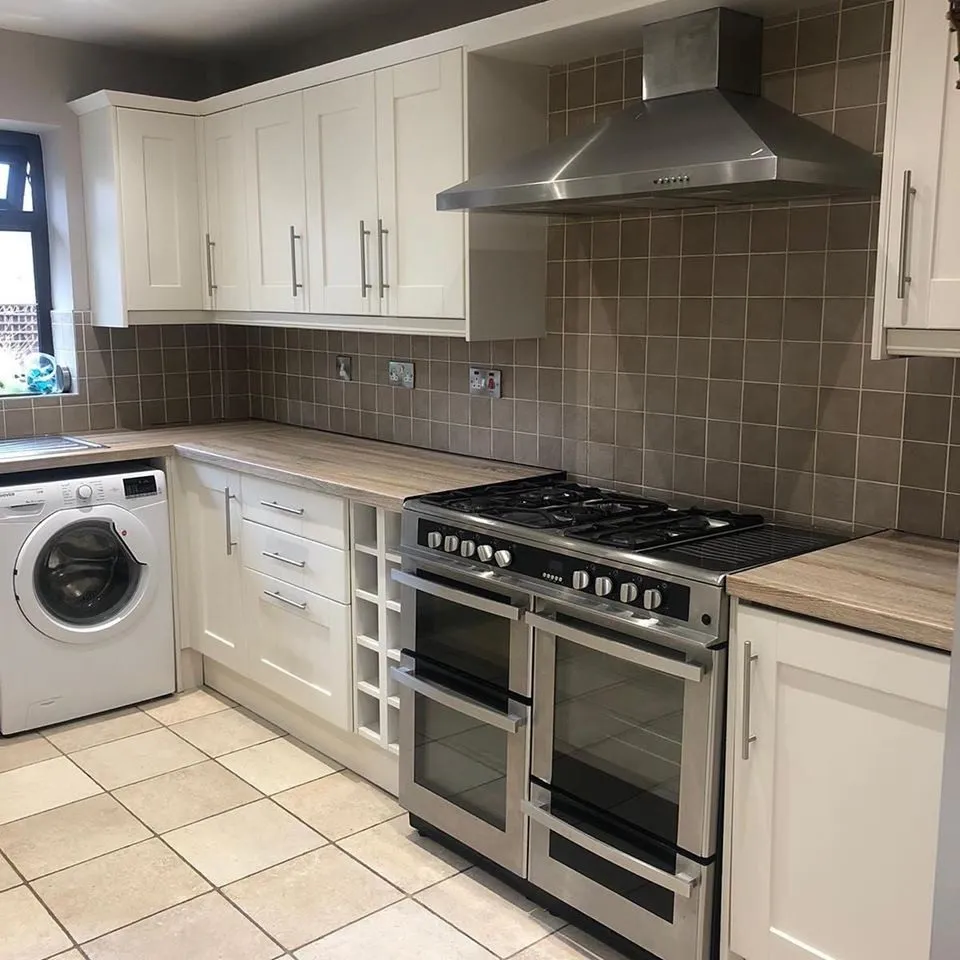
Spraying is a permanent refinish. The old coating is removed, damage repaired, and a new PU film applied that is chemically bonded to the substrate. It lasts as long as a factory finish, it can be repaired locally in future, and it works on profiled and moulded doors where a film cannot conform. It costs more and the item is away for about two weeks.
Wrapping is a surface applied over what is there. Architectural vinyl is cut and heat-formed onto the existing door. It is faster — three to five days for a kitchen — noticeably cheaper, and there is no curing period. Quality vinyl in a matt or textured finish is convincing at normal viewing distance.
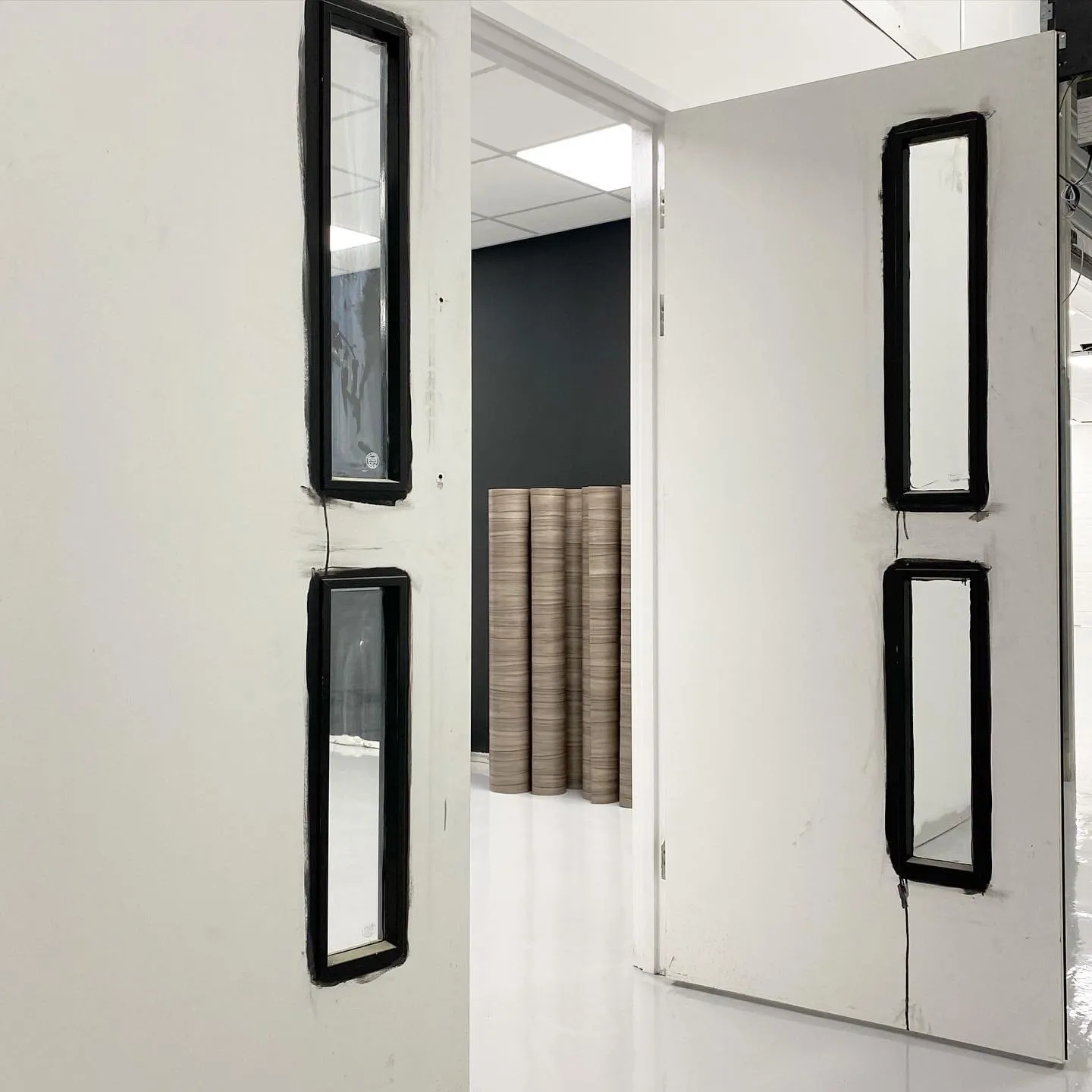
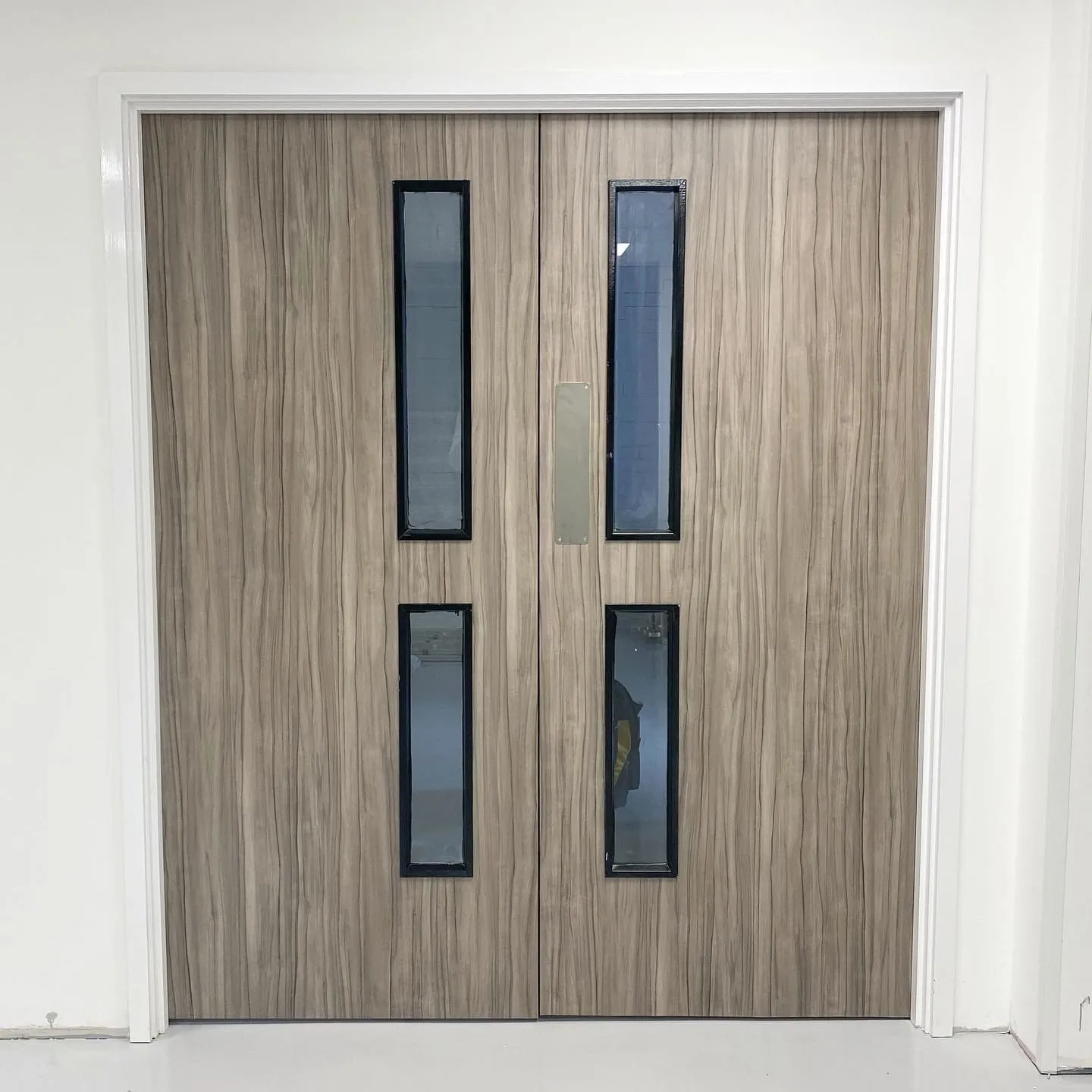
Where wrapping struggles. Deeply profiled doors, sharp internal corners and areas of concentrated heat or steam — directly beside a hob or above a kettle — are where edges eventually lift. It also cannot hide damage: a dent under vinyl is still a dent, whereas spraying involves filling it first.
Our usual advice. Flat-fronted doors in sound condition, tight budget or a fast turnaround: wrap. Profiled doors, damage to repair, or an intention to keep the kitchen another ten years: spray. Rental property being turned around quickly: wrap. Family home you are staying in: spray.
Furniture painting in Dubai
How much does it cost to respray a kitchen?
AED 9,000 to 16,000 for a standard kitchen and AED 16,000 to 22,000 for a large or villa kitchen. Against AED 25,000 to 120,000 to replace, it is usually the best-value intervention available where the carcasses are sound.
How long does it take?
About two weeks for a kitchen. The carcasses stay in place and remain usable throughout — you lose the doors, not the kitchen. Individual furniture pieces are one to three weeks depending on the finish.
Will it look sprayed or painted?
Sprayed, because it is. Multiple thin coats applied in a booth with filtered air, flatted between coats. There are no brush marks and no dust nibs, which is exactly what you cannot achieve painting in situ.
Can you match a specific colour?
Any RAL or NCS reference, in matt, satin or gloss. We spray a sample board in the actual finish and you approve it in your own light before we commit — a printed chart is not a reliable guide.
Is respraying as durable as a new kitchen?
Yes, when the preparation is done properly, because the finish is the same PU system a manufacturer would use. Poor preparation underneath is what causes a respray to fail, and it is where most of our labour goes.
Can you do it without taking the doors away?
We can spray frames and architraves in situ with proper masking, but doors and fronts go to the booth. A door sprayed in a home will pick up airborne dust in the wet film, and you will see it.
What if my carcasses are damaged?
We replace the damaged ones and respray everything for a uniform finish. Two failed units under a sink do not mean replacing a whole kitchen.
Should I wrap instead?
Vinyl wrapping is faster and cheaper with no curing time, and it is a genuinely good option on a tight budget or timescale. It is a different product with a different lifespan, and we will explain the trade-off rather than pretend they are equivalent.
Send us photographs
Photos of the item and a rough idea of the finish you want is enough for a price. We will tell you honestly whether refinishing is worth it or whether you are better off replacing.