Joinery in Dubai, cut and sprayed in our own workshop
Wardrobes, kitchens, TV units, panelling, doors, staircases and shop fittings — made on 32b Street in Ras Al Khor since 1984, and surveyed after your rooms are finished rather than before.
What joinery in Dubai means with us
Abdulla Carpentry EST manufactures bespoke joinery in its own Ras Al Khor workshop: fitted wardrobes, kitchens, TV and media walls, wall panelling, doors and frames, staircases, bathroom vanities, home office and library units, bar and wine storage, and commercial shop fittings. Boards are Egger or Kronospan, hardware is Blum or Hettich, and finishes are PU lacquer, veneer, laminate or acrylic. We survey after ceilings and floors are complete, so units are scribed to the room as built. Prices run from AED 1,100 per square metre of face for laminate to AED 2,600 and above for veneer and lacquer.
There are two kinds of joinery company in Dubai. One takes your drawing, orders from a trade workshop, and finds out on installation day whether the carcasses are square and the veneer matches across the doors. The other makes it themselves.
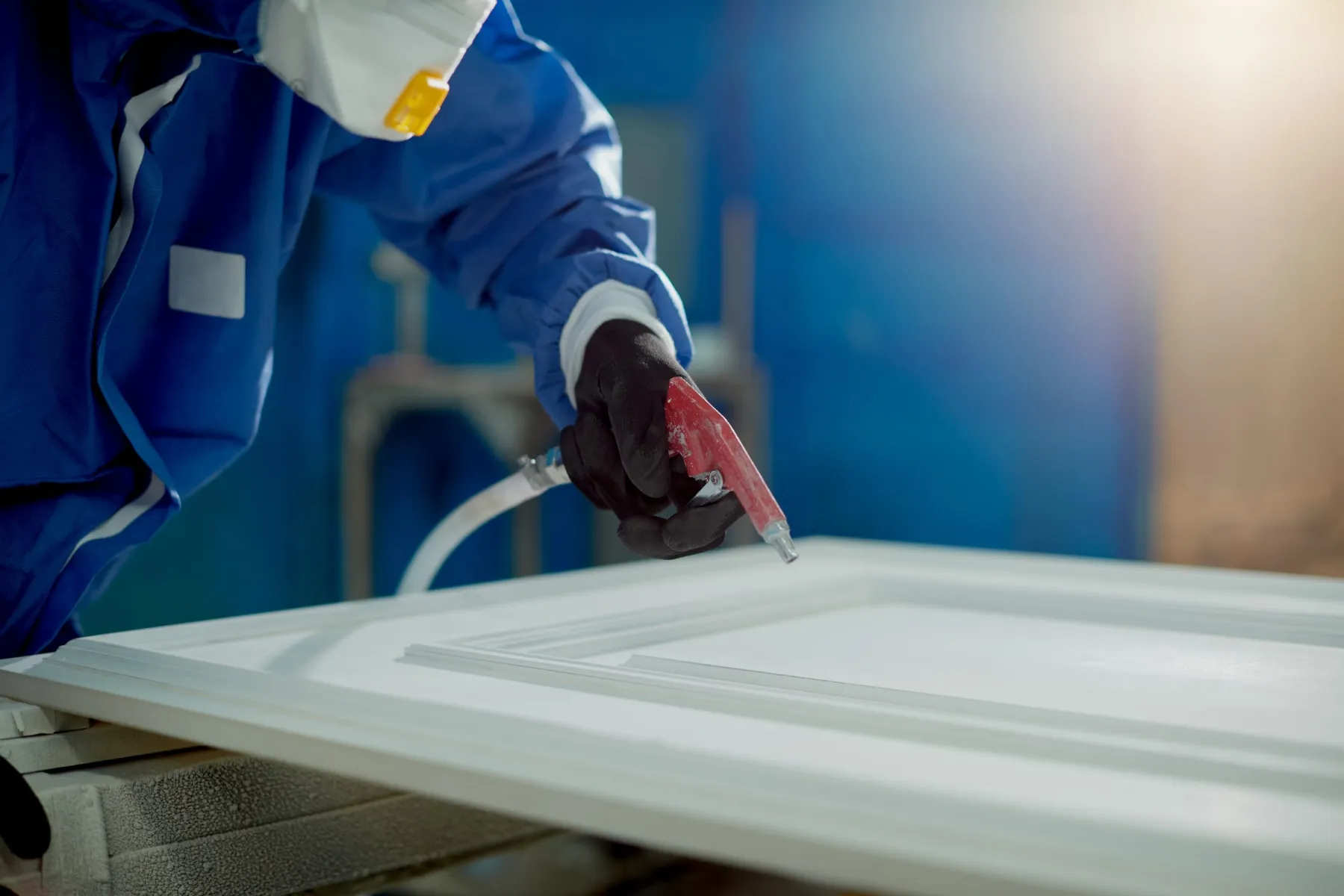
We are the second, and have been since 1984. Panel saw, edge bander, spray booth with extraction, drying racks and benches where every unit is dry-assembled before it is broken down for delivery. If a door is out by two millimetres we find it on our own bench, where it costs an afternoon.
It also means you can come and look. Clients regularly visit during manufacture to approve a stain on the actual timber rather than a sample chip, or to see a kitchen stood up before it leaves. That visit is welcome and costs nothing.
 Since 1984Our own Ras Al Khor workshop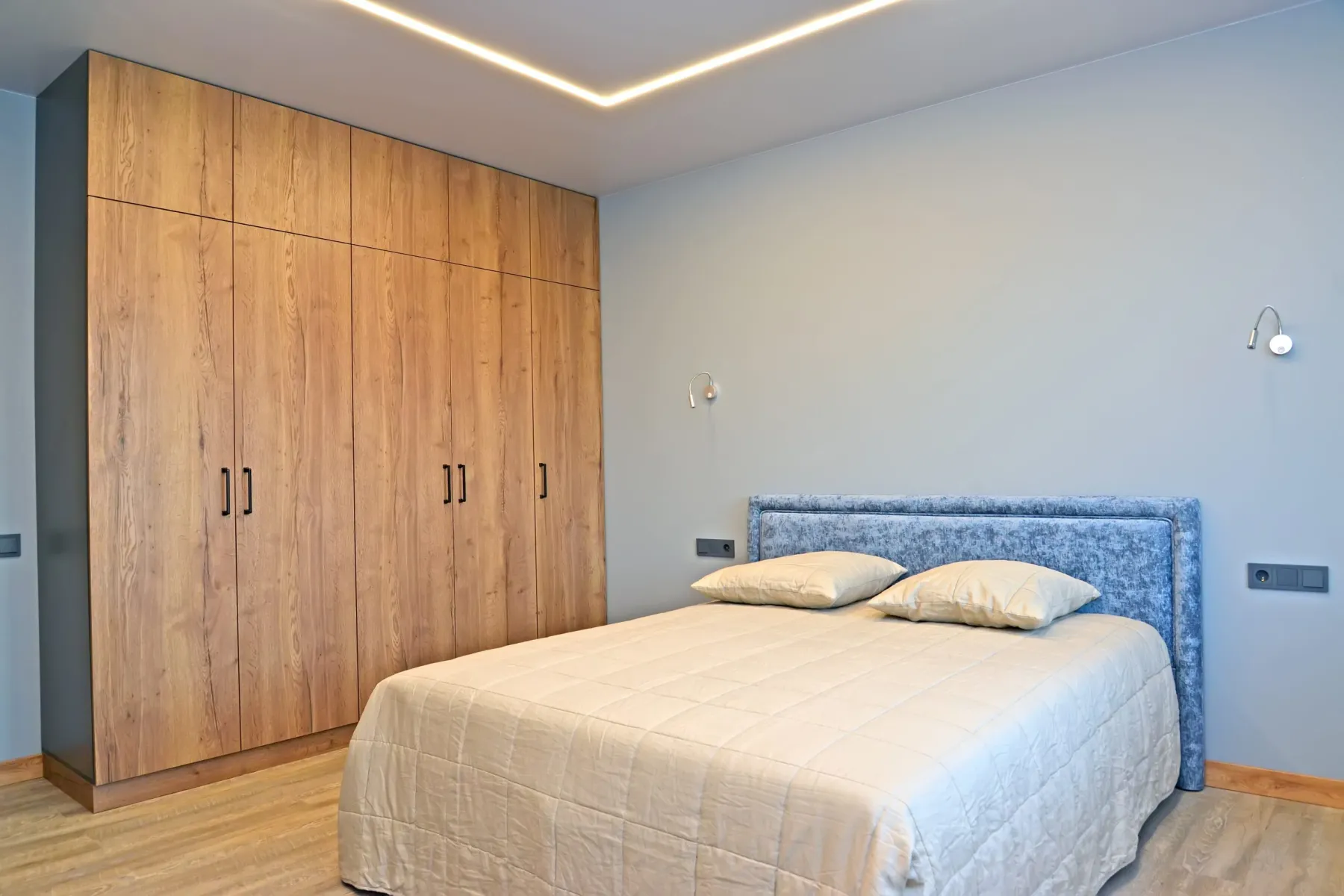
The pieces that come out of the workshop
Everything here is made to your dimensions. There is no standard range, no carcass sizes to design around, and no minimum order.
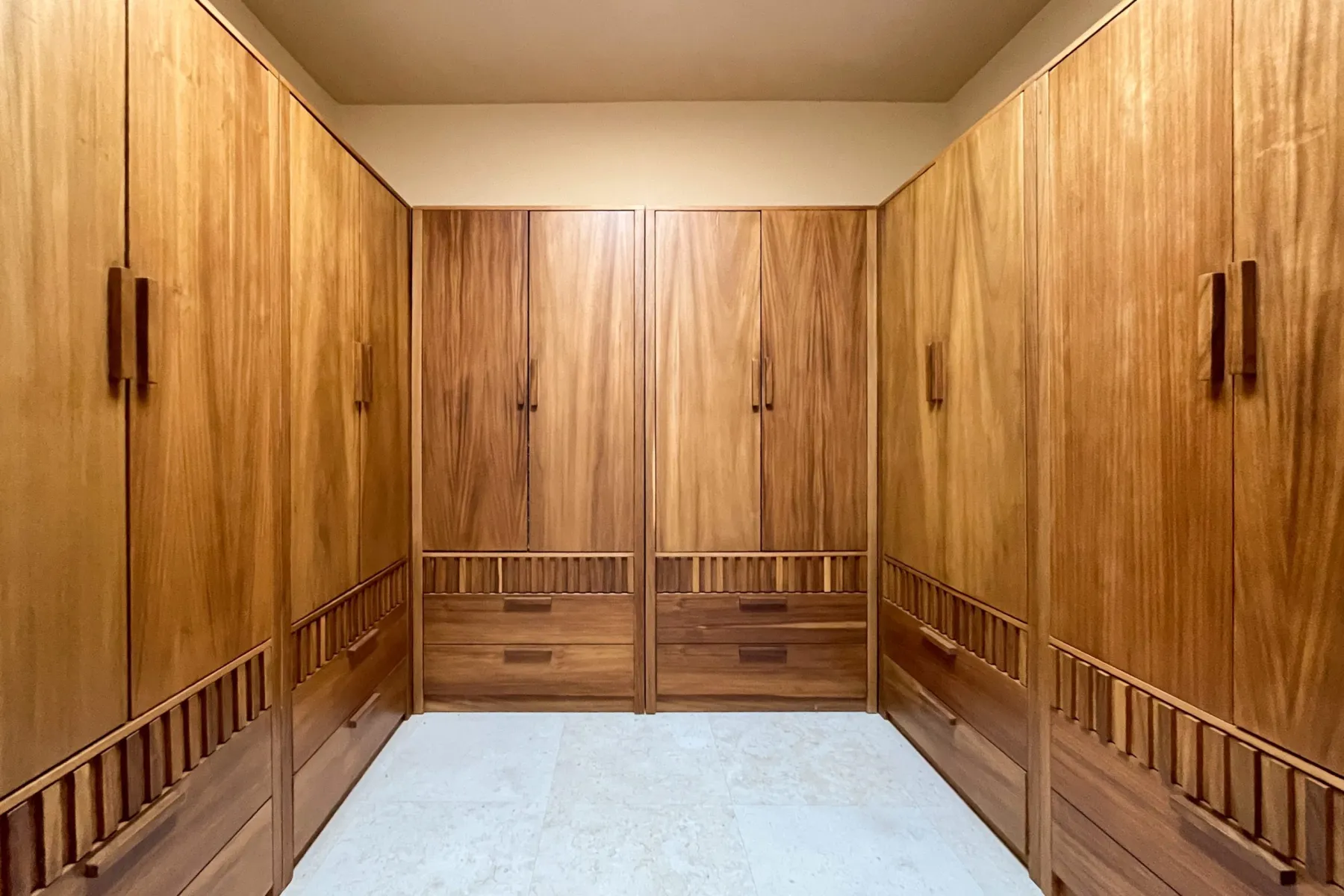
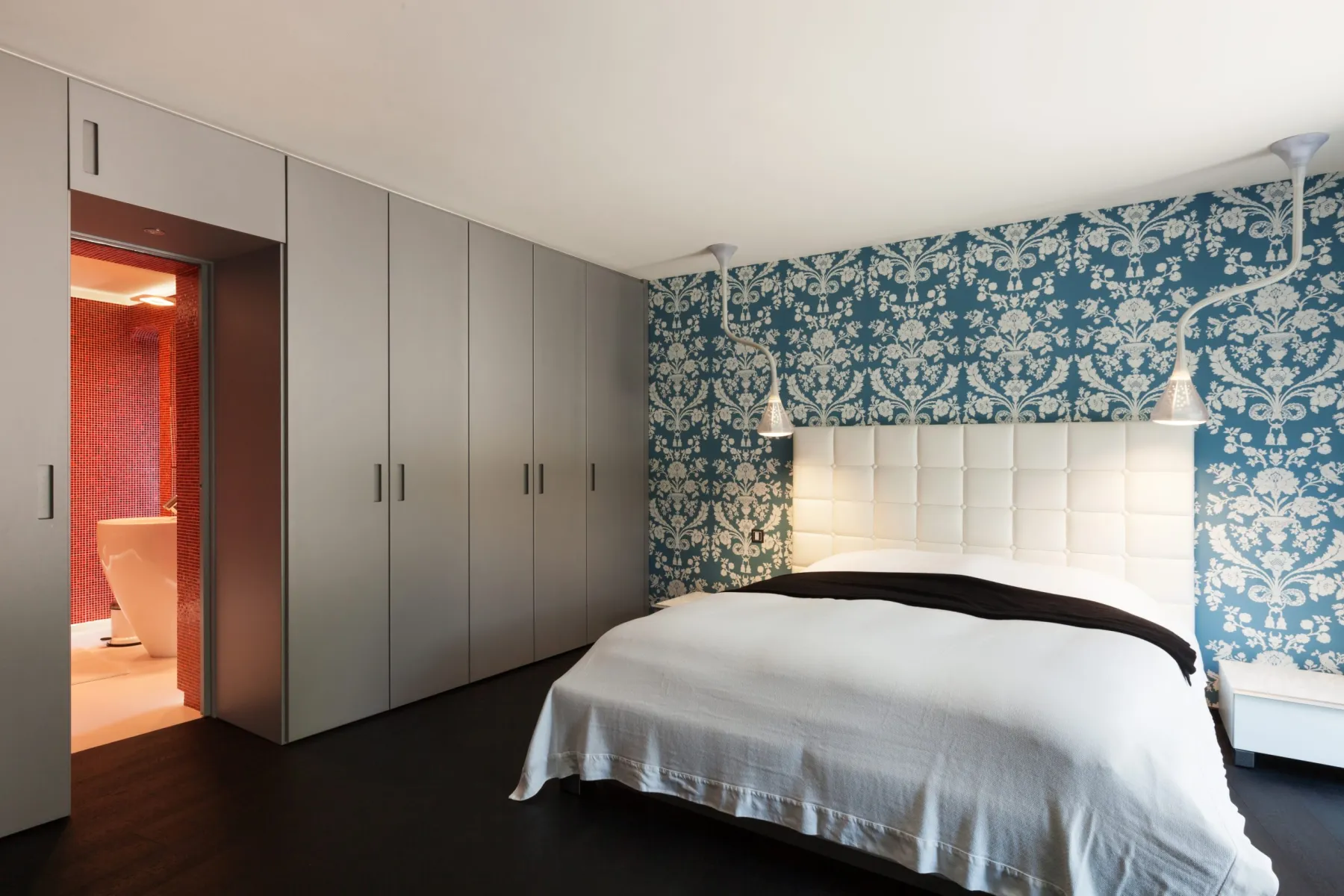
Fitted wardrobes are our highest volume item. Hinged, sliding or walk-in, with internals planned around what you actually own — hanging heights split for shirts and dresses, drawer counts that match your folding, a shoe run sized to the number of pairs, and somewhere for luggage that is not the top shelf. Full height to the ceiling every time; the 400mm of dead space above a freestanding wardrobe is the most wasted volume in a Dubai bedroom.
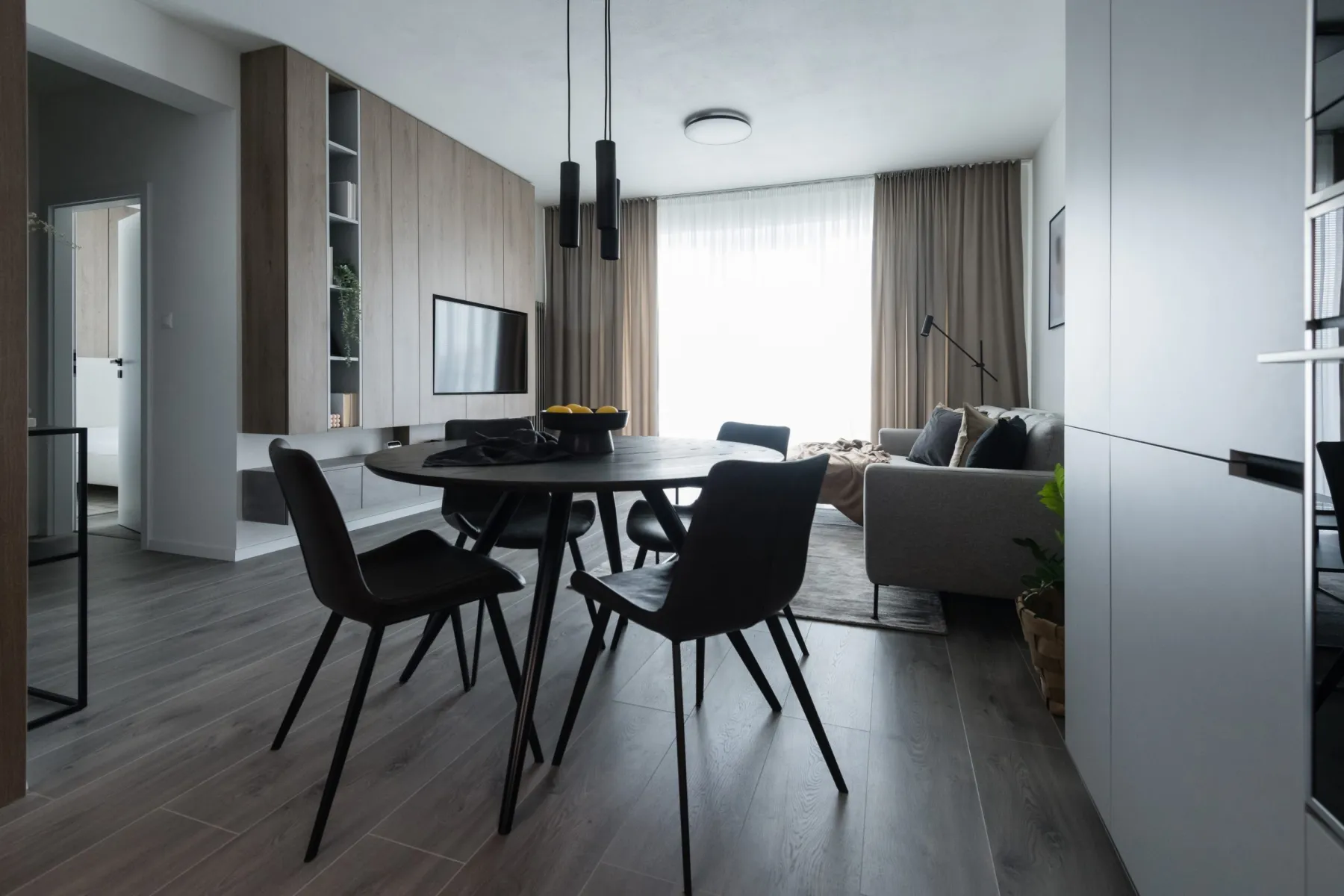
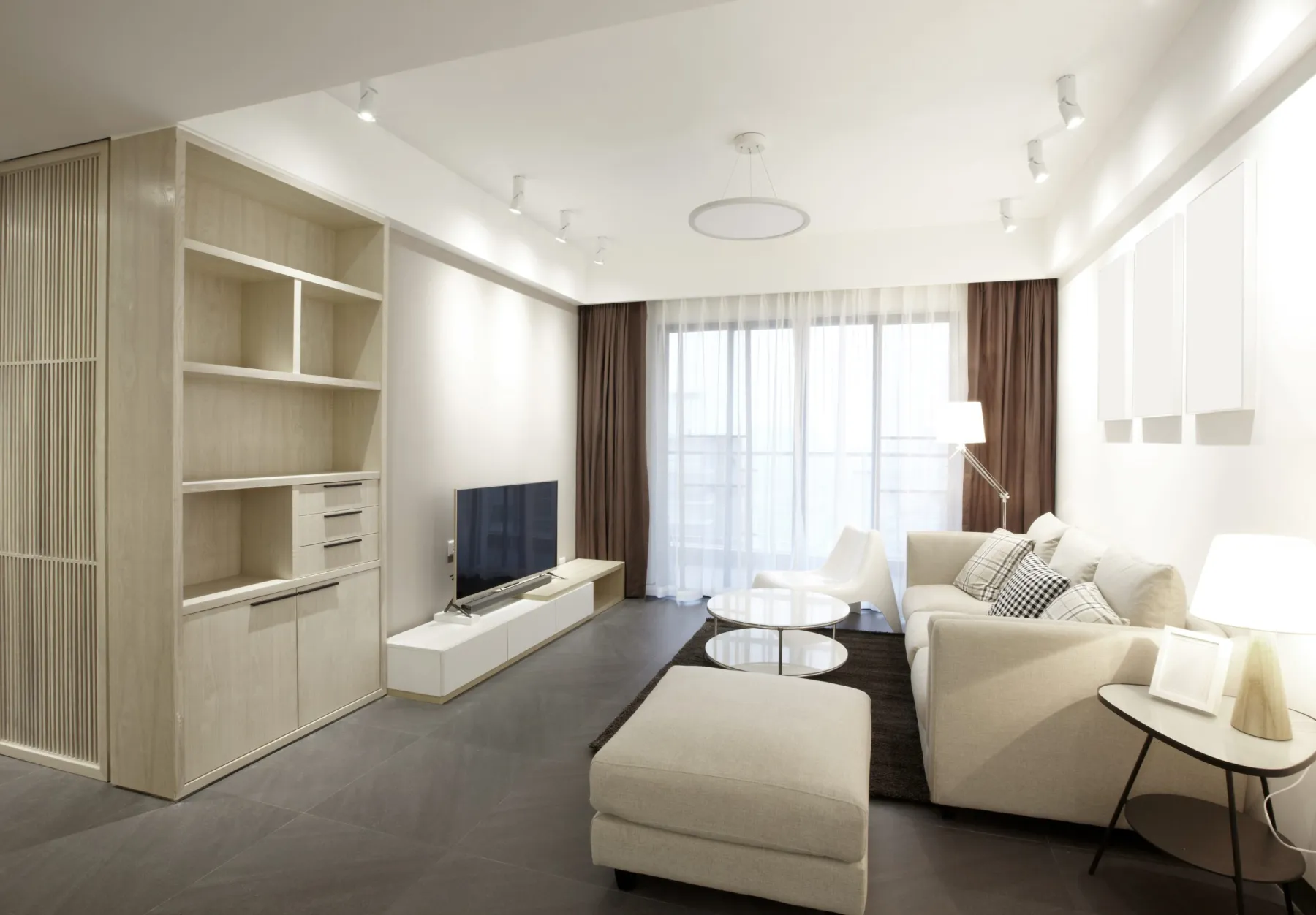
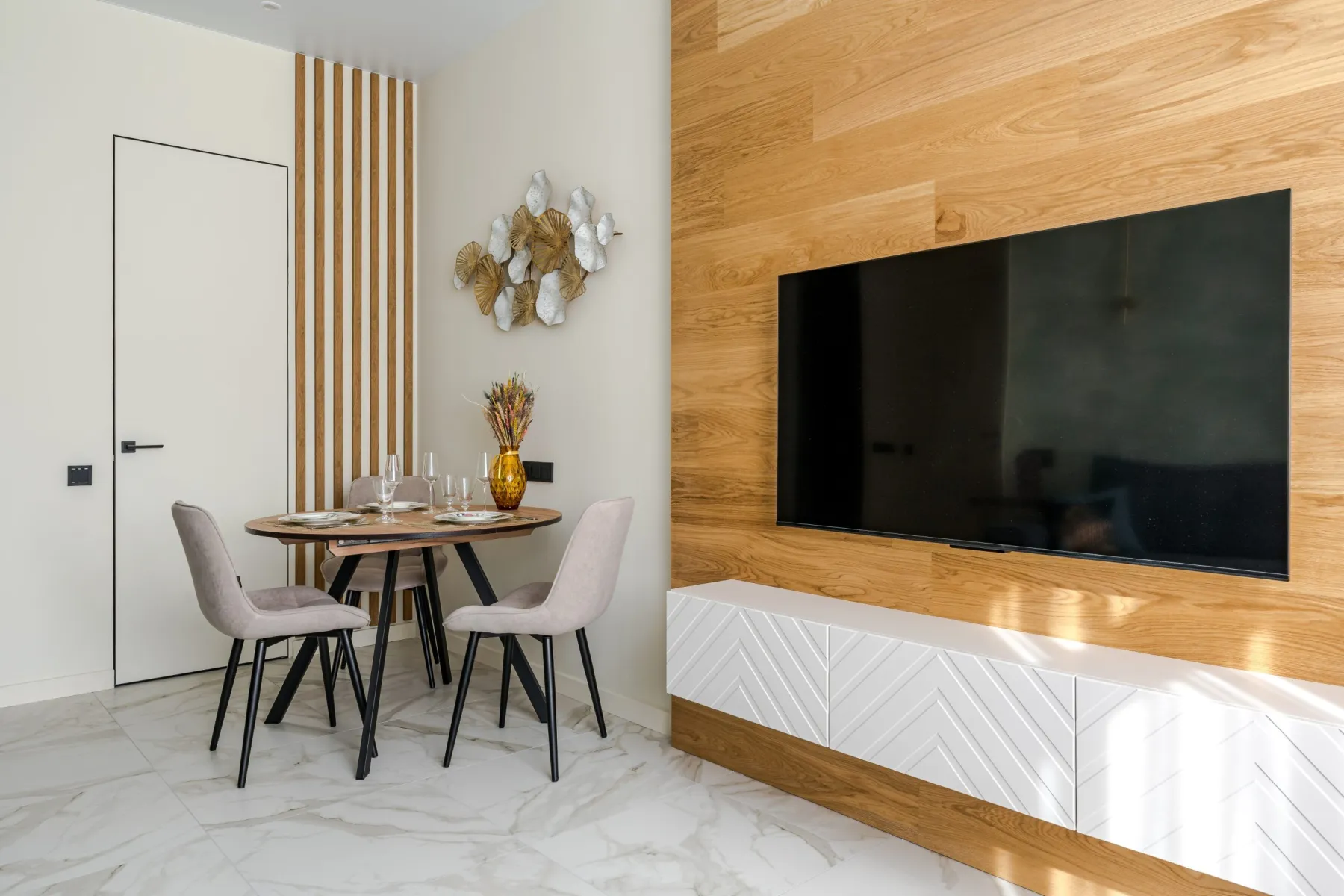
TV and media walls combine joinery with panelling, stone and concealed lighting. The parts that matter are invisible: cable routes sized for what you will own in five years, ventilation behind the equipment so it is not cooking itself in a closed box, and a screen position set against seated eye level rather than centred on the wall.
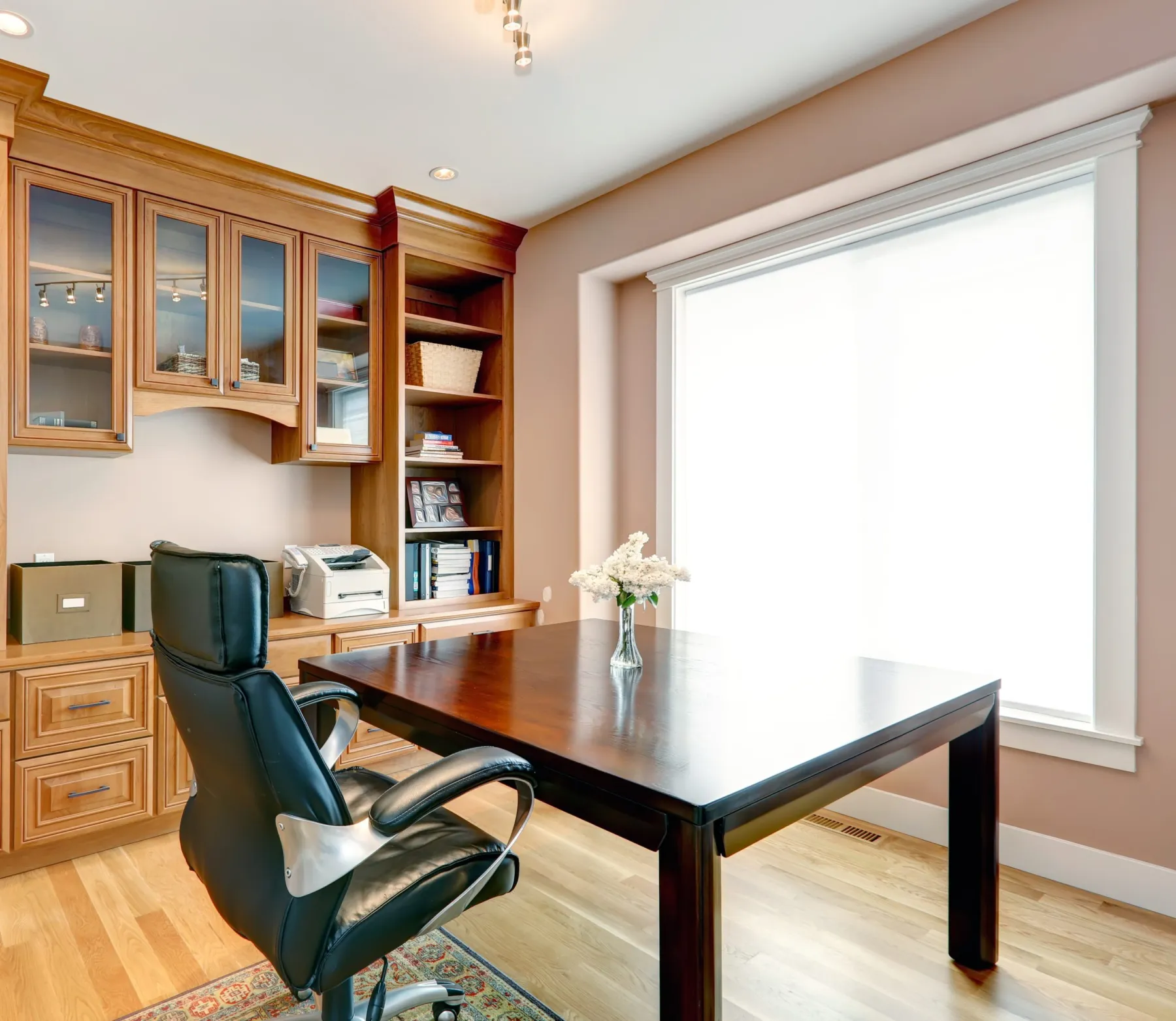
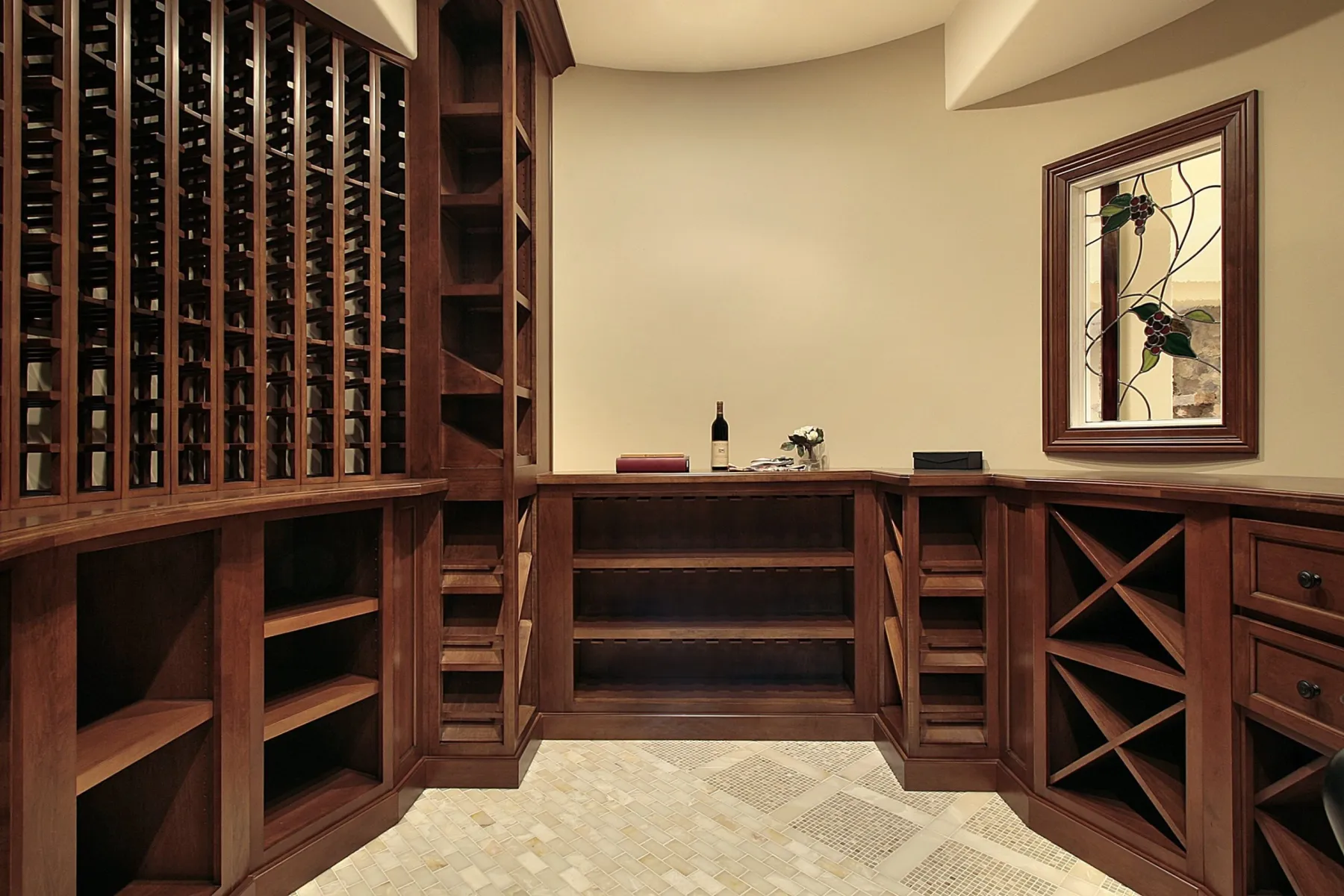
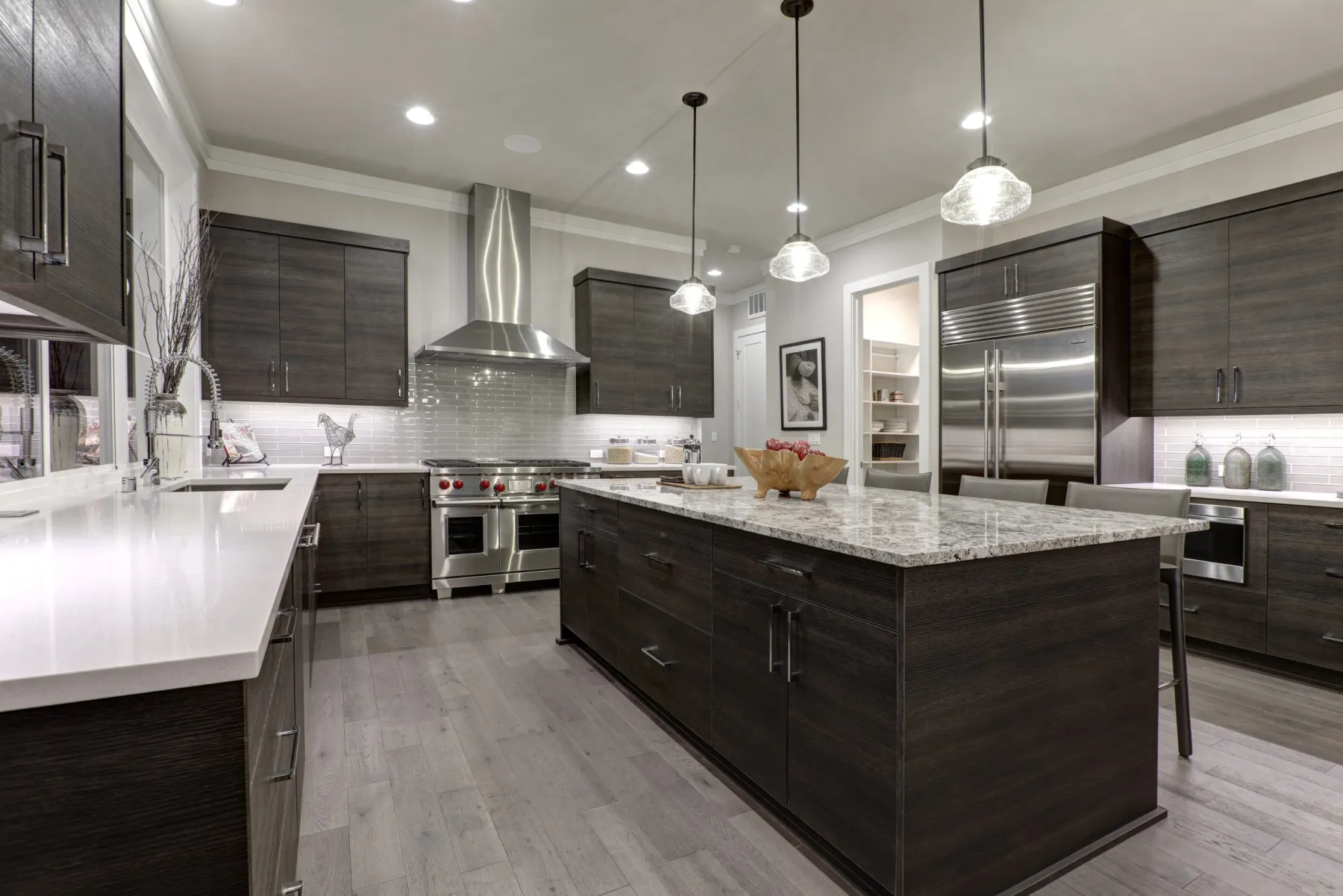
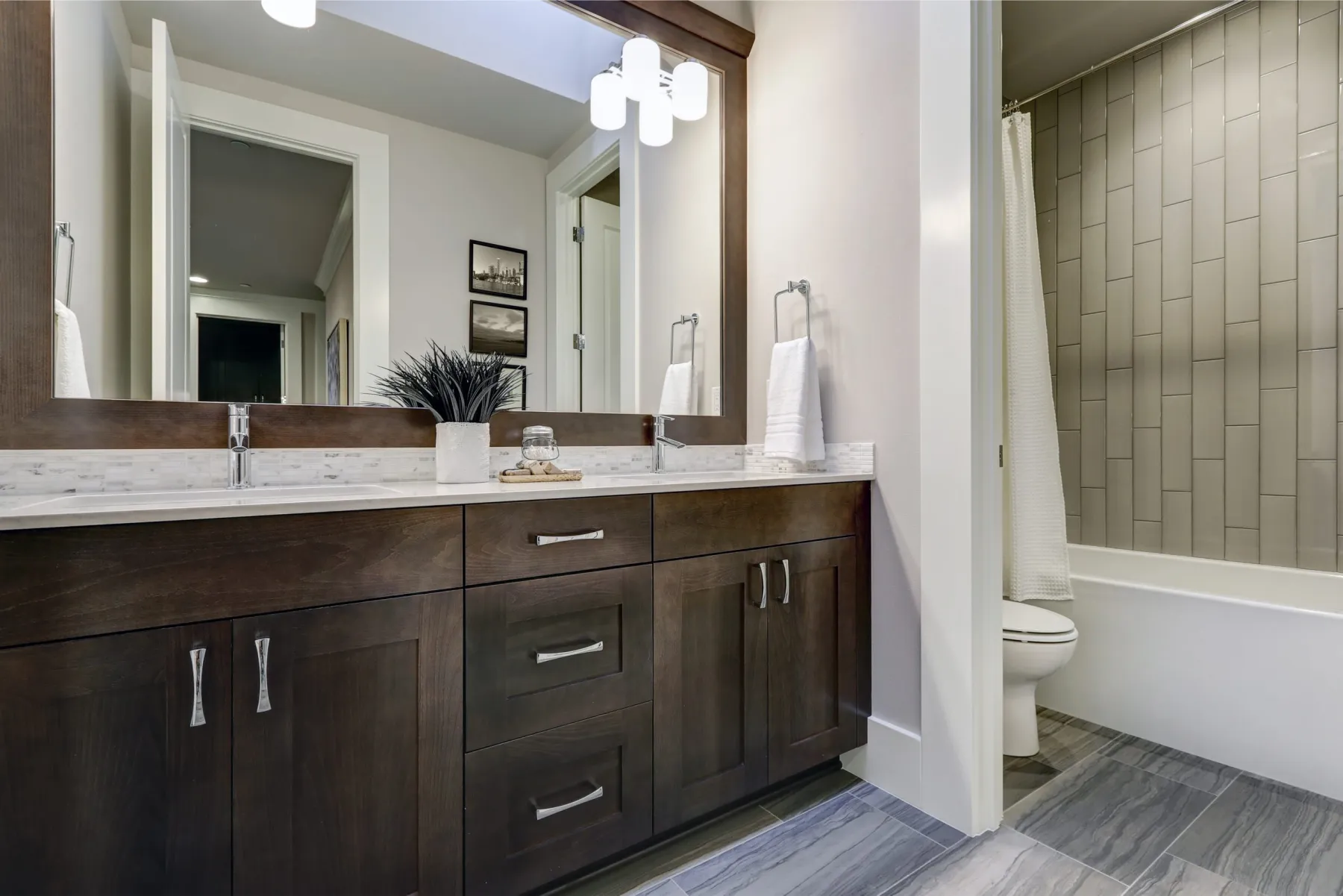
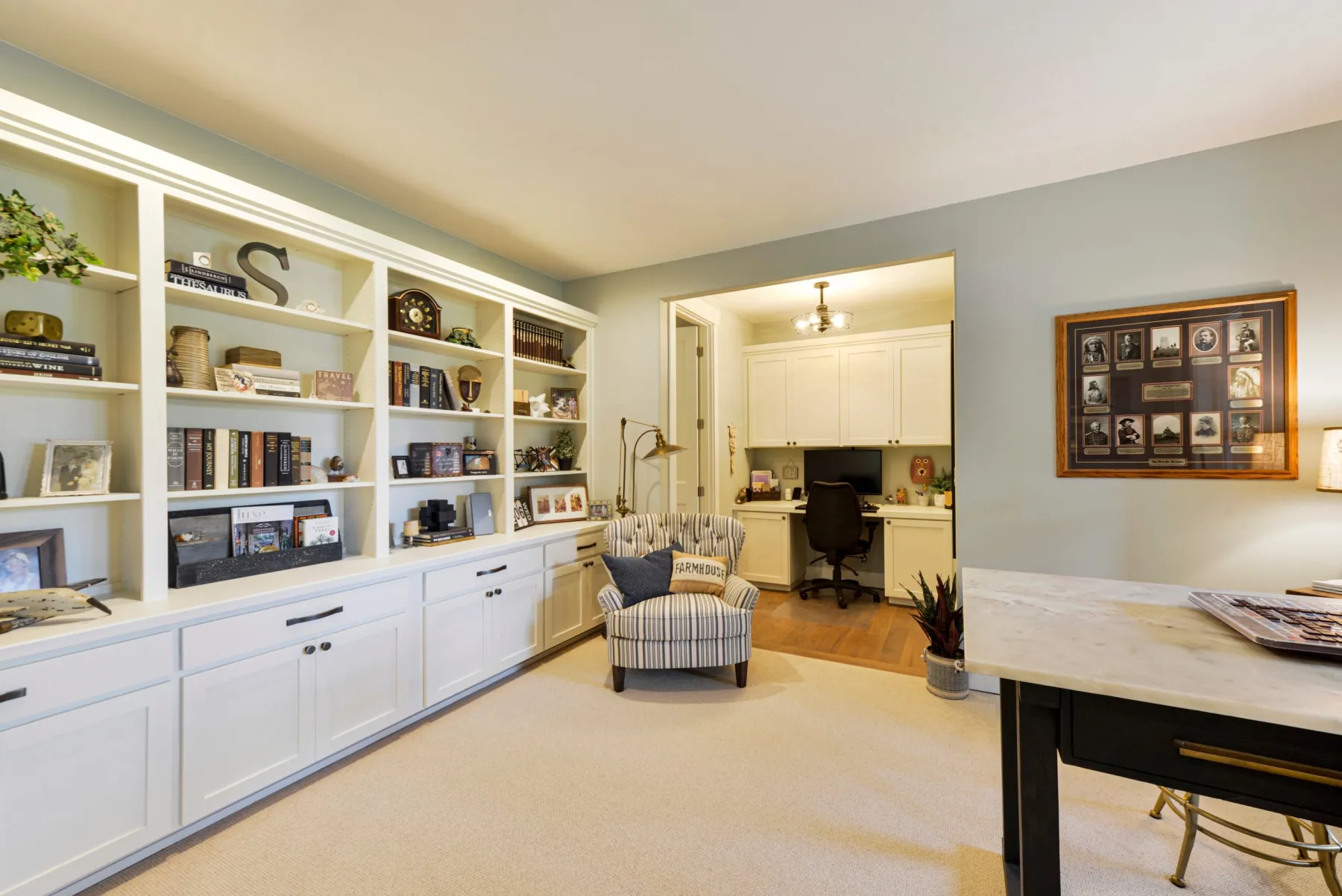
Kitchens and bathroom vanities are built in moisture-resistant board with sealed cut edges, because a wet room is not a bedroom. Home offices, libraries and study units get desks at the right height with cable management built in rather than drilled later. Bar and wine storage with display lighting and, where you want it, temperature control.
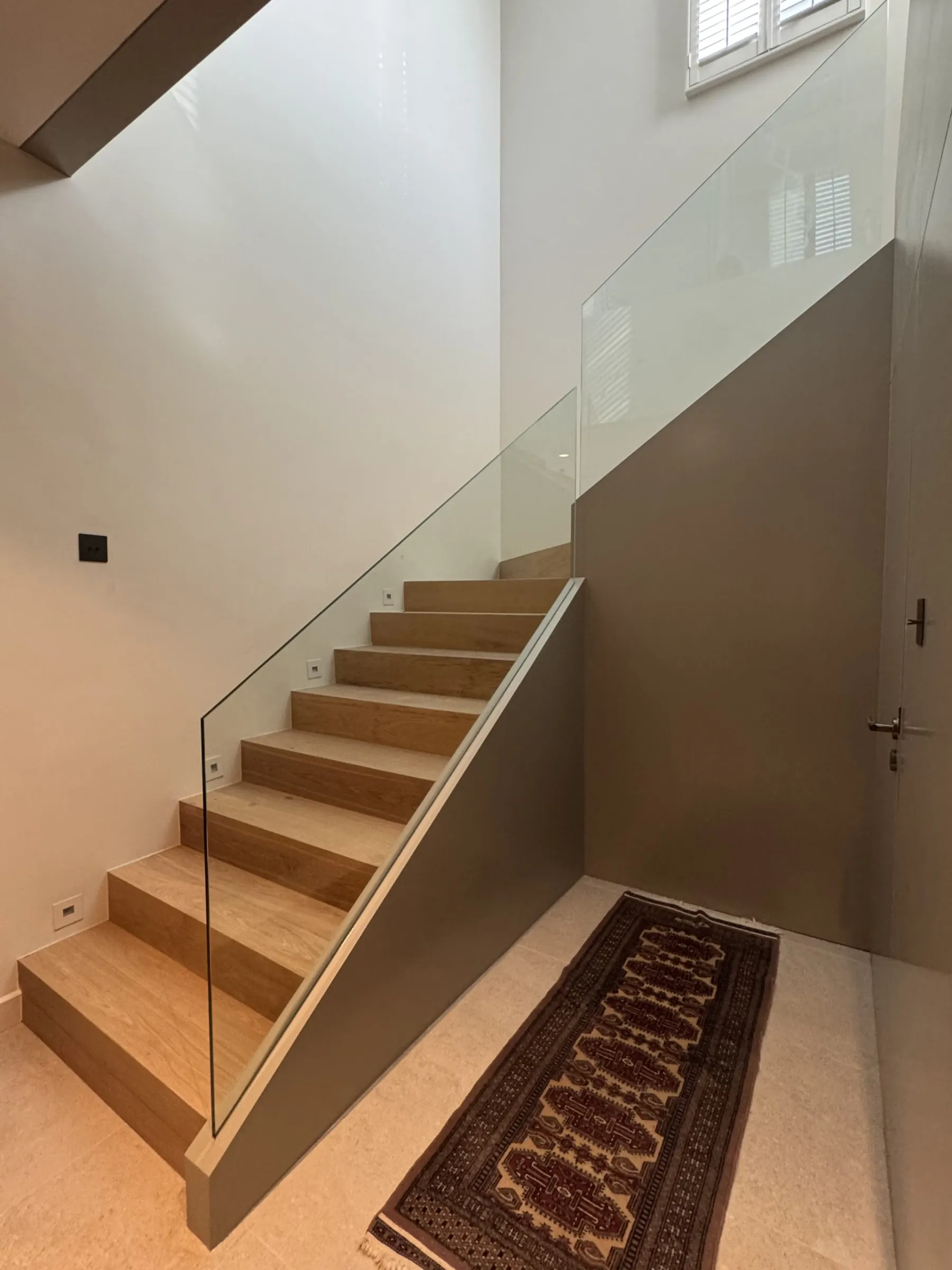
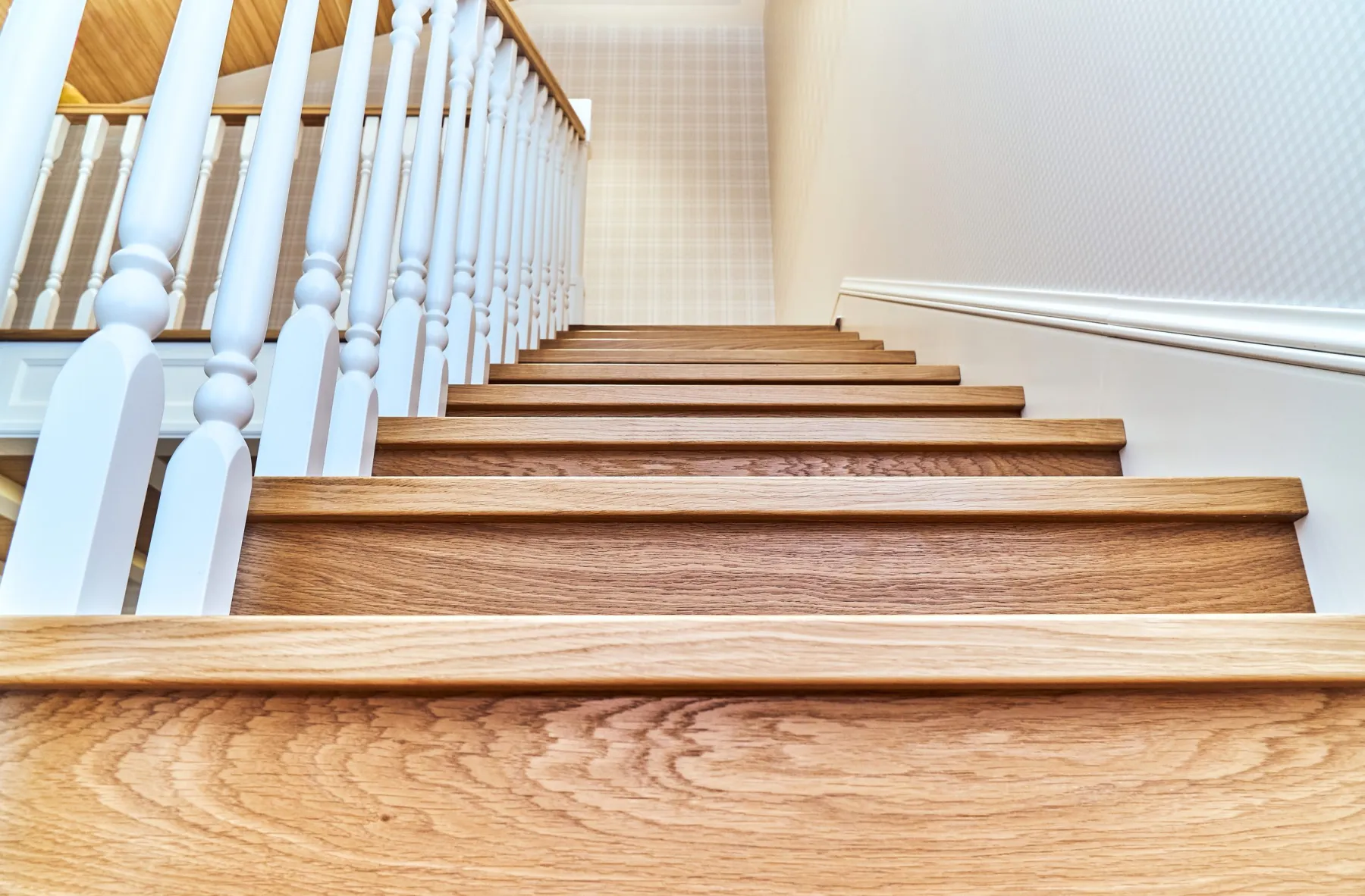
Doors, frames and staircases. Solid, veneered or lacquered doors with matching architraves, hung and adjusted so they close the same in August as in January. Timber cladding to existing concrete stair flights, new treads and risers, and balustrades in glass or metal.
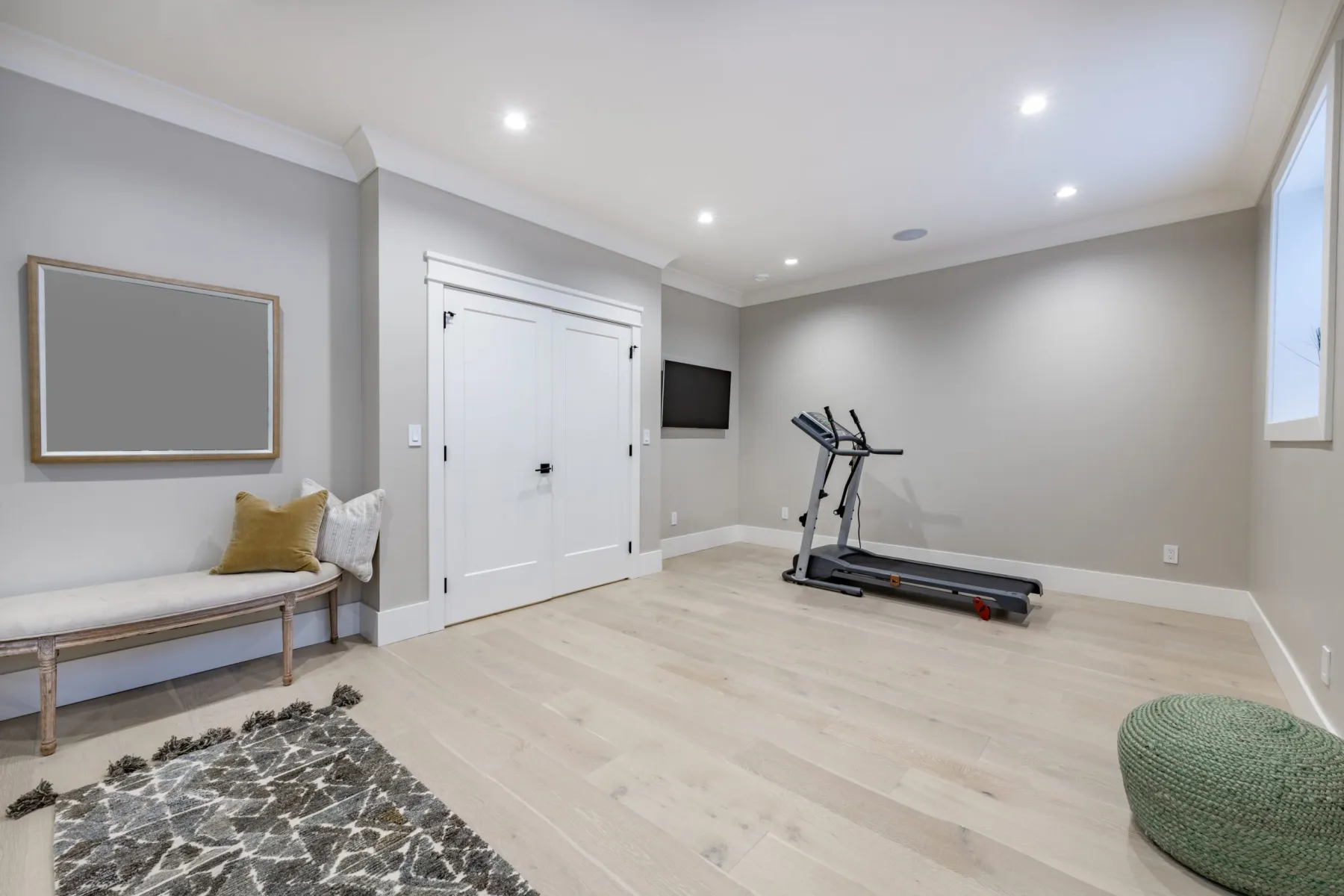
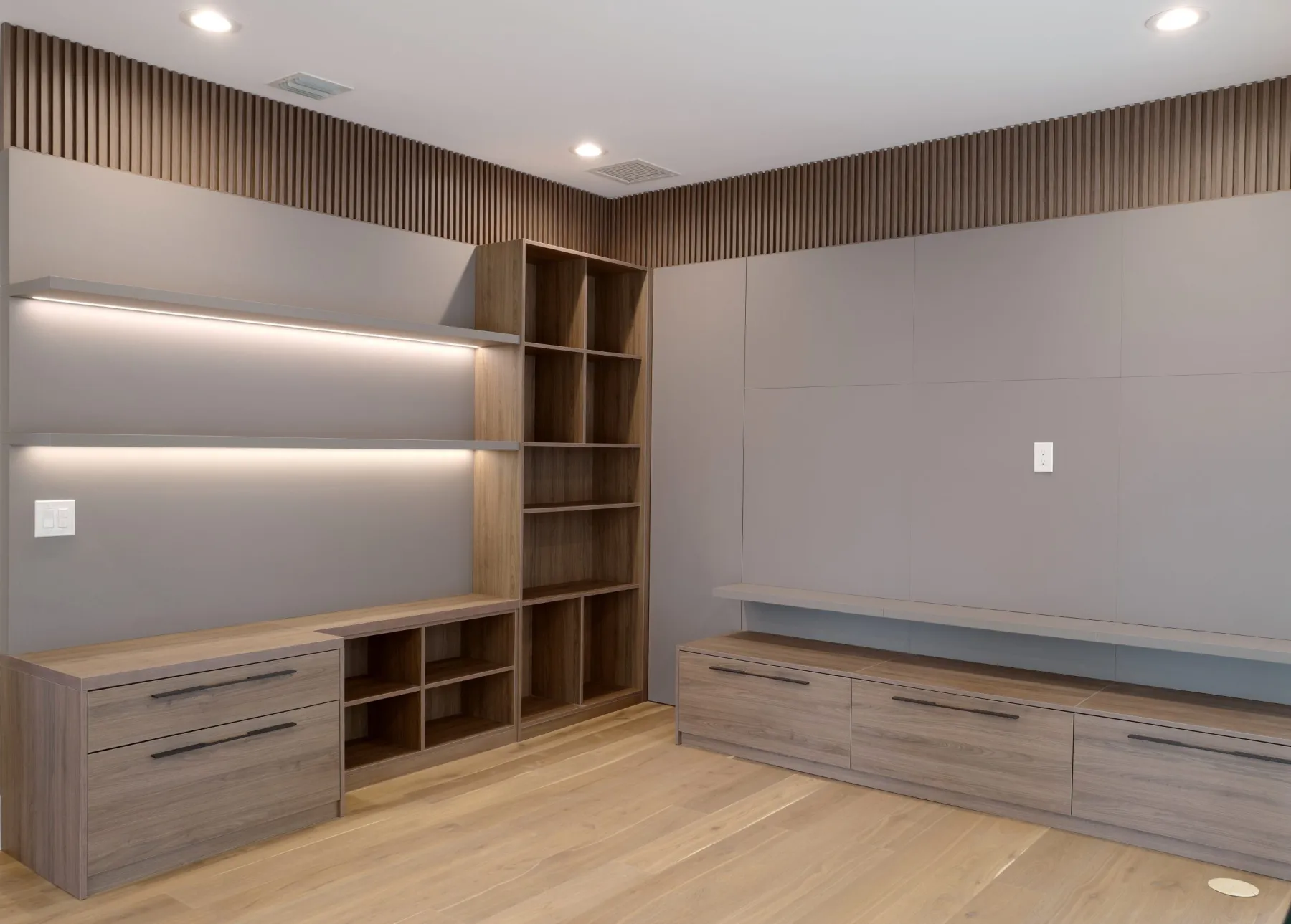
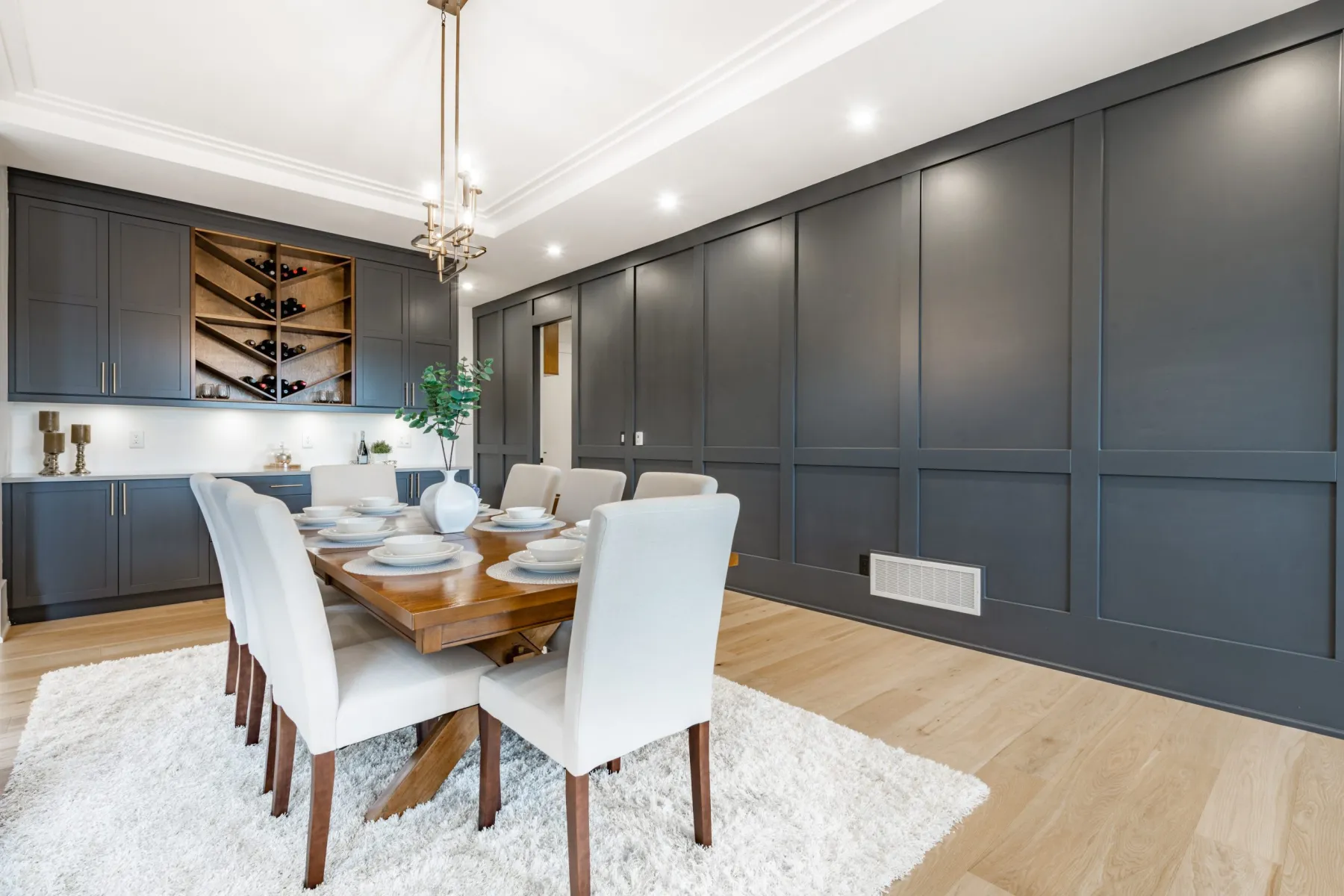
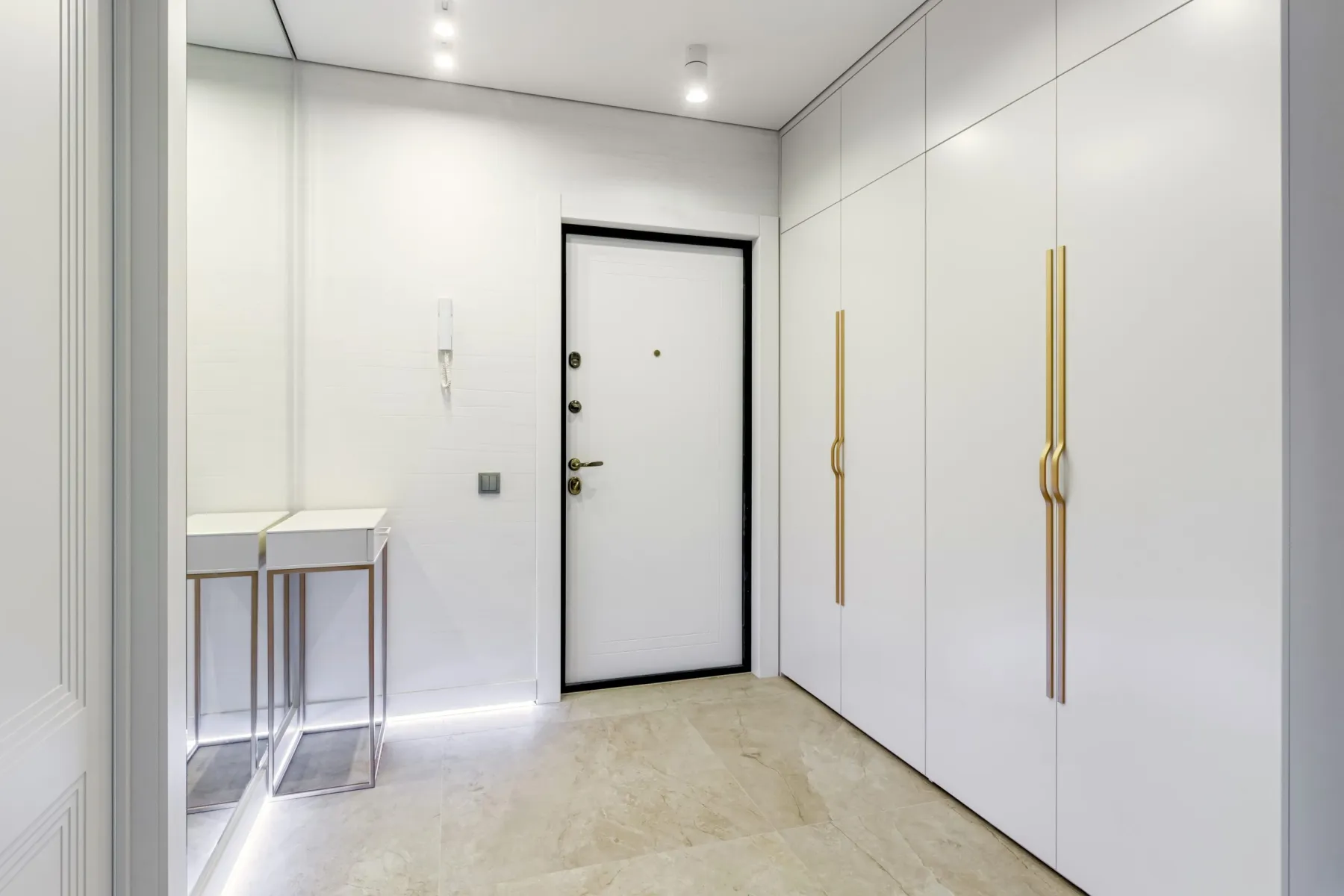
Wall panelling in fluted, slatted, flat-panel or upholstered form. Entryway and mudroom storage, console units and benches. Commercial fittings — reception counters, display units, bar fronts, workstations and clinic casework, built to take daily commercial abuse rather than domestic use.
What separates joinery that lasts from joinery that looks the same on day one
Two wardrobes can be indistinguishable at handover and completely different objects by year five. The difference is never the door colour.
Board. 18mm Egger or Kronospan throughout, moisture-resistant grade in kitchens, bathrooms and laundry without exception. Backs grooved into the carcass rather than pinned on, so the unit stays square when it is lifted into place. Thin backs stapled on are the single clearest sign of a workshop cutting corners.
Edging. Machine-applied on our own edge bander, matched to the face, on all four edges including the ones nobody sees. Hand-applied edging with a domestic iron lifts at the corners within a year or two in this humidity — it is what you get from a workshop that does not own the machine.
Hardware. Blum or Hettich, soft-close throughout, on every job regardless of budget. It is three to five per cent of the cost and it is the difference between drawers that still glide in year eight and doors that sag by year two. When a competing quote is notably cheaper, this is usually where.
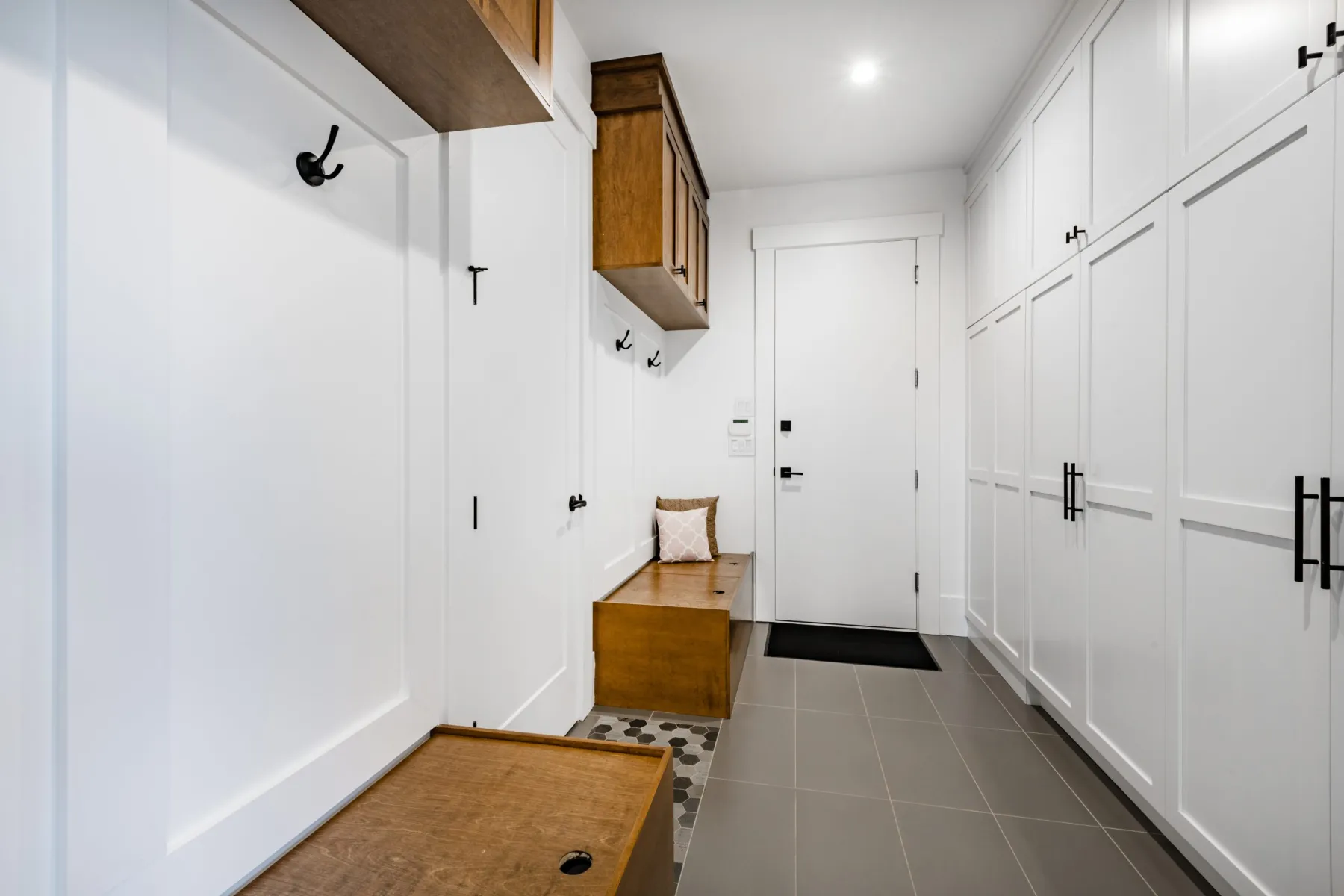
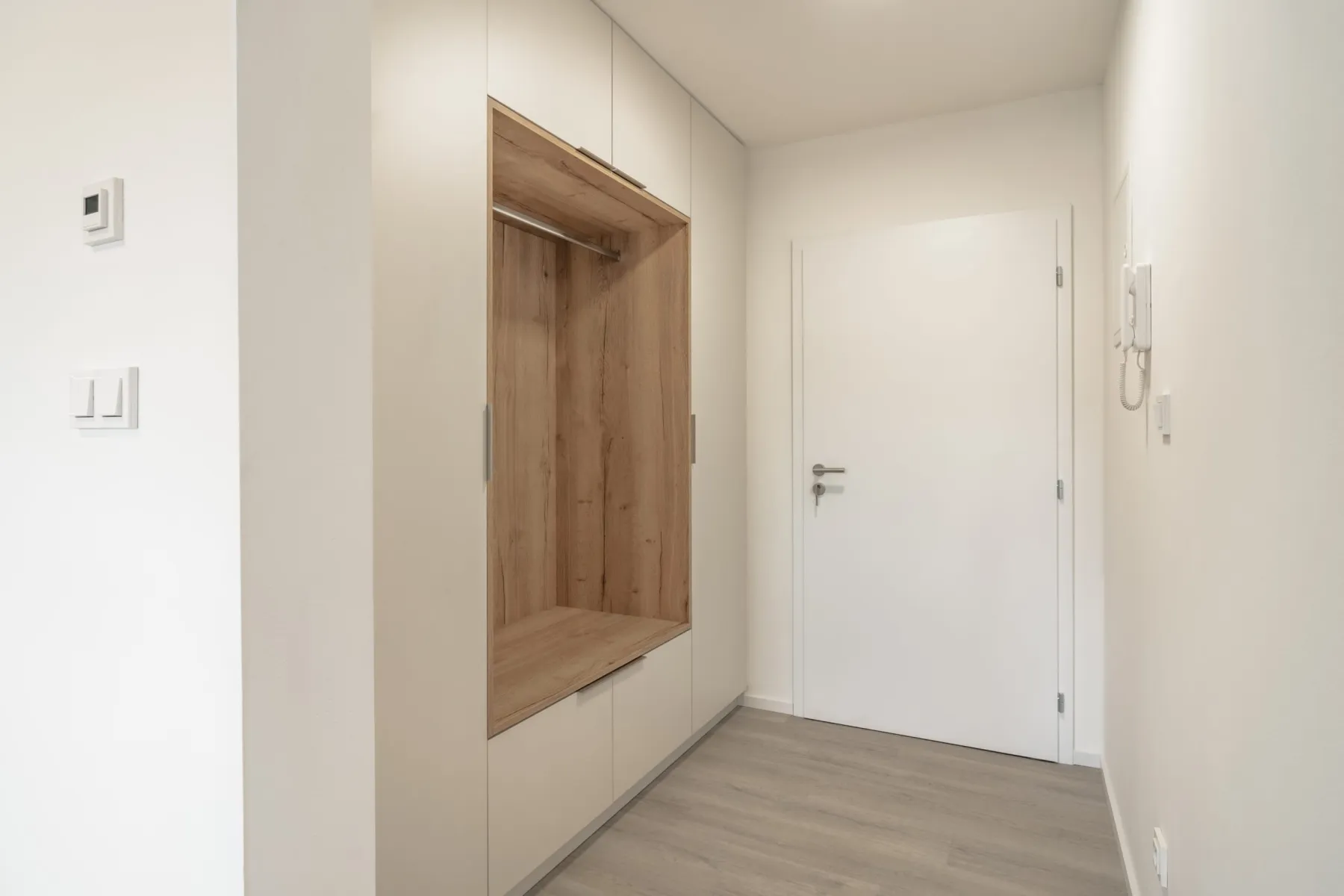
Finishes. PU lacquer for depth and for detailed profiles. Natural veneer where you want grain running continuously across a run — which requires sequencing the leaves, something only a workshop that cuts its own can do. High-gloss acrylic for a seamless modern look. Laminate where durability matters more than luxury. Each has a use and none is simply better; we will tell you which suits the room, the light and your tolerance for fingerprints.
Everything named on the quotation. Board brand and grade, hardware brand, finish type. You can compare us line by line against anyone, and nothing cheaper can appear quietly on delivery day.
Why we survey after your rooms are finished
This is the single decision that determines whether fitted joinery looks fitted or looks delivered, and almost nobody in this market does it.
The convenient way to run a job is to measure at the start, manufacture while the site works happen, and install the week the room is ready. It compresses the programme and it is why so much Dubai joinery needs a scribe strip at one end, sits 15mm off a wall that drifted, or meets the ceiling in a line that is visibly not parallel.
Rooms move. A skim coat adds thickness. A screed changes the floor level. A ceiling is set out against something. None of those are faults — they are normal construction tolerances, and they are exactly why the measurement has to come afterwards.
So our carpenters attend once the ceilings, screeds and tiling are complete, measure the room that exists, and only then does the cutting list go to the saw. It costs us about a week on a typical job. It is the reason our units are scribed rather than packed out, and it is not negotiable on our own contracts.
Survey to installation, three to six weeks
Survey, design and quotation
We measure, ask what has to live in the unit, and draw it. You get elevations you can read and a quotation itemised by unit with board, hardware and finish named. Changes at this stage cost nothing.
Finishes approved on real material
Stains, veneers and lacquer sheens approved on actual timber, not a printed chip. Come to the workshop if you can; we will spray sample boards if you cannot.
Final measure, then manufacture
Once your ceilings and floors are done we re-measure the finished room. Then cutting, edging, assembly and spraying, with every unit dry-assembled on the bench and checked square before it is broken down.
Delivery and installation
Installed by the people who built it. Units levelled, scribed to the walls, doors and drawers aligned, handles set out consistently. Protection down on your floors before anything comes through the door.
Adjustment and handover
Every door and drawer operated and adjusted, silicone and scribes cut clean, site cleared. We snag it before you do, and the twelve-month workmanship warranty starts here.
Joinery prices in Dubai
Fitted joinery is priced per square metre of visible face, measured width by height. That is the only way to compare quotations meaningfully, because a “wardrobe” can be any size. These are our ranges.
| Item | Typical range | Notes |
|---|---|---|
| Fitted wardrobe, laminate finish | AED 1,100 – 1,500 / sq m face | Soft-close hardware included as standard |
| Fitted wardrobe, PU lacquer or veneer | AED 1,800 – 2,600 / sq m face | Veneer sequenced across the run |
| Walk-in wardrobe, full room | AED 28,000 – 75,000 | Depends on run length and internal fittings |
| TV and media wall | AED 9,000 – 45,000 | Joinery, panelling, stone and concealed lighting |
| Wall panelling | AED 550 – 1,400 / sq m | Fluted, slatted, flat-panel or upholstered |
| Bathroom vanity | AED 4,500 – 16,000 | Moisture-resistant board, stone top extra |
| Internal door with frame, made to size | AED 2,200 – 6,500 | Solid, veneered or lacquered, hung and adjusted |
| Staircase cladding and balustrade | AED 22,000 – 80,000 | Timber treads with glass or metal balustrade |
| Reception counter, commercial | AED 12,000 – 45,000 | Built for commercial wear, with cable management |
When you compare quotations, ask three questions rather than looking at totals: what grade of board is used in wet areas, what brand the hinges and runners are, and whether the price is per square metre of face or per unit. A quotation that will not answer those has told you what you need to know.
Decisions that make fitted joinery worth the money
Clients spend weeks on finishes and minutes on the things that decide whether the unit actually works. These are worth your attention.
Go full height. A wardrobe stopping 400mm below the ceiling wastes the most useful storage in the room and collects dust on top. Taking it to the slab costs perhaps eight per cent more and adds a quarter more capacity, with the top boxes holding what you use twice a year.
Drawers over shelves below waist level. A deep drawer costs about fifteen per cent more than a shelf of the same width and is the change clients thank us for most. You see everything without kneeling, nothing is lost at the back, and the runners carry far more than a shelf will.
Tell us what goes in it before we draw it. How many suits, how many long dresses, whether shoes are boxed or loose, where the suitcases live, whether the safe goes inside. A wardrobe designed around an inventory is a different object from one designed around a wall.
Light inside, not just outside. LED strips on a door sensor inside a wardrobe cost very little at manufacture and are effectively impossible to add neatly afterwards, because the supply has to be routed through the carcass. Same for display cabinets and wine storage.
Handleless has a tolerance cost. Push-to-open and J-pull profiles look superb and show every deviation in a wall. They are worth doing over units scribed to a finished room, which is exactly why we survey late. Over an un-scribed run they will highlight the problem rather than hide it.
Veneer needs to be sequenced. If you want grain running continuously across four wardrobe doors, the leaves have to be selected and laid up in order. That is a workshop decision made before cutting, not something that can be fixed at installation, and it is a fair test of whether a company is really making your joinery or buying it in.
Consider refinishing before replacing. Sound carcasses with dated fronts can be resprayed or vinyl-wrapped in our own booth for a fraction of replacement. We will say so even though it is the smaller invoice.
Built for a thousand people a day, not four
Domestic joinery has to survive a family. Commercial joinery has to survive strangers, trolleys, cleaning chemicals and a landlord’s reinstatement inspection. It is a different specification, and pricing it as domestic work is how fit-out contractors lose money.
Reception counters take the most abuse of anything we build. The client-side face gets kicked, scuffed and leaned on all day, so it is specified in high-pressure laminate or solid surface rather than lacquer, with a metal or stone kick strip at floor level. Inside, cable management for power, data and card readers is built in from the start — retrofitting it means cutting into a finished counter.
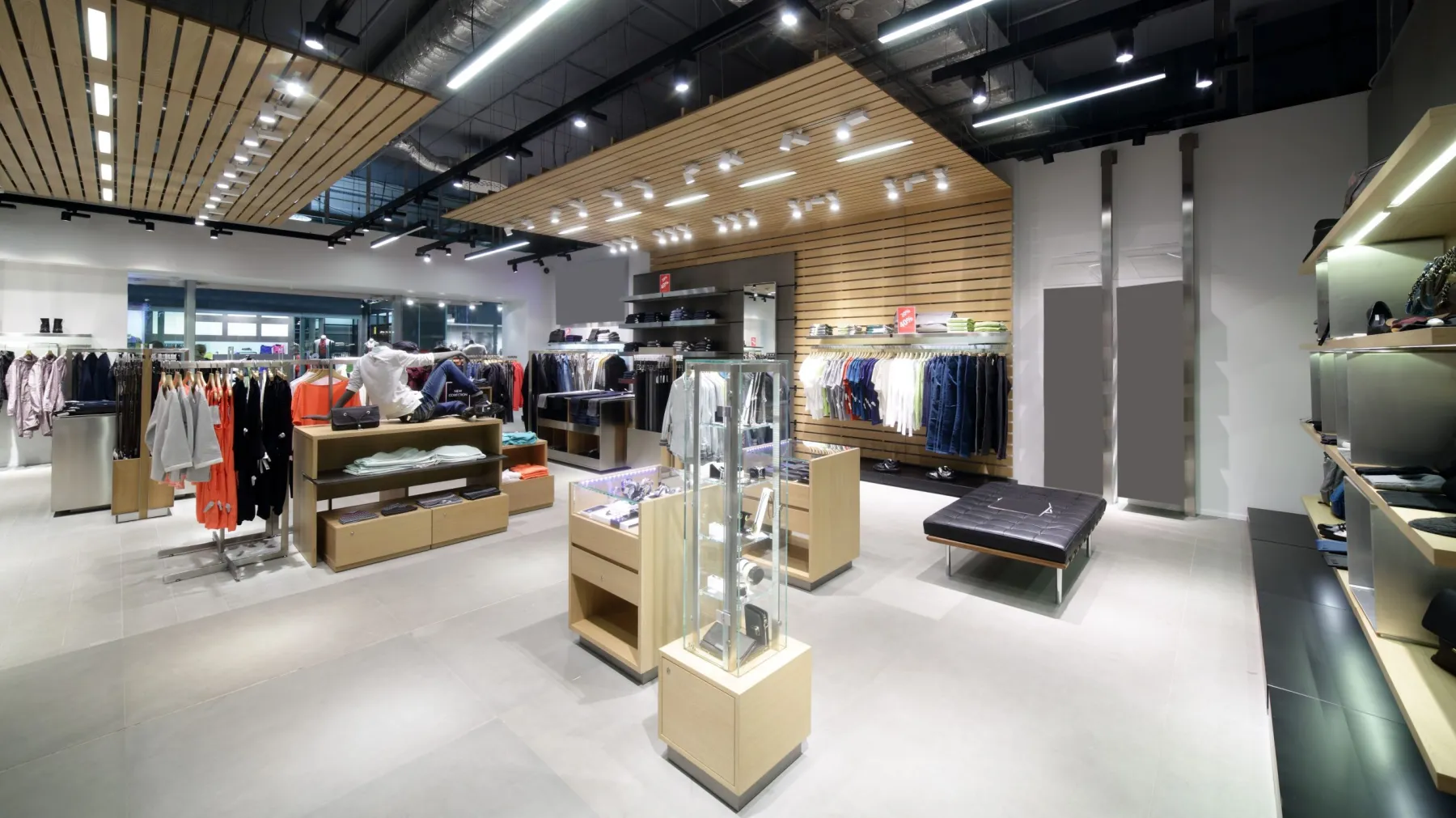
Retail display has to be reconfigurable. Shop layouts change with every season and every brand refresh, so we build on adjustable systems rather than fixing shelves permanently. Lighting is integrated into the joinery because a display lit only from the ceiling puts the product in its own shadow.
Clinic and medical casework is specified for cleaning. Continuous surfaces, coved junctions, no open joints where anything can collect, and finishes that survive daily disinfectant without dulling. Sharps and consumables storage sized to the actual protocol the clinic runs.
Restaurant and bar joinery lives in heat and moisture. Bar fronts and back-bar units are built in moisture-resistant board with sealed edges throughout, and anything near a service area gets the same treatment we would give a bathroom vanity.
Office workstations and storage are built to a repeatable module so a floor can be extended or reconfigured later without a visible mismatch. We keep the specification on file, which matters when a tenant adds ten desks two years on.
All commercial work comes with shop drawings, material submittals and method statements for landlord and consultant approval, plus the insurance documentation buildings require before anyone mobilises.
Joinery in Dubai
How much does fitted joinery cost in Dubai?
Wardrobes run AED 1,100 to 1,500 per square metre of face in laminate and AED 1,800 to 2,600 in PU lacquer or veneer. A TV and media wall is AED 9,000 to 45,000, a bathroom vanity AED 4,500 to 16,000, and wall panelling AED 550 to 1,400 per square metre.
How long does joinery take?
Three to six weeks from final measure to installation for most items. Manufacture runs in parallel with your other site works, so the joinery is being built while ceilings and tiling are finished.
Do you actually manufacture, or do you buy it in?
We manufacture. Panel saw, edge bander, spray booth and assembly benches on 32b Street in Ras Al Khor, running since 1984. You are welcome to visit while your units are being built — it is the clearest way to judge any joinery company.
Can I see the finish before you make it?
Yes, and you should. We spray sample boards in your chosen stain or lacquer, or you can come to the workshop and approve it on the actual timber. A printed colour chip is not a reliable guide to how a finish reads under Dubai light.
Do you install joinery someone else has made?
We prefer not to, because we cannot warranty a carcass we did not build. We will look at it and give you an honest view, but the twelve-month workmanship warranty only covers what we manufacture and install.
Can you match existing joinery in my home?
Usually. Send photographs and we will assess it at survey. Matching a laminate or a standard veneer is straightforward; matching an aged stain on natural timber is harder and we will tell you honestly how close we expect to get before you commit.
Is there a minimum order?
No. A single wardrobe, one vanity or one door is normal work for us.
What warranty covers the joinery?
Twelve months on workmanship from installation, written into the contract, plus the manufacturer warranties on Blum or Hettich hardware registered in your name.
Come and see it being made
Send dimensions or photographs for a quotation, or visit the workshop in Ras Al Khor and look at the work before you commit to anything. Free survey, itemised price, no obligation.