Bathroom renovation and remodeling in Dubai, waterproofed and flood-tested
Stripped back to the slab, tanked properly, and rebuilt by one in-house team — waterproofing, tiling, joinery, plumbing and electrical all on our own payroll from our Ras Al Khor workshop.
Bathroom renovation Dubai
A bathroom renovation in Dubai means stripping the room back to the slab, re-tanking it, resetting the falls to the drain, re-running the plumbing and electrical, then rebuilding it in the right order — waterproofing, screed, tiling, joinery, sanitary ware, glass. A single bathroom takes three to five weeks and costs AED 22,000 to 60,000. Abdulla Carpentry EST has been doing this from Ras Al Khor since 1984.
Most of what goes wrong with bathroom remodeling Dubai owners pay for is invisible on handover day. The tiles look right. The glass is clean. Six months later the skirting in the corridor outside is dark, or the neighbour below reports a stain on their ceiling, and the whole room comes out again. That is not bad luck — it is a membrane that was never continuous, or a fall that runs away from the drain instead of towards it.
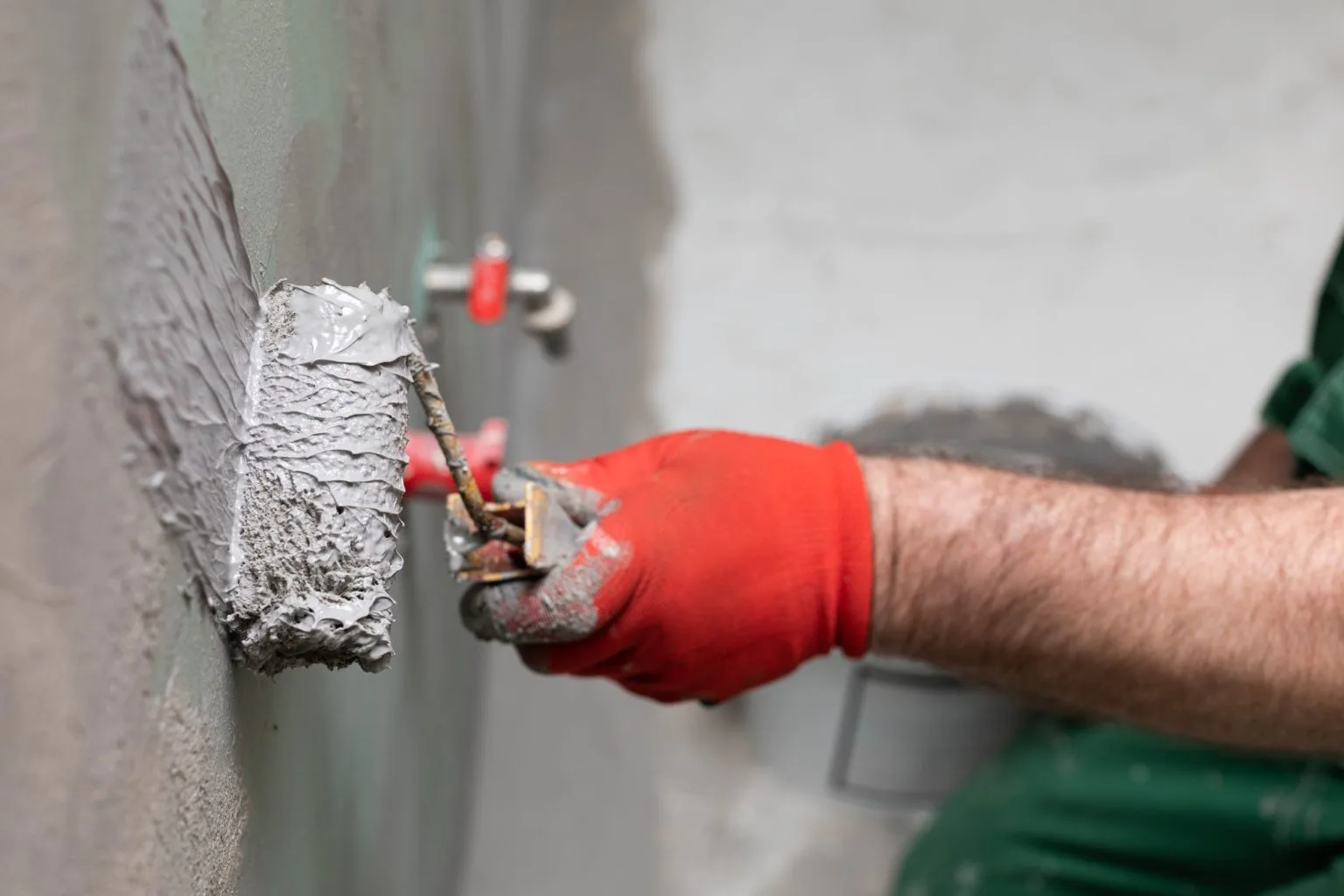
So we test before we tile. Every bathroom we build gets a 24-hour flood test on the finished membrane, with the drain plugged and the water level marked, before a single screed board goes down. If the level drops, the membrane gets fixed, not covered. It is the cheapest hour of the job and the only one that makes the next ten years quiet.
That is the difference between a bathroom renovation company in Dubai that subcontracts the wet works to whoever is free that week, and one that employs the waterproofer. We are not brokers. The bathroom contractors Dubai clients meet on our sites — the tiler, the plumber, the joiner, the glazier — carry our own ID.
 3–5 weeksA single bathroom, slab to handover
Full bathroom remodel
A full bathroom remodel is not a finish change. It is a demolition, a re-tank and a rebuild — and the price is set by what comes out, not by what goes back in.
A bathroom fit out at this level starts with the breaker. Tiles, screed, old membrane, sanitary ware, the vanity, the shower tray and usually the ceiling all come out, down to bare blockwork and slab. Only then can anyone see the truth: where the existing waste sits, how much fall there really is, whether the previous membrane was ever turned up the wall, and how much of the blockwork is sound.
From there the room is rebuilt in a fixed sequence. Plumbing and electrical first fix, blockwork repairs and any new stud walls, cementitious tanking taken 1,800 mm up in the shower zone and 300 mm elsewhere, a 24-hour flood test, screed to falls, tiling, ceiling and extraction, then joinery, sanitary ware, glass and brassware. Skip a stage and the one after it has to be undone.
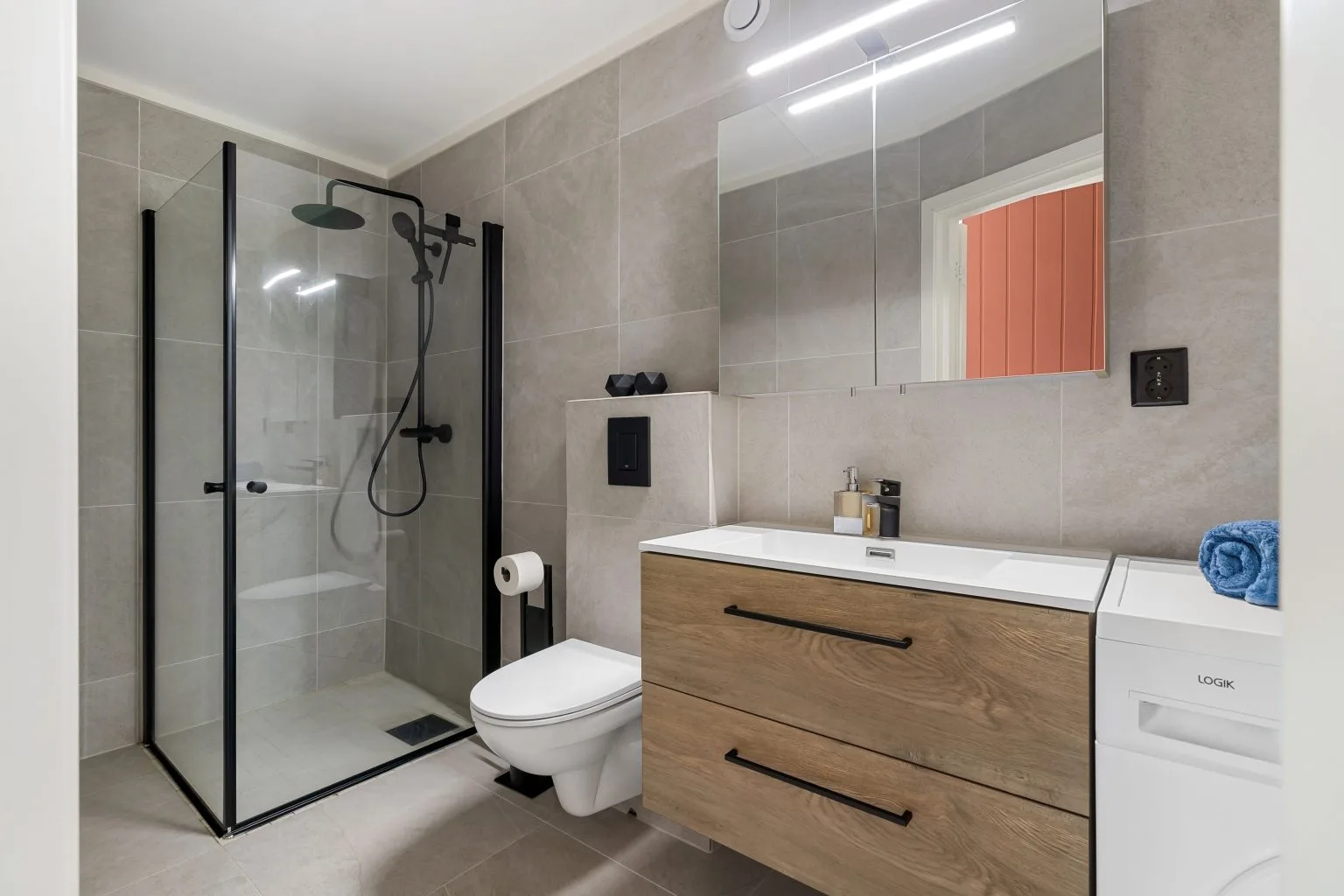
A lighter bathroom makeover is a real option and we quote it honestly: regrout and reseal, replace the brassware, swap the mirror for a mirror cabinet, refinish or replace the vanity doors, repaint the ceiling. It costs a fraction of a strip-out and takes days, not weeks. What it cannot do is fix a leak, change the drain position or add a shower where there was a bath. If the membrane is the problem, a makeover just hides it for another year.
We photograph every stage, so bathroom renovation before and after is not a marketing phrase on this site — it is a folder you receive with the handover pack, including the flood test, the first fix and the concealed pipework, in case anything ever has to be opened again.
Bathtub to shower conversion
A bathtub to shower conversion is the single most requested change we do, and in most Dubai apartments it is straightforward — because the bath already sits over the wet zone and the drain is already there. The work is taking the bath out, checking and re-tanking the exposed slab, building the fall towards a linear or point drain, then tiling the floor through so a walk-in shower reads as one continuous surface rather than a tray dropped into a corner.
Where it gets more involved is the drain. If the existing waste is under the bath rather than where the new shower outlet needs to be, the pipe has to be re-run in the screed, and that eats into the floor build-up. In a low-ceiling apartment we will sometimes recommend a shallow tray and a shower enclosure instead of a fully tiled walk-in, and we will say so at survey rather than discovering it halfway through.
Glass is the other decision. A frameless glass shower in 10 mm toughened glass, fixed on minimal brackets, is what most clients picture — it keeps the room visually whole and there is almost no frame to collect scale. A fixed glass partition with a walk-through gap is cheaper, easier to clean and needs no seals at all, but it does let more spray out, so it only works if the shower is long enough.
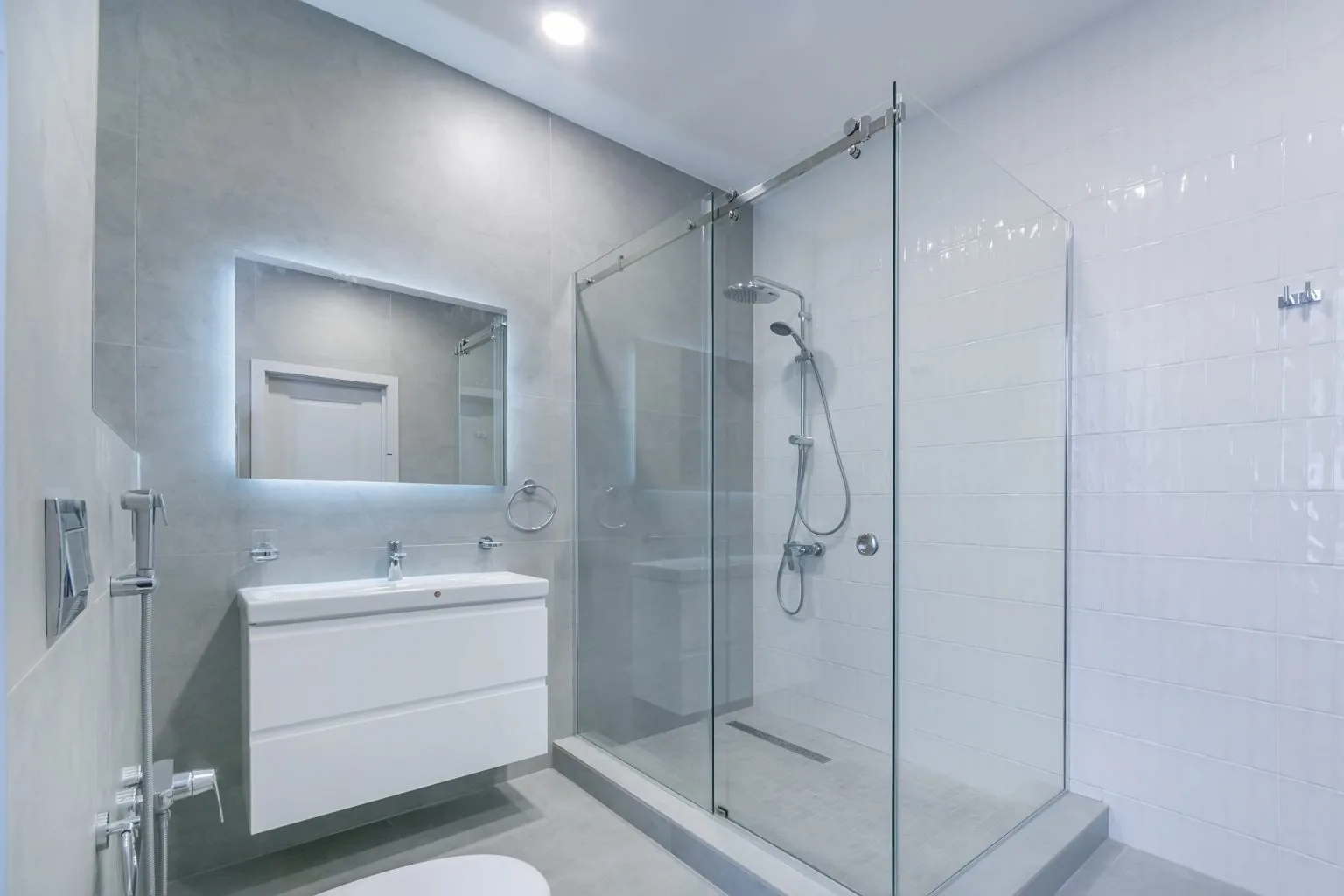 10 mm glassToughened, templated after tiling
Not every bathroom should lose its bath. In a family apartment with only one bathroom, or a villa where the children are small, we usually argue for keeping one. A bathtub replacement — same position, new bath, new tiling and new brassware — is quick and cheap by comparison. A freestanding bathtub is the opposite: it needs floor-mounted or wall-mounted filler pipework set out before the screed goes down, and a floor that is genuinely level, so it has to be decided at design stage, not chosen later.
Bathroom tiling and flooring
Tiling is where a bathroom is judged, and where the setting-out decisions have to be made before the first adhesive is mixed — not improvised at the last wall.
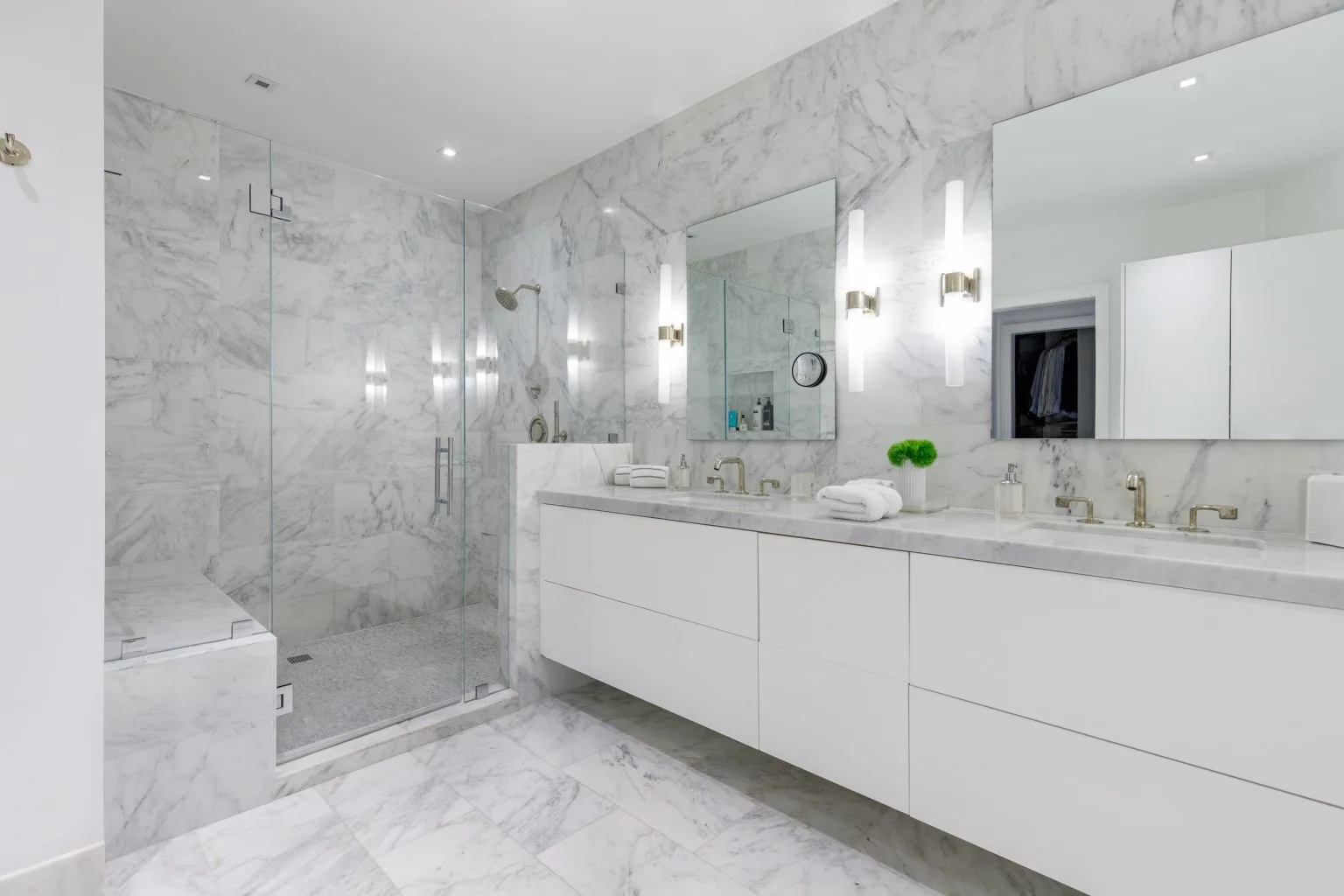
Almost everything we lay in Dubai bathrooms is porcelain. Porcelain tiles take water, heat and cleaning chemicals without change, which matters in a room that gets a hot shower twice a day and a bleach wipe twice a week. Where a client wants real stone, we use marble tiles and say plainly what comes with them: they etch with acidic cleaners, they need sealing on a schedule, and the veining has to be dry-laid and photographed before fixing so the pattern runs where you want it.
Large-format tiles — 600×1200 and up — are the current default for walls, and they genuinely do make a small room read bigger, because there are fewer grout lines to break it up. They are also unforgiving. A large tile needs a flat substrate, full back-buttering and levelling clips, or every lipped edge catches the light. That is a labour cost, not a material cost, and it is the reason a cheap quote for large-format tiling is usually a warning.
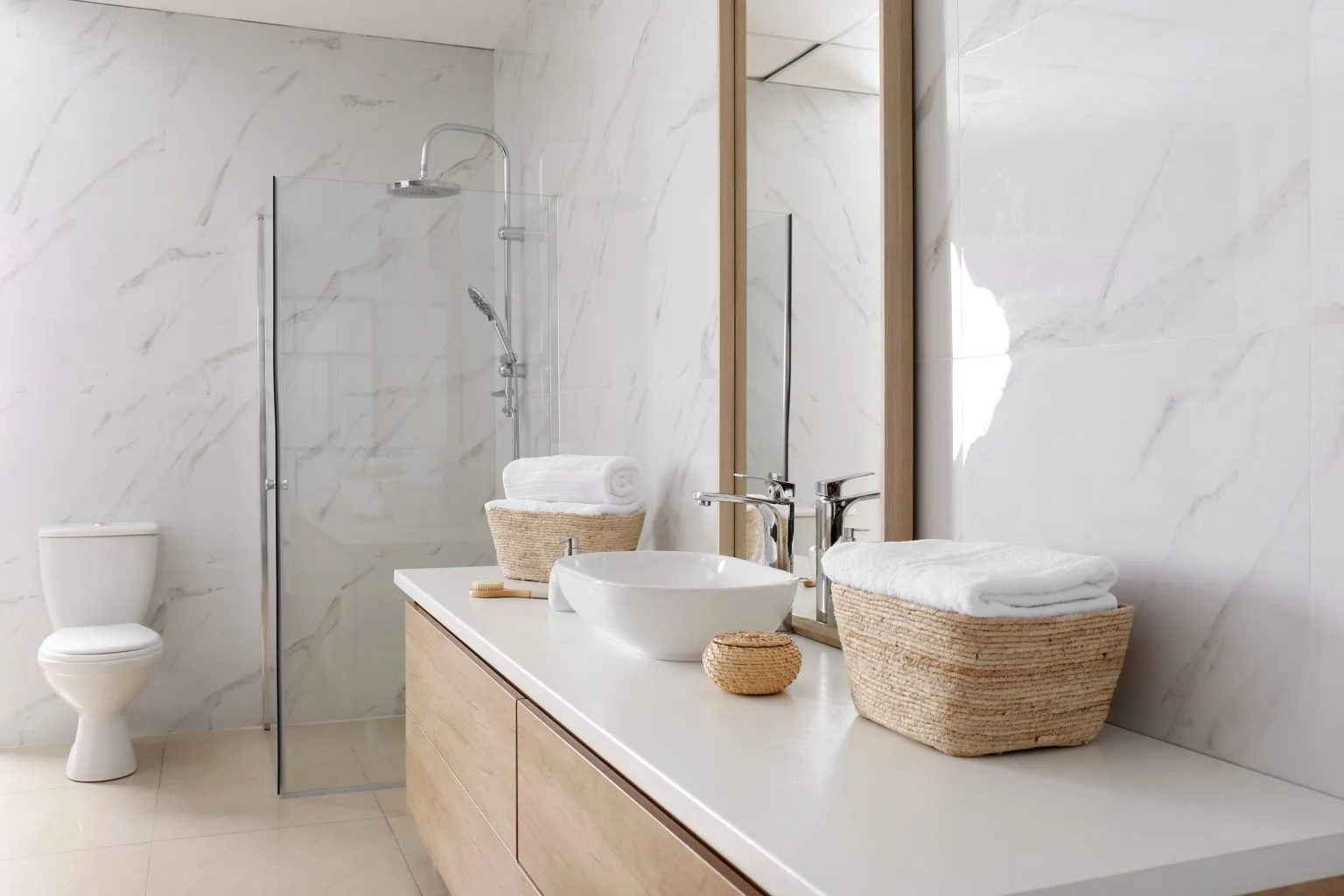
On the floor we specify anti-slip bathroom flooring as standard — a textured or honed porcelain with a wet-rated finish, not the same polished tile as the walls. It is the one specification we push back on when a client wants a mirror-polish floor, because a wet polished tile in a shower zone is genuinely dangerous, and more so in a home with young children or elderly parents.
Grout and silicone get the same attention. We use an epoxy or a high-performance cementitious grout in shower zones, colour-matched, and we silicone every internal corner rather than grouting it — corners move, grout cracks, and a cracked corner is how water gets behind a perfectly good tile.
Five weeks, in this order
One team, one sequence, no waiting on a subcontractor who is finishing somebody else’s job first.
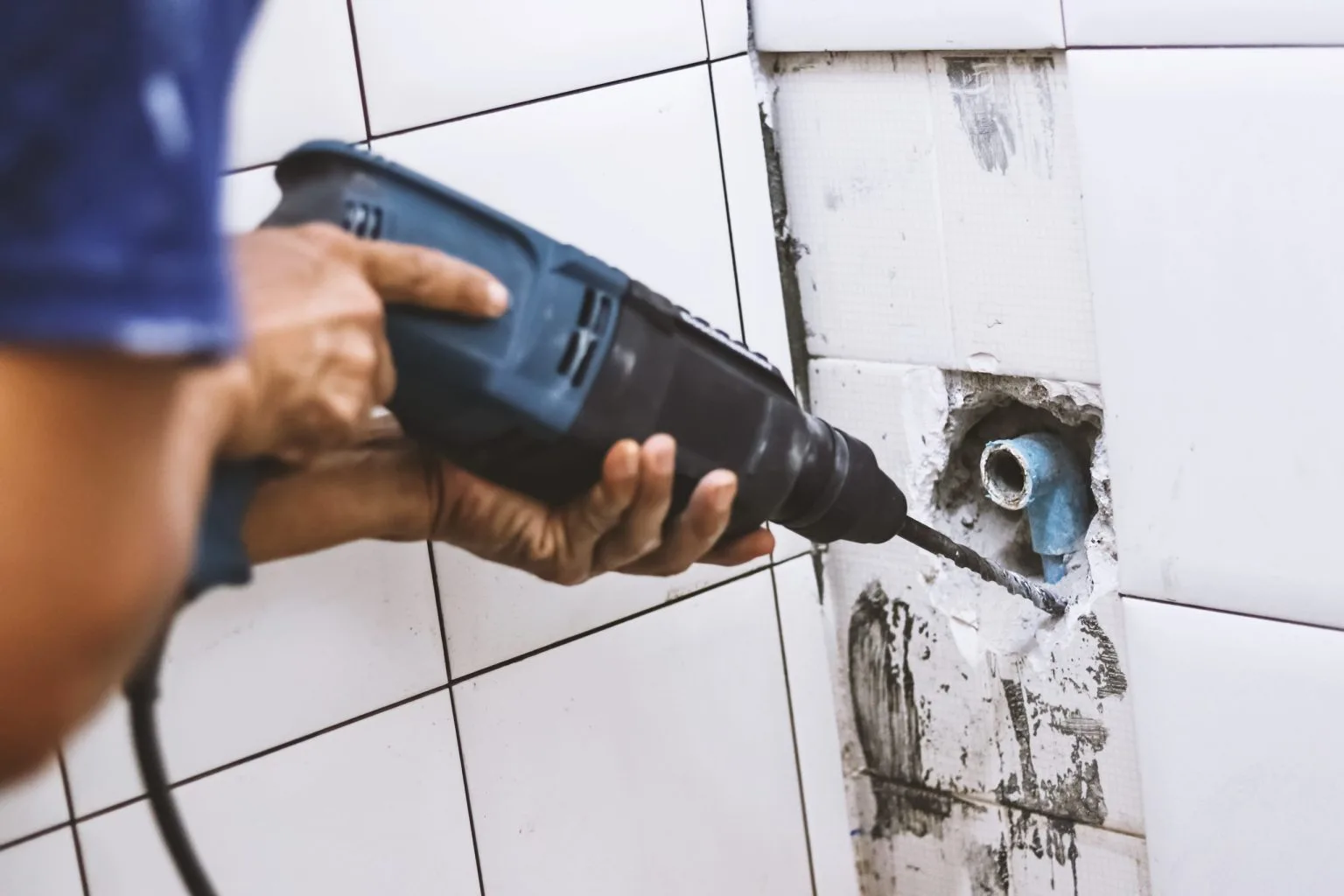
Survey, strip-out and 3D
We measure the room, check the drain and the fall, issue a 3D you approve, then take it back to the slab.
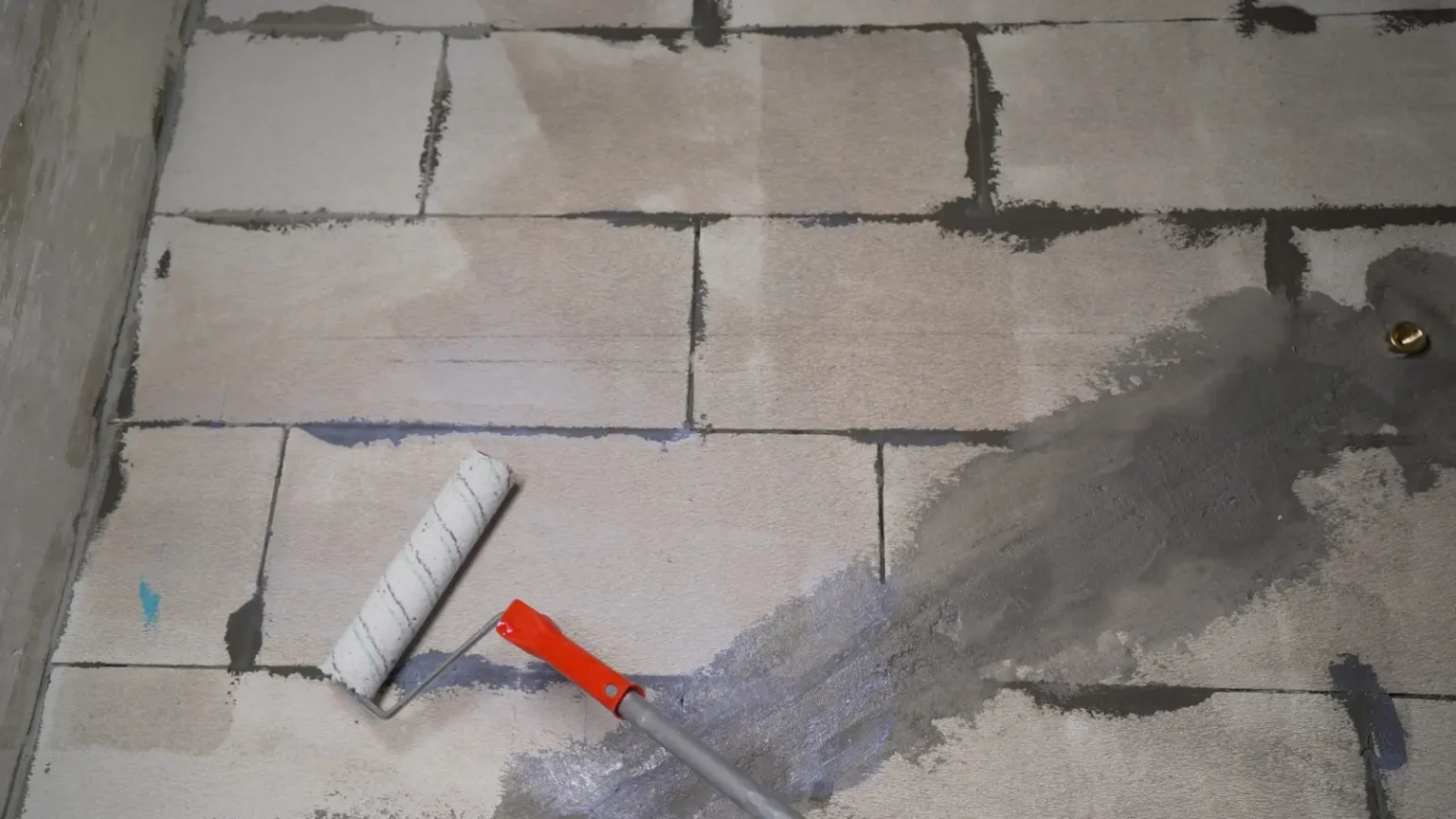
Waterproofing and flood test
The membrane goes on in two coats with the corners taped, then the room is flooded for 24 hours and read.
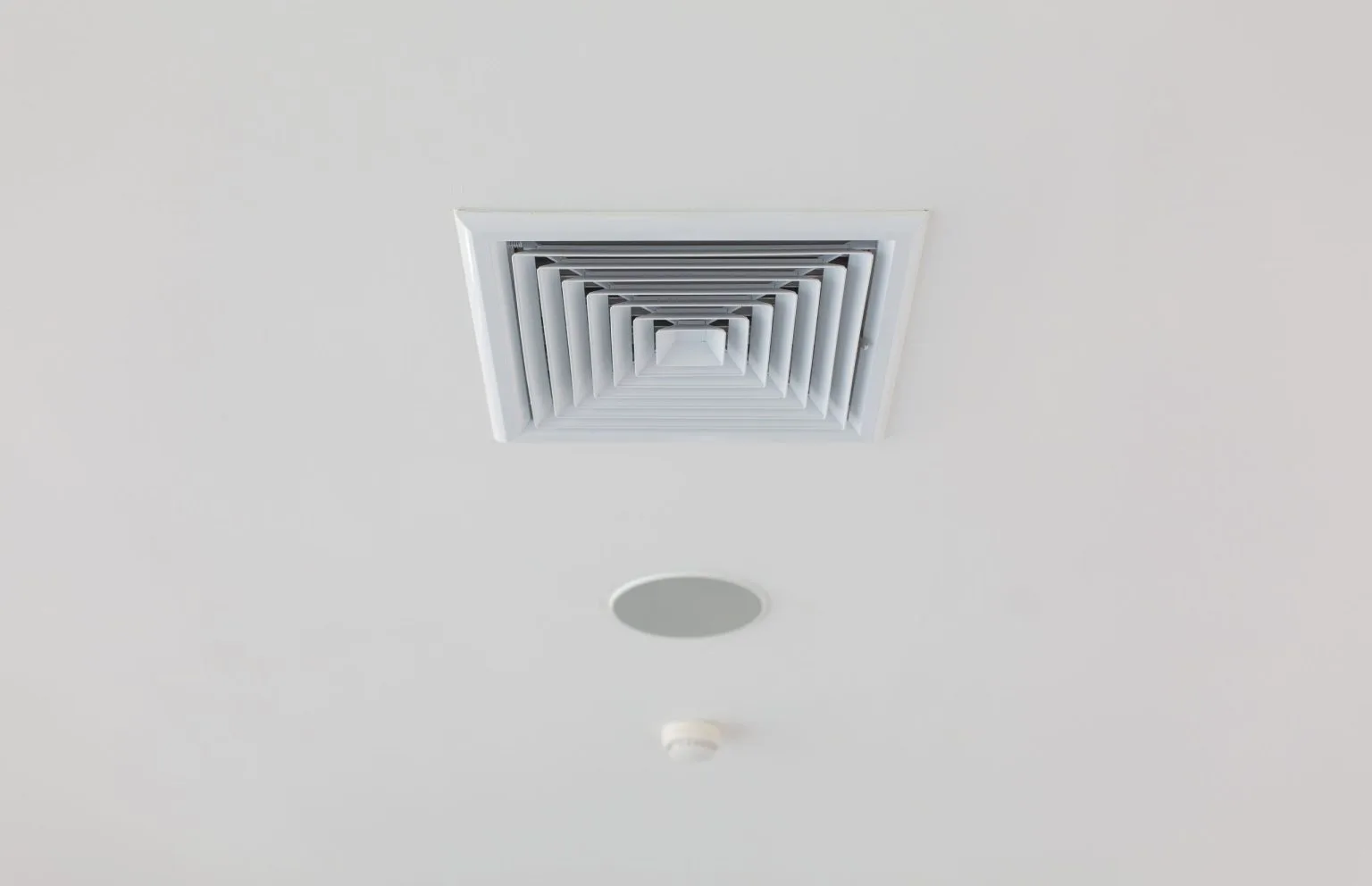
Plumbing, power and heater
Pipework, circuits, extraction and the heater are re-run, tested and photographed before the walls close.
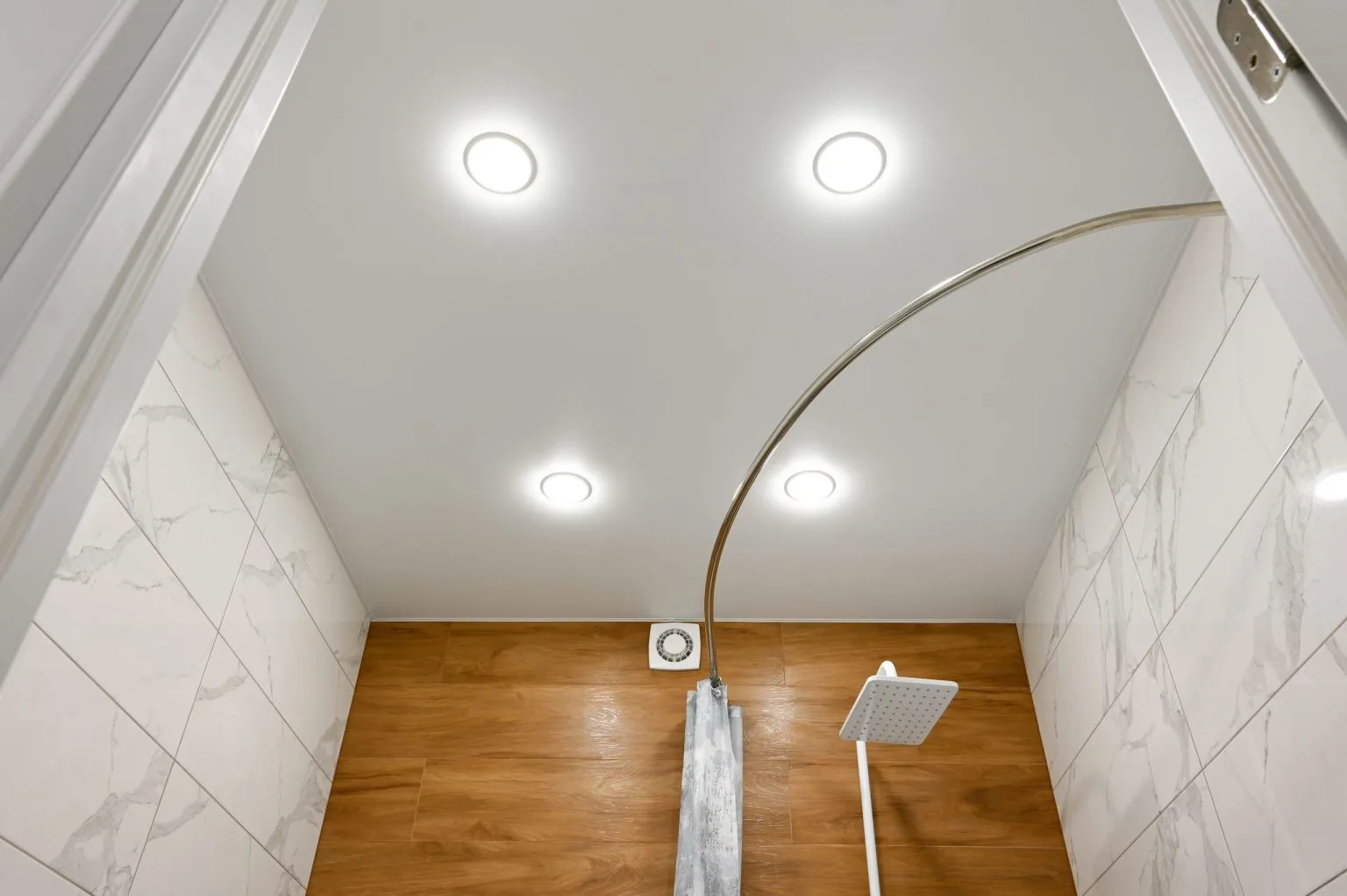
Screed, tiling and ceiling
Falls are set with a laser, porcelain is laid to the setting-out, then the ceiling and lighting close in.
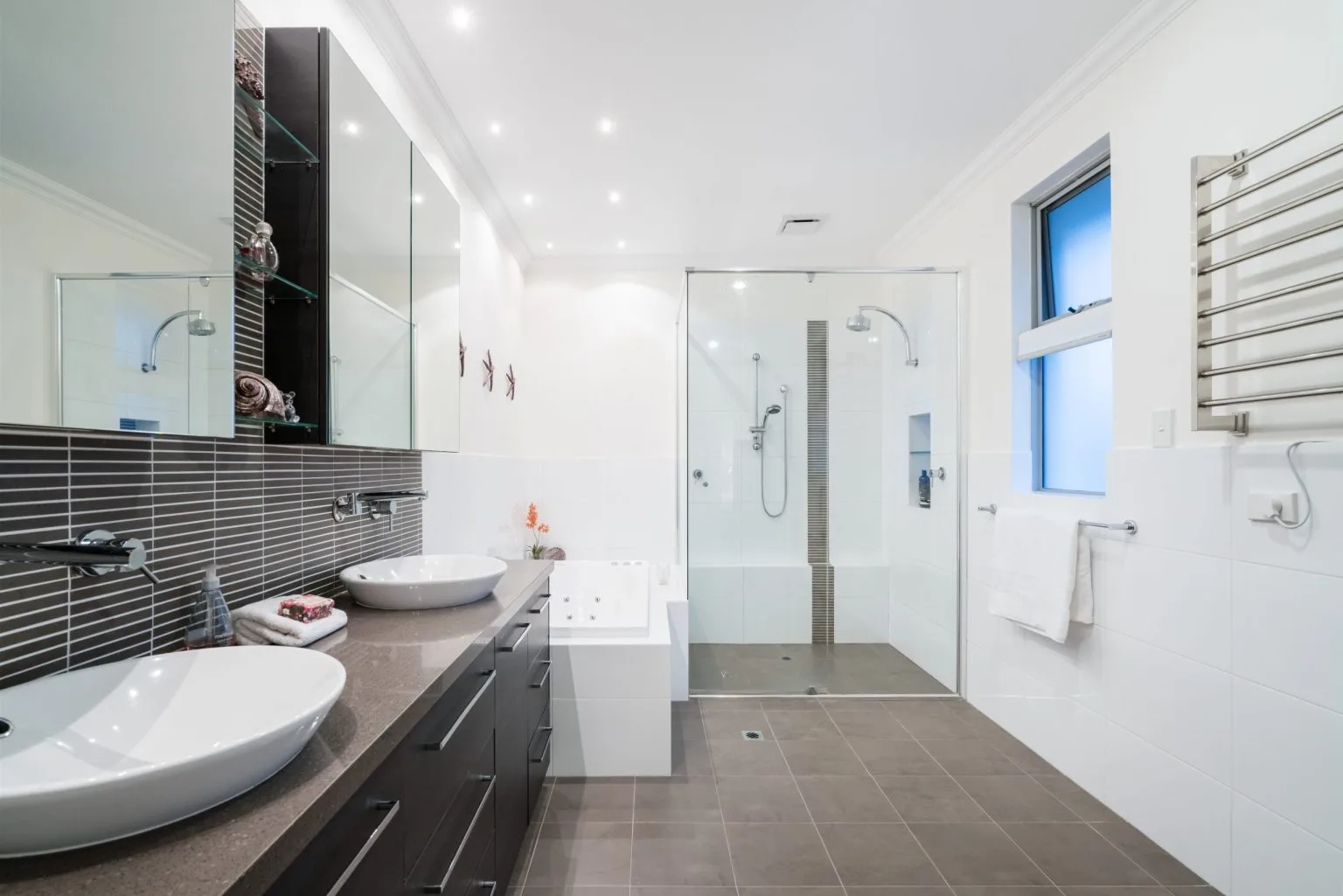
Joinery, glass and handover
The vanity is templated and fitted, glass and brassware go on, then we test, snag and hand the room over.
Nothing above is compressible without consequence. The flood test needs its 24 hours, the screed needs to cure before tiling, and the stone top cannot be templated until the cabinet is physically fitted. A contractor promising a finished bathroom in ten days is skipping one of those, and it is almost always the one you cannot see.
Bathroom vanity and cabinets
This is the part we actually build. Our workshop on 32b Street in Ras Al Khor Industrial Area 2 has been making joinery since 1984, and a custom vanity unit for a Dubai bathroom is a different object from a bedroom cabinet. The carcass is moisture-resistant board, every cut edge is sealed, the back panel is cut around the pipework rather than notched roughly on site, and the plinth is either a recessed void or the unit does not touch the floor at all.
A floating vanity is what we recommend in almost every apartment, for two reasons that have nothing to do with fashion. It keeps the joinery out of standing water if anything ever overflows, and it lets the floor tile run underneath, which makes a small room read noticeably larger. The trade-off is that it has to be fixed into sound blockwork or a properly built stud with noggins — a floating unit screwed into plasterboard alone will sag within a year.
Sizes come from the room, not a catalogue. We template on site after the tiling, so the unit lands tight to the wall without a filler strip, and we set the drawer boxes out around the trap so the top drawer still opens. The stone top is templated separately, on the fitted cabinet, for the same reason.
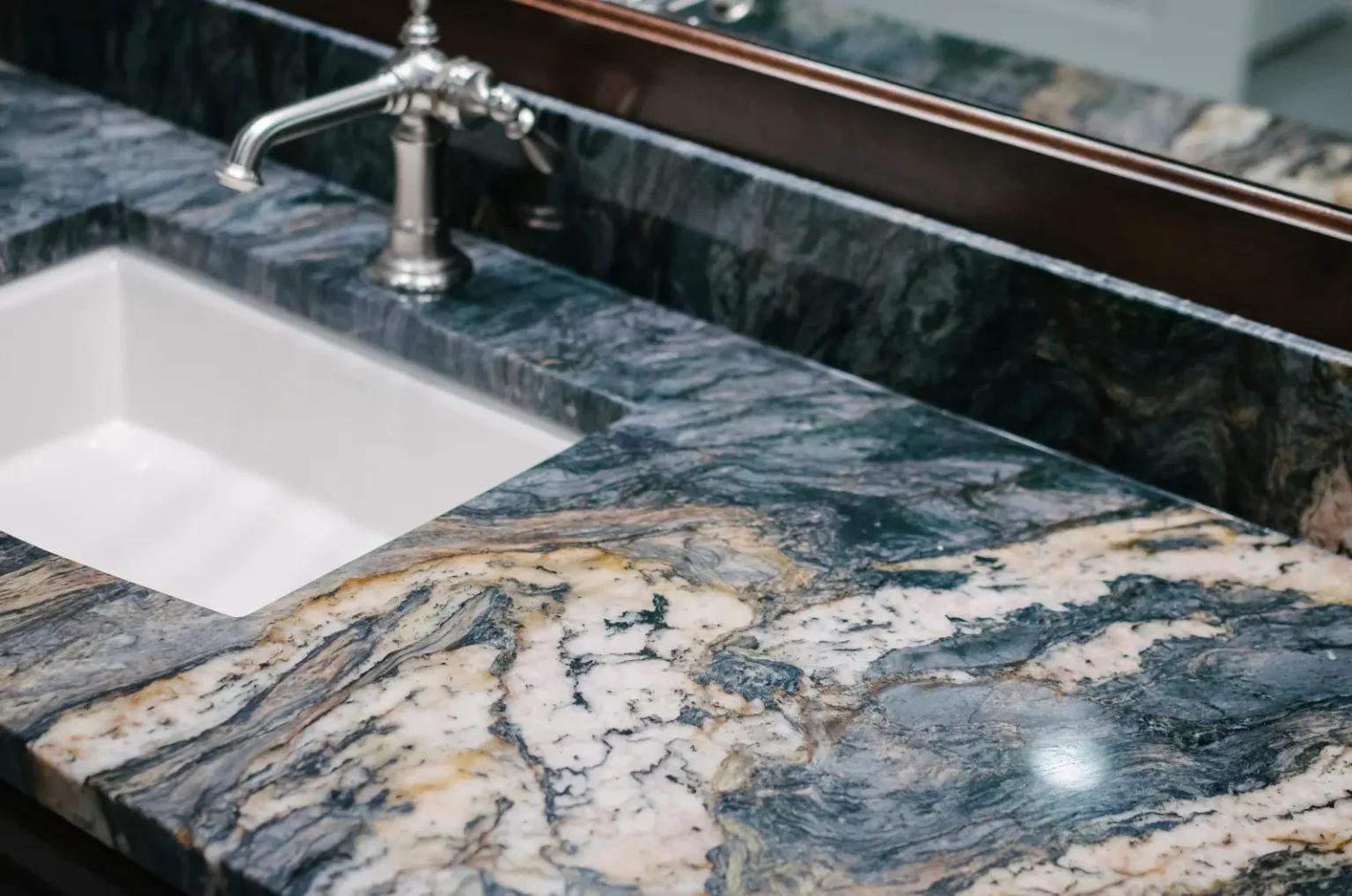 Made in-houseRas Al Khor Industrial Area 2
Mirrors are joinery too. A mirror cabinet is the cheapest storage in any bathroom — it uses the 120 mm of wall depth above the basin that is otherwise wasted, and it hides everything that would otherwise sit on the vanity top. We build them with a recessed socket inside, so shavers and toothbrushes charge out of sight.
An LED mirror is worth doing properly or not at all. Front-lit, at around 4000 K, is what you want for shaving and make-up; a backlit halo mirror looks better in photographs but throws almost no usable light on a face. We wire both off a fused spur with the transformer left accessible, because the most common call-out we get on somebody else’s bathroom is an LED mirror whose driver has failed and been buried behind a tiled wall.
Sanitary ware and fittings
We are not tied to any brand, and we do not mark up sanitary ware to make our margin. What we do is refuse to install fittings we know we will be called back to.
A wall-hung toilet on a concealed cistern is the fitting we specify most often, because it frees the floor, makes cleaning trivial and looks calmer in a small room. It also has one hard requirement: the carrier frame has to be bolted to the slab and the blockwork, not just to a stud, and there has to be a real access panel at the flush plate. A concealed cistern with no access is a tiled wall waiting to be demolished.
For the shower, a rain shower head on its own is a comfortable way to stand under warm water and a poor way to actually wash, so we fit it alongside a handset on a slide rail as a matter of course. Both run off a thermostatic shower mixer, which holds temperature when a tap runs elsewhere in the apartment — that is a safety item in a home with children, not a luxury.
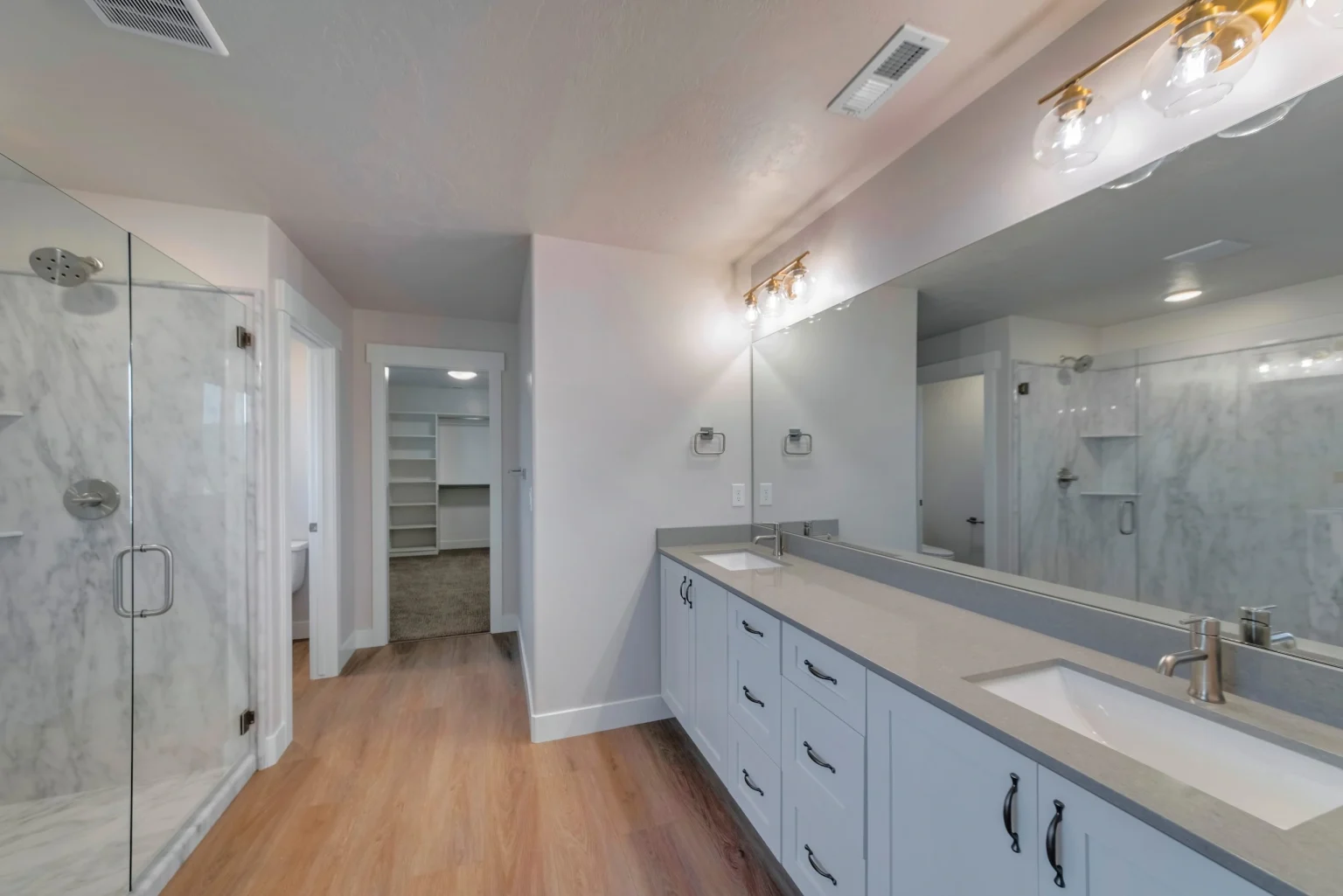
On sanitary ware brands, we install and warranty Grohe, Kohler, Duravit, Roca and Hansgrohe routinely, and we will happily fit whatever a client has already bought. The reason we lean towards these is unglamorous: cartridges, seals and flush plates are available in Dubai years later. An unbranded mixer that fails in year three is not cheap — it is a tiled wall opened up to find a part that no longer exists.
Waste and trap detail matters more than the tap. We use bottle traps sized to the basin, access panels wherever a trap sits inside joinery, and isolating valves on every hot and cold feed, so a future repair is a fifteen-minute job with a spanner instead of a day with the building water off.
Bathroom waterproofing
If we only got one stage of the job right, this would be it. Everything visible can be replaced in a week. A failed membrane takes the room, the ceiling below and the neighbour’s goodwill with it.
Bathroom waterproofing in Dubai is a two-coat cementitious or liquid-applied membrane over a primed, sound substrate, taken 1,800 mm up the wall inside the shower zone and at least 300 mm everywhere else, carried across the whole floor, and turned up behind the skirting line. The failures we are called to repair are almost never the membrane material. They are the junctions: the floor-to-wall corner, the pipe penetrations, the drain flange and the door threshold.
So those four get reinforcing tape and a third coat as standard, and the drain gets a puddle flange bedded into the membrane rather than sealed on top of it. Then the room is flooded. Drain plugged, water to 30 mm, level marked, left 24 hours and re-read. We photograph the mark at both readings and it goes in the handover pack.
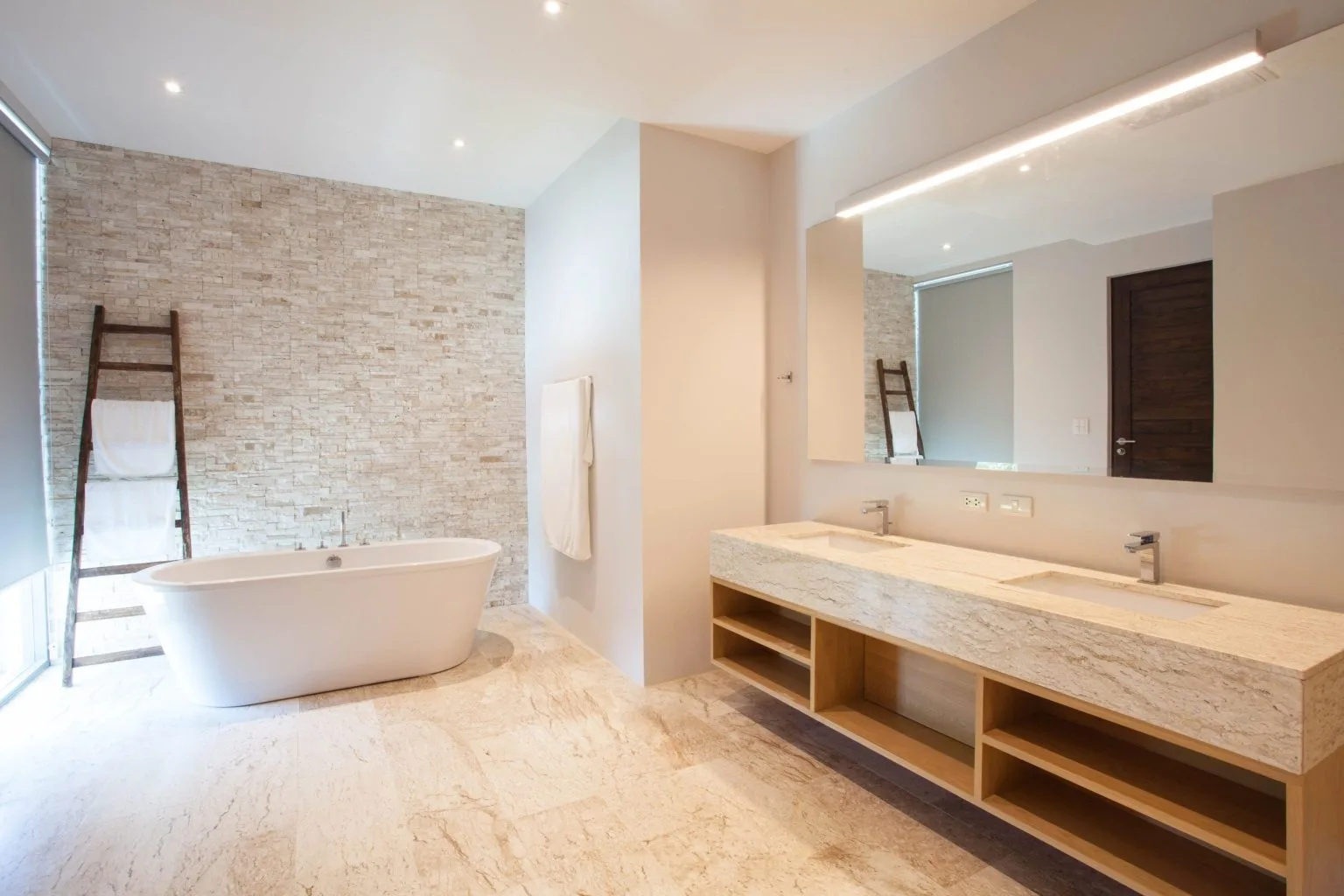
Leak repair and waterproofing on an existing bathroom is a different conversation, and an honest one. We can trace a leak with a moisture meter and a dye test, and sometimes the answer is a genuinely local repair — a failed silicone joint, a cracked waste, a shower tray seal. Often it is not. If the membrane has gone under the tiles, patching one corner moves the problem rather than fixing it, and we will tell you that before you pay for a repair that buys six months.
The second half of waterproofing is falls. Water has to run to the drain by gravity, at roughly 1 in 80 across the shower zone, with no flat patch and no back-fall towards the door. We set this in the screed with a laser and check it with water before tiling, because once large-format porcelain is down, a bad fall is permanent.
Bathroom plumbing and electrical
Everything in this section is buried before tiling, which is exactly why it is worth a paragraph each now rather than a demolition later.
Bathroom plumbing and electrical first fix happens while the walls are open. Hot and cold are re-run in PPR or PEX with isolating valves at every fixture, wastes are re-graded and pressure-tested, and the circuits are pulled back to the consumer unit on their own RCD-protected way. Every socket and light in a bathroom is zoned to IP rating, and the shaver socket inside a mirror cabinet is fed through an isolating transformer. We photograph the whole first fix before it disappears.
Water heater installation is the item most often left as-is and most often worth replacing at the same time. If the cylinder is in the ceiling void above the bathroom — as it is in most Dubai apartments — it is sitting directly over the room you have just rebuilt, on a drip tray that may or may not still drain anywhere useful. Replacing it while the ceiling is already open costs a fraction of doing it after, and it comes with a new tray, a new safety valve and a drain that actually runs to the floor waste.
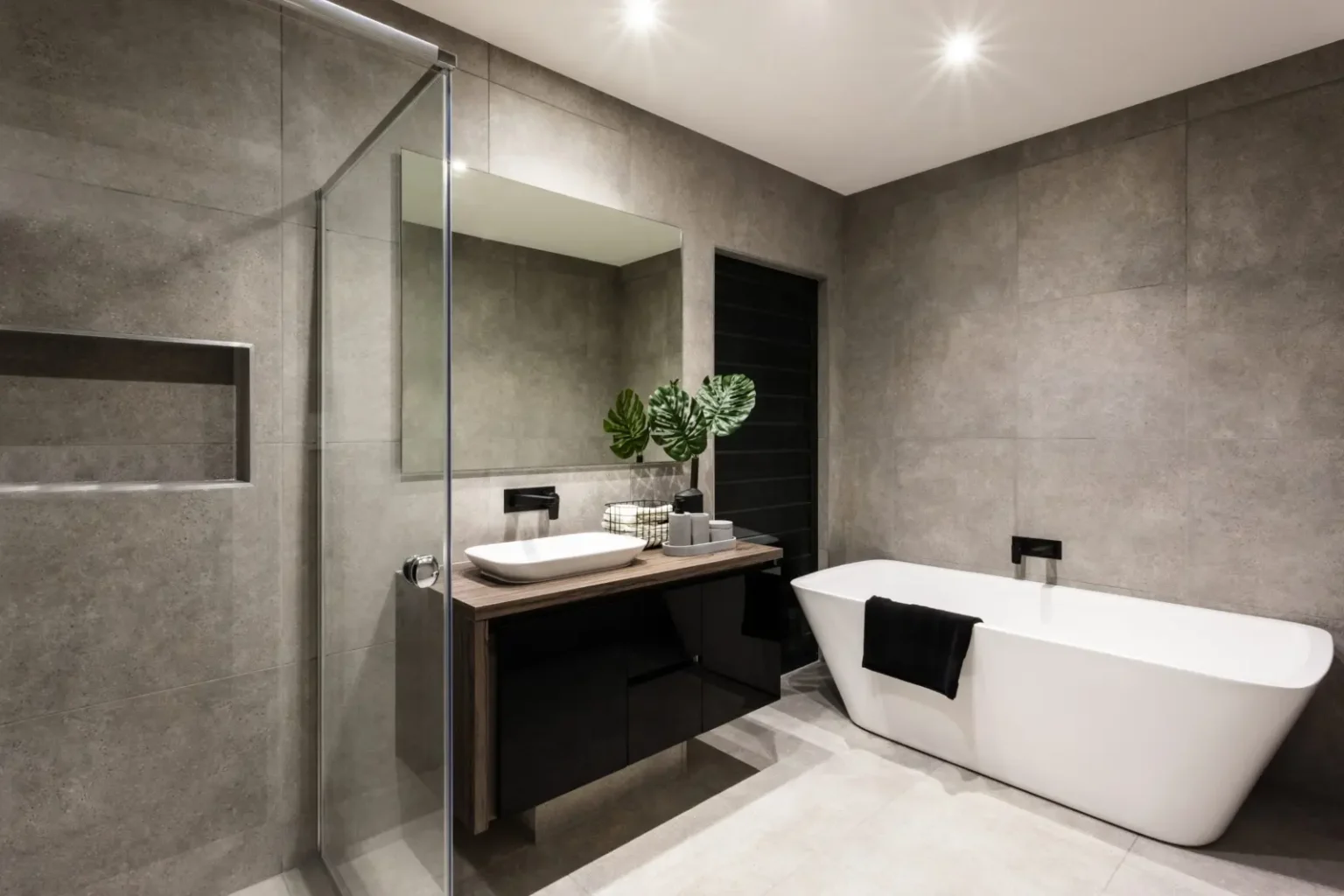
Exhaust fan and ventilation is the difference between a bathroom that stays clean and one that grows mould in the grout within a year. Dubai humidity plus a hot shower needs real air changes, and a fan that only comes on with the light is not enough. We size the extract to the room volume, duct it in rigid or semi-rigid line rather than a crushed flexible, run it to a genuine outside termination instead of into a ceiling void, and wire it on a timed overrun so it keeps pulling for fifteen minutes after you leave.
Bathroom false ceiling and lighting then closes it all in. The ceiling is moisture-resistant board on a galvanised frame, with a real access hatch at the valves and the heater, not a cut square pushed back into place. Lighting is IP-rated downlights on a layout set out against the tile joints, with the shower zone on its own circuit, and we will usually add a low-level night light on a separate switch — it is the detail clients mention most, a year later.
Master bathroom, guest bathroom and powder room renovation
Three rooms, three briefs. Treating them as one specification is how a villa ends up with a powder room built like a service bathroom.
Master bathroom
Twin basins, a separated WC and a walk-in shower, planned so that two people can use the room at once without standing in one another’s light.
Guest bathroom
Hard-wearing and very simple to clean, built to take either a bath or a shower, and specified so that a guest cannot damage it in one weekend.
Powder room
The smallest room and the most looked at, so it carries the best stone, a wall-hung basin, and lighting aimed at the mirror and not the floor.
A small bathroom renovation is not a scaled-down version of a large one, and it is usually harder. In three square metres every millimetre is spoken for, so the wins come from removals rather than additions: a wall-hung WC to recover 150 mm, a floating vanity so the tile runs under it, a frameless screen instead of a framed enclosure, a recessed shower niche instead of a shelf, and one large-format tile running floor to ceiling so the eye has nothing to count.
A luxury bathroom renovation goes the other way, and the cost sits in things you cannot photograph: book-matched stone that has to be slabbed and dry-laid before cutting, concealed cisterns and shower valves that need access panels designed into the joinery, underfloor heating mats laid into the screed, and enough ceiling void to run real extraction. The finishes are the easy part.
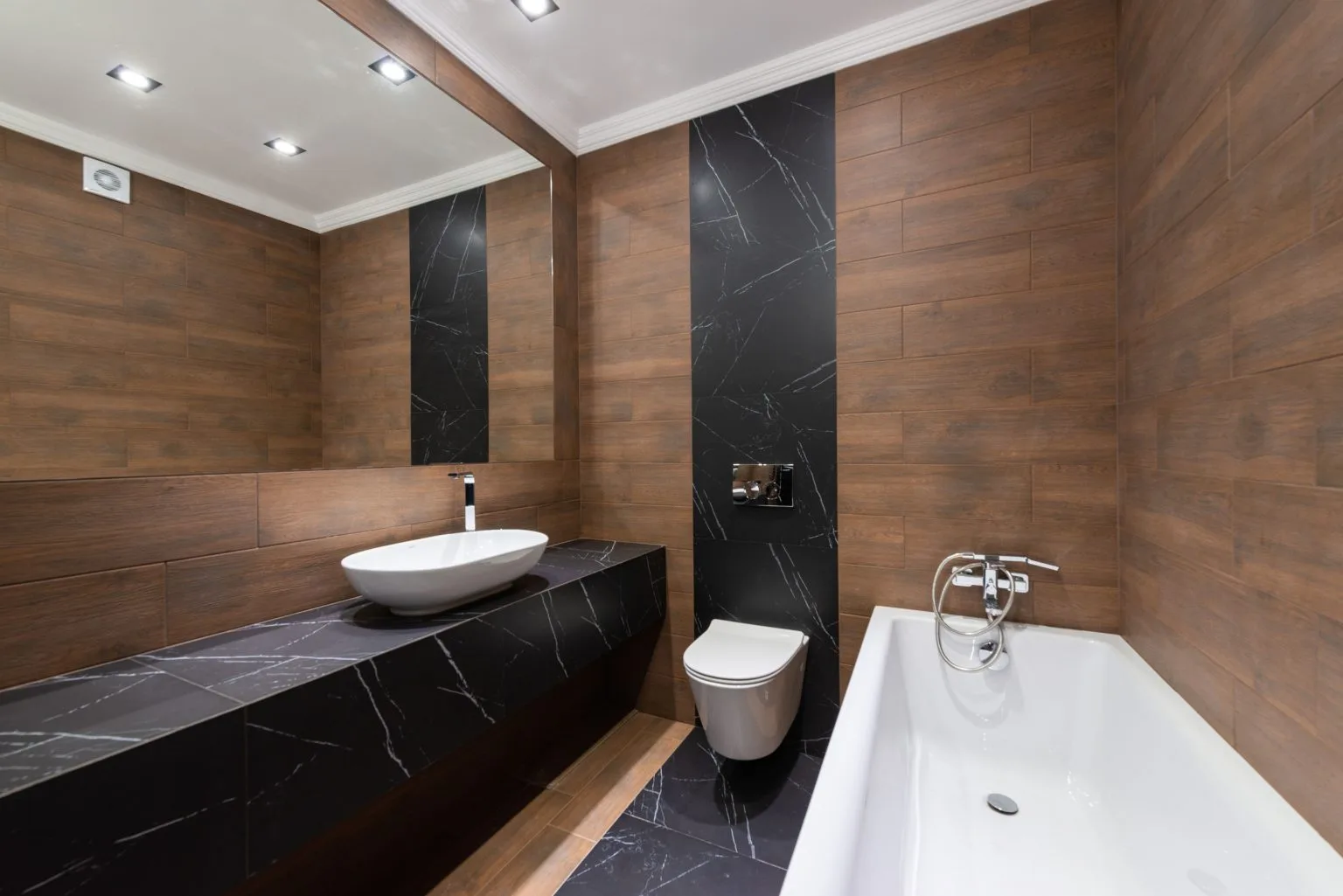
An accessible bathroom is work we take seriously and quote honestly. A level-access shower with no threshold, a 900 mm clear door opening, grab rails fixed into blockwork or properly noggined studs rather than into tile adhesive, a slip-rated floor, and a seat that folds flat. For an elderly-friendly bathroom we would usually add a thermostatic valve capped at a safe maximum, lever taps instead of knobs, and a low-level light left on overnight — small items, decided before first fix, that cost very little if they are designed in and a great deal if they are retrofitted.
Villa and apartment bathroom renovation
The bathroom is the same. The building around it is not, and that is what changes the programme, the approvals and the working hours.
Villa and apartment bathroom renovation differ before a tool comes out of the van. In a villa we have a driveway, a place to cut tile, our own water supply to isolate and no lift booking. In an apartment we have a service lift with a time slot, a building manager, protection to lay from the lift door to the flat door, and neighbours either side of every wall we are about to break.
Approvals follow the same split. A villa bathroom that keeps its existing drain positions and structure is usually a straightforward job under the community’s own rules. An apartment almost always needs the developer or owners’ association NOC before work starts, and where a layout change or wet-area extension is involved, a permit through the relevant authority. We prepare the drawings and submit the paperwork as part of the job, and we obtain the developer NOC per job rather than claiming any standing approval we do not hold.
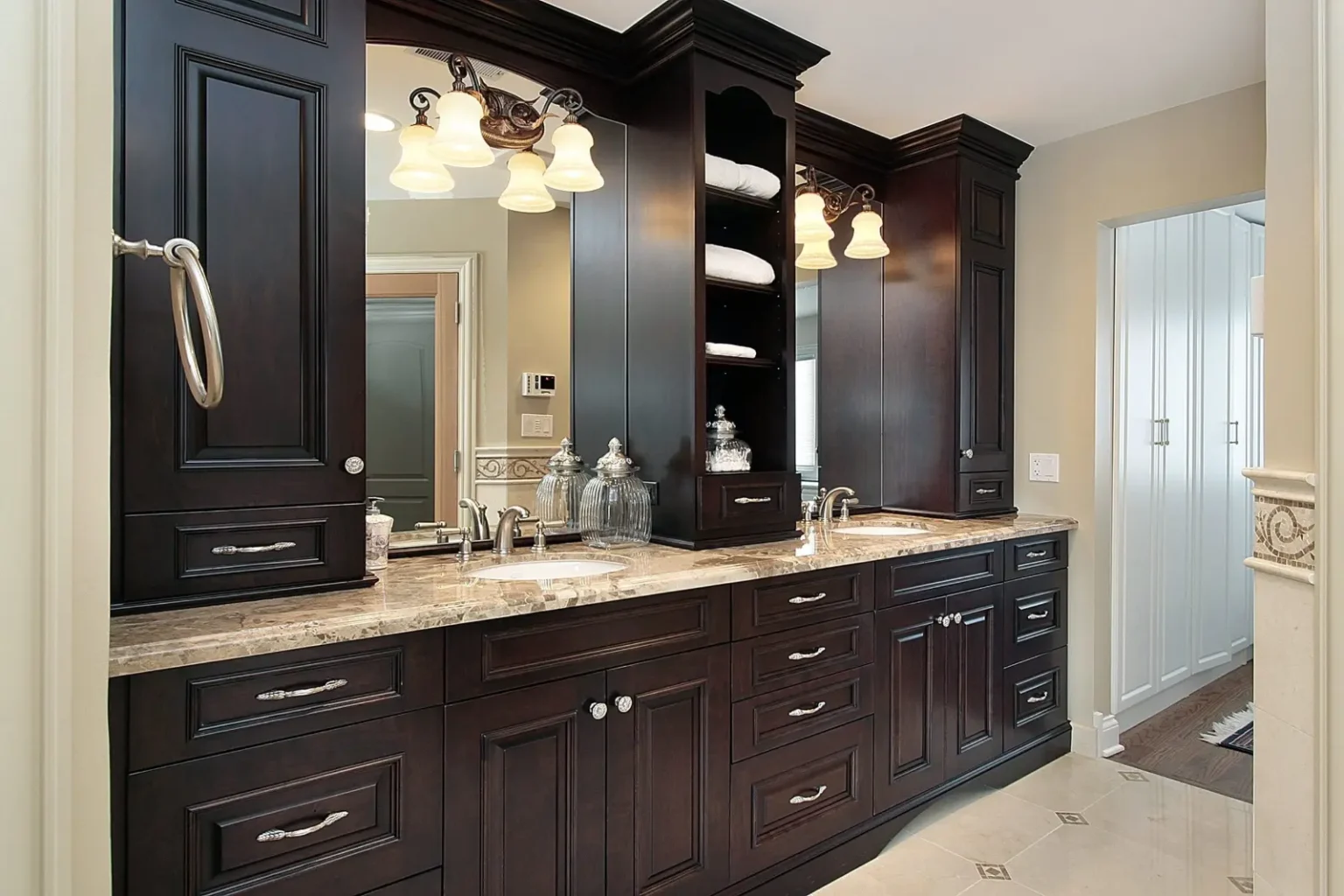
Villas also open up options an apartment cannot take. A Jacuzzi needs a reinforced floor build-up, a dedicated circuit and real access to the pump, so it is a villa or a ground-floor item. A steam room needs a sealed enclosure, a sloped ceiling so condensate runs to the walls rather than dripping, a generator sited somewhere serviceable and its own drainage. Both are achievable and both have to be designed in at the start, not squeezed in later.
We work across Dubai Marina, Downtown, Business Bay, JVC, Dubai Hills, Arabian Ranches, Damac Hills and Mirdif, and our workshop and stores are in Ras Al Khor Industrial Area 2 — which is central to all of them, and the reason a missing bracket is a one-hour problem rather than a lost day.
Bathroom renovation cost in Dubai
These are our own published figures, the same ones quoted on our residential page. They are ranges, not estimates — your number comes from the survey.
| Work | Our published range | Typical duration |
|---|---|---|
| Single bathroom, stripped back to slab and rebuilt | AED 22,000 – 60,000 per bathroom | 3 – 5 weeks |
| Cosmetic refresh — paint, flooring, light joinery | AED 300 – 500 per sq ft | 3 – 5 weeks |
| Full apartment renovation, bathrooms included | AED 500 – 750 per sq ft | 8 – 14 weeks |
| Full villa renovation, bathrooms included | AED 500 – 900+ per sq ft | 3 – 6 months |
| Full repaint, occupied property | AED 12 – 22 per sq ft | 1 – 2 weeks |
Bathroom renovation cost in Dubai sits between AED 22,000 and 60,000 for a single bathroom taken back to the slab and rebuilt, over three to five weeks. The spread is wide because the room is small and the material choices are therefore very visible: the same three square metres can be finished in a mid-range porcelain or in book-matched marble, with mass-market or premium brassware, and the labour barely moves between the two.
Bathroom renovation cost per bathroom also falls when several are done together. Doing three bathrooms in one villa in a single programme shares the strip-out, the skip, the waterproofing set-up, the tiler’s mobilisation and the supervision across all three, so the second and third are meaningfully cheaper than the first. If more than one bathroom is on the list, say so at survey — it changes the price.
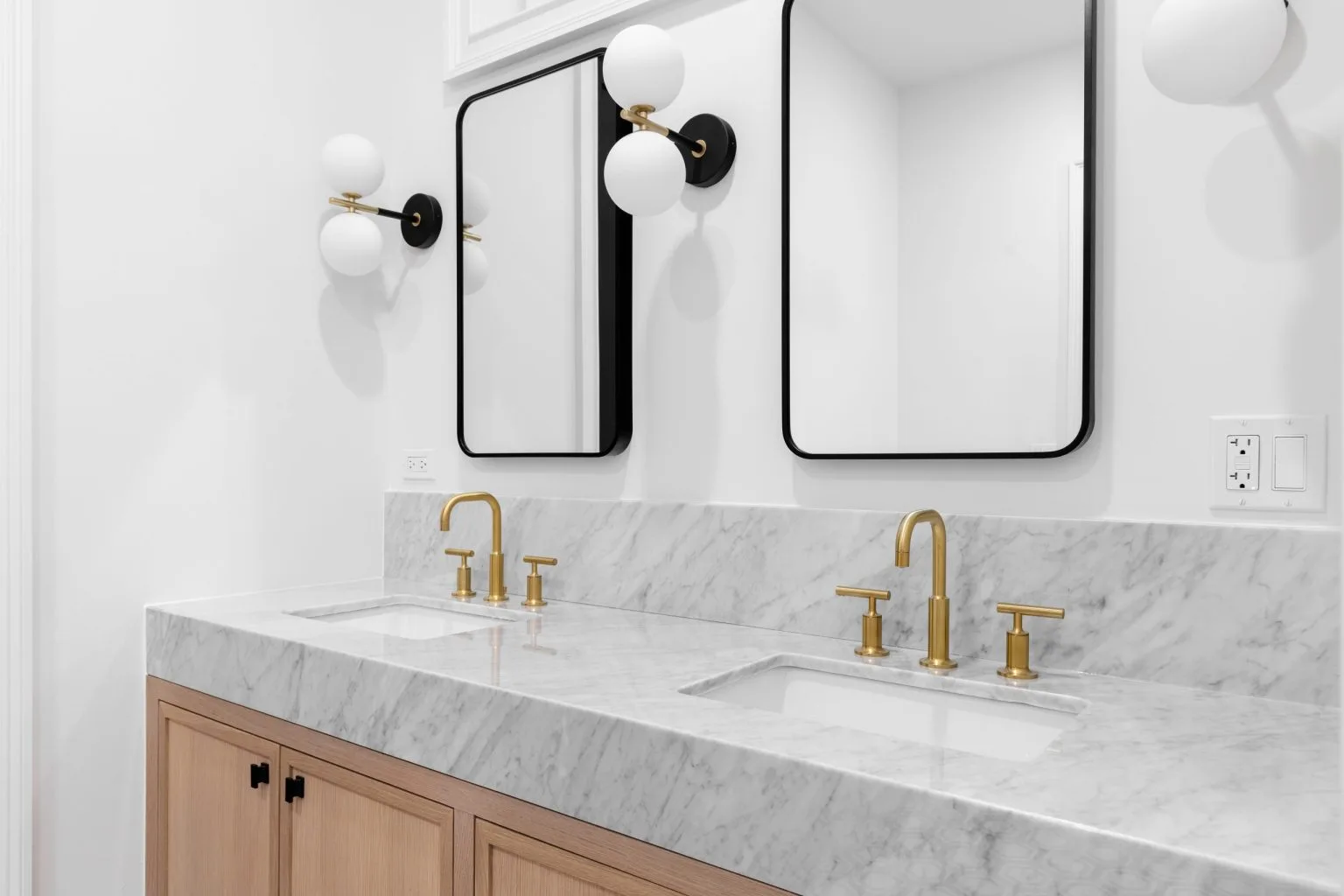
What is not in the range: structural changes, moving a soil stack, relocating a bathroom to a different part of the plan, or upgrading a water heater that turns out to be at end of life. We call those out separately on the quotation instead of burying them in a rate, so you can decide each one on its own.
Bathroom renovation and remodeling in Dubai
How much does a bathroom renovation cost in Dubai?
Bathroom renovation cost in Dubai runs from about AED 22,000 to 60,000 for a single bathroom stripped back to the slab and rebuilt, over three to five weeks. That is our own published range and it covers demolition, waterproofing, screed, tiling, joinery, sanitary ware, glass, plumbing and electrical. Where you land inside it is almost entirely material choice: mid-range porcelain and mass-market brassware sit near the bottom, book-matched marble and premium fittings near the top. Structural changes, moving a soil stack or relocating the bathroom are quoted separately.
How long does a bathroom renovation take?
Three to five weeks for one bathroom, from strip-out to handover. The sequence is fixed and parts of it cannot be shortened: the waterproofing membrane needs a 24-hour flood test, the screed needs to cure before tiling, and the stone vanity top cannot be templated until the cabinet is physically installed. Several bathrooms in one villa overlap well and add far less than a full multiple — three bathrooms typically run six to eight weeks rather than fifteen.
Can I change a bathtub to a shower in a Dubai apartment?
In most apartments, yes. The bath already sits over the wet zone and the drain is usually close to where the shower outlet needs to be, so a bathtub to shower conversion is removal, re-tanking, re-setting the fall and tiling through. The one thing to check at survey is the floor build-up: if the waste has to be re-run across the room, it eats into the screed depth, and in a low-ceiling apartment that can mean a shallow tray rather than a fully tiled walk-in. We confirm this before quoting, not during.
Do I need building or developer approval to renovate a bathroom?
For an apartment, almost always. Most buildings require an NOC from the developer or the owners’ association before any work begins, and a permit through the relevant authority where the layout, the wet area or the drainage changes. Villas in managed communities follow their own rules, which are usually lighter for a like-for-like rebuild. We prepare the drawings and handle the submission as part of the job, and we obtain the NOC per project — we do not hold or claim any standing approval.
Do you guarantee the waterproofing?
Yes. Every bathroom we build gets a two-coat membrane with taped corners and penetrations, a puddle flange bedded into the membrane at the drain, and a 24-hour flood test that is photographed at both readings. The test result, the first fix photographs and the material data sheets go into your handover pack, and the waterproofing is warranted. If it ever fails, we come back.
Can you repair a leak without redoing the whole bathroom?
Sometimes, and we will tell you honestly which case you are in. A failed silicone joint, a cracked waste or a perished tray seal is a genuine local repair. A membrane that has failed under the tiles is not — patching one corner moves the water somewhere else and buys a few months. We trace it with a moisture meter and a dye test first, then give you the real answer rather than the cheap one.
Which sanitary ware brands do you install?
We install and warranty Grohe, Kohler, Duravit, Roca and Hansgrohe routinely, and we will fit whatever you have already bought. We lean towards those names for an unglamorous reason: cartridges, seals and flush plates stay available in Dubai years later. An unbranded mixer that fails in year three means opening a tiled wall to find a part that no longer exists.
Do you supply the tiles and fittings, or should I?
Either. Many clients choose their own tiles and sanitary ware and we install them, which is fine — we just need the selections confirmed before the strip-out so nothing holds up the tiler. If you would rather we supply, we quote at our trade cost with our margin shown, so you can see exactly what you are paying for the material and what you are paying for the work.
Will I be able to use the bathroom during the work?
Not that one. A bathroom taken back to the slab is out of use for the full three to five weeks. In an apartment with a second bathroom that is usually manageable; where it is the only bathroom, we programme the job tightly and agree the dates around you, and in some cases the strip-out and first fix can be held until you are ready.
Can you make a bathroom accessible for an elderly parent?
Yes, and it is much cheaper decided at design stage than retrofitted. A level-access shower with no threshold, a 900 mm clear door, grab rails fixed into blockwork or properly noggined studs, a slip-rated floor, a fold-flat seat, lever taps and a thermostatic valve capped at a safe maximum. Almost all of it is set before first fix, which is why it is worth raising at the survey.
Do you work outside Dubai?
Our sites are concentrated across Dubai — Marina, Downtown, Business Bay, JVC, Dubai Hills, Arabian Ranches, Damac Hills and Mirdif among them — because our workshop and stores are in Ras Al Khor Industrial Area 2 and same-day support matters on a live bathroom. We do take work in the northern emirates case by case. Ask, and we will give you a straight answer on whether we can service it properly.
How do I get a quotation?
Call or WhatsApp 056-5608073, or send the room dimensions and a few photographs to contact@abdullacarpentryest.ae. We arrange a free site visit and bathroom quotation, usually within a couple of days. The survey takes about forty minutes, we measure and check the drain and fall on site, and the written quotation follows itemised by stage so you can see what each part of the job costs.
Useful official references
Before a bathroom is altered in Dubai, the rules that matter come from the building authority, the utility and your developer. These are the primary sources we work to — worth reading before you sign anything with anyone.
Book a free bathroom survey
A free site visit and bathroom quotation, anywhere in Dubai. We measure the room, check the drain and the fall, talk through what is worth keeping and what is not, and send a written quotation itemised by stage. Call or WhatsApp 056-5608073, or email contact@abdullacarpentryest.ae.